Coro , full name Santa Ana de Coro ( Spanish: Coro, Santa Ana de Coro ) is a city in the north-west of Venezuela , the administrative center and largest city of the state of Falcon .
| City | |||||||
| Koro | |||||||
|---|---|---|---|---|---|---|---|
| Coro, full name Santa Ana de Coro | |||||||
| |||||||
| |||||||
| A country |  Venezuela Venezuela | ||||||
| State | Falcon | ||||||
| History and Geography | |||||||
| Based | 1527 year | ||||||
| Square | |||||||
| Center height | |||||||
| Timezone | |||||||
| Population | |||||||
| Population | 174 thousand people | ||||||
| Official language | Spanish | ||||||
| Digital identifiers | |||||||
| Telephone code | +58 268 | ||||||
| Postcode | |||||||
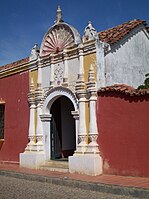


 | UNESCO World Heritage Site No. 658 Russian • English • fr. |
The population is 174 thousand inhabitants (2001).
The city is located on a sandy plain at the base of the Paraguan Peninsula. La Vela de Coro port on the Caribbean Sea is located 12 km northeast of the city center.
History
It was founded in 1527 by Juan de Ampies as the first capital of the Klein- Wenedig colony. In 1528, the Spanish crown decided to grant a concession to these territories to a German consortium of bankers, which existed under the auspices of the banking house of Velzer.
After leasing these lands to the German concessionaires, the latter began to intensively search for the mysterious and mysterious country of Eldorado .
For 28 years, during which the reign of the German governors continued here, even the Spaniards, far from exemplary in relation to the inhabitants of the lands they subordinate, were tired of the inconsideracy and cruelty of the German concessionaires, with whom they imposed their orders. As a result, in 1556 the concession was canceled.
After the termination of the contract with Germany, the official capital of the colony became El Tokuyo . Koro, abandoned by the authorities and the garrison, soon turned into the usual center of one of the states of the country and French and English pirates began to attack him, repeatedly looting and burning the former capital to the ground.
Each time the city was rebuilt in the vain hope that this attack would be the last. In the 17th century, Corot was the center of smuggling trade with the Dutch islands of Bonaire and Curacao .
In 1950, the historic city center was declared a national monument. In 1993, Corot, by decision of UNESCO, became a World Heritage Site . In 2005, the historic center of Corot was listed as endangered by World Heritage Sites [1] .