Louis (Louis) II Malsky ( fr. Louis de Male ; November 25, 1330 , Mal , Flanders - January 30, 1384 , Lille or Saint-Omer, Flanders) - Count of Flanders since 1346 , Count of Nevers and de Rethel named Louis III since 1346 , Count of Artois and the Palatine of Burgundy from 1382 from the house of Dampierre , son of Count of Flanders Louis I of Nevers and Margarita of France , Countess Artois and Burgundy, daughter of King Philip V Long of France.
| Louis II | |||||||
|---|---|---|---|---|---|---|---|
| fr. Louis de Male | |||||||
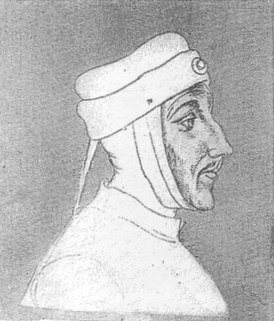 Louis II | |||||||
| |||||||
| Predecessor | Louis I of Nevers | ||||||
| Successor | Margarita III | ||||||
| |||||||
| Predecessor | Louis I of Nevers | ||||||
| Successor | Margarita III | ||||||
| |||||||
| Predecessor | Louis I of Nevers | ||||||
| Successor | Philip II the Bold | ||||||
| |||||||
| Predecessor | Margarita I | ||||||
| Successor | Philip II the Bold | ||||||
| |||||||
| Predecessor | Margarita I | ||||||
| Successor | Philip II the Bold | ||||||
| Birth | November 25, 1330 Mal , Flanders | ||||||
| Death | January 30, 1384 (53 years old) Lille or Saint-Omer, Flanders | ||||||
| Burial place | |||||||
| Kind | House Dampier | ||||||
| Father | Louis I Neversky | ||||||
| Mother | Margarita I French | ||||||
| Spouse | Margarita Brabant | ||||||
| Children | Pierre, Charles, Margarita III | ||||||


Content
- 1 Youth
- 2 Beginning of the reign (1346–1349)
- 3 Well-time (1349–1379)
- 4 Domestic policy
- 5 End of reign (1379–1384)
- 6 Person
- 7 Marriage and children
- 8 Bibliography
- 9 References
Youth
As the son of a French princess, Louis was brought up at the French court. He fought with his father at the Battle of Crecy , but managed to avoid death. His father died in this battle, after which Louis inherited all his possessions - the counties of Flanders, Nevers and Rethel. Louis was able to regain control of Flanders, from which his father was expelled in 1339 .
Beginning of the reign (1346–1349)
Since November, the new count began to rule in Flanders. But Ghent , dominated by the weaver communes, wanted to impose an English marriage on the count as a guarantee of the supply of island wool. The young count took advantage of falconry to escape to France, and then to Brabant , where in 1347 he married with Margarita Brabant , daughter of an ally of the king of France. Ghent immediately rises (1347–1349).
But the discontent in the city and the desire of Bruges , Lille and Ypres to challenge hegemony weakened the rebellion in Ghent, especially since the terrible epidemic of the black plague raged in Flanders in 1348. Contrary to all expectations, on August 25, 1348, the count signed an agreement on neutrality with the king of England and, putting pressure on the remaining rebel cities ( Gramont , Dendermonde , Oudenaarde ), again triumphantly strengthened in Flanders. Ghent weavers were eventually weakened due to the strengthening of other artisan associations.
Well-Being (1349–1379)
The count tried to find a balance between the interests of parties oriented to England and France , and also to maintain neutrality in the Hundred Years War .
After the death of his father-in-law, Duke of Brabant Jean III , he demanded from his successors - the eldest daughter of Jeanne and her husband Wenzel of Luxembourg sale Mechelen and payment of a cash payment for his wife, which was rejected. Louis then captured Brabant and Brussels and conquered the duchy. The Brabant rebelled (October 24-29, 1356), but unsuccessfully. As a result of the peace treaty concluded on June 4, 1367, Louis received the title of Duke of Brabant, and also annexed Antwerp to his possessions.
One of the most important affairs of his reign is the marriage of his only daughter and heiress Margarita . Intense diplomatic activity was devoted to this, because a rich inheritance, longed for by the British and French, was at stake. In 1357, Margarita married Philip , Duke of Burgundy. The death of the young duke in 1361 provoked the unexpected return of Artois, since Louis's mother inherited this province.
Located to an English marriage, Louis II forced Margarita to combine in 1369 with the new Duke of Burgundy, Philip II the Bold , the younger brother of King Charles V of France, in return for which Walloon Flanders (Lille, Douche , Orshe ) returned to the county (April 25, 1369).
Domestic Policy
Louis strengthened centralized state power, the financial and judicial systems. The count’s administrative policy has largely prepared the future actions of the dukes of Burgundy: in order to balance the power of the cities, he added a fourth campaign to Bruges to the three “Members” of Flanders , a dish campaign when the country surrounded the port. He divided the Council (Curia) into specialized bodies (the future deliberative room of judges, the court session of the council), the Council has now become a political affairs body, separated from the count. New posts have also been created: judicial ruler, general collector and prosecutor general. The Earl surrounded himself with lawyers.
The end of the reign (1379–1384)
Recent years have been marked by the resumption of confrontation with the townspeople. The demand for payment by the residents of Ghent for holding a knightly tournament provoked a rebellion of white chaperons (so named because of the insignia of the rebels), which began in 1379 and ended only after the death of Louis. Weavers seized power in Ghent (August 1379), and then in the rest of northern Flanders . The count took refuge in Lille, and then moved to Bruges. There he managed to escape by a miracle when the rebels, led by Philip van Arteveld , defeated the count's troops and captured Brugge. Returning to Lille, which he inherited from his mother (May 9, 1382), the count was forced to ask for help to suppress the uprising from his overlord - the French king Charles VI .
In October 1382, 10 thousand horse-drawn warriors were assembled in Arras , joined by crossbowmen and foot soldiers. The bridge over the River Lis was destroyed, at the cost of tremendous stress, the French managed to cross the other side and, using the means at hand, restored the bridge to capture the first Flemish city of Commin . In the next battle - at Rosebek (November 27, 1382), the king was eager for battle, trying to take part in hand-to-hand combat as a simple soldier, from which the Duke of Burgundy was able to keep him by force. The French won a complete victory, after which the war was almost over. Several Flanders cities were looted, the rest were imposed high duties and fines, sometimes four times higher than what was customary to pay under the previous boards.
The fruits of victory took advantage of the son-in-law of the count - Philip II the Bold , who since then began to establish his power over the county.
In 1382, the mother of Louis died, as a result of which he inherited her possessions - the counties of Burgundy and Artois , significantly increasing her possessions.
He himself died on January 30, 1384 in Lille. Both of his sons died early, so all of his vast possessions (Flanders, Nevers, Rethel, Artois, Franche-Comté) were inherited by his daughter Margarita . These lands became the basis for the Netherlands possessions of the Burgundy house .
Person
In private life, Louis II appears to us as a typical nobleman of his time. He supported the zoo, surrounded himself with a theater of strolling acrobats and organized jousting tournaments, spending a lot of money on entertainment. It is believed that he left 11 illegitimate children. Often not having enough money, he increasingly flew the Flemish cities, which caused discontent in Ypres, Bruges and Ghent.
Marriage and children
Wife: from July 1, 1347 (Saint-Quentin, France) Margarita of Brabant ( February 9, 1323 - 1368 ), daughter of Jean III , Duke of Brabant and Limburg
- Pierre (d. March 3, 1376 )
- Charles
- Margarita ( April 30, 1350 - March 16/21 , 1405 ), Countess of Flanders (Margarita III), Countess Nevers (Margarita I), Palatine Countess of Burgundy and Countess Artois (Margarita II) from 1384 , Retel (Margarita I) in 1384 - 1402 ; 1st husband: from May 14, 1357 Philip I of Ruvres ( August 5, 1346 - November 21, 1361 ), Count of Artois and the Palatine of Burgundy from 1347 , Count of Auvergne and Boulogne from 1360 ; 2nd husband: from June 19, 1369 (Gent) Philip II the Bold ( January 7, 1342 - April 27, 1404 ), Duke of Burgundy from 1363
Bibliography
- Ustinov V.G. The Hundred Years War and the Wars of the Roses. - M .: AST: Astrel; Keeper, 2007.- S. 637. - ISBN 978-5-17-042765-9 .
- Karl Theodor Wenzelburger. Ludwig III. von Male // Allgemeine Deutsche Biographie (ADB). - Bd. 19. - Lpz. : Duncker & Humblot, 1884. - S. 546-547. (German)