The Royal Society of London for Improving Natural Knowledge [1] , the Royal Society of London , one of the oldest scientific societies in the world, was created in 1660 and approved by the royal charter in 1662.
| Royal society | |
|---|---|
| Royal Royal Society for the Advancement of Nature | |
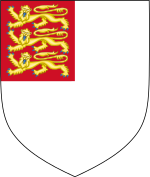 Coat of arms of the Royal Society | |
| Administrative center | |
| Type of organization | and |
| Base | |
| Established | November 1660 |
| Awards | Princess of Asturias Prize: Communications and Humanitarian Affairs (2010) |
The motto of society - “Nullius in verba” (from lat. - “Nothing from the words”) - means that the evidence should be experiments, calculations, but not the words of authorities. This expression was chosen as a sign that it would rely only on scientific evidence, in contrast to medieval scholastic philosophy, for which Aristotle and the church fathers were indisputable authorities. [3] [4]
Being a private organization, existing on a subvention from the government, plays an important role in the organization and development of scientific research in the UK and acts as an advisory body in addressing the main issues of scientific policy, acting as the British Academy of Sciences . It has over a thousand members.
Since 1665, the Society has published the journal Philosophical Transactions of the Royal Society (Phil. Trans.) - one of the oldest scientific journals in the world [5] .
Content
History
The forerunner of the Royal Society was the Invisible College , which had been meeting since 1645 in London and since 1648 in Oxford . It was a private club of like-minded intellectuals, among which Robert Boyle , John Wilkins and John Evelyn were of prime importance.
The first formal meeting of the same persons, drawn up in a protocol, was held on November 28, 1660 at London Gresh College . Two years later, Charles II elevated society to a state institution; The first official meeting was held on April 22, 1663. [6]
At its foundation, the company developed a research program that included the problems posed by:
- on the one hand, practice - navigation (orientation in space and time, in particular determining longitude ; mapping ), military affairs (studying the motion of a projectile in the air), metallurgy , medicine, and so on;
- on the other hand, the need to develop a scientific view of nature, which appeared in a new light as a result of the Copernican revolution and the great geographical discoveries [7] .
Since 1663, the society was officially called “The Royal Society of London for Improving Natural Knowledge”, the modern name is “The Royal Society” [8] . From 1873 to 1967, the headquarters was in Burlington House on Piccadilly Street.
In terms of tasks and functions, the Royal Society is often compared to the Academy of Sciences , sometimes calling "British Academy of Sciences ” [9] . At the same time, in 1901, at the initiative of the society, a special British Academy was created for the participation of British scientists in the International Association of Academies [10] .
Founding Members
- Ralph Bathurst (1620-1704)
- William Ball (1627–1690)
- Robert Boyle (1627–1691)
- William Brauncker (1620–1684)
- Alexander Bruce (1629–1681)
- Jonathan Goddard (1617–1675)
- Abraham Hill (1633-1721)
- Sir Robert Morey (1608–1673)
- Sir 1613–1686]
- Sir William Petty (1623–1687)
- 1622-1662]
- John Wilkins (1614–1672)
- Sir Christopher Wren (1632-1723)
Presidents
Russian and Soviet members of society
At different times, the following were elected to the Royal Society of London [11] [12] :
| Year of election | Name | The science |
|---|---|---|
| 2001 | Abrikosov, Alexey Alekseevich | physics |
| 1969 | Hambartsumyan, Victor Amazaspovich | astrophysics |
| 1988 | Arnold, Vladimir Igorevich | maths |
| 2000 | Barenblatt, Grigory Isaakovich | Mechanics |
| 1942 | Vavilov, Nikolai Ivanovich | biology, geography |
| 1942 | Vinogradov, Ivan Matveevich | maths |
| 1977 | Gelfand, Israel Moiseevich | maths |
| 1987 | Ginzburg, Vitaly Lazarevich | physics |
| 1916 | Golitsyn, Boris Borisovich | physics |
| 2011 | Gromov, Mikhail Leonidovich | maths |
| 1979 | Zeldovich, Yakov Borisovich | physics |
| 1929 [13] | Kapitsa, Peter Leonidovich | physics |
| 1855 | Kovalevsky, Alexander Onufrievich | biology, embryology |
| 1964 | Kolmogorov, Andrey Nikolaevich | maths |
| 1837 | Kruzenshtern, Ivan Fedorovich | geography |
| 1960 | Landau, Lev Davidovich | physics |
| 1982 | Lifshits, Evgeny Mikhailovich | physics |
| 1892 | Mendeleev, Dmitry Ivanovich | chemistry |
| 1714 [14] | Menshikov, Alexander Danilovich | |
| 1895 | Mechnikov, Ilya Ilyich | biology |
| 1961 | Nesmeyanov, Alexander Nikolaevich | chemistry |
| 2011 [15] | Novoselov, Konstantin Sergeevich | physics |
| 1907 | Pavlov, Ivan Petrovich | biology, physiology |
| 1755 | Razumovsky, Kirill Grigoryevich | |
| 1958 | Semenov, Nikolai Nikolaevich | chemistry |
| 2009 | Sinai, Yakov Grigorievich | maths |
| 1827 | Struve, Vasily Yakovlevich | astronomy |
| 1873 | Struve, Otto Vasilievich | astronomy |
| 1954 | Struve, Otto Ludwigovich | astrophysics |
| 2009 | Sunyaev, Rashid Alievich | astrophysics |
| 1944 | Tymoshenko, Stepan Prokofievich | Mechanics |
| 1911 | Timiryazev, Kliment Arkadevich | biology |
| 2010 | Faddeev, Ludwig Dmitrievich | maths, physics |
| 1994 | Khalatnikov, Isaac Markovich | physics |
| 1877 | Chebyshev, Pafnutiy Lvovich | mathematics, mechanics |
| 1981 | Shafarevich, Igor Rostislavovich | maths |
| 1960 | Engelhardt, Vladimir Alexandrovich | biochemistry |
For comparison, only five Spanish scientists were elected to the society in its history: Santiago Ramon i Cajal (1909), Severo Ochoa (1965), Antonio Garcia-Bellido (1986), Avelino Corma (2012) and Gines Morata ( 2017) [16] .
Awards and Prizes
- Since 1731 - Copley Medal , awarded annually for achievements in any of the fields of science.
- Since 1775 - Baker's lecture , awarded annually for achievements in the field of natural sciences.
- Since 1800 - Rumford Medal , awarded once every two years (in even years) for achievements in the study of the thermal or optical properties of a substance.
- Since 1826 - the Royal Medal , awarded annually for achievements in the development of natural sciences (2 medals) and for his outstanding contribution to applied science (one medal).
- Since 1877 - Davy Medal , awarded annually for achievements in the field of chemistry.
- Since 1890 - Darwin Medal , awarded for even years for achievements in the fields of evolution, population biology, organ biology, biodiversity.
- C 1901 - Sylvester Medal , awarded once every two years (in even years) for achievements in the field of mathematics.
- C 1902 - Hughes Medal , awarded annually for achievements in the field of physical sciences, especially those related to the production, storage and use of energy.
- C 1960 - Leverhalm Medal , awarded once every three years for achievements in chemistry or in engineering.
- C 1986 - Michael Faraday Prize , awarded annually for achievements in the popularization of science.
- C 1989 - Gabor Medal , awarded once every two years (in odd years) for achievements connecting life sciences with other disciplines.
See also
- Science in the UK
- National Academy dei Linchea
Notes
- ↑ Royal Society | British science society | Britannica.com
- ↑ https://bigenc.ru/education/text/2157686
- ↑ Source - Horace, “Messages,” I, 1, 14c.
- ↑ (K.A. Timiryazev, Essay on the Development of Natural Science for the 3rd Century (1620-1920).)
- ↑ Great Encyclopedic Dictionary - Royal Society of London (Retrieved January 1, 2010)
- ↑ Academies // Encyclopedic Dictionary compiled by Russian scientists and writers. - SPb. , 1861.
- ↑ Great Britain - article from the Great Soviet Encyclopedia .
- ↑ History of the Royal Society
- ↑ V.V. Tikhomirov In articles on anniversary and memorable dates about members of the Society
- ↑ IAA: Association Internationale des Academies
- ↑ Korneev S.G. Soviet scientists are honorary members of scientific organizations of foreign countries. M .: Nauka, 1981. 303 p. Information on page 167.
- ↑ List of all members of society
- ↑ P.L. Kapitsa elected as a national member of society, not a foreign
- ↑ Paradoxically, the first was A.D. Menshikov , the favorite of Peter I. A letter of acceptance was written to him personally by Isaac Newton
- ↑ K. S. Novosyolov was elected as a national member of society
- ↑ https://www.ikerbasque.net/en/news/gines-morata-nuevo-miembro-de-la-royal-society
Literature
- Society found a worthy historian in the scholar Thomas Thomson , whose work “History of the R. Society, from its institution to the end of the XVIII Century” (London, 1812) surpassed everything written on the topic earlier.
- Gatina M.R., Michel D.V. Early History of the Royal Society of London through the Eyes of Modern Historians of Science // Dialogue with Time: Almanac of Intellectual History. - IVIRAN, 2011. - Issue. 34 . - S. 191-205 .
- Bluhm, RK Remarks on the Royal Society's Finances, 1660–1768 (Eng.) // Notes and Records of the Royal Society of London : journal. - The Royal Society, 1958. - Vol. 13 , no. 2 . - P. 82 . - DOI : 10.1098 / rsnr . 1958.0012 .
- de Beer, ES The Earliest Fellows of the Royal Society (English) // Notes and Records of the Royal Society of London : journal. - The Royal Society, 1950. - Vol. 7 , no. 2 . - P. 172 . - DOI : 10.1098 / rsnr.1950.0014 .
- JDGD The Arms of the Society (Eng.) // Notes and Records of the Royal Society of London : journal. - The Royal Society, 1938. - Vol. 1 , no. 1 . - P. 37 . - DOI : 10.1098 / rsnr . 1938.0007 .
- Fischer, Stephanie. Report: The Royal Society Redevelopment (English) // Notes and Records of the Royal Society of London : journal. - The Royal Society, 2005. - Vol. 59 , no. 1 . - P. 65 . - DOI : 10.1098 / rsnr.2004.0077 .
- Hall, Marie Boas. Public Science in Britain: The Role of the Royal Society (Eng.) // Isis : journal. - University of Chicago Press , 1981. - Vol. 72 , no. 4 . - P. 627-629 . - DOI : 10.1086 / 352847 .
- Henderson, LJ The Royal Society (Eng.) // Science . - American Association for the Advancement of Science , 1941. - Vol. 93 , no. 2402 . - P. 27-32 . - DOI : 10.1126 / science.93.2402.27 . - . - PMID 17772875 .
- Hunter, Michael. A 'College' for the Royal Society: The Abortive Plan of 1667–1668 (Eng.) // Notes and Records of the Royal Society of London : journal. - The Royal Society, 1984. - Vol. 38 , no. 2 . - P. 159 . - DOI : 10.1098 / rsnr.1984.0011 .
- Lyons, HG The Growth of the Fellowship (Eng.) // Notes and Records of the Royal Society of London : journal. - The Royal Society, 1938. - Vol. 1 , no. 1 . - P. 40 . - DOI : 10.1098 / rsnr . 1938.0008 .
- Lyons, HG Two Hundred Years Ago. 1739 (English) // Notes and Records of the Royal Society of London : journal. - The Royal Society, 1939. - April ( vol. 2 , no. 1 ). - P. 34 . - DOI : 10.1098 / rsnr . 1939.0007 .
- Lyons, HG One Hundred Years Ago. 1839 (Eng.) // Notes and Records of the Royal Society of London : journal. - The Royal Society, 1939. - November ( vol. 2 , no. 2 ). - P. 92 . - DOI : 10.1098 / rsnr.1939.0016 .
- Lyons, HG The Composition of the Fellowship and the Council of the Society (English) // Notes and Records of the Royal Society of London : journal. - The Royal Society, 1939. - Vol. 2 , no. 2 . - P. 108 . - DOI : 10.1098 / rsnr.1939.0017 .
- Lyons, HG The Officers of the Society (1662-1860) (Eng.) // Notes and Records of the Royal Society of London : journal. - The Royal Society, 1940. - Vol. 3 , no. 1 . - P. 116 . - DOI : 10.1098 / rsnr . 1940.0017 .
- Martin, DC Former Homes of the Royal Society (Eng.) // Notes and Records of the Royal Society of London : journal. - The Royal Society, 1967. - Vol. 22 , no. 1/2 . - P. 12 . - DOI : 10.1098 / rsnr . 1967.0002 .
- Miller, David Philip. The 'Hardwicke Circle': The Whig Supremacy and Its Demise in the 18th-Century Royal Society (Engl.) // Notes and Records of the Royal Society : journal. - The Royal Society, 1998. - Vol. 52 , no. 1 . - P. 73 . - DOI : 10.1098 / rsnr.1998.0036 .
- ACS Notes on the Foundation and History of the Royal Society (English) // Notes and Records of the Royal Society of London : journal. - The Royal Society, 1938. - Vol. 1 , no. 1 . - P. 32 . - DOI : 10.1098 / rsnr . 1938.0006 .
- Sorrenson, Richard. Towards a History of the Royal Society in the Eighteenth Century (English) // Notes and Records of the Royal Society of London : journal. - The Royal Society, 1996. - Vol. 50 , no. 1 . - P. 29 . - DOI : 10.1098 / rsnr . 19966.0003 .
- Sprat, Thomas. The history of the Royal Society of London: for the improving of natural knowledge. By tho Sprat. - Samuel Chapman, 1722.
- Stark, Ryan. "Language Reform in the Late Seventeenth Century," in Rhetoric, Science, and Magic in Seventeenth-Century England (Washington, DC: The Catholic University of America Press, 2009), 9-46.
- Summerson, John. Carlton House Terrace (Eng.) // Notes and Records of the Royal Society of London : journal. - The Royal Society, 1967. - Vol. 22 , no. 1 . - P. 20 . - DOI : 10.1098 / rsnr . 1967.0003 .
- Syfret, RH The Origins of the Royal Society (English) // Notes and Records of the Royal Society of London : journal. - The Royal Society, 1948. - Vol. 5 , no. 2 . - P. 75 . - DOI : 10.1098 / rsnr.1948.0017 .
- Robinson, HW The Administrative Staff of the Royal Society, 1663–1861 (English) // Notes and Records of the Royal Society of London : journal. - The Royal Society, 1946. - Vol. 4 , no. 2 . - P. 193 . - DOI : 10.1098 / rsnr . 1946.0029 .
- Wagner, Wendy Elizabeth. Rescuing Science from Politics: Regulation and the Distortion of Scientific Research. - Cambridge University Press, 2006. - ISBN 9780521855204 .
Links
- The Royal Society - The official website of the Royal Society.
- List of members since 1660
- The Royal Society's 350th anniversary
- The Royal Society Publishing website
- The Royal Society of London (a brief history)
- Scholarly Societies Project: Royal Society of London
- A visualization of the Royal Society's publications from 1665 to 2005
- The Royal Society , BBC Radio 4 discussion with Stephen Pumphrey, Lisa Jardine & Michael Hunter