Danube-Ipoy ( Hungarian. Duna-Ipoly Nemzeti Park ) is a national park in the north of Hungary , north of Budapest , in the territory of Komarom-Esztergom , Pest and Nograd . The park area is 603.14 km², it is the second largest national park in Hungary after Hortobadi . The park was founded in 1997.
| Danube Ipoy | |
|---|---|
| Hung Duna-Ipoly Nemzeti Park | |
 Visegrad Mountains | |
| IUCN Category II ( National Park ) | |
| basic information | |
| Square | |
| Founding date | |
| Location | |
| A country |
|

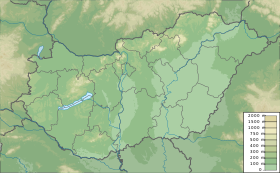


The territory of the park covers most of the Pilis mountains, the Visegrad mountains and the Burjen mountains, as well as part of the Danube valley and its tributary Ipoy river ( Hungarian Ipoly ). The park is located on both banks of the Danube near the Slovak border . The islands on the Danube between Budapest and Esztergom also belong to the national park.
The landscapes of the park are diverse, including river valleys, mountain ranges and vast lowlands. The origin of the mountain ranges is volcanic, they are composed of magma rocks.
In the park there are 170 protected plant species, including 10 especially protected ones. The park has several special training paths.
Places of
Danube
Located next to Visegrád . Here the Danube breaks between the Burgen mountains and the Visegrad ridge, forming a steep bend with islands and coastal floodplain forests.
The Cave of Senpochehyi
Like most of the caves of the region has a karst origin, formed as a result of limestone erosion by hot thermal springs. Cave air is used to treat respiratory diseases.