Charles VI The Mad , the official nickname is Loved ( Fr. Charles VI le Fol, ou le Bien-Aimé ; December 3, 1368 - October 21, 1422 ) - King of France from 1380 , from the Valois dynasty .
| Charles VI the Mad | |||||||
|---|---|---|---|---|---|---|---|
| fr. Charles VI le Fol, ou le Bien-Aimé | |||||||
 Death sculpture | |||||||
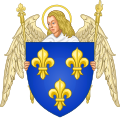 | |||||||
| Coronation | November 3, 1380 , Reims Cathedral , Reims , France | ||||||
| Predecessor | Charles V the Wise | ||||||
| Successor | Charles VII | ||||||
| |||||||
| Predecessor | Jean | ||||||
| Successor | Charles | ||||||
| Birth | December 3, 1368 Paris | ||||||
| Death | October 21, 1422 (53 years old) Paris | ||||||
| Burial place | Saint Denis Basilica , Paris , France | ||||||
| Kind | Valois | ||||||
| Father | Charles V the Wise | ||||||
| Mother | Jeanne de Bourbon | ||||||
| Spouse | Isabella of Bavaria | ||||||
| Children | sons: Carl, Carl, Louis , Jean , Charles VII , Philip daughters: Jeanne, Isabella , Jeanne , Maria , Michelle , Catherine | ||||||
| Religion | western christianity | ||||||


The son and successor of Charles V the Wise .
Content
- 1 Childhood and adolescence
- 1.1 Childhood
- 1.2 Regency
- 1.3 Coronation
- 1.4 Domestic policy under the regency
- 1.5 Foreign policy
- 1.6 Regency Results
- 1.7 Marriage
- 2 The Age of the Marmusets (1388–1392)
- 3 Madness
- 3.1 Background
- 3.2 King in the forest near Le Mans
- 3.3 The second attack of insanity - "Ball of flames"
- 3.4 the next thirty years
- 3.5 Odette de Chamdiver
- 3.6 Hypotheses on the causes of royal disease
- 3.6.1 Version One - Mental Disorder
- 3.6.2 Version Two - Poisoning
- 4 The time of the external and internal world (1392-1404)
- 5 Civil war between Armagnacs and bourguignons - the first period (1404-1415)
- 6 The resumption of the Hundred Years War. The Civil War between Armagnacs and Bourguignons - the second period (1414-1420)
- 7 The actual collapse of France (1420-1422)
- 8 Death and burial
- 9 Results of the reign
- 10 Marriage and children
- 11 Image in art
- 11.1 In the literature
- 11.2 In the theater
- 11.3 In the cinema
- 12 Notes
- 13 Literature
- 14 References
Childhood and Youth
Childhood
Little is known about the childhood of the future king. He was born in Paris on December 3, 1368, eight years after the death of his older brother and first successor to the throne, Jean. It is believed that Karl was the first in history to receive the title “ dauphin ” and the province of Dauphiné at the birth as an appanage [1] .
Regency
Charles VI lost his father at the age of 12. In accordance with the ordinance of 1374, it was determined that the king would be considered an adult from the age of 13. Charles V the Wise, fearing the love of power and greed of his second oldest brother, Louis I of Anjou , ordered that in case of his early death, the Queen should be recognized as regent, and two other uncles should be with her - the Dukes Jean of Berry and Philip of Burgundy . But the queen died before her husband, and therefore, following the customary law of that time, the eldest of uncles had to take custody. Immediately after the burial of the king, at the end of September 1380, a Council opened in Paris, which was to choose a regent. The main battle unfolded between the Duke of Anjou and his brothers, due to the fact that the Council did not make any decision, both sides secretly began to draw troops to the capital. However, it did not come to bloodshed. Ultimately, it was decided that the regent's limited powers should be transferred to his elder uncle, and the other two would be the guardians of the children of Charles V. The main authority until Charles VI came of age passed into the hands of the Grand Council of 50 members - representatives of all classes, within which stood out 12 person representing the guardians themselves [2] .
By the first decision, the Grand Council adopted the resignation of Chancellor d'Orgemont, who, according to the chroniclers of that time, “left, foreseeing the troubles in which the state would be plunged”, and Bishop Beauvais was replaced in his place. France’s constable was approved by Olivier de Clisson , appointed to this position by the late king.
Coronation
The next step was to be the coronation of Charles VI, but preparations for it were postponed due to the fault of Louis I of Anjou, who hastily fraudulently appropriated part of the royal treasury - the total amount stolen was about 17 million francs. Not limited to this, he took over part of the jewels of the crown, gold and silver utensils, gold and silver bullion - the latter constituted an untouchable reserve of the state, and Louis managed to get it by threatening to execute treasurer Philip de Savoissi.
On November 3, 1380, the young king nevertheless arrived in Reims , where he was knighted by the Duke of Anjou and solemnly crowned , as prescribed by tradition, by the Archbishop of Reims. Immediately after the coronation, Charles knighted four young nobles, two of whom, the sons of the Duke de Bar , were his cousins, and took the oath of allegiance to himself nobles and representatives of the people. During the royal feast that followed that day, there was a clash between uncles - Philip the Bold “arbitrarily” took the place of an elder — on the king’s right hand, explaining to the Duke of Anjou that “this place belongs to him by right”, the same did not dare to resist deciding that the younger brother acts with the consent of the king.
The solemn procession then went to Paris, where the triumphal arches were erected, and the young king rode into the city to the joyful cries of the people, damming the streets. Over the next three days, festivities, tournaments, competitions in dexterity and the ability to wield a spear continued, orchestras played in the streets and fountains of wine, milk and fragrant water beat.
Regency Domestic Politics
Jean Berry and Philip the Bold soon achieved the division of power. Louis I of Anjou retained preemptive rights, but refused the status of regent, his brothers, together with him and 12 members appointed by them, composed the “Prescribed Council”. This council lasted from October 1381 to January 1383 . Its composition soon underwent significant changes.
Immediately upon returning from power, the favorites of the former king, La Riviere and de Grange, Bishop of Amiens , were dismissed , moreover, the king himself expressed himself quite explicitly about the latter “ thank God, we managed to get rid of the tyranny of this prelate ”.
| ||||||||||||||||||||||||||||
On the day of the coronation, a tax cut was announced, as it directly followed from the will of the late king, but both dukes opposed the actual implementation of this measure, and Philip of Burgundy directly called on the old ones to add new ones - which was done - under the name “subvention” an indirect tax has been introduced (the so-called aide - that is, "welfare"), requiring the population to deduct a twentieth of the income from trade in favor of the king. The result of its introduction was a riot in Paris, when, according to the chronicler, "the mob smashed the homes of collectors and Jews, forcibly baptized the children of the latter and calmed down only after the death of several unfortunate people drowned in the river ." This rebellion went down in history as the Mayothen uprising - that is, the “Hammers” (from French maillon - “ Berdysh ,” a weapon captured by rebels in the Paris arsenal) [3] .
As for the formation of the king, it was left to chance. Considered a mentor by his person, Philip of Burgundy preferred to indulge the whims of a 12-year-old boy, entertaining him with banquets, hunting, games and spectacles, constantly replacing each other, while the affairs of the state were essentially decided without his knowledge and participation. However, according to the chroniclers, the boy’s militancy and his desire to immediately enter the war with the British are noted. An example of this is the story when Charles V called his son to him and offered him the choice of a warrior’s crown or iron helmet. Karl’s response was quite clear: “ Messir, give me a helmet, and you can keep the crown for yourself .”
In 1382, the people of Paris took up arms and were indignant at the treachery of the regents who had violated the will of the late king in the matter of taxes. The street crowd armed themselves, defeating the Arsenal , criminals were released from prisons. The uprising was led by the former prime minister of Paris, South Abrio, accused of many crimes under the new king and imprisoned. The king, along with the regents, moved to Vincennes , and when the negotiations yielded nothing, he moved farther from the capital, to Melun . The Duke of Anjou gathered the troops that ravaged the city suburbs. As a result, the city was brought into obedience and forced to pay 100,000 francs of fine. A few days later, the king returned to the city. Breaking their own promises, the regents ordered to imprison and drown in the Seine a significant number of citizens suspected of rebellion.
After returning from the Flemish campaign, the king was informed that a trap was being prepared for him in Paris, and that the local bourgeois allegedly corresponded with representatives of other cities in order to obtain benefits. Troops were sent to Paris, after which the regents unleashed a bloody terror. All who participated in the rebellion or were suspected of having links with the Flemings were persecuted. About 300 people were executed and thrown into prison, and Philip the Bold did not hesitate to crack down on the supporters of his older brother. The city was liable to new taxes - 1 sous from each livre at sales, 12 sous from each sold measure of wine, a quarter of the price for retail sale of wine. The same was done in Orleans , Troyes , Rouen and many other cities.
Foreign Policy
At the same time, envoys of the Hungarian king and Castilians arrived in Paris, with the aim of persuading France to support Urban VI . They were accepted by Louis of Anjou, but rejected the request of the ambassadors, and after him the meeting of the French cardinals and the University of Paris were equally declared the true pope of Clement VII , and after some hesitation, the Castilians also took their side.
At the end of July, two months before the death of Charles V, the uncle of the English king Richard , Earl Buckingham , landed in Calais , accompanied by 3 thousand foot and horse warriors and 4 thousand archers, with the Flemings and Germans who joined them, who, according to the chronicler " Buckingham promised to give the whole of France to plunder ." By a quick march, he passed through Artois , Picardy , Champagne and stopped in Mena , where the Duke of Breton, friendly to the British, was waiting for him with the troops near Rennes . Both brothers of the king hastily manned their armies, trying to block the way to the invaders, but the French troops did not have enough food, and the news from Paris about the king’s fatal illness completely upset the campaign. The princes hastened back to the capital to ensure maximum influence and power under the young king, while the British moved unhindered towards Brittany. However, the duke, having managed to get sufficient guarantees at the French court, had already changed his mind, noting that "the hatred that I had for the French kingdom with the death of Charles has decreased by more than half, just as I hated my father, I will love my son ." The duke led a double game, letting the English into his country, whom he did not dare to confront, and supplying them with everything necessary, invited them to begin the siege of Nantes , where the French garrison stood, promising to join in 15 days - but he did not keep his word. Buckingham did not have enough troops for a decisive assault and he decided to retreat.
At the beginning of 1381, peace was secretly made between France and Brittany in Paris, two of the three regents wanted to untie their hands for personal wars. The Duke of Breton, according to his conditions, received Nantes and several neighboring cities, pledged to take a vassal oath to the Duke of Anjou for Castellant Chantos, pay 200 thousand francs to the treasury, come to Paris personally accompanied by the Connaught de Clisson, Duke of Bourbon and Admiral de Viennaen , where he ask for royal forgiveness and take the oath to Charles VI. The British, who cursed the duke for treason, were provided with ships so that they could return home without hindrance.
Louis I of Anjou in 1382 left to conquer the inheritance of his adoptive mother Giovanna I of Naples, and two years later he died of illness, and did not finish the campaign. Jean Berry received absolute power in the Languedoc with the status of royal governor, which, however, he had to subjugate to himself by force of arms. In this war, the king wished to take a personal part, ordering, as usual, to take the oriflam of France to Saint-Denis , but Philip the Bold opposed this, saying that such a minor opponent was not worthy of personal intervention by the sovereign. The king nevertheless insisted and was defeated in the first battle, but in view of the numerical superiority of his army, the Count de Foix did not dare to continue the war and voluntarily agreed to cede his lands, saying forgiveness and preservation of sufficient property. A fine of 800 thousand francs was imposed on the Seneschalism of Toulouse , Carcassonne and Boker as a punishment for the rebellion.
In the same year, Philip II the Bold, after the departure of Louis, feeling like a sovereign master at the court, undertook a campaign in order to help the father-in-law to Count of Flanders , in which the king also took part. In October, 10,000 horse-drawn warriors were assembled in Arras , joined by crossbowmen and foot soldiers. The bridge over the River Lis was destroyed, at the cost of tremendous stress the French managed to cross the other side by fording or using the improvised means to bridge the bridge and capture the first Flemish city of Commin. In the next battle near Rozbek, the king was eager for battle, trying to take part in hand-to-hand fighting as a simple soldier, from which the Duke of Burgundy was able to keep him by force. The French won a complete victory, after which the war was almost over. Several Flanders cities were looted, the rest were imposed high duties and fines, sometimes four times higher than what was customary to pay during the previous reigns.
At the end of that year, King Richard of England, as the chroniclers write, “envied by Charles, who had covered himself with fame in such a young age,” and supported by the anti-dad Urban, whom France did not recognize, landed in Calais, accompanied by 800 knights and with them infantrymen Count Buckingham. Rebel Flanders, the British began the siege of Ypres . An army of 16 thousand people was sent against them, but in view of the fact that the king's vassals were obliged to serve only for a certain time, after which they had the right to return to their possessions, the war was sluggish, with varying success. In the end, the Flemings returned to their homes, while the British were allowed to return to Calais, leaving prey behind. The military leaders of the French army protested against this outcome, but the regents had the last word. There were rumors in the country that this could not have done without the influence of the Duke of Breton. One way or another, sire d'Otville went to London, and a two-year truce was concluded between the two countries.
At the end of 1387, skirmishes resumed, and all the attempts of the French to make peace were smashed by the exorbitant demands of the English side - in particular, King Richard demanded that Normandy and Guyenne be transferred to him. Therefore, it was decided to "punish the British on their own islands." Preparations for the invasion of England began, ships and defenses for infantry were built, and the royal favorite la Tremuil ordered his ship to be decorated with gold, for which 2 thousand francs were spent. The total number of ships was 1287 (“enough to build a bridge from Calais to Dover” - since the time of Charles the Great, France has never had such an impressive fleet [1] ). The invasion, however, did not take place, in view of the indecisiveness of the Duke of Berry, "who did not want to expose his Majesty to the fury of the British and entrust the unreliable disposition of the sea." The duke dragged on until autumn storms began in September, and the king was forced to abandon his plan.Of the wooden towers given to Philip of Burgundy, warehouses were later built. However, the troops were sent to help Robert II of Scotland and fought quite successfully. In the end, however, the French quarreled with the Scots and in the spring of next year a significantly thinned army returned home.
Regency Results
Эпоха всевластия (1380—1388) дядей Карла VI характеризовалась безраздельным разгулом личных амбиций принцев крови [4] . Неаполитанский поход (1382—1384) Людовика I Анжуйского, фландрский поход Филиппа Смелого, меценатство Жана Беррийского оплачивались из королевской казны, также огромные средства были среди прочего выброшены на неудавшуюся экспедицию в Англию. Победа при Роозенбеке мало что дала французской короне. Для того, чтобы оплатить необходимые на ведение войны и амбиции принцев крови расходы, были резко подняты косвенные налоги и вновь введена подымная подать. Восстания в Париже, Руане, Реймсе были подавлены с редкой жестокостью, на мятежные города были наложены крупные штрафы.
Брак
В 17 лет Карл превратился в статного юношу, крепкого и сильного настолько, что без труда мог сломать руками подкову. Дядьями было решено устроить его брак. На выбор ему были предложены принцессы лотарингская, ланкастерская, австрийская и баварская. Регенты немедленно отвергли возможность брака короля с англичанкой, и склонялись к дочери герцога лотарингского , так как считалось, что она «наиболее привычна к французским манерам», но герцоги Беррийский и Бургундский предпочли в этом случае последовать воле покойного короля, прочившего в жены наследнику немку. С политической точки зрения, брак преследовал цель заручиться немецкой поддержкой против англичан, причём особенно привлекали королевских дядей в этом вопросе баварские Виттельсбахи [5] . Ко всем принцессам были направлены художники, и конечно же, самым красивым оказался портрет Изабеллы Баварской. Но король, проявив неожиданную твёрдость, настоял на том, чтобы лично увидеться с предполагаемой невестой, так как «ему придётся провести с ней в любви всю жизнь». Потому было решено, что герцогиня Брабантская отправится в Амьен вместе с Изабеллой, якобы для поклонения святыням, и туда же как бы невзначай, прибудет король. Принцессу сопровождали её дядья Баварские, но перед встречей с королём французы настояли на том, чтобы возможную невесту переодели, так как «её платье было слишком простым с точки зрения французов».
Карл действительно был увлечён красивой немкой и после первой же аудиенции приказал немедленно готовиться к свадьбе, так как, по собственным его словам, до венчания «не сможет глаз сомкнуть из-за неё». Во время той же аудиенции коннетабль проницательно заметил сеньору де Куси : «клянусь честью, эта дама приберёт короля к рукам целиком и полностью, — он уже смотрит на неё влюблёнными глазами».
18 июля амьенский епископ обвенчал молодых, в тот же день Изабелла была коронована.
Эпоха «мармузетов» (1388—1392)
3 ноября 1388 года Карл VI на заседании королевского совета заявил, что, не будучи более ребёнком, принимает власть в свои руки [6] . Дядья были удалены из совета, их требования компенсировать их затраты по управлению страной оставлены без внимания. Оба герцога уехали в свои владения, по всей видимости спокойно, однако же, на следующий день без видимой причины скончался кардинал Лаонский, как считалось, подвинувший короля к этому шагу. В том, что его смерть была результатом отравления, не сомневался никто.
Фактически апатичный и слабохарактерный король передоверил власть другой придворной партии, получившей название «мармузетов» ( Оливье де Клиссон , Жан де Вьенн , Жан ле Мерсье, Жан де Монтагю, Бюро де ла Ривьер) [4] . Это были, в основном, оставшиеся не у дел советники Карла V, мечтавшие вернуться к методам правления покойного короля. Они поделили между собой власть следующим образом: коннетабль возглавил армию, де ла Ривьер взял на себя управление дворцовым хозяйством, Жан де Мерсье и Жан де Монтагю взяли на себя управление финансами. Единственным из прежних правителей остался у власти герцог де Бурбон, дядя короля с материнской стороны. Из парламента и органов управления сторонники дядьёв были удалены. Для пресечения коррупции основные государственные должности должны были впредь замещаться лицами, избранными королевским советом. Были реформированы финансовые органы, в том числе созданы Палата эд и Курия казны и приняты меры по возврату к полноценной монете. В ходе поездки короля в Лангедок в конце 1389 года мармузеты выявили ряд чудовищных финансовых злоупотреблений, имевших место в наместничество Жана Беррийского.
Были частично отменены введённые во времена регентства налоги, Парижу возвратили его древние привилегии, купеческим прево Парижа был назначен будущий биограф короля Жювеналь дез Юрсе. Он приложил все силы, чтобы восстановить речной флот, восстановил спокойствие, и постепенно привел экономику к более устойчивому состоянию.
Канцлером стал Арно де Корбье, изменивший структуру парламента, в который были на равных основаниях введены представители духовенства и светской власти, с англичанами было заключено трёхлетнее перемирие, и постепенно прежние беды стали забываться — во всём произошедшем ранее народ винил жадность и неразборчивость принцев. Сам король, казалось, достиг всего, о чём можно было желать. Как пишет хронист, он «превосходил всех мужчин в королевстве — высокий, крепко сбитый, кровь с молоком, с ярким, проницательным взглядом и шапкой светлых волос. Среди придворных никто не мог соперничать с ним в стрельбе из лука или метании дротика. Он был добр и прост в обращении и не отказывал в аудиенции никому, даже самым незнатным из народа, многих помнил по имени и никогда не забывал оказанных ему услуг. Бывало, он гневался, но никогда не проявлял несправедливости, помня, как веско звучит любое слово, сказанное принцем, и как может осчастливить или повергнуть в отчаяние подданного один его взгляд».
Именно в это время король выбрал своей резиденцией Отель Сен-Поль, у реки, на улице Сен-Антуан. Внутри эта резиденция состояла из прихожей, зала для аудиенций, спальни, двух кабинетов и гардеробной. Также здесь была «неаполитанская комната», комната для занятий, ванная, голубятня, зал Совета, где иногда собирался Парламент, две часовни — большая и малая, парильная комната или, как он сам её называл «комната, чтобы греть спину», вольер, зал для игры в теннис и зоопарк, где держали львов.
Тем временем продолжалась война за Неаполитанское королевство , в которой Карл также решил принять участие, но сначала было решено устроить по всем правилам посвящение в рыцари Людовика II Анжуйского , кузена короля, и по этому случаю устроить рыцарский турнир, а вслед за тем торжественно короновать свою жену и устроить ей триумфальный въезд в столицу. Грандиозные празднества требовали средств, и постепенно король стал забывать собственные обещания и вновь вводить ранее отменённые налоги.
В 1389 году решено было предпринять поход в Неаполитанское королевство, с целью утвердить на троне Людовика II Анжуйского, король также собирался отправиться туда, чтобы по пути проинспектировать все французские провинции. Он прошел через Бургундию, посетил Лион , затем Авиньон , где был принят Климентом VII [2] . 1 ноября состоялась коронация Людовика. 15 ноября король отправился в Лангедок, жители которого неоднократно жаловались на тиранию герцога Беррийского. Герцог предпочел на время уехать, но его казначей Бетизак, наворовавший лично для себя 100 тыс. франков и обвинённый в ереси был сожжён живьём. В дальнейшем король посетил Тулузу и графство Фуа , и наконец вернулся в Париж.
5 февраля 1392 года королева родила сына, объявленного дофином Франции, по поводу чего вновь были устроены пышные празднества. Ребёнок получил имя Карл, вслед за своим старшим братом, который однако, смог прожить только три месяца.
В том же году король сосватал свою дочь Изабеллу за сына герцога Бретонского, дав за ней приданого 500 тыс. золотых франков.
Оборотной стороной правления мармузетов стало всё возрастающее влияние брата короля — Людовика Орлеанского (1370—1407). Теперь уже этот принц, оказавшись у кормила власти, беззастенчиво злоупотреблял ею.
В целом, правление мармузетов не достигло декларируемых целей. Налоговая система осталась неизменной, административные реформы не были доведены до конца [7] .
Безумие
Background
Первые тревожные симптомы стали проявляться в апреле 1392 года , когда король впервые перенёс « лихорадку, сопровождавшуюся длительной горячкой », как это называет его личный врач. В дальнейшем стали замечать, что суверен время от времени страдал болезненной раздражительностью, выходя из себя по причине любого громкого или резкого звука, но достаточно быстро успокаиваясь. Отмечали также, что во время этих приступов он делал « движения и жесты, несовместимые с его королевским достоинством ». Однако ситуации не было уделено должного внимания, и она продолжала ухудшаться.
Король в лесу под Ле-Маном
Пьер де Краон, уроженец Анжу , был королевским кузеном. Этот человек имел очень дурную славу с тех пор, как Людовик Анжуйский послал его к жене с просьбой привезти сколь возможно денег для продолжения войны в Италии, а Краон, получив от его жены деньги, как считается, прокутил их в компании венецианских куртизанок. Так или иначе, после смерти мужа герцогиня Анжуйская начала против него судебный процесс, который завершился в её пользу, и Краону было приказано возместить украденное. Герцоги Беррийский и Бургундский ненавидели его и неоднократно угрожали выбросить из окна, но Краона взял под своё покровительство брат короля, герцог Туреньский , вероятно, из желания насолить обоим дядьям, но и с ним он рассорился, как считается, открыв глаза герцогине на амурные похождения её мужа. По настоянию брата короля Краону было приказано вернуться в Анжу, но тот затаился в Париже, сняв дом на улице Шартон. Неизвестно, чем вызвал его ненависть Оливье де Клиссон — хроникёры предполагают, что это была зависть, — но так или иначе, Краон атаковал коннетабля на улице Сен-Антуан, наняв для успеха своего плана несколько человек. Клиссон, проходивший по улице только в сопровождении двух безоружных лакеев , вначале принял Краона за брата короля и пытался уговорить оставить свою затею. Поняв, кто перед ним, он обнажил клинок. Кираса , которую Клиссон всегда носил под одеждой, спасла ему жизнь, однако раненый коннетабль упал с коня. Убийцы, сочтя его мёртвым, бежали. Клиссона подобрал на пороге своего дома некий пекарь и послал за помощью в королевскую резиденцию.
К счастью, раны оказались не опасны, хирурги заверили короля, что через 15 дней коннетабль будет здоров. Прево Парижа немедленно организовал погоню за убийцами, трое из которых были схвачены и повешены на следующий день. Краон был заочно приговорён к ссылке и лишению имущества. Он бежал в Бретань, где герцог гостеприимно отнёсся к нему и отказался выдать королю.
В этом случае король и его совет были единодушны — решено было собрать войско и атаковать Бретань , местом сбора был назначен город Ле-Ман . К походу присоединились оба дяди короля, причём по этому случаю герцог Беррийский получил прощение и с него взято было слово впредь не притеснять своих подданных.
Герцог Бретонский тем временем прислал письмо, в котором клялся, что не знает, куда бежал из его владений Краон, и в подтверждение своих слов был готов открыть перед королевскими войсками ворота всех городов, чтобы дознание было проведено на месте. В то же время королева Арагонская прислала письмо, что при попытке бежать в Африку в Барселоне был арестован некий французский рыцарь, который, видимо, и был Краоном. Герцоги Беррийский и Бургундский были склонны прервать поход, но коннетабль настоял на его продолжении.
On August 5, 1392, the army left Le Mans and headed towards Nantes. The king already felt ill on the eve of the campaign; in Amiens, he lay in bed for the second time a few days because of a “ fever accompanied by intense fever, ” and since then has seemed sad and distracted. The alarmed servants persuaded him to take the medicine, but he refused unexpectedly sharply. The day was very hot. According to the chronicler , the king was dressed " in a black velvet jacket, which soon covered with sweat, a bright scarlet hat, held in his hand the pearl beads that the queen gave him on the road ."
He managed to drive off about one league from the city, when a certain ragged man set off after him, screaming with all his might: “ Stop, king! They betrayed you! “The situation was aggravated by the fact that one of the pages of the king just at that moment fell asleep or distracted, and a spear that fell out of his hands clanged on the helmet of one of the foot soldiers .
It is worth noting that about the old man "barefoot, with his head uncovered, dressed in a torn doublet, " writes only Froissart , who knew the whole story from second hand. Michel Pointe, the Benedictine monk who accompanied the king on this campaign, for his part, speaks only of the spear that fell out of the hands of a page, and that everything happened "in the same league from the city, not far from the local leper colony ."
One way or another, it is known that immediately after this the king grabbed a blade from its scabbard and with a cry, "Forward, forward to the traitors!" Pierced the page, then rushed at his own knights. He managed to kill the bastard de Polignac, wounded three more and chased his own brother, who, however, managed to hide in the forest. For an hour the king scoured among his own army, until the sword in his hand broke, and the castell of the court Guillaume Martel threw himself on the horse’s croup, grabbing him from behind. The king was thrown to the ground, after which he fell into oblivion and was transported to the city by carriage. The next two days he was in a coma , and, according to a personal doctor, the king’s body gradually cooled, only his chest remained warm and heart sounds were hardly audible. Everyone was waiting for Carl's death, but on the third day he came to his senses. The first fit of madness was left behind.
Having woken up, the king immediately appointed pensions for the widows and children of those killed, after which he returned to Paris at the insistence of the doctors. Having handed over the reins to the hands of his uncles, who “did not leave him in trouble,” he spent days at a time in his Paris residence, having fun playing tennis and hunting birds. He refused to return to government affairs, annoyed if offered to him. People were more likely to explain such behavior by laziness, but by no means by a relapse of the disease.
Second Attack of Madness - Flame Ball
On January 28, 1393, the Queen staged a ball masquerade over the wedding of one of her maids of honor , Katerina de Fatovren. Charles VI and five persons close to him appeared in masks and costumes of “wild people” - wearing linen sacks directly on their bodies, coated with wax (or pitch ) with a disheveled hemp glued on top, depicting wool. Louis of Orleans brought the torch too close to one of the mummers, and a wax-soaked suit flared up; the flame passed from one "savage" to another, a fire started. In the crush and crush, the Duchess of Berria, wrapping the king in her skirts, extinguished the flame on him.
From the sight of people burning alive, the king’s mind became confused again, and for several days he didn’t recognize anyone around him, refused his name and kingship, insisted that he was never married and had no children, was annoyed when Queen Isabella tried to approach him , and loudly demanded "to remove from him this woman who is watching him" [8] .
The whole country was alarmed by the king’s disease, masses were served for the sake of his recovery, pilgrimages were arranged, in order to save the king’s soul, all Jews living there were expelled from Paris. Princess Maria born that year was “promised to God” —that is, she was doomed to become a nun so that the young girl’s prayers would atone for her father’s sins. A delegation of Parisian artisans and merchants was sent to the king.
The next thirty years
In the future, the king’s disease acquired a cyclical character, periods of insanity were replaced by enlightenments, when nothing reminded of what happened, and Karl could quite successfully carry out his duties - take vassal oaths, dictate letters and collect royal advice. Unfortunately, over the years, periods of enlightenment have become shorter and more obscure - harder and longer. In total, it was estimated that thirty years before his death, the king suffered from 44 to 52 seizures, during which he was locked in his own residence, where, for the sake of safety, the windows and balcony were taken away by bars.
Chroniclers note that the king himself felt the approach of relapse , and, having abandoned all his affairs, he hurried back to Paris to live locked up for several months, then two or three again to be held in a fairly sane state. The court’s lawyer, Jean Juvenal des Jursen, recalled the beginning of one of the attacks:
| How hard it was to listen to the complaints and complaints of the good king, when he felt that he was again plunging into the abyss of madness, and appealed to the mercy of the Lord , and the Mother of God and all the saints , and prayed aloud; noble gentlemen, ladies and damsels wept bitterly with compassion and pity for him. |
We know the details of individual attacks only during the first five years, in the future, as Bertrand Ginet, who devoted special work to the king’s madness, remarks, “everyone got used to his illness, and history moved forward without the king’s participation.”
It is known that during the next period of the eclipse that happened in the summer of that year, the king began to assure that his name was Georges, and on his coat of arms depicted a lion pierced by a sword . The madman got to the point where he tried to scrape the authentic coat of arms of Valois from the dishes, grimaced and danced something bravura.
In bouts of insanity, he used to wield his fists, rushing at anyone who was nearby - however, he did not reach the murder. Queen Isabella especially got it, in the end, fearing for her life, she considered it best to settle separately, only visiting the king from time to time during enlightenment. According to rumors, the Duke of Orleans advised her, taking the children with him, to flee the country [8] .
Sometimes the attack was characterized by exorbitant gaiety, during which the king acted like a shy little boy, tearing curtains to shreds, breaking chairs and throwing dishes into the fireplace, or vice versa, screaming from an unknown danger.
Several times it happened that the king imagined that he was made of glass, and loudly demanded to clothe him in iron armor so as not to be accidentally broken. In 1405, for five months he refused to wash and did not allow himself to cut and shave, refused to eat. At this time, it is believed that he should have been served by 10 to 12 hefty footmen, in cuirasses worn under shirts, and almost forcibly changed clothes and washed the king, changed bedding.
Odette de Chamdiver
Odette (Udina, Odette) de Chamdiver was the daughter of a royal stable , her father's hereditary possessions were in Burgundy - the seniors de Chamdiver were vassals of the local duke. It is believed that she was introduced to the court in 1405 by the king’s brother, and perhaps for some time she was his mistress. Subsequently, the queen, drawing attention to the young maid of honor , put her as a nurse and concubine to the insane king.
Probably Odette became attached to him, and two years later she gave birth to a daughter by the name of Margarita, later recognized by Charles VII and married to the lord de Belleville. Some authors of "non-traditional theories" believe that Margarita was the one we know under the name of Joan of Arc , and, playing her part, quietly disappeared from the historical scene.
One way or another, Odette spent next to the crazy king for 16 years, practically without departing from him until her death. She alone was able to calm the attacks of rage, according to the chroniclers, one reproachful glance or, in the worst case, the threat of falling out of love and leaving, was enough to stop the most severe relapse.
Odette de Chamdiver is credited with the introduction in France of playing cards , which she ordered a certain artist, and from the treasury "six Sou Paris coinage" was paid for the work.
The king was carried away by the game, and the carnal pleasures served as the stakes in it - having lost, Odette had to share the bed with the king. To reassure the patient, she often succumbed to him, and each win the king was accompanied by a joyful cry of "I defeated the British!"
Hypotheses on the causes of royal disease
Unfortunately, the sources describing the state of the king are very scarce and contain mainly not symptoms and medical observations, but the results that turned this or that state. As Bertrand Guinet aptly remarked, “the state was not described of a man - but of a king”, therefore, from the fragmentary data available, much mutually exclusive conclusions can be drawn.
Version One - Mental Disorder
The authors adhering to this version, first of all, recall that Karl’s mother, Jeanne de Bourbon , suffered from mental disorders , and it is noted that Charles V married a cousin - a close relationship could also affect the state of mind of descendants. It is worth noting that dementia also manifested itself in the grandson of Karl, the son of King Henry V and the daughter of Karl Katerina Valois - Henry VI - who was declared king of England and France in infancy. Just as the insanity of his grandfather almost led to the death of the French kingdom, the insanity of his grandson was the beginning of the nearly wrecked feudal England war of the Roses .
Therefore, if we accept the version of mental disorder, Karl’s condition is identified with hereditary schizophrenia , the trigger of which was a kind of viral disease (“fever accompanied by prolonged fever”), to which the sources unanimously refer.
Another diagnosis option is manic-depressive psychosis , but in either case, attention is drawn to the "atypical" course.
Version Two - Poisoning
Rumors that “the king was bewitched and poisoned” began to go from the first attack of the disease - the rage that swept Karl in the forest near Le Mans.
The usual methods of treatment, which at that time consisted in confession, comfort, and the appointment of sedatives, had no effect, therefore, in complete desperation, alchemists and outright charlatans were called upon to heal the king, one of which began to treat the patient, among other things, with powdered pearls, which, of course, led not to recovery, but to severe pain in the stomach. The king at the time of enlightenment once addressed the assembled courtiers and princes of blood:
| For God's sake, if in this room there is someone or something guilty of my illness, please do not torment me further, but rather help me die sooner. |
Perhaps another impetus to the persistent rumors of poisoning was the case of a certain Pershier, a fraudster and murderer, who, under the guise of a wandering monk, was engaged in clearly criminal activity. Once, while in Paris, the monk drank too much, and inadvertently let slip that he wanted to poison the king. Perhaps there was nothing behind this statement except drunken bragging, but the monk was seized, and among other evidence during the search they seized the bag of herbs that he wore around his neck. After examining the contents, the king’s doctor came to the conclusion that “ one of the herbs can cure madness, the second is certainly poisonous, the rest are harmless .” Perche was hanged for insulting the majesty.
But rumors continued to multiply, and in 1395 Valentina Visconti , the wife of the Duke of Orleans, was expelled from the palace, as she was openly accused of poisoning and " spoilage ", which she allegedly sent to the king. There were two reasons for this: the first was her origin from Milan , the “ country of intrigues and poisons, ” the second was that, without recognizing anyone and hostility towards his own family, the king nevertheless maintained a tender affection for Valentina, whom he called his “dear sister” ".
It is interesting that the poisoning hypothesis has not lost its relevance to this day, although it is considered largely marginal. Her supporters are of the opinion that the king was persecuted with ergot , and put on the role of the villain Isabella of Bavaria and the king’s brother - Louis , who allegedly wanted to occupy the French throne in this way.
Time of the external and internal world (1392-1404)
The onset of the madness of Charles VI in the forest near Le Mans allowed the uncles of the king - Jean of Berry, Philip II the Bold of Burgundy, Louis II of Bourbon - to regain power. Although in September 1392, Charles VI returned to reason, it was only a temporary respite. Next year, the seizure was repeated, in the future seizures became more frequent and prolonged. However, the king’s uncles managed to stabilize the country's internal position.
In 1389, a three-year truce was concluded between England and France, then repeatedly extended. Richard II , having broken the resistance of the discontented, gradually strengthening his power, wished for peace with Charles VI, whose daughter Isabella married in 1396 [9] .
The overthrow of Richard II in 1399 by Henry IV of Lancaster led to prolonged unrest in England. As a result, Henry IV, who came to power under warlike slogans, could not resume the war with France.
So unexpectedly, after a long and unsuccessful first half of the Hundred Years War, France became a leading power in Europe.
French diplomacy actively participated in resolving the issue of overcoming the Great Schism . Twice in 1398 and 1408, France refused to obey rival popes, theologians of the University of Paris, with the support of the authorities, actively preached the priority of cathedrals over popes, anticipating the ideas of Constance and Basel Cathedrals .
The idea of the Crusades is being revived. In 1391, the uncle of King Louis II of Bourbon led an unsuccessful campaign against Tunisian Muslims. In 1396, the French knights, led by Jean the Fearless , the son of Philip II the Bold of Burgundy, took an active part in the Crusade of Sigismund against the Turks, which ended in catastrophe near Nikopol. A little later, the French, under the command of Marshal Busico, made their way to Constantinople , the only European knights who responded to the call for help of Manuel II .
In 1401, Dauphin Karl died, and the title passed to his younger brother Louis , Count of Guyenne.
Civil War between Armagnacs and Bourguignons - First Period (1404-1415)
After the death of Philip II of the Bold Burgundy in 1404, agreement came to an end. On the one hand, the son of the deceased Jean Fearless, who relied on ever expanding possessions in the Netherlands, was eager for power. On the other hand, the King’s brother Louis of Orleans, relying on the support of Isabella of Bavaria , the wife of Charles VI, achieved unlimited influence on the sick king. In 1405, it came to an armed clash: the troops of Jean the Fearless went to Paris, Louis of Orleans and Isabella of Bavaria tried to kidnap the heir to the throne, Louis of Hyena. Конфликт удалось погасить, но стычки в Совете между Людовиком Орлеанским и Жаном Бесстрашным продолжались, при этом обе стороны продолжали собирать войска. К 1407 году конфликтующие стороны удалось склонить к миру, но в ноябре 1407 года Людовик Орлеанский был убит по приказу Жана Бесстрашного [4] .
Сразу после убийства своего врага Жан Бесстрашный, опасаясь мести, бежал в свои владения. Убийство Людовика Орлеанского на время сплотило всех принцев крови. Сложившаяся партия противников Жана Бесстрашного в разное время включала в себя вдову Людовика Орлеанского Валентину Висконти , их сына Карла Орлеанского (1391—1465), Жана Беррийского, Людовика II Анжуйского , Людовика II Бурбонского и его сына Жана I Бурбонского, сыновей Карла VI Людовика Гиеньского, Жана Туреньского и будущего Карла VII . Эта партия первоначально называлась орлеанской, но своё более распространённое название — арманьяки — она получила от имени наиболее активного своего члена графа Бернара VII Арманьяка , с 1410 года тестя Карла Орлеанского, с 1416 года коннетабля. Именно Бернар VII Арманьяк приведет на помощь своей партии грозные гасконские банды, носившие на груди фамильный знак графов Арманьяков — белый крест. Сторонники Бургундских герцогов Филиппа II , Жана Бесстрашного и Филиппа III Доброго называются в русскоязычной литературе бургиньонами , то есть буквально «бургундцами».
Поскольку арманьяки на первых порах ограничивались лишь моральной поддержкой вдовы и сына Людовика Орлеанского, Жан Бесстрашный перешёл в наступление. Вскоре после убийства он уже вёл сепаратные переговоры с Жаном Беррийским, Людовиком II Анжуйским о своём прощении. В феврале 1408 года Жан Бесстрашный, договорившийся с принцами, вернулся в Париж, в марте 1408 года доктор Университета Жан Пти перед королём и двором произнёс речь, обвинявшую убитого Людовика Орлеанского в тирании и оправдывавшую его убийство. В Шартре 9 сентября 1409 года перед королём все принцы поклялись забыть обиды.
Между тем, Жан Бесстрашный, опираясь на свою партию и поддержку парижского населения, вскоре фактически захватил власть. В популистских целях Жан Бесстрашный издал от имени короля ряд ордонансов , упорядочивавших систему управления, провёл массовые увольнения в государственных органах, судах, казначействе, сократил жалование королевским чиновникам. Вершиной реформ бургиньонов стал изданный 26 — 27 мая 1413 года так называемый Великий реформаторский ордонанс. Этот ордонанс должен был вернуть к жизни идеи Карла V и мармуазетов, но фактически он так и остался на бумаге.
Между тем возобновившаяся в 1410 году гражданская война между бургиньонами и арманьяками , лидеры которых были объявлены вне закона, закончилась в 1412 года капитуляцией Жана Беррийского и последующим подчинением остальных принцев из партии арманьяков. В августе 1412 года враждующие принцы в очередной раз примирились друг с другом в Оксерре . В ходе этой войны обе стороны просили Генриха IV о вооружённом вмешательстве.
Созыв Жаном Бесстрашным в 1413 году Штатов Лангедойля неожиданно приблизил конец его диктатуры. Бургиньоны, оказавшиеся в подавляющем большинстве в Штатах, и подогреваемые ими парижские низы вели себя вызывающе. 27 апреля 1413 года мятежники во главе с парижским мясником Кабошем ворвались во дворец Людовика Гиеньского, наместника больного короля, перебили его друзей, а затем убили всех найденных ими в Париже арманьяков. В течение последующего месяца мятеж следовал за мятежом, бунтовщики требовали от безумного короля и Штатов всё больших уступок. В результате этого и был издан ранее упомянутый Великий реформаторский ордонанс. Будучи делом рук одной партии, изданный в условиях террора, этот ордонанс только вызвал ответную реакцию арманьяков .
В течение июля 1413 года все лидеры арманьяков пришли к соглашению с Людовиком Гиеньским, бежавшим из Парижа в Понтуаз . 4 августа 1413 года Людовик Гиеньский, приветствуемый населением столицы, уставшим от террора бургиньонов, вернулся в Париж. 23 августа 1413 года Жан Бесстрашный, в свою очередь, бежал из Парижа. 1 сентября 1413 года в Париж вступили отряды арманьяков, возглавляемые принцами. 5 сентября 1413 года Великий реформаторский ордонанс был отменён, Жан Бесстрашный был торжественно объявлен вне закона. Теперь уже торжествующие арманьяки обрушили репрессии на бургиньонов, многие из которых лишились имущества и жизни.
В феврале 1415 года враги вновь подписали Аррасский мир, по которому приговор об изгнании Жану Бесстрашному был отменён, но ни власти, ни компенсаций он не получил. Пятьсот его ближайших сторонников были исключены из списка амнистированных.
Возобновление Столетней войны. Гражданская война между арманьяками и бургиньонами — второй период (1414—1420)
Во время междоусобной войны арманьяки и бургиньоны тайно вели переговоры с Англией, желая получить помощь для уничтожения соперников. Генрих IV не имел возможности вмешаться во французские дела, поглощённый собственными неурядицами. Его сын Генрих V , вступивший на престол в 1413 году, сумел покончить с уэльскими мятежниками и собственно английскими заговорщиками и решил возобновить войну с Францией. Официальные переговоры между французским и английским двором, ведшиеся в 1413—1415 годах, зашли в тупик по вине Генриха V, выставлявшего всё большие требования.
14 августа 1415 года Генрих V во главе английской армии высадился в устье Сены . 14 сентября 1415 года после месячной осады пал Арфлёр . Приближение зимы заставило Генриха V вести армию на север в Кале . Между тем правительство арманьяков, добившихся в 1414 году полного контроля над Карлом VI, собрало в районе Руана французскую армию, намного превосходившую по числу и боевому духу отступавших к Кале англичан. Уставший от французской погони Генрих V принял бой 25 октября 1415 года около Азенкура , в Артуа . Его пехота выстроила укрепления, лучники отличались меткой стрельбой, почва была размыта проливным дождём. Французские рыцари были вынуждены броситься в атаку спешенными и были перебиты английскими лучниками. После победы при Азенкуре Генрих V поспешно отступил в Кале и 16 ноября 1415 года отплыл в Англию.
Этот, по существу, заурядный грабительский набег англичан имел роковые последствия для Франции. Множество французских дворян оказались в плену, за них было необходимо внести выкуп. Королевская казна, опустошённая враждующими партиями, попеременно сменявшимися у кормила власти, была пуста. Напротив, Генрих V, пользуясь своей победой, приобрёл новых союзников: сторону Англии в конфликте принял, в частности, император Сигизмунд .
В довершение всех бед, в том же 1415 году умер от затяжной болезни дофин Людовик, и наследником престола стал его младший брат Карл (будущий Карл VII) [1] .
В августе 1417 года Генрих V вновь высадился в Нормандии. На этот раз речь шла не об очередном набеге, началось планомерное завоевание Нормандии. В течение 1417—1419 годов англичанам покорилась вся Нормандия кроме монастыря Мон-Сен-Мишель . Последним нормандским городом, сдавшимся после шестимесячной осады 13 января 1419 года, был Руан.
Между тем партия арманьяков рассыпалась. Одни её вожди, в том числе Карл Орлеанский и Жан I Бурбон , находились в английском плену, другие (Жан Беррийский, Людовик II Анжуйский, сыновья Карла VI — Людовик Гиеньский и Жан Туреньский) умерли. С июня 1417 года номинальным главой арманьякского правительства с титулом генерального наместника короля стал последний сын Карла VI дофин Карл, не обладавший никакими талантами руководителя и не имевший опыта в делах. За его спиной правил деспотичный и жестокий коннетабль Бернар VII Арманьяк. Но террор арманьяков уже не страшил измученное всё возраставшими налогами население. Большая часть городов Шампани и Пикардии, получив обещание от Жана Бесстрашного об освобождении от налогов, впустили гарнизоны бургиньонов. В апреле 1416 года восстание парижан против арманьяков было подавлено с беспримерной жестокостью.
Но Бернар VII Арманьяк и дофин Карл совершили роковую ошибку, — воспользовавшись очередным периодом просветления, им удалось обвинить перед королём его жену в распущенности и откровенном сожительстве с герцогом Орлеанским, и таким образом добиться приказа о её высылке из Парижа в Тур , где королева должны была находиться на положении пленницы [1] . 8 ноября 1417 года она бежала из Тура в Труа , где примирилась с Жаном Бесстрашным. Здесь Изабелла Баварская была провозглашена регентшей на время болезни Карла VI, возглавив тем самым правительство бургиньонов, противостоявшее правительству арманьяков во главе с дофином Карлом. 29 мая 1418 года в Париже вспыхнуло восстание, горожане открыли ворота бургиньонам. Находившиеся в Париже арманьяки были вырезаны, погибли канцлер, коннетабль Бернар VII Арманьяк, и лишь начавшаяся в городе чума заставила граждан успокоиться [1] . Дофину Карлу едва удалось бежать. Карл VI оказался вновь в руках бургиньонов.
Однако правительство бургиньонов было также неспособно остановить распад государства. Жан Бесстрашный из популистских соображений отменил важнейшие налоги — эд и талью , правительство с трудом существовало в основном за счет конфискаций и принудительных займов у сторонников арманьяков.
В декабре 1418 года дофин Карл провозгласил себя регентом королевства. Тем временем, полностью покорив Нормандию, Генрих V приближался к Парижу и 31 июля 1419 года взял Понтуаз . Перед лицом опасности арманьяки и бургиньоны начали запоздалые переговоры. Жан Бесстрашный намеревался, примирившись с дофином Карлом, изгнать из его окружения последних арманьяков и править в дальнейшем от его имени. But these plans were not destined to come true. Во время второй встречи между лидерами партий 10 сентября 1419 года на мосту в Монтро приближенные дофина Карла под предводительством Танги дю Шателя убили Жана Бесстрашного.
Убийство в Монтро, запоздалая месть за смерть Людовика Орлеанского, дискредитировала арманьяков и их лидера дофина Карла в Северной Франции. Новый герцог Бургундский Филипп III Добрый, желая отомстить за смерть своего отца, начал совместно с Изабеллой Баварской переговоры с Генрихом V, завершившиеся договором в Труа ( 21 мая 1420 года ). Париж открыл ворота перед англичанами [10] .
В соответствии с этим договором Генрих V, женившийся на последней дочери Карла VI Екатерине , становился наследником французского престола и наместником Карла VI на время болезни последнего [11] . Генрих V становился также герцогом Нормандским и принимал оммаж от герцога Бретонского. Дофин Карл навеки отстранялся от престола за «ужасные и громадные преступления и проступки» — считается, что королеве удалось добиться от супруга подобной уступки, обвинив младшего сына в практической узурпации трона.
Фактический распад Франции (1420—1422)
Таким образом, результатом растянувшейся на пятнадцать лет борьбы за власть между двумя группировками стало фактическое поражение Франции в Столетней войне, потеря престола национальной династией Валуа и переход короны к английским Ланкастерам. По условиям договора Франция не теряла в прямом смысле независимости, но в созданной двойной монархии она отходила на второй план. От Франции фактически отторгались провинции, из-за которых с XII века велась борьба с Англией, — Гиень , Нормандия , Бретань , полновластным сувереном которых становился Генрих V. Филипп III Добрый , ценой своего предательства, становился практически независимым государем, удерживая помимо своих наследственных владений Шампань и Пикардию . Арманьяки, сгруппировавшиеся вокруг слабовольного и неопытного дофина Карла, удерживали за собой свои апанажи к югу от Луары. Центральной власти во Франции фактически не стало.
В декабре 1420 года Карл VI в сопровождении своего зятя и намеченного преемника Генриха V, а также Филиппа III Доброго вернулся в Париж. Парламент одобрил договор в Труа , вызвал дофина Карла на суд и затем заочно осудил его, приговорив к вечному изгнанию из Франции.
Отъезд Генриха V в Англию вновь оживил надежды арманьяков. 22 марта 1421 года в битве при Боже погиб от рук арманьяков брат и предполагаемый наследник Генриха V Кларенс . Рассеянные по Северной Франции гарнизоны арманьяков продолжали партизанскую войну против англичан и бургиньонов, дофин Карл во главе новой армии двинулся на Париж. Генрих V был вынужден вернуться во Францию в июле 1421 года, последующий год ушел у английского короля на деблокирование Парижа. Неожиданная смерть Генриха V 31 августа 1422 года прервала его победную поступь, королём Франции он так и не стал.
Смерть и погребение
Карл VI пережил своего зятя на два месяца. Он скончался 21 октября 1422 года в Париже, во дворце Сен-Поль, брошенный всеми, даже своей женой, в окружении нескольких верных слуг. Причиной смерти была малярия , продолжавшаяся 37 дней, в течение которых от него не отходили верная Одетта и её дочь Маргарита. Король не узнавал их, как, впрочем, уже не способен был узнать никого другого. Последним оказался, по воспоминаниям современников, третий или четвёртый приступ болезни. Впрочем, сознание Карла прояснилось за несколько минут до смерти. Адвокат дез Юрсен так передаёт его последние слова:
| Король прошептал: Моя дочь… я тебе отдаю… отдаю… а! Я позабыл, у короля Франции ничего нет… Благословение, вот и все, чем он может одарить… Одетта!… Одетта!.. |
[12]
Карла оплакивал Париж , по всему пути следования процессии были открыты окна, и люди плакали и молились за успокоение его души. Король был погребён в Сен-Дени , причём, сопровождавшая его процессия была «слишком скромной для короля Франции». Рядом с гробом шли герцог Бедфордский , кастелян, канцлер двора, королевский духовник и несколько мелких чиновников. Возле открытой могилы герольды , как то полагалось по обычаю, сломали свои жезлы и бросили их на гроб короля, Берри, их глава, громким голосом возгласил смерть Карла VI и начало правление его преемника — Генриха Английского , как то прямо вытекало из заключённого в Труа договора. Новому королю исполнился в то время год.
Одновременно своими сторонниками был провозглашён королём Франции Карлом VII и дофин Карл.
Итоги царствования
Таким образом, закономерным итогом 42-летнего царствования Карла VI — сначала малолетнего, потом вялого и не интересующегося государственными делами, затем безумного — стал распад Франции как единого государства. Его преемникам предстояло начать с нуля — изгнать англичан, обуздать принцев крови, ставших фактически независимыми государями, реанимировать государственный механизм. Эту задачу предстояло решить сыну и внуку Карла VI — Карлу VII и Людовику XI .
Брак и дети
Жена: (с 17 июля 1385 , Амьен ) Изабелла Баварская (ок. 1370 — 24 сентября 1435 ). Она родила ему 12 детей:
- Карл ( 26 сентября 1386 — 28 декабря 1386 ), дофин ( 1386 ).
- Изабелла ( 1387 — 1409 ); 1-й муж (с 1396 ): Ричард II ( 1367 — 1400 ), король Англии ( 1377 — 1399 ); 2-й муж (с 1406 ): Карл I ( 1394 — 1465 ), герцог Орлеанский ( 1407 — 1465 ).
- Жанна ( 14 июня 1388 — 1390 ), родилась в Сен-Уене, похоронена в аббатстве Монбийон.
- Жанна ( 24 января 1391 — 27 сентября 1433 ); муж: Жан VI (V) Мудрый ( 1389 — 1442 ), герцог Бретонский (с 1399 ).
- Карл ( 6 февраля 1392 — 13 января 1401 ), дофин (с 1392 ).
- Мария ( 24 августа 1393 — 19 августа 1438 ), приоресса Пуасси, умерла в Париже от чумы.
- Мишель ( 11 января 1395 — 8 июля 1422 ); муж (с 1409 ): Филипп III Добрый ( 1396 — 1467 ), герцог Бургундии .
- Людовик ( 22 января 1397 — 18 декабря 1415 ), дофин (с 1401 ), герцог Гиеннский , номинальный глава партии арманьяков, наместник при своём отце.
- Жан ( 31 августа 1398 — 4 апреля 1417 ), герцог Туреньский , дофин (с 1415 ).
- Екатерина ( 27 октября 1401 — 3 января 1438 ); 1-й муж (с 2 июня 1420 ): Генрих V ( 1387 — 1422 ), король Англии (с 1413 года ), наследник французской короны по договору в Труа ( 1420 ); 2-й муж (с 1429 ): Оуэн Тюдор (ок. 1385 — 1461 ). Её сын от первого брака — Генрих VI ( 1421 — 1471 ), король Англии ( 1422 — 1461 и 1470 — 1471 ), последний из династии Ланкастеров . Её внук от второго брака — Генрих VII ( 1457 — 1509 ), король Англии (с 1485 года ), основатель династии Тюдоров .
- Карл VII ( 22 февраля 1403 — 22 июля 1461 ), граф Понтье , дофин (с 1417 ), глава арманьяков после смерти своих старших братьев, с 1422 года — король Франции.
- Филипп (род. и ум. 10 ноября 1407 ).
Внебрачная связь: Одинетта де Шамдивер ( 1390 — 1424 ), одна дочь:
- Маргарита де Валуа ( 1407 — 1458 ), узаконена в 1428 году ; муж: с 1428 Жан де Бельвиль , сеньор де Монтегю.
Образ в искусстве
In the literature
- Является одним из героев исторической хроники Уильяма Шекспира « Генрих V » и различных её экранизаций.
- Поэт-романтик Жерар де Нерваль (1808—1855) посвятил безумному королю поэму «Сон Карла VI». Также Карл VI появляется в его романе « Король шутов ».
- Выступает героем в романе Александра Дюма-отца « Изабелла Баварская ».
- « Бал объятых пламенем » стал основой рассказа Эдгара Алана По «Прыг-скок» [13] .
- Последние годы жизни короля описываются в единственном романе Райнера Марии Рильке « » (1910).
- Жизни и безумию Карла VI посвящён роман голландской писательницы Хеллы Хаассе «Заблудившись в тёмном лесу» (1949).
- Французский романист Ги Бретон посвятил Карлу и Изабелле Баварской несколько глав в первом томе своих «Историй любви в истории Франции» (1954) [14] .
- Карл, его окружение и его приступы описываются в книге «Перстень с Волком» Жан-Франсуа Намьяса из цикла «Дитя всех святых»
В театре
- « », опера Фроманталя Галеви . Роль короля на премьере исполнил баритон (Париж, , 1843 ).
- « Одетта, или Безумие Карла VI », балет Жюля Перро . Роль короля на премьере исполнил Эфисио Катте (Милан, театр « Ла Скала », 1847 ).
В кинематографе
- «Предательство королевы, преданный король Карл VI Французский», реж. Луи Фейяд (Франция, 1911 ).
Карл VI также выступает персонажем в ряде фильмов, посвящённых королю Англии Генриху V:
- « Генрих V », реж. Лоренс Оливье , в роли Карла Харкорт Уильямс (Великобритания, 1944).
- «Возраст королей» (телесериал, 1960).
- « Генрих V », реж. Кеннет Брана , в роли Карла Пол Скофилд (Великобритания, 1989).
- « Генрих V », телефильм из сериала « Пустая корона », в роли Карла Ламбер Вильсон (Великобритания, 2012).
- В роли Карла также снимались Джон Уорнер и Алан Роу [ specify ] .
Notes
- ↑ 1 2 3 4 5 Charles VI le Fou (фр.) , Paris: France pittoresque. Дата обращения 10 февраля 2009.
- ↑ 1 2 Charles VI (англ.) . Дата обращения 19 февраля 2009. Архивировано 26 августа 2011 года.
- ↑ Майотены // Большая советская энциклопедия : Сб.
- ↑ 1 2 3 France Perrin. Charles VI le Bien-Aimé ou le Fol // Dictionnaire d`Histoire de France : Сб. — P. .
- ↑ Isabeau de Bavière: l'alliance bavaroise . Дата обращения 10 февраля 2009. Архивировано 26 августа 2011 года.
- ↑ Charles VI roi de France - le Fou (03/12/1368 - 21/10/1422) (неопр.) . Дата обращения 15 февраля 2009. Архивировано 26 августа 2011 года.
- ↑ Рыжов К. Карл VI Безумный // Все монархи мира, Западная Европа . - 2nd ed. — М. : Вече, 1999. — 656 с. — ISBN 5-7838-0374-X .
- ↑ 1 2 Odinette de Champdivers, la "petite reine" de Charles VI . Дата обращения 10 февраля 2009. Архивировано 26 августа 2011 года.
- ↑ Столетняя война . Дата обращения 15 февраля 2009.
- ↑ CHARLES VI - AZINCOURT (неопр.) . Дата обращения 15 февраля 2009. Архивировано 26 августа 2011 года.
- ↑ CHARLES VI LE FOU (неопр.) . Дата обращения 19 февраля 2009. Архивировано 26 августа 2011 года.
- ↑ Lavirotte César. Odette de Champdivers la petite reine de France après la mort de Charles VI : Сб. — Dijon.: presse méchanique de Loireau-Fichon, 1852—1853. — Т. 2 , № 2 . — С. 147—166 .
- ↑ Эдгар Алан По. «Прыг-скок» в Библиотеке Серанн . Дата обращения 15 февраля 2009. Архивировано 26 августа 2011 года.
- ↑ Истории любви в истории Франции . Дата обращения 15 февраля 2009.
Literature
- Басовская Н. И. Столетняя война: Леопард против лилии. — М. : Олимп, 2002. — 428 с. — ISBN 5-8195-0725-8 .
- Перруа Э. Столетняя война. — СПб. , 2002.
- Рыжов К. Западная Европа. — М. , 2001. (из серии «Все монархи мира»)
- Карл VI Французский // Энциклопедический словарь Брокгауза и Ефрона : в 86 т. (82 т. и 4 доп.). - SPb. , 1890-1907.