
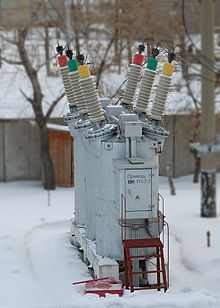

An electrical apparatus is an electrical device designed to control electrical and non-electrical devices, as well as to protect these devices from operating modes other than normal.
Content
- 1 Classification
- 1.1 Intended use
- 1.1.1 Switching
- 1.1.2 Protective
- 1.1.3 Limiting
- 1.1.4 Ballasts
- 1.1.5 Supervisory
- 1.1.6 Regulatory
- 1.2 Voltage
- 1.3 By type of current
- 1.4 According to other characteristics
- 1.1 Intended use
- 2 Requirements for electrical appliances
- 2.1 Thermal resistance
- 2.2 Electrodynamic resistance
- 2.3 Other requirements
- 3 Literature
- 4 References
Classification
Due to the wide variety of electrical devices and the possibility of one device performing several different functions, it is not possible to carry out a strict classification of them according to some criterion. Typically, electrical appliances are divided according to their primary function. Thus, we can distinguish groups:
By appointment
Switching
Switching devices are used for various kinds of switching (switching on, switching off). Switching devices include disconnectors, circuit breakers , switches , circuit breakers , etc.
Protective
Protective devices are designed to protect electrical circuits from abnormal operating modes, such as, for example, overload or short circuit , phase sequence disturbance, phase failure. Protective devices include various types of circuit breakers and fuses , as well as protective relays - for example, phase monitoring relays , differential relays , etc.
Restrictive
The main purpose of limiting electrical apparatus is to limit short circuit currents and overvoltages . These devices include reactors , surge arresters , surge arresters .
Start-up
The ballasts are designed to control various kinds of electric drives or to control industrial energy consumers. This group includes contactors , starters , rheostats , etc.
Supervisors
The task of the monitoring apparatus is to control the set parameters ( voltage , current , temperature , pressure , etc.). This group includes relays and sensors .
Regulatory
The devices of this group are used to regulate a given system parameter. These include, for example, stabilizers .
Voltage
- Low voltage devices (up to 1 kV )
- High-voltage apparatuses (1 kV and higher)
By current type
- Direct current
- Alternating current
Other Features
These signs include performance, speed, boundaries of protected or controlled sites, etc.
Electrical Requirements
Each electrical apparatus must satisfy a number of requirements. These requirements include:
Thermal Resistance
The device must withstand heating for a long time, due to the flow of electric current through it.
Electrodynamic resistance
The device must withstand short-term non-rated modes of the electrical network, such as a short circuit or overload.
Other requirements
These include a number of individual requirements relating to the specifics of the apparatus. In addition, the device should have the smallest possible dimensions, weight and cost, it should be easy to operate and be reliable.
Literature
- Rodshtein L. A. “Electrical apparatuses: A textbook for technical schools” - 3rd ed., L.: Energy Publishing House. Leningra. Department, 1981.
- Electric apparatus - article from the Great Soviet Encyclopedia .