Hudson black tyrant [1] ( lat. Knipolegus hudsoni ) - a species of birds from the tyrannous family. Named in honor of the British-Argentinean ornithologist William Henry Hudson (1841-1922).
| Hudson Black Tyrant | |||||||||||||||||||||||||||||||||||||||
| Scientific classification | |||||||||||||||||||||||||||||||||||||||
|---|---|---|---|---|---|---|---|---|---|---|---|---|---|---|---|---|---|---|---|---|---|---|---|---|---|---|---|---|---|---|---|---|---|---|---|---|---|---|---|
| |||||||||||||||||||||||||||||||||||||||
| International scientific name | |||||||||||||||||||||||||||||||||||||||
Knipolegus hudsoni Sclater , 1872 | |||||||||||||||||||||||||||||||||||||||
| Security status | |||||||||||||||||||||||||||||||||||||||
Description
Length 15.5 cm. The plumage of the male is black, but under the wing there is a white flap. In flight, it is noticeable, but when the bird sits in place, it is invisible.
Migratory birds. They nest in Argentina , and winter to the north, reaching Bolivia and Paraguay . They live in subtropical and tropical shrubs. They feed on insects.
In the mating season, males try to attract the attention of females, constantly jumping from branch to branch, as well as in voice.
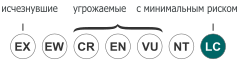
IUCN has assigned the LC protection status to the species [2] .
Notes
- ↑ Boehme R. L. , Flint V. E. The Bilingual Dictionary of Animal Names. Birds. Latin, Russian, English, German, French / Ed. ed. Acad. V. E. Sokolova . - M .: Rus. lang., "RUSSO", 1994. - S. 249. - 2030 copies. - ISBN 5-200-00643-0 .
- ↑ Knipolegus hudsoni (English) . The IUCN Red List of Threatened Species . Date of treatment November 26, 2013.