Rhodesian sugar honey plant [1] ( lat. Promerops gurneyi ) is a bird species of the Promeropidae family. A specific Latin name is given in honor of the English ornithologist John Gurney (1819-1890) [2] .
| Rhodesian sugar honey |
|
| Scientific classification |
|---|
| No rank : | Bilateral symmetrical |
| Family: | Sugar honey pumps ( Promeropidae Vigors , 1825 ) |
| View: | Rhodesian sugar honey |
|
| International scientific name |
|---|
Promerops gurneyi Verreaux , 1871 |
| Security status |
|---|
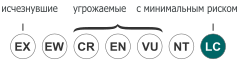
Least ConcernedIUCN 3.1 Least Concern : 22717443 |
|
Endemic to South Africa. Distributed in Zimbabwe , Mozambique , Lesotho , Esvatini and South Africa . Lives in finbosha among thickets of protea .
The male is 34–44 cm long, the female is 25–29 cm. Weight 25 g. The upper body is dark brown, the belly is white, the chest and the top of the head are red-brown. Yellow spine. The beak is long and slightly curved. The male has a tail up to 30 cm long, the female is much shorter - up to 10 cm.
Protein nectar is the basis of the diet. It also feeds on spiders, bugs and flying insects. When feeding pollinates flowers.
The mating season lasts from February to August. Clutch consists of 1-2 eggs. The incubation period lasts 17 days. Only female incubates. Both parents feed the chicks. There are 2 broods a year.