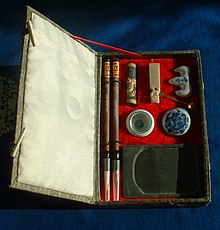
The four jewels of the study ( Chinese р 房四 房四,,, п , pinyin : wénfáng sìbǎo , pall : wenfang sibao ) is a figurative expression that is widespread in late Imperial China : four jewels mean brush , paper , ink and ink . These subjects were considered symbols of an enlightened person and were necessary to prepare for the imperial Keju exams , bringing wealth and public recognition. As status markers, they had not only practical, but also ritual significance.
The appearance of the term dates back to the era of the Northern and Southern Dynasties (420-589).
In the South Tang era , the most famous calligraphy accessories were mascara by craftsman Li Tinggui from Huizhou (徽州 李廷 珪 墨), brushes of the Zhuge clan (诸葛 笔), longewheels from Longwei (龙尾 砚), and Chenggingtang Hall paper (澄心 堂 纸)