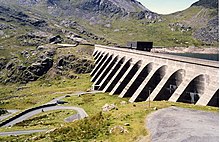
Energy storage - accumulation of energy for its further use. An energy storage device is commonly referred to as a battery or battery. A typical example of an energy storage device (energy storage device) is a storage battery that stores chemical energy that is easily converted into electricity for a mobile phone. A less obvious example is a hydroelectric power station: the water in the reservoir acts as a source of potential gravity energy. Fossil fuels, such as coal, oil and gas, are also storages of energy received at one time from sunlight by living organisms, which eventually turned into these fuels.
Content
- 1 History
- 1.1 Recent History
- 2 Methods
- 2.1 Scheme
- 2.1.1 Mechanical accumulation
- 2.1.2 Hydroelectricity
- 2.1.3 Pumped storage power plant
- 2.1.4 Technology for the storage of energy of compressed air
- 2.1.5 Flywheel energy storage technology
- 2.1.6 Accumulation of gravitational potential energy of solid masses
- 2.2 Thermal energy storage
- 2.2.1 Accumulated thermal energy
- 2.2.2 Hidden accumulation of thermal energy
- 2.3 Electrochemical
- 2.3.1 Battery
- 2.3.2 Flowing battery
- 2.3.3 Supercapacitor
- 2.4 Other chemicals
- 2.4.1 Power-to-Gas (P2G) Technology
- 2.4.2 Hydrogen
- 2.4.3 Methane
- 2.4.4 Biofuels
- 2.4.5 Aluminum
- 2.4.6 Boron, silicon and zinc
- 2.4.7 Other chemicals
- 2.5 Electrical methods
- 2.5.1 Capacitor
- 2.5.2 Superconducting inductive storage
- 2.1 Scheme
- 3 Application
- 3.1 Mills
- 3.2 Home energy storage
- 3.3 Electricity and power plants
- 3.3.1 Renewable energy storage
- 4 notes
History
Recent History
In the twentieth century, electricity was generated primarily by burning fossil fuels. Challenges in energy transportation, air pollution and global warming, with increased use of renewable energy sources such as solar and wind. Wind energy depends on climatic conditions and weather. Solar energy depends on geographical location, cloud cover. It is available only in the daytime, while demand often peaks after sunset. Interest in the accumulation of energy from these sources is growing, since it is they who have recently been generating an increasing part of world energy production.
The use of electricity outside of power networks in the 20th century was a niche market, but in the 21st century it expanded significantly. Portable devices are used all over the world. Solar panels are becoming more widespread in rural areas. Access to electricity is now a matter of economics, not location. However, in the energy supply of transport, fuel combustion still prevails.
Methods
Scheme
See also: Energy Storage Scheme
The following list includes types of energy storage:
- Fossil fuel storage
- Mechanical
- Compressed Air Energy Storage Technology (CAES) (Pneumatic Battery)
- Steam-free steam locomotive
- Super flywheel
- Potential Gravity Energy
- Accumulator
- Accumulating power station
- Electric, electromagnetic
- Capacitor
- Supercapacitor
- Superconducting electrical energy storage device
- (Superconducting magnets and superconducting coils (H01F6))
- Biological
- Glycogen
- Starch
- Electrochemical (Battery Energy Storage System, BESS)
- flow battery
- Accumulator battery
- UltraBattery
- Thermal
- Thermal battery
- Cryogenic Storage Systems, Liquid Air Energy Storage (LAES)
- Derman's cryogenic engine
- Eutectic system
- Ice storage conditioner
- Salt as an energy storage device
- Substance phase transition
- Seasonal storage of thermal energy]]
- Sunny pond
- Steam battery
- Thermal Energy Storage (General)
- Chemical
- Biofuel
- Hydrated salts
- Hydrogen storage
- Hydrogen peroxide
- Power-to-Gas Technology (P2G)
- Vanadium Oxide (V)
Mechanical accumulation
Energy can be stored in water that is pumped to a higher altitude by pumping or by moving solids to higher places (gravity batteries). Other mechanical methods involve the compression of air and flywheels, which convert electrical energy into kinetic energy, and returning it when the need for electricity reaches a peak.
Hydroelectricity
Main article: Hydroelectric Power Station
Hydroelectric power stations with reservoirs can be operated to provide electricity during periods of peak demand. Water is stored in the tank during periods of low demand and is released at high demand. The effect is similar to accumulation with pumping, but without associated losses. Although the hydroelectric power station does not directly accumulate energy from other sources, it behaves equivalently, reducing the generation during the period of excess electricity received from other sources. In this mode, dams are one of the most effective forms of energy storage, since only the timing of its generation changes. Hydroelectric turbines have a startup time of the order of several minutes [1] .
Accumulating Power Station
Main article: Accumulating Power Station
Globally, a pumped storage power plant (PSP) is the largest form of energy storage on a large scale. The energy efficiency of the PSPP varies, in practice, from 70% to 80% [2] [3] [4] [5] .
During periods of low electricity demand, excess generating capacity is used to pump water from a lower reservoir to a higher one. When demand grows, water flows back to the lower reservoir (or waterway / body of water) through a turbine that generates electricity. Reversible turbo-generating units act as a pump and a turbine (usually a Francis turbine ). Almost all such structures use a height difference between two water bodies. Pumping and storage units “in pure form” move water between tanks, while the “pumping” approach is a combination of pump storage facilities and conventional hydroelectric power plants using the natural flow of water.
Compressed Air Energy Storage Technology
The pneumatic accumulator uses excess energy to compress air for the subsequent production of electricity. Compressed air is stored in an underground tank [6] .
A pneumatic accumulator can bridge the gap between production volatility and load. A pneumatic battery meets the energy needs of consumers by efficiently providing affordable energy to meet demand. Renewable energy sources, such as wind and solar energy, have variable resources. As a result, the addition of other forms of energy is necessary to meet energy demand during periods of declining availability of renewable resources. Compressed air energy storage plants are capable of accumulating excess energy from renewable energy sources during energy overproduction. This stored energy can be used when the demand for electricity increases or the availability of energy resources decreases.
Compression of air creates heat: when compressed, the air warms. Expansion , for its part, requires thermal energy. If you do not add additional energy, the air after expansion will be much colder. If the heat generated during compression can be accumulated and used during expansion, the efficiency increases significantly [7] .
Flywheel Energy Storage Technology
see also: super flywheel , flywheel
The flywheel energy storage (FES) works by accelerating the rotor ( flywheel ) to a very high speed, accumulating rotational energy . When energy is extracted, the rotation speed of the flywheel decreases; adding energy accordingly leads to an increase in flywheel speed.
Most FES systems use electricity to accelerate and decelerate the flywheel, but devices that directly use mechanical energy are also considered [8] .
FES systems have rotors made of high-strength carbon-fiber composites suspended on magnetic bearings and rotating at speeds from 20,000 to more than 50,000 rpm in a vacuum housing. Such flywheels can reach maximum speed ("charge") in minutes. The flywheel system is connected to a combined electric motor / generator .
FES systems have a relatively long service life (lasting decades, practically requiring no maintenance [9] ; the full-cycle life indicated for flywheels varies from 10 5 to 10 7 cycles of use), high specific energy (100-130 Wh) / kg or 360-500 kJ / kg) and specific power [10] .
Accumulation of gravitational potential energy of solid masses
Changing the height of the solid masses can accumulate or release energy through a lifting system driven by an electric motor / generator.
Methods include the use of rails [11] [12] and cranes [13] to move concrete loads up and down, the use of high-altitude floating platforms with solar batteries, supporting winches for lifting and lowering solid masses.
Thermal energy storage
Thermal energy storage (TES) is the temporary storage or removal of heat.
Accumulated Thermal Energy
Heat storage takes advantage of heating the material to store energy.
The technologies of seasonal accumulation of thermal energy (SNTE) allow the use of heat or cold months after it has been obtained from natural sources or waste. Accumulation can occur in aquifers, well clusters in geological substrates such as sand or crystalline rocks, in lined pits filled with gravel and water, or in mines filled with water. SNTE technologies often have a payback period in the range of four to six years. An example is the Drake Landing solar panel community in Canada, for which 97% of the year-round heat is provided by solar-thermal collectors on the roofs of garages, and the downhole heat energy storage device (SNTE) is a supporting technology [14] . In Brastrup, Denmark, a community solar heating system also uses CHPP at a storage temperature of 65 ° C (149 ° F). A heat pump that only works when there is excess wind energy in a single grid is used to raise the temperature to 80 ° C (176 ° F) for distribution. When there is no excess electricity generated by the wind, a gas boiler is used. 20% of the Brastrup heat is solar in origin. [fifteen]
Concealed heat storage
Hidden thermal energy storage systems operate with materials with high latent heat capacity , known as phase transition materials (PCM). The main advantage of these materials is that their latent heat capacity is much greater than the tangible heat. In a certain temperature range, the phase transition from solid to liquid absorbs a large amount of thermal energy for subsequent use.
The latent accumulation of thermal energy is a process by which energy in the form of heat is either absorbed or released during a material phase transition (PCM). Phase change is the melting or solidification of a material. During phase changes, PCM has the ability to absorb a large amount of energy due to its high melting point.
Electrochemical
Battery
A battery contains one or more electrochemical cells. Batteries come in many shapes and sizes, from buttons to megawatt power systems.
Rechargeable batteries have a lower total cost of use and environmental impact than non-rechargeable (disposable) batteries. Some types of batteries are available in the same formats as disposable batteries. Rechargeable batteries have a higher initial cost, but they can be recharged very cheaply and used many times.
General chemical compositions of the battery:
- Lead-acid batteries : Lead-acid batteries occupy the largest market share in batteries. In a charged state, a negative electrode of metallic lead and a positive electrode of lead sulfate are immersed in an electrolyte with dilute sulfuric acid (H 2 SO 4 ). During the discharge, electrons are pushed out of the cell, since lead sulfate is formed on the negative electrode , and the electrolyte is reduced to water.
- The technology of lead-acid batteries has been widely developed. Operation requires minimal labor, its cost is low. The available energy capacity of the battery is subject to rapid discharge, which leads to a short service life and low energy density [16] .
- Nickel-cadmium battery (NiCd): Nickel oxide hydroxide and cadmium metal are used as electrodes. Cadmium is a toxic element and was banned by the European Union in 2004 for most uses. Nickel-cadmium batteries have been almost completely replaced by nickel metal hydride (NiMH) batteries.
- Nickel-Metal Hydride Battery (NiMH): The first commercial designs appeared in 1989 . Now it is a common consumer and industrial product. The battery has a hydrogen-absorbing alloy for the negative electrode instead of cadmium.
- Rechargeable Li-ion Battery : The choice of many consumers in the field of electronic devices. It has one of the best energy to mass ratios and a very slow self-discharge when not in use.
- Lithium-ion polymer battery : These batteries are lightweight and can be made in any shape.
Flow Battery
The flowing battery works by passing the solution through the membrane, where the ion exchange takes place to charge / discharge the cell. The voltage is chemically determined by the Nernst equation , and in practice ranges from 1.0 to 2.2 V. The storage capacity depends on the volume of the containers in which the solution is located.
The flow battery is technically close to both the fuel cell and the electrochemical battery cell . Commercial applications are designed for long-term storage periods, for example, for backup power supply.
Super Capacitor
Main article: Supercapacitor
Supercapacitors, also called electric double layer capacitors (EDLCs) or ultracapacitors, are common terms for a family of electrochemical capacitors that do not have conventional solid dielectrics . Capacity is determined by two parameters of accumulation: two-layer capacity and pseudo -capacity [17] [18] .
Supercapacitors bridge the gap between conventional capacitors and batteries. They store the largest amount of energy per unit volume or mass ( energy density ) among capacitors. They support up to 10,000 farads / 1.2 V [19] , up to 10,000 times more than electrolytic capacitors , but give out or receive less than half the power per unit time ( power density ) [20] .
В то время, как суперконденсаторы имеют удельную энергию и удельные плотности энергии примерно 10 % в сравнении с батареями, их плотность мощности обычно в 10-100 раз больше. Это приводит к гораздо более коротким циклам зарядки / разрядки. Кроме того, они будут выдерживать гораздо больше циклов зарядки и разрядки, чем батареи.
Суперконденсаторы поддерживают широкий спектр применений, включая:
- Низкий ток питания для резервного копирования памяти в статической оперативной памяти (SRAM)
- Питание для автомобилей, автобусов, поездов, кранов и лифтов, в том числе рекуперация энергии при торможении, кратковременное накопление энергии и подача питания в импульсном режиме
Другие химические вещества
Технология Power-to-Gas (P2G)
Технология Power-to-Gas — это технология, которая преобразует электричество в газообразное топливо, к примеру, водород или метан . Известны три метода использования электричества для превращения воды в водород и кислород посредством электролиза .
При первом методе водород впрыскивается в сеть природного газа. Второй метод заключается в реакции водорода с диоксидом углерода для получения метана, с использованием реакции метанирования (такой, как реакция Сабатье ) или биологического метанирования, что приводит к дополнительной потере преобразования энергии на 8 %. Затем метан можно подавать в природную газовую сеть. Третий метод использует выходной газ из генератора древесного газа или биогазовой установки после того, как модификатор биогаза смешан с водородом из электролизера, чтобы улучшить качество биогаза.
Водород
Основная статья: Хранение водорода
Водород тоже можно рассматривать как накопитель энергии: электричество в этом случае производится посредством водородного топливного элемента.
Для синтеза килограмма водорода требуется около 50 кВт⋅ч (180 МДж) солнечной энергии, поэтому стоимость электроэнергии является критически важной.
Подземное хранение водорода производится в подземных пещерах, соляных куполах и истощенных нефтяных и газовых месторождениях. [21] Imperial Chemical Industries в течение многих лет хранит в подземных пещерах большие количества газообразного водорода без каких-либо проблем. Европейский проект Hyunder указал в 2013 году , что для аккумуляции энергии ветра и солнца с использованием подземного водорода потребует 85 пещер.
Метан
Основная статья: Синтетический природный газ
Метан — простейший углеводород с молекулярной формулой СН 4 . Метан легче хранить и транспортировать, чем водород. Имеется полноценная инфраструктура его хранения и сжигания (трубопроводы, газометры, электростанции).
Синтетический природный газ ( синтез-газ или SNG) может быть создан в многоступенчатом процессе, начиная с водорода и кислорода . Водород реагирует с диоксидом углерода в реакции Сабатье , производя метан и воду. Метан может храниться, а затем использоваться для производства электроэнергии. Полученная вода рециркулируется, уменьшая потребность во внешних её источниках. На стадии электролиза, кислород сохраняется для сжигания метана в чистой кислородной среде на соседней электростанции.
При сгорании метана образуются углекислый газ (CO 2 ) и вода. Диоксид углерода может быть переработан для ускорения процесса Сабатье, а вода может быть переработана для дальнейшего электролиза. Производство метана, хранение и сгорание перерабатывают продукты реакции.
Биотопливо
Основная статья: Биотопливо
Ископаемое топливо могут заменять различные виды биотоплива, такие как биодизельное топливо , растительное масло , спиртовое топливо или биомасса . Химические процессы могут превращать углерод и водород (в составе угля, природного газа, растительной и животной биомассы и органических отходов), в простые углеводороды, подходящие в качестве замены для традиционных углеводородных видов топлива. Примерами являются дизельное топливо Фишера-Тропша , метанол, диметиловый эфир и синтез-газ . Этот источник дизельного топлива широко использовался во время Второй мировой войны в Германии, которая столкнулась с ограниченным доступом к поставкам сырой нефти. По тем же причинам Южная Африка производит большую часть дизельного топлива из угля.
Алюминий
Рядом исследователей в качестве энергонакопителя был предложен алюминий . Электрохимический эквивалент алюминия почти в четыре раза больше, чем у лития. Энергия может извлекаться из алюминия путем его взаимодействия с водой с образованием водорода. Однако для реакции с водой алюминий должен быть отделен от его естественного оксидного слоя. Это процесс, который требует измельчения, а также химических реакций с едкими веществами или сплавами. Побочным продуктом реакции с образованием водорода является оксид алюминия , который может быть переработан обратно в алюминий в рамках процесса Холла-Херулта , делая реакцию теоретически возобновляемой. Если процесс Холла-Херулта запускается с использованием солнечной или ветровой энергии, алюминий может использоваться для хранения энергии, причем у такого процесса эффективность более высока, чем при прямом солнечном электролизе [22] .
Бор, кремний и цинк
В качестве альтернативных накопителей энергии рассматриваются также бор [23] , кремний и цинк [24] .
Другие химические вещества
Органическое соединение норборнадиен , в реакции превращения в квадрицикл, при воздействии света, сохраняет солнечную энергию, в форме энергии химических связей. Функционирующий образец был разработана в Швеции и позиционируется как молекулярная солнечная тепловая система [25] .
Электрические методы
Конденсатор
Основная статья: Электрический конденсатор
Конденсатор — это пассивный двухполюсный электрический компонент , используемый для электростатического накопления энергии. На практике конденсаторы сильно различаются, но все они содержат, по меньшей мере, два электрических проводника (пластины), разделенных диэлектриком (изолятором). Конденсатор может накапливать электрическую энергию, когда он отключен от своей зарядной цепи, поэтому его можно использовать как временную батарею или как другие виды перезаряжаемой системы накопления энергии . Конденсаторы обычно используются в электронных устройствах для поддержания питания при замене батарей (это предотвращает потерю информации в энергозависимой памяти). В среднем конденсаторы имеют плотность менее 360 джоулей на килограмм, в то время как у обычной щелочной батареи этот параметр составляет порядка 590 кДж / кг.
Конденсаторы накапливают энергию в электростатическом поле между пластинами. Благодаря разности потенциалов на проводниках (например, когда конденсатор присоединен к батарее), электрическое поле проходит через диэлектрик, заставляя положительный заряд (+Q) собираться на одной пластине и отрицательном заряде (-Q) на другой пластине. Если аккумулятор подключен к конденсатору в течение достаточного времени, через конденсатор не может протекать ток. Однако если через выводы конденсатора подается напряжение, может возникать ток смещения .
На практике диэлектрик между пластинами пропускает небольшое количество тока в виде утечки и имеет предел напряженности электрического поля, известный как напряжение пробоя. Однако эффект восстановления диэлектрика после пробоя высокого напряжения может привести к созданию нового поколения самовосстанавливающихся конденсаторов [26] [27] .
Сверхпроводящие индуктивные накопители
Система хранения сверхпроводящей магнитной энергии — сверхпроводящий индуктивный накопитель (СПИН) хранит энергию в магнитном поле , создаваемом потоком постоянного тока в сверхпроводящей катушке , которая была охлаждена до температуры ниже её сверхпроводящей критической температуры . Типичная система СПИН включает в себя сверхпроводящую катушку, систему кондиционирования и холодильник. Как только сверхпроводящая катушка заряжена, ток не распадается, и магнитная энергия может храниться бесконечно долго.
Накопленная энергия может быть передана в сеть путем разрядки катушки. Соответствующий инвертор / выпрямитель обеспечивает примерно 2-3 % потерь энергии в каждом направлении. СПИН теряет наименьшее количество электроэнергии в процессе накопления энергии, по сравнению с другими методами хранения энергии.
Из-за энергетических требований охлаждения и стоимости сверхпроводящего провода, СПИН используется для кратковременного хранения, например, для улучшения качества электроэнергии Эта система хранения применяется так же в балансировке сетки.
Application
Мельницы
Классическим применением накопления энергии до промышленной революции было управление водными путями для приведения в действие водяных мельниц для обработки зерна или приводной техники. Сложные системы водохранилищ и плотин были построены, чтобы хранить и выпускать воду (и потенциальную энергию , которую она содержит), когда требуется.
Домашнее накопление энергии
Ожидается, что накопление энергии в домашних условиях станет все более распространенным явлением, учитывая растущую важность распределенного производства возобновляемых источников энергии (особенно фотоэлектрических) и значительную долю потребления энергии в жилых зданиях [28] . Чтобы повысить самообеспеченность (самостоятельность) на 40 % в доме, оборудованном фотоэлектрическими приборами, необходимо накопление энергии [28] . некоторые производители производят аккумуляторные батареи для хранения энергии, как правило, для удержания избыточной энергии солнечной/ветровой генерации. Сегодня для хранения энергии в домашних условиях литий-ионные аккумуляторы предпочтительнее свинцово-кислотных, учитывая их аналогичную стоимость, но гораздо более высокую производительность [29] .
Tesla Motors выпускает две модели Tesla Powerwall . Одна из них представляет собой версию на 10 кВт⋅ч в неделю, а другая — версию на 7 кВт⋅ч для применения с ежедневным циклом [30] . В 2016 году ограниченная версия, Telsa Powerpack 2, стоила 398 долларов США / кВт⋅ч для хранения электроэнергии, стоимостью 12,5 цента / кВт⋅ч (средняя цена на энергосистему США), что положительно сказывалось на рентабельности инвестиций, если цены на электроэнергию не превышали 30 центов / кВт⋅ч [31] .
Компания Enphase Energy анонсировала интегрированную систему, которая позволяет домашним пользователям хранить, контролировать и управлять электроэнергией. Система сохраняет 1,2 кВт⋅ч энергии и 275 Вт / 500 Вт выходной мощности [32] .
Аккумуляция энергии ветра или солнца с использованием накопителя тепловой энергии, хотя и менее гибкое, значительно дешевле, чем батареи. Простой 52-галлонный электрический водонагреватель может хранить примерно 12 кВт⋅ч энергии для добавления горячей воды или отопления помещения [33] .
Электросеть и электростанции
Накопление возобновляемой энергии
Самый большой запас возобновляемой энергии предоставляется сейчас и гидроэлектростанциями. Большое водохранилище около гидроэлектростанции может хранить достаточно воды, чтобы усреднить годовой сток реки между сухим и влажным сезонами. Хотя гидроэлектростанция не накапливает напрямую энергию от прерывистых источников, она уравновешивает энергосистему, удерживая воду, когда энергия генерируется солнечным или ветровым излучением.
Важнейшее направление накопления энергии — гидроаккумулирующие электростанции. Такие регионы, как Норвегия , Уэльс , Япония и США эксплуатируют географические особенности, используя электрические насосы для заполнения резервуаров. При надобности вода проходит через генераторы и преобразует гравитационный потенциал падающей воды в электричество [34] .
Среди виды энергонакопителей, используемых при производстве электроэнергии, следует отметить гидроэлектростанции с насосным накопителем, аккумуляторные батареи, тепловые энергонакопители (включая расплавленные соли), которые могут эффективно хранить и высвобождать очень большое количество тепловой энергии [35] , и хранилища энергии сжатого воздуха, маховики, криогенные системы и сверхпроводящие магнитные катушки.
Избыточная мощность также может быть преобразована в метан ( реакция Сабатье ) с запасом в сети природного газа [36] [37] .
В 2011 году Администрация энергетики Бонневилля ( северо-запад США ) разработала экспериментальную программу по поглощению избыточного ветра и гидроэнергии, генерируемых ночью или во время штормовых периодов, сопровождаемых сильными ветрами. При наличии центрального управления бытовые приборы поглощают избыточную энергию, нагревая керамический кирпич в специальных обогревателях до сотен градусов и повышая температуру в резервуарах с подогревом горячей воды. После зарядки приборы обеспечивают отопление дома и подачу горячей воды по мере надобности. Экспериментальная система была создана с учётом последствий сильного шторма 2010 года , который довел ситуация до перепроизводства возобновляемой энергии а такой степени, что все обычные источники энергии были закрыты, или в случае АЭС — редуцированы до минимально возможного рабочего уровня, оставляя большую область почти полностью на возобновляемых источниках энергии.
Ещё один продвинутый метод, который использовался в бывшем проекте Solar Two в Соединенных Штатах и Solar Tres Power Tower в Испании , использует расплавленную соль для хранения тепловой энергии, получаемой от солнца, а затем преобразует её и отправляет в виде электрической энергии. Система перекачивает расплавленную соль через башню или другие специальные трубопроводы, которые нагреваются солнцем. Изолированные резервуары хранят раствор. Электричество производится путем превращения воды в пар, который подается в турбины.
Notes
- ↑ Robert A. Huggins. Energy Storage . — Springer Science & Business Media, 2010-09-01. - 424 p. — ISBN 9781441910233 .
- ↑ Packing some power // The Economist. — 2012-03-03. — ISSN 0013-0613 .
- ↑ Packing some power // The Economist. — 2012-03-03. — ISSN 0013-0613 .
- ↑ Wayback Machine . web.archive.org (1 августа 2014). Date of treatment March 16, 2019.
- ↑ Wayback Machine . web.archive.org (5 сентября 2012). Date of treatment March 16, 2019.
- ↑ Wald, Matthew L. . Pushed Along by Wind, Power Storage Grows (англ.) , The New York Times (27 июля 2010). Date of treatment March 16, 2019.
- ↑ Gies, Erica . A Storage Solution Is in the Air (англ.) , The New York Times (1 октября 2012). Date of treatment March 16, 2019.
- ↑ Wayback Machine . web.archive.org (16 мая 2011). Date of treatment March 16, 2019.
- ↑ Flywheels: Spinning into Control (англ.) . sciencewriter.org (22 August 2010). Date of treatment March 16, 2019.
- ↑ Next-gen Of Flywheel Energy Storage | Product Design and Development . web.archive.org (10 июля 2010). Date of treatment March 16, 2019.
- ↑ Nathanael Massey,ClimateWire. Energy Storage Hits the Rails Out West (англ.) . Scientific American. Date of treatment March 16, 2019.
- ↑ Energy-Storing Train Gets Nevada Approval (англ.) . Fortune. Date of treatment March 16, 2019.
- ↑ Akshat Rathi, Akshat Rathi. Stacking concrete blocks is a surprisingly efficient way to store energy (англ.) . Quartz. Date of treatment March 16, 2019.
- ↑ Wayback Machine . web.archive.org (4 марта 2016). Date of treatment March 16, 2019.
- ↑ Braedstrup Solar Park in Denmark is now a reality! . web.archive.org (26 января 2013). Date of treatment March 16, 2019.
- ↑ Liangzhong YAO, Bo YANG, Hongfen CUI, Jun ZHUANG, Jilei YE. Challenges and progresses of energy storage technology and its application in power systems (англ.) // Journal of Modern Power Systems and Clean Energy. — 2016-10-01. - Vol. 4 , iss. 4 . — P. 519–528 . — ISSN 2196-5420 . — DOI : 10.1007/s40565-016-0248-x .
- ↑ ScienceDirect . www.sciencedirect.com. Date of treatment March 16, 2019.
- ↑ Сосенкин В.е, Михалин А.а, Вольфкович Ю.м, Бограчев Д.а. УГЛЕРОДНЫЕ ЭЛЕКТРОДЫ С БОЛЬШОЙ ПСЕВДОЕМКОСТЬЮ ДЛЯ СУПЕРКОНДЕНСАТОРОВ // Электрохимия. — 2012. — Т. 48 , вып. 4 . — ISSN 0424-8570 .
- ↑ Capacitor cells - ELTON . web.archive.org (23 июня 2013). Date of treatment March 16, 2019.
- ↑ BE Conway. Electrochemical Supercapacitors: Scientific Fundamentals and Technological Applications . — Springer US, 1999-04-30. — 734 с. — ISBN 9780306457364 .
- ↑ (PDF) Sustainable transportation based on electric vehicle concepts: A brief overview (англ.) . ResearchGate. Date of treatment March 16, 2019.
- ↑ Current Efficiency, Specific Energy Consumption, Net Carbon Consumption - The Aluminum Smelting Process . www.aluminum-production.com. Date of treatment March 16, 2019.
- ↑ Boron: A Better Energy Carrier than Hydrogen? (28 February 2009) . www.eagle.ca. Date of treatment March 16, 2019.
- ↑ The Ergosphere: Zinc: Miracle metal? . Date of treatment March 16, 2019.
- ↑ Liquid storage of solar energy: More effective than ever before (англ.) . ScienceDaily. Date of treatment March 16, 2019.
- ↑ A. Belkin, A. Bezryadin, L. Hendren, A. Hubler. Recovery of Alumina Nanocapacitors after High Voltage Breakdown // Scientific Reports. — 04 20, 2017. — Т. 7 , вып. 1 . — С. 932 . — ISSN 2045-2322 . — DOI : 10.1038/s41598-017-01007-9 .
- ↑ Y. Chen, H. Li, F. Lin, F. Lv, M. Zhang. Study on Self-Healing and Lifetime Characteristics of Metallized-Film Capacitor Under High Electric Field // IEEE Transactions on Plasma Science. — 2012-8. — Т. 40 , вып. 8 . — С. 2014–2019 . — ISSN 0093-3813 . — DOI : 10.1109/TPS.2012.2200699 .
- ↑ 1 2 Lead–acid batteries coupled with photovoltaics for increased electricity self-sufficiency in households . www.sciencedirect.com. Date of treatment March 16, 2019.
- ↑ Photovoltaic self-sufficiency of Belgian households using lithium-ion batteries, and its impact on the grid . www.sciencedirect.com. Date of treatment March 16, 2019.
- ↑ Matthew DeBord. Elon Musk's big announcement: It's called 'Tesla Energy' . Business Insider. Date of treatment March 16, 2019.
- ↑ Fred Lambert. Tesla slashes price of the Powerpack system by another 10% with new generation (англ.) (неопр.) ? . Electrek (14 ноября 2016). Date of treatment March 16, 2019.
- ↑ Enphase plug-and-play solar energy storage system to begin pilot program (англ.) . newatlas.com. Date of treatment March 16, 2019.
- ↑ Your Water Heater Can Become A High-Power Home Battery (англ.) . Popular Science. Date of treatment March 16, 2019.
- ↑ Wald, Matthew L. . Pushed Along by Wind, Power Storage Grows (англ.) , The New York Times (27 июля 2010). Date of treatment March 16, 2019.
- ↑ Wald, Matthew L. . Ice or Molten Salt, Not Batteries, to Store Energy (англ.) , The New York Times (21 апреля 2014). Date of treatment March 16, 2019.
- ↑ Jürgen Schmid. Renewable Energies and Energy Efficiency: Bioenergy and renewable power methane in integrated 100% renewable energy system (thesis) // Universität Kassel / Kassel University Press.
- ↑ Scénario négaWatt 2011-2050 (фр.) . Association négaWatt. Date of treatment March 16, 2019.