Sahara ( Arabic. الصحراء الكبرى , Es Sahra-l-Kubra ; FR. Sahara ) - the largest hot desert and the second, after the Antarctic , desert on Earth by area. Located in the north of the African continent . It is stretched for about 4800 km from west to east and from 800 to 1200 km from north to south; has an area of about 8.6 million km² (about 30% of the area of Africa , slightly larger than the area of Brazil ) [1] . From the west, the Sahara is washed by the Atlantic Ocean , from the north it is bounded by the Atlas Mountains and the Mediterranean Sea , and from the east by the Red Sea . The southern border of the desert is defined by a zone of sedentary ancient sand dunes at 16 ° C. sh., south of which the Sahel is located - a transitional region to the Sudan savannah [2] .
| Sahara | |
|---|---|
| Arab. الصحراء الكبرى | |
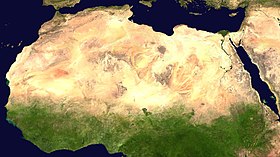 Satellite Image of the Sahara from NASA World Wind | |
| Specifications | |
| Length | 800-1200 km |
| Width | 4800 km |
| Square | 8,600,000 km² |
| Location | |
| Country |
|


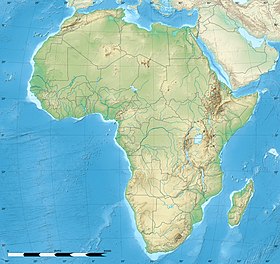


Sahara partially captures the territory of more than ten states - Algeria , Egypt , Libya , Mauritania , Mali , Morocco , Niger , Sudan , Tunisia and Chad , as well as the disputed territory of Western Sahara . Vast expanses of the Sahara are not populated, a settled way of life is limited to areas of oases , valleys of the Nile and Niger rivers .
Sugar cannot be categorized within a single desert type, although the sandy-rocky type is predominant. In the desert, there are many regions: Tenere , Greater East Erg , Greater West Erg , Tanesruft , El Hamra , Igidi , Erg Shesh , Arabian , Algerian , Libyan , Nubian deserts , Talak desert.
Sahara is constantly increasing - every year the desert expands to the south by 6-10 km [3] .
Content
Title
The name "Sahara" is mentioned from the 1st century BC. e. [4] Comes from the word arab. صَحراء (ṣaḥrāʾ), which means “desert”, and its plural ṣaḥārā, according to other sources, from ancient Arabic sugar is “red-brown” [4] .
The names of some areas of the Sahara, such as Tanesruft (south-west of Algeria) or Tener (center of Niger), are often of Berber origin [2] .
Geographical characteristics
Area
Different sources define the borders of the Sahara in different ways, which is why estimates of its area fluctuate. Isogytes of 100 and 200 mm, aridity indices , the fruiting border of date palms and the growth of esparto grass in the north, as well as other botanical characters in the south are used. In some sources, the eastern border of the Sahara is drawn along the Nile Valley (the Arabian and Nubian deserts are not included). TSB provides a range of 6 to 8 million km² [5] . According to the Encyclopedia Britannica Sahara covers an area of about 8.6 million km², which is about 30% of Africa [2] . WWF gives the figure of 9.1 million km², describing the area of the "Great Sahara" [6] .
Geology and Minerals
Sugar is located on the Sahara plate - the northwestern part of the ancient African platform . Along the central part of the plate, the Central Sahara zone of uplifts stretches from west to east, where the Precambrian crystalline basement extends to the surface: the Regibat massif in the west is separated by the Tanesruft trough from the Akhaggar plateau, consisting of alternating horsts and grabens . Further to the east massifs of Tibesti , El-Uvaynat , El-Eglab , as well as the western protrusion of the Nubian-Arabian shield ( Etbay Range) [7] .
To the north and south of the uplift zone are the North-Sahara and South-Sahara lowering zones - platform troughs filled with Phanerozoic sedimentary rocks . Up to the middle of the Cretaceous , a continental stratum accumulated in these zones, which was later (at the end of the Cretaceous - the beginning of the Paleogene ) blocked by marine sediments (moreover, marine sediments in the southern part of the lowering zone are less powerful). From the Oligocene era, the sea receded, and the ancient massifs (especially Ahaggar and Tibesti) experienced a strong uplift. In the South-Sahara lowering zone, there are also flat Taodenni syneclise , Gao graben, Mali-Niger synclise and Chad syneclise. [7]
Due to the stability of the platform, the formations of the Paleozoic era remained horizontal and changed little. In most areas of the Sahara, these formations were covered by Mesozoic sediments, which are associated with many important aquifers . In the northern part of the desert, these formations are also associated with elongated hollows and basins: from the oases of western Egypt to the Chots of Algeria. The platform deflection in the southern part of the desert created large basins occupied by Cenozoic lakes (for example, the mega-lake Chad and the group of Uniang lakes). [2]
In the Sahara there are rich deposits of oil and gas ( Sahara oil and gas basin , including the Hassi-Mesaud deposit ), iron ( Ijil ) and copper ( Akzhuzht ) ores. Deposits of gold , tungsten , uranium and rare metals are associated with the Precambrian basement [4] [5] .
Relief
The Sahara landscape is very diverse. Most of its territory (up to 70% [4] ) is occupied by flat clay serials , pebble regions and rocky plateaus (hamada) with a height below 500 m, falling to 200 m in coastal areas. The mountain ledges are highest in Central Sahara - the Tibesti highlands (the highest peak in the Sahara - the volcano Emi-Kushi , 3415 m) and Akhaggar (Mount Tahat , 3003 m). These areas bear traces of active volcanism of the Neogene and Anthropogenic times and are divided by deep valleys (width up to 30 km, length up to 400 km) with dry channels of ancient rivers. Around the uplands stretch kuest ridges up to 1000 m high and stepped plateaus Adrar-Iforas (up to 728 m), Air (up to 1900 m), Ennedi (up to 1310 m), Tademait and others. [5] A notable feature of the lowland areas is a desert tan - a ferromanganese black film covering rocks. The Sahara plateaus are mainly composed of weathered rocks, such as the Algerian plateau Tademait . [2] [5]
In addition to the plains, plateaus and mountains in the Sahara, there are numerous shallow salt- free drainage basins (Sebhi, Shotts and Daii) and large depressions in which oases are found. The lowest locations are Cattara (−133 m, the lowest point in the Sahara), El Fayyum , Melgir (−26 m) and Bodele . [2]
Confined to depressions and large wadi , sand deserts ( ergs ) and dunes occupy about 25% of the desert surface [2] or about 2.2 million km² [5] . The largest accumulations of sand are Igidi , Erg-Shesh , Greater Western Erg , Greater East Erg , Erg-Shebby and others. The ridges are mostly fastened by weak xerophytic vegetation, round, star-shaped, transverse dunes and crescent dunes are also found; the pyramidal dunes reach a height of 150 m, ridges up to 200-300 m high are found. In the south of the northern and northeastern parts ( Aubari , Idehan-Marzuk , Tener , Libyan desert ) there are moving sands. In some places, the phenomenon of singing sands is observed [2] [5] .
| . | Tadrart-Akakus Mountains , Libya | Gelta in the Ennedy area, Chad |
Water resources
Several rivers, originating beyond the borders of the Sahara, replenish the surface and underground waters of the desert. The Nile is the only river with a constant transitive watercourse [5] . Its main tributaries - the Blue and White Nile - merge in the southeast of the Sahara, and along the eastern edge of the desert, the river carries its waters to the Mediterranean Sea . A large Nasser reservoir was created on the Nile in 1964-1968, which formed Lake Toshka during the spill, the area of which the Egyptian government plans to turn into an oasis . In southern Sahara, several rivers flow into Lake Chad , from where a significant amount of water continues to flow to the northeast and replenishes local aquifers. The Niger River flows along the southwestern outskirts of the Sahara, at the inner delta of which there are lakes Fagibin , Garu , Niangai , etc. [2]
Streams and wadi (dry streams filled with water after heavy rains) flowing from the Anti-Atlas , Atlas , Ores Mountains and other coastal highlands of Libya , Tunisia , Algeria and Morocco bring water to the northern regions of the desert. The largest of these rivers are Draa , Saura , Ziz . Many smaller wadis flow into the scots, such as the Jedi in Melgir .
A vast ancient river network diverges from Ahaggar, Tassilin-Ager and Tibesti inside the Sahara — Wadi Igargar , Tafasaset , Tamanrasset and others. Some of these wadi formed in the distant past when the climate of the region was more humid, others are the result of water flows from sudden manifestations of the elements, such as the 1922 flood that destroyed the Algerian city of Tamanrasset . The sand dunes of the Sahara store significant reserves of rainwater, which seeps and leaves springs on the desert slopes. Rains also fill the gelts , some of which do not dry out ( Arsha , Zemmur , etc.) On the outskirts of the Sahara, as well as in the central mountain ranges, relic lakes have been preserved, partially boggy and often heavily mineralized, for example, Lake Joa from the group of Uniang lakes [2] [ 5] .
Under the sands of the Sahara are large basins of groundwater , including artesian . These basins are mainly confined to continental Lower Cretaceous sandstones and provide oases for water. Due to the large volume of underground runoff, the northern part of the Sahara is rich in groundwater; in the southern part of the water are less abundant, and aquifers lie deeper. Groundwater is also used for irrigation (see Libyan project Great Man-Made River ) [5] .
| Ziz River flowing into the Sahara desert from the High Atlas Mountains | Oasis, Aghaggar Highlands | Camels at the water source in the Arsha Gelta , Chad |
Soil
The soils of most of the Sahara are characteristic of tropical deserts and semi-deserts (gravel, pebble, sand). They have a low content of organic substances , soil layers are poorly selected. Nitrogen-fixing bacteria are present in some areas, but soils are mostly biologically inactive. Soils along the edges of the desert contain higher concentrations of organic matter; in depressions, soils are often saline . The presence of unbound carbonate indicates a low degree of leaching .
Mostly in the northwestern part of the desert, dense calc-gypsum layers ( crusts ) with a thickness of several cm to 1-2 m are widespread, which are associated with calcareous bedrock. The distribution of finely dispersed, including diatomic components is limited by drainless depressions and depressions.
As a result of neglect of the vegetation and plowing of light sandy soils, moving sands attack oases. In 1974, the “green wall” project was launched in Algeria, during which obstacle lines of eucalyptus trees and other trees were planted for 1,500 km [2] [5] .
Climate
From a climatic point of view, the Sahara turned into a desert about 5 million years ago, at the beginning of the Pliocene , after which climate humidity experienced short- and medium-term fluctuations; in particular, during the Neolithic subpluvial, the Sahara was the last savannah . The modern arid climate lasts about 10 thousand years [5] . Apparently, the anthropogenic factor contributed by increasing the reflectivity of the surface and reducing the total evaporation . Obviously, grazing cattle for 7 thousand years in the desert and its borders has fixed these conditions, and the climate of the Sahara over the past 2 thousand years has not changed much. A significant deviation of conditions from normal was observed from the 16th to the 17th century, when the so-called Small Ice Age lasted in Europe. At this time, precipitation along the tropical border, in the desert itself and, possibly, in its northern regions, increased significantly. In the XIX century, climatic conditions returned to those that are similar to the current ones [2] .
The climate of most of the Sahara is strongly influenced by the northeast trade wind throughout the year. Relative humidity is 30–50%, a huge moisture deficit and high evaporation (potential evaporation of 2500–6000 mm) are typical for the entire desert, with the exception of narrow coastal stripes [5] . Two main climatic regimes are distinguished: dry subtropical in the north and dry tropical in the south. The northern regions are characterized by unusually large annual and diurnal temperature fluctuations with cool and even cold winters and hot summers. Rainfall has two annual maximums. In the southern regions, summers are hot and winters are mild and dry. After the hot and dry season, it rains summer. The cooler climate of the narrow coastal strip in the west is explained by the influence of the cold Canary Current [2] .
| Satellite image of Erg Issauan, Algeria. Salt between the dunes (blue and white areas) - from the evaporated rainwater. | Rishat - a geological formation in western Sahara | Sand blown from the Sahara towards the Canary Islands |
Northern part
The dry subtropical climate of northern Sahara is determined by stable high-pressure cells located above the North Tropic . The annual average temperature difference is approximately 20 ° C. Winters are relatively cold in the north and cool in the central regions. The average monthly winter temperature in the northern part of the desert is +13 ° C [2] , the average monthly air temperature in July reaches +37.2 ° C ( Adrar ), and average daily temperatures can reach +40 ° C and more. Daily temperature fluctuations are significant in winter and summer. In winter nights, the soil freezes, and nighttime temperatures up to −18 ° C are recorded in the central mountain ranges. The summer is hot, the maximum recorded temperature is +57.8 ° C ( Al-Aziziya , Libya); the surface of the earth can warm up to + 70 ... + 80 ° C [5] .
The amount of precipitation varies greatly, the average annual value is 76 mm. Mostly rains are observed from December to March, and from May to June there is little rainfall. The second maximum occurs in August and is accompanied by thunderstorms , which cause severe short-term floods [2] . Inland areas may not receive precipitation for several years in a row; on the northern plateaus ( Akhaggar and Tibesti ) snow falls almost every year for a short time. In most of the desert, abundant dew in the morning is characteristic, which contributes to the formation of surface dusty crusts [5] .
Dry subtropics are also characterized by hot southerly winds that carry dust out of the interior, causing multi-day dust storms (wind speed sometimes reaches more than 50 m / s [5] ). As a rule, they are observed in the spring, but are possible at other times of the year. In Egypt, these winds are known as “ hamsin ” and “ samum, ” in Libya as “ died, ” in Tunisia as “chili.” Суданский ветер хабуб имеет меньшую длительность, наблюдается летом и, как правило, сопровождает сильные дожди [2] .
Южная часть
На сухой тропический климат юга пустыни, кроме тех же ячеек высокого давления, также регулярно оказывает влияние сезонное взаимодействие стабильных субтропических континентальных и нестабильных морских воздушных масс, находящихся южнее. Годовая разница среднесуточных температур сухих тропических областей Сахары составляет около 17,5 °C. Средние температуры самых холодных месяцев примерно такие же, как и в северной части пустыни, но суточные колебания меньше. В высотных районах температура иногда падает ниже нуля — абсолютный минимум, зафиксированный в горах Тибести , составляет −15 °C. Конец весны и начало лета жаркие, воздух нередко прогревается до 50 °C [2] .
Осадки в горных районах сухих тропиков невелики и распределены по всей длительности года, дожди в низменных областях идут преимущественно летом. Как и на севере, многие дожди сопровождаются грозами. Среднегодовая норма осадков составляет около 130 мм, на центральных горных массивах изредка выпадает снег. Температура западной границы пустыни смягчается прохладным Канарским течением, из-за чего количество конвекционных осадков уменьшается, зато повышается влажность и иногда наблюдаются туманы. Зима в южной Сахаре — это период харматана , сухого северо-восточного ветра, несущего пыль и песок [2] .
Растительность
Сахарская растительность скудна, состоит из небольших сообществ трав, кустарников и деревьев, произрастающих в оазисах, высотных районах, и вдоль вади . Во впадинах встречаются устойчивые к соли растения- галофиты . На менее обеспеченных водой равнинах и плато произрастают виды трав, небольших кустов и деревьев, устойчивых к засухам и жаре. [2] Во многих областях (реги, хамады, частично скопления песков и т. д.) растительный покров вообще отсутствует. Сильное воздействие на растительность почти всех областей оказала деятельность человека ( выпас скота , сбор полезных растений, заготовка топлива и т. п.) [5] .
Флора Сахары особенно хорошо приспособлена к нерегулярности осадков. Это отражается в большом разнообразии физиологических адаптаций, предпочтениях места обитания, создании зависимых и родственных сообществ и стратегий воспроизводства. Многолетние засухоустойчивые злаки и кустарники имеют обширную и глубокую (до 15—21 м) корневую систему . Многие из травяных растений — эфемеры , которые могут производить семена за три дня после достаточного увлажнения и высеивать их в течение 10—15 дней после этого [2] .
В горных районах пустыни встречается реликтовая неогеновая флора, родственная средиземноморской, много эндемиков . Среди реликтовых древесных растений, произрастающих в горных районах — некоторые виды олив , кипариса и мастиковое дерево . Также представлены виды акации , тамарисков и полыни , дум-пальма , олеандр , финик пальчатый , тимьян , эфедра . В оазисах возделывают финики , инжир , оливковые и фруктовые деревья, некоторые цитрусовые , различные овощи . Травяные растения, произрастающие во многих частях пустыни, представлены родами триостница , полевичка и просо . На побережье Атлантического океана растёт прибрежница и другие солестойкие травы. Различные комбинации эфемеров образуют сезонные пастбища, называемые ашебами. В водоёмах встречаются водоросли [2] [5] .
Fauna
Фауна Сахары относится к Голарктической и Эфиопской зоогеографическим областям , общее число видов составляет около 4 тысяч (большинство — беспозвоночные ). Около 40 % всех видов являются африканскими эндемиками , хотя на территории Сахары эндемизм составляет не более 10—12 %. Области обитания типичных сахарских животных ограничиваются центральными нагорьями. В наиболее засушливых районах видовой состав крайне беден, а биомасса животных уменьшается до 2 кг/га и менее. Большинство животных ведут ночной образ жизни [5] .
Млекопитающие (всего около 60 видов [5] ): подсемейство песчанковые , семейство тушканчиковые , капский заяц , эфиопский ёж , гривистый баран , антилопа саблерогая , газель-доркас , муфлон , дикий нубийский осёл , павиан анубис (в Аире и Тибести); пятнистая гиена , обыкновенный шакал , гепард , песчаная лисица , лисица фенек , Ictonyx libycus и мангустовые ( египетский мангуст и др.) Последнюю антилопу аддакс в Северной Сахаре убили в начале 1920-х годов, на юге пустыни и в центральных горных массивах её популяция значительно сократилась. Североафриканский слон вымер ещё во времена Древнего Рима ; лев , страус и другие виды встречались на северных границах пустыни ещё в 1830 году [2] [5] .
Если учитывать перелётных птиц (более 50 % видового разнообразия [5] ), то число видов, обитающих в Сахаре, превышает 300. Прибрежные зоны и внутренние водотоки привлекают много видов водоплавающих птиц . Во внутренних районах встречаются страусы , различные хищные птицы, птица-секретарь , цесарка , Neotis nuba , африканский филин и сипуха ; Calandrella raytal , Ptyonoprogne obsoleta , пустынный и трубастый вороны [2] .
Ящерицы , вараны , хамелеоны , сцинки , рогатые гадюки и кобры обитают в каменистых и песчаных районах. Различные виды улиток служат важным источником пищи для птиц и других животных. Пустынные улитки могут впадать в летнюю спячку и оставаться в таком состоянии несколько лет до выхода из него в результате осадков. Животный мир озёр Сахары состоит из лягушек , жаб , мелких крокодилов , артемии и других ракообразных . Реликтовая тропическая фауна северной Сахары включает в себя тропические виды сомообразных и этроплюсов , которые обитают в Бискре (Алжир) и в изолированных оазисах [2] .
| Антилопа аддакс , обитающая в удалённых районах Сахары, находится под угрозой вымирания | Миниатюрная лисица фенек — обычный обитатель Сахары | Газель-доркас , находится под угрозой вымирания вследствие сокращения ареала и неконтролируемого отстрела |
Народы
Несмотря на то, что территория Сахары сравнима с территорией США , плотность населения (включая долину Нила ) оценивается всего в 0,4 человека на км² (всего 2,5 млн человек) [2] . Огромные пространства не заселены, разрозненные поселения формируются лишь у надёжных источников воды и островков растительности, способных кормить скот.
В доисторические времена Сахара была населена гораздо плотнее. Каменные артефакты, окаменелости и наскальная живопись , которые широко распространены в регионах, ныне слишком сухих для поддержания жизни, свидетельствуют о присутствии как человека, так и диких животных, включая антилоп, буйволов, жирафов, слонов, носорогов и бородавочников . Костяные гарпуны, места концентрации ракушек и останки рыб, крокодилов и гиппопотамов говорят о существовании доисторических поселений на берегах древних озёр [2] .
После появления домашнего скота на территории Сахары почти 7 тыс. лет назад в некоторых группах кочевое скотоводство стало доминировать над охотой и рыбалкой. Родственные берберам или загава народы нигерского региона Тенере занимались разведением крупного рогатого скота. Появление овец и коз связано, вероятно, с народами северо-восточной Африки и представителями Капсийской культуры . Зарождение земледелия относят к периоду примерно 6 тыс. лет назад, когда в Египте начали выращивать ячмень и пшеницу двузернянку . Эти сельскохозяйственные культуры, очевидно, пришли из Азии; свидетельства одомашнивания местных африканских растений впервые были обнаружены в гончарных изделиях, найденных на территории Мавритании. Эти изделия датируются 1000 годом до н. e. и приписываются гангара , предкам современных сонинке [2] .
Появление сельского хозяйства и домашних животных привело к специализации многих народов Сахары и установлению экономических связей между близко расположенными поселениями. Начала развиваться внешняя торговля: медь из Мавритании поставлялась средиземноморским цивилизациям эпохи бронзового века уже во втором тысячелетии до н. e. Торговля усилилась с появлением сахарских цивилизаций железного века в I веке до н. э., включая цивилизацию с центром в Нубии [2] .
Подвижность кочевых народов упростила их участие в Транссахарской торговле . Опустынивание Сахары отражено в переходе торговцев с лошадей и крупного рогатого скота к верблюдам. Хотя верблюды использовались в Египте уже в VI веке до н. э., начало их доминирования относится лишь III веку н. e. Жители сахарских оазисов подвергались нападениям санхаджи (берберский клан) и других кочевников, многие из которых укрылись в пустыне от анархии и войны позднего римского владычества в Северной Африке. Многие из оставшихся жителей оазисов, включая , были порабощены кочевниками. Распространение ислама в Северной Африке между VII и XI веком вынудило уйти в пустыню группы берберов и арабов, желавших сохранить традиционные верования. Распространившийся по торговым путям ислам в конце концов стал основной религией региона [2] .
Несмотря на значительное культурное разнообразие, народы Сахары в большинстве характеризуются как скотоводы, оседлые земледельцы или ремесленники. Скотоводство, всегда в некоторой степени кочевое, распространено в окраинных районах, в предгорьях и в немного более влажных западных районах. Крупный рогатый скот водится вдоль южной границы с Сахелем, в пустыне же разводят коз, овец и верблюдов. Основные группы скотоводов — регейбат на северо-западе пустыни и чаамба в северной части алжирской Сахары. В периоды засухи к поисках пастбищ происходили крупные миграции. Известные своей воинственностью туареги имеют матриархальное общество , и женщины в нём, несмотря на исповедание ислама, имеют большую свободу. Мавританские группы на западе ранее были объединены в племенные союзы. Народ теда из района Тибести и его южных окраин занимаются преимущественно разведением верблюдов, его представители известны своей физической выносливостью [2] .
Economics
Транссахарская торговля
В Средние века по территории Сахары проходили караванные пути, соединявшие государственные образования побережья Атлантического океана и торговые города Северной Африки .
Главные торговые пути несколько раз смещались. Так, до XI века основной караванный путь проходил через средневековую Гану , с XII века он переместился на восток, соединив малийские золотые рудники с торговыми городами Северной Африки. Малийское золото, как и многие другие товары (шкуры, страусиные перья и пр.), попадали на Ближний Восток и оттуда нередко в Европу.
С XV века главный караванный путь стал проходить через хаусаленд .
Goods were transported using caravans of dromedary camels . Before being collected in a caravan, the animals were fed for several months on the plains of the Maghreb or Sahel . According to the stories of Ibn Battuta , who was traveling with one of the caravans, the average size of the caravan was about 1,000 camels , and sometimes reached 12 thousand. Caravans were highly paid Berber guides who knew the desert and inhabited its nomadic Tuareg . The survival of the caravan depended on the coordinated work of many. Go to the oases sent messengers who could bring water from those places to which the caravan had a few more days of travel.
Transport
Two highways that start in the city of Algeria pass through the desert. The Trans-Sahara “road of unity” goes through In-Salah and Tamanrasset and ends in Lagos , has two branches: to Agadez (Niger) and Gao (Mali). The second road passes through the oasis of Tuat. In the cities of Adrar , Tamanrasset and a number of others, there are airports [4] .
History
The Sahara desert decreased significantly during a series of episodes of “Green Sahara” of the Middle Pleistocene with a particularly noticeable, but short period of about 330 thousand liters. n., corresponding to the marine isotope stage 9 (MIS 9) [8] [9] .
Reaching by 4000 BC e. peak moisture Sahara began to slowly turn into a desert during the aridization period from 3600 BC. e. until 2700 BC e. Such conclusions were made based on the study of geological deposits raised from the depths of Lake Yoa , located in northern Chad . According to research, 6 thousand years ago, trees grew in the Sahara and there were many lakes. Thus, the work of scientists from Germany, Canada and the USA, led by Stefan Kreplin of the Institute of Prehistoric Geology at the University of Cologne, refutes the existing theory of the rapid transformation of this part of Africa into the desert 5500 years ago over several centuries [10] .
In 2017, geologist David Wright from Seoul University suggested that the transition of the ancient tribes living in this region about 8,000 years ago to the shepherd's type of animal husbandry led to a decrease in vegetation cover and an increase in the amount of sunlight reflected from the surface , which, in turn, it made rains more rare and intensified the desertification process [11] .
Notes
- ↑ Cook, Kerry H .; Vizy, Edward K. Detection and Analysis of an Amplified Warming of the Sahara Desert (Eng.) // Journal of Climate: journal. - 2015. - Vol. 28 . - P. 6560 . - DOI : 10.1175 / JCLI-D-14-00230.1 . - .
- ↑ 1 2 3 4 5 6 7 8 9 10 11 12 13 14 15 16 17 18 19 20 21 22 23 24 25 26 27 28 29 30 Sahara - Britannica Online Encyclopedia (English)
- ↑ Hungry year: the flow of migrants is increasing
- ↑ 1 2 3 4 5 Dictionary of modern geographical names / Rus. geo about . Mosk. Centre; Under the total. ed. Acad. V.M. Kotlyakova . Institute of Geography RAS . - Yekaterinburg: U-Factoria, 2006.
- ↑ 1 2 3 4 5 6 7 8 9 10 11 12 13 14 15 16 17 18 19 20 21 Sahara - an article from the Great Soviet Encyclopedia .
- ↑ Northern Africa (inaccessible link) . WWF Date of treatment April 23, 2014. Archived on April 28, 2014.
- ↑ 1 2 Sahara Plate - article from the Great Soviet Encyclopedia .
- ↑ Shannon P. McPherron . The Age of the Homo sapiens fossils from Jebel Irhoud (Morocco) and the origins of the Middle Stone Age // Nature, June 8, 2017, DOI: 10.1038 / nature22335
- ↑ Larrasoaña, J. in Modern Origins: A North African Perspective (eds Hublin, J.-J. & McPherron, SP) 19–34 (Springer, 2012).
- ↑ Shift From Savannah to Sahara Was Gradual, Research Suggests, 2008.
- ↑ A new reason for the transformation of the Sahara into the desert was named
Literature
- The Berbers. - Blackwell Publishers, 1996.
- Bulliet, Richard W. The Camel and the Wheel. - Harvard University Press, 1975. Republished with a new preface Columbia University Press, 1990.
- Gearon, Eamonn. The Sahara: A Cultural History. - Signal Books (UK), Oxford University Press (US), 2011.
- Julien, Charles-Andre. History of North Africa: From the Arab Conquest to 1830. - Praeger, 1970.
- Kennedy, Hugh. Muslim Spain and Portugal: A Political History of al-Andalus. - Longman, 1996.
- Laroui, Abdallah Laroui. The History of the Maghrib: An Interpretive Essay. - Princeton, 1977.
- Scott, Chris. Sahara Overland. - Trailblazer Guides, 2005.
- Wade, Lizzie. Drones and Satellites Spot Lost Civilizations in Unlikely Places . - Science (American Association for the Advancement of Science) , 2015 .-- DOI : 10.1126 / science.aaa7864 .