Havelland ( German: Das Havelland ) is a historical area in German Brandenburg .
| Havelland | |
| Named after | |
|---|---|
| State | |
| Administrative unit | |
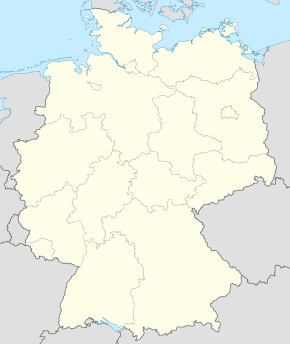

Geographically, Havelland is a U-shaped region surrounded by Havel between Oranienburg in the northeast and Rinow in the northwest. The northern end of Havelland forms the Rin and Rinkanal rivers. In the history of Brandenburg, Havelland is a historical region that lies south of Prinitz and Ruppiner Land .
The Havelland district covers the center of Havelland. In addition, the southern part of the East Prignitz-Ruppin region with a part of Rinluch, some places in the Potsdam-Mittelmark region , the cities of Brandenburg and the Potsdam areas to the north and Berlin areas west of Havel.
Havelland is popular with tourists, but it has some distinction. It includes the Havelland district, the city of Brandenburg an der Havel and the north of the Potsdam-Mittelmark district, including municipalities south of Havel, which otherwise relate to the Zauhe landscape.
Theodore Fontane described Havelland, as well as other landscapes of Brandenburg. Through the ballad Mr. von Ribbek about Ribbek in Hafelland [1] he helped this region gain a special reputation, because his fictional character Effie Brist lives there. A separate volume of The Brandenburg Travels is dedicated to Havelland [2] .
Content
Landscape
Vast primeval valleys define the landscape in Hafelland. Island-like hills protrude from slabs that carry mainly ground moraines. But terminal moraines of the ice age of Saale and Weixel also occur. The former were more or less formed during the Weiksel ice campaign.
Sandy, dry slabs, with the exception of agricultural land, carry extensive forests. The largest is the Nauen plateau. North of it there are several small regions. To the west of the source of Havel lies the Schollen region.
In the glacial valleys extending north of the Nauen plateau are the Hafelland luh and Rinluh, separated by landhen, south of the Nauen plateau, located on the smaller moraine hills of the East Hafel Lowland with numerous Hafelsee lakes . Especially in the north of Havelland, vast areas were drained by new canals from 1700 to 1950 .
The western part of the region between Rinov and Pritserbe belongs to the East Havelland natural park. It is located in the Lower Havel lowlands in the largest wetland in Western Europe .
Settlement
Havelland is sparsely populated. The large cities of Spandau (now Berlin), Potsdam , Brandenburg and Rathenov developed at the bends of Havel. The other central locations of Havelland are Rinov , Premnitz , Nauen and Frisak . The city of Falkensee with surrounding villages is growing rapidly.
Economics and Transport
Agriculture and livestock dominate the vast areas of Havelland. Especially around Werder is growing fruit and vegetables. It also processes juices, fruit and vegetable canned goods. Havel and Havelse still provide some fishermen with livelihoods.
Tourism plays an increasingly important role in Havelland, which is one of the recreational areas of the metropolis of Berlin.
A freight center was built on the outskirts of Berlin in Wustermark . In Schönwald-Glyn, the Märkische Exhibition and Entertainment Center offers the opportunity to host major fairs and events.
The Hafelland problem was and is the development of transport. Havel is, on the one hand, an important waterway, especially between Brandenburg and Oranienburg, on the other hand, it with its lakes and large wetlands is an obstacle to roads and railways.
The main roads are B 5 from Berlin via Nauen in the direction of Hamburg , from which B 188 branches off to Ratenow. Tangent north-south is B 102 from Brandenburg via Rathenow to Rinov, and to the east is the A10 ring motorway in Berlin. From Spandau, two high-speed rail lines run through Havelland. These are the routes Berlin-Hamburg via Nauen and Lerter-Ban via Rathenow. In the west, the Brandenburg City Railway connects Brandenburg with Rathenow. In the east, the Berlin outer ring affects this area.
To the west of Nauen, in the place of Paulienenaue or Bienfarm, there is the Bienfarm sports airfield. In addition to conventional sports aircraft and a parachute group, numerous antique cars are also housed. The Quax Classic Car Club has been operating here since the 2000s and organizes regular events with the airport operator.
Notes
- ↑ Herr von Ribbeck auf Ribbeck im Havelland (ein Birnbaum in seinem Garten stand ...) auf Wikisource
- ↑ Havelland um Werder, Lehnin und Ketzin (= Werte der deutschen Heimat. Band 53). 1. Auflage. Selbstverlag des Instituts für Länderkunde, Leipzig 1992, ISBN 3-86082-014-1 .
Literature
- Havelland um Werder, Lehnin und Ketzin (= Werte der deutschen Heimat. Band 53). 1. Auflage. Selbstverlag des Instituts für Länderkunde, Leipzig 1992, ISBN 3-86082-014-1 .
- Joachim Nölte: Havelland. Ein Wegbegleiter. 1. Auflage. Edition Terra, Berlin / Potsdam 2013, ISBN 978-3-942917-11-7 .
- Wilhelm Döbbelin: Im Zeichen von Terror und Gewalt. Die ersten Wochen der Naziherrschaft im Havelland. In: Arbeit - Bewegung - Geschichte , Heft II / 2016.
Links
- Wiktionary: Havelland - Bedeutungserklärungen, Wortherkunft, Synonyme, Übersetzungen
- Wikivoyage: Havelland - Reiseführer
- Landkreis havelland
- Tourismusverband Havelland e. V.