The Museum of Science and Industry is a large historical and historical museum in Manchester ( Great Britain ) dedicated to the development of science, technology and industry with a focus on the achievements of the city of Manchester in these areas. The Museum is part of the Museum of Science Group , a non-departmental public agency of the UK Department of Culture, Media and Sports , affiliated with the Science Museum in London in 2012 [1] .
| Museum of Science and Industry | |
|---|---|
 | |
| Established | |
| opening date | |
| Visitors per year | |
| Site | |


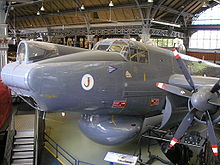
The museum presents an extensive exposition of various modes of transport: cars, airplanes , railway locomotives and rolling stock; power units: water , electric , steam and gas engines ; Manchester's historic sites in the areas of sanitation , textiles , communications, and computer technology .
The museum is the so-called "anchor point" of the European route of industrial heritage. It is located on the territory of the world's first passenger railway station - Manchester-Liverpool Road, which opened on the Liverpool-Manchester railway in September 1830. The facade of the station and the warehouse of 1830 are included in the first list of historical heritage of England.
History
Initially, at the time of opening in 1969, the museum was called the Northwest Museum of Science and Industry. It was located in a temporary building on Grosvenor Street in the area of Chorlton-on-Medlock. The museum had close ties with the University of Manchester Institute of Science and Technology, developing from the Department of the History of Science and Technology.
In 1978, the Greater Manchester Council purchased from British Rail the oldest part of the former train station, closed in 1975, for a nominal sum of £ 1. September 15, 1983 a museum was opened in this building. Later, the remainder of the station was included in its complex [2] .
Since 2007, the museum has held annual scientific festivals in Manchester.
In 2014, Sally MacDonald, a former curator of the collection of University College London , replaced the director of the museum, Jean Franczyk [3] .
Exhibitions
The museum has several exhibitions.
Aviation
- Avro Shackleton anti-submarine aircraft and other Avro aircraft built at local facilities in Chadderton and Woodford
- Supermarine Spitfire Fighter
- Hawker Hunter fighter bomber
- Military transport helicopter Bristol Belvedere
- Yokosuka MXY-7 Ohka Projectile
- Cabin of Hawker Siddeley Trident airliner. Previously, the cockpit was equipped with an audiovisual take-off simulator with movable controls and accompanying text on behalf of the pilot
Computing
- Replica Manchester Small Experimental Machine
Rail Transport
- A replica of the "New" steam locomotive by John Erickson with original details from 1829
- Electric locomotive British Rail Class 77 No. 27001 in the coloring of the Nederlandse Spoorwegen No. 1505 "Ariadne"
- South African Railways GL class Garratt No. 2352, built in 1929 by Manchester-based Beyer-Peacock .
- Pakistan Railways 4-4-0 No. 3157, built by the Indian Northwest Railway around 1911-1914 at the Vulcan Foundry plant in Newton-le-Willows
Theme Galleries
- Connecting Manchester - an exposition telling about the development of means of communication and communication from the printing press to modern computer networks
- Textile Gallery - A History of Manchester's Textile Industry
Railway
There is a railway on the territory of the museum, on which you can take a historic train on certain days. In working condition, two steam locomotives:
- The Planet is a replica of the steam engine of Robert Stephenson and Company , built for the museum in 1992. The original steam locomotive was built in 1830 and drove trains on the Liverpool-Manchester railway.
- Agecroft No. 1 is a steam tank built by Robert Stephenson and Hawthorns in 1948 for use at Agecroft Power Station. Restored in 2011.
The museum's railway line used to be connected to the national railway network in the Ordsall Lane Junction area. However, due to the construction of the Ordsol Chord, which began in January 2016, there is currently no access to the main line.
Industrial Machines
The museum has a large collection of stationary steam engines, hot air engines, diesel engines, hydraulic pumps, large electric generators and other similar machines. Most of them are operational and are sometimes included for demonstration to visitors.
The exposition also includes spinning and weaving machines, covering all stages of the processing of wool into fabric. They are included for a few minutes on a schedule.
Notes
- ↑ Manchester's MOSI and London's Science Museum to merge , BBC News (December 2, 2011). Date of appeal September 19, 2012.
- ↑ History of the Museum - MOSI . Museum of Science and Industry. Date of treatment March 14, 2009. Archived October 31, 2007.
- ↑ Yakub, Qureshi Respected curator named as new boss of Museum of Science and Industry . Manchester Evening News . Date of treatment May 1, 2014.