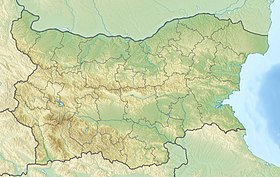
Magura is a cave in the Vidin region of Bulgaria , located near the village of Rabisha , near Vidin .
| Magura | |
|---|---|
 | |
| Location | |
| A country |
|



Content
History
The cave was known and explored during the Roman Empire and the Middle Ages .
Speleological Description
The total length of 3 km. The cave consists of long and deep corridors, in order to complete them completely, it takes an average of 5 hours. Magura is known for its stalactites , stalagmites and stalactones . The largest stalactone has a height of 20 m and a base diameter of 4 m. The largest stalagmite found during the study of Bulgarian caves, with a length of 11 m and a base diameter of 6 m.
The temperature is +12 ° C throughout the year.
Rock Painting
The cave is also famous for 700 examples of cave paintings , which are one of the oldest examples of primitive art in Europe , unique in the Balkans . They depict female and male figures, hunters, animals, plants, the sun and stars. Bulgarian researchers believe that it depicts the oldest Neolithic solar calendar in Europe, consisting of 366 days [1] . The dating of the drawings in the cave dates back to the Bronze Age of 3100-900 BC. e., making this calendar the oldest in Europe [2]
Modern life
The cave also has wines . Classical music concerts are held in the largest Triumphal Hall (height 30 m, width 58, length 130 m). For tourists created paths with handrails and lighting.
Notes
- ↑ Magura preserve the old solar calendar in Europe (inaccessible link - history ) .
- ↑ UNESCO World Heritage Center. The Magoura cave with drawings from the bronze age - UNESCO World Heritage Center . whc.unesco.org. Date of treatment July 31, 2017.
Links
- www.rus-edu.bg (unavailable link) . Archived on September 29, 2007.