Berlin public transport due to the geographical location of the city, its tourist attractiveness and population is an essential component of the infrastructure of Berlin , one of the largest transport hubs in Europe and Germany . The transport system of Berlin and its suburbs, administratively related to Brandenburg , inextricably connects them into a single Berlin metropolitan area , which is especially evident in the examples of the lines of the Berlin electric train and the routes of city buses crossing the border between these lands .
The priority of public transport over the individual is enshrined in the Berlin law on mobility ( German: Berliner Mobilitätsgesetz ) [1] . In general, mobility means freedom and quality of life for Berliners and is an important condition for their participation in society [2] .
Development History

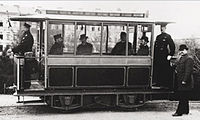

Some of the milestones of more than 700 years of Berlin transport history:
- 1313 : for the first time mentioned the ferry (between the current Hennigsdorf and Heiligenense ) [3] - the first public transport in Berlin
- January 1, 1688 : the appearance of the first land public transport in Berlin - palanquin [4]
- December 24, 1739 : appearance of the first wheeled public transport in Berlin - fiakra [5]
- September 27, 1788 : Frenchman Blanchard in Tiergarten flies in his own balloon - the first aircraft in the sky of Berlin [6]
- November 20, 1815 : start of regular operation of the first German yeast [5]
- May 20, 1825 : one of the world's first omnibus connections between the Brandenburg Gate and Charlottenburg was opened [7]
- September 22, 1838 : open traffic on the first railway of Prussia between Potsdam and Zehlendorf [8]
- October 29, 1838 : in the area of Potsdamer Platz , the first railway station in Berlin, opened (now defunct)
- June 22, 1865 : between the Brandenburg Gate and Charlottenburg the regular operation of the first horse-drawn horse tram began on a regular basis [10]
- 1873 : a transport police was organized, which received the humorous name “white mice” because of their white caps, which should have been clearly visible on the streets even in bad weather [11]
- May 16, 1881 : in Lichterfeld, the start of regular operation of the first electric tram in the world [12]
- April 29, 1882 : the regular operation of Electromot , the first trolleybus in the world, began in Halenz [13]
- 1896 : Start of operation of F11, Berlin's oldest existing ferry service [14]
- May 31, 1897 : The first underground transport tunnel in Germany was laid in Gezundbrunnen [15]
- May 25, 1898 : the first electric bus in the world is presented in Berlin, two years later, plying between the Anhalt and Stettinsky (now ) stations [16]
- September 26, 1909 : flights began at the Johannisthal airfield [17] - the second oldest runway in Germany
- September 24, 1921 : AVUS is open for traffic on the territory of the present Berlin districts of Westend , Grunevald and Nicholasze - the first high-speed highway in Europe designed exclusively for cars [18] - the forerunner of modern highways
- October 8, 1923 : the first Berlin Tempelhof Airport opened [19]
- August 24, 1924 : open movement of electric trains between the Stettinsky station and Bernau - the official birthday of the Berlin train [20]
- October 21, 1924 : one of the first electric traffic lights in Europe was installed on Potsdamer Platz [21]
- March 1952 : the first crosswalk in Germany is marked in front of the Schönweide station [22]
- May 1, 1957 : the first cableway (on the territory of modern Hanzafirtel ) was put into operation [23]
- 1988 : Germany launched the first car sharing project in Germany [24] [25]
- August 28, 1989 : one of the first in the world to start transporting passengers on magnetic cushion trains [26]
Transport Infrastructure
To ensure uninterrupted transportation of almost 13 million tourists (2017 data) [27] and 4.4 million residents of the Berlin metropolitan area [28] , a total of 5,400 km of transport routes were laid in the city, including 1,900 km (which corresponds to the distance between Berlin and Moscow ) [29] , intended for public transport and equipped with more than 7,600 stations and stops [30] [31] [32] . Thus, the goal is achieved that at least 80% of Berliners within a radius of 400 meters during the day and 500 meters at night from their housing one or another public transport is available [33] . In addition, the path to the city center from any stop (with the exception of 5% of the most distant) should not take more than one hour [34] .
According to various estimates, in the German capital, depending on the determination method, there are from 915 to 2100 bridges (for comparison, there are only 426 in Venice) [35] .
It should be noted that the length of the roads, as well as the number of stations and stations in Berlin over the past 10 years, remains virtually unchanged [36] , and the total number of rolling stock in operation even decreases [37] . The city, once planned and developed taking into account the continuously growing individual transport, sets itself the task of providing benefits to public transport and crowding out private cars, especially from its central areas [38] . The era of extensive development of the city is replaced by a period of its qualitative growth, characterized by the motto “renewal is more important than expansion” [39] , and requires no less financial investments: in 2010–2025, it is planned to invest about 7.5 billion euros in Berlin’s transport infrastructure [40] . Almost 600 million euros are spent annually to maintain affordable fares on urban public transport, ensure the functioning of its unprofitable routes, and timely update rolling stock from the municipal and federal budgets [41] .
We must not forget that almost one in ten Berliners has a high degree of disability, and more than a third of the city’s population as a whole are physically limited one way or another (this includes, for example, elderly people, pregnant women, passengers with small children, etc.) [42] . In order to exclude any discrimination, it is legislatively enshrined that by January 1, 2022, any technical restrictions should be removed when they use public transport and its entire infrastructure [43] , which would require someone else to help them.
Despite all the efforts made, the problem of the optimal organization of traffic flows in the city is still far from being resolved. According to an international study published in 2018, Berlin car drivers were stuck in traffic on average 44 hours a year, which is much less than the “leaders” of this list in Los Angeles (102 hours) and Moscow (91 hours), but it yields on an annualized basis € 6.9 billion of additional, unjustified expenses [44] . So far, it has not yet been possible to completely overcome the differences in the transport infrastructure of the western and eastern regions of the city, existing since its unification [45] .
City public transport
27% public transportation
13% bike
31% on foot
A 2013 survey showed that on average, an average Berliner spends 81 minutes en route and covers a distance of 20.8 kilometers [46] . At least once a year, more than 92% of the city’s residents use public transport services [47] .
The most important factors affecting the choice in his favor [48] :
- the ability to use the time spent on the road at the same time for other purposes
- increased security
- price and time availability
- Reliable traffic information.
Comparative characteristics of the main types of public transport in Berlin in 2017 (where: punctuality is the percentage of flights operated with a deviation from the schedule of not more than 4 or 5 minutes depending on transport, regularity is the total percentage of completed flights from the plan) [49] [50] [ 31] [51] [30] [52] [53] :
| Type of transport | Mobile composition (unit) | Total length lines (km) | Interval movements (min) | Average speed movements (km / h) | amount transported passengers (million people) | Average Occupancy (people) (2016) | Average age transport means (years old) | Punctuality (%) | Regularity (%) |
|---|---|---|---|---|---|---|---|---|---|
| City train | 650 | 254 | 20 | 17.1 | 442 | 149.5 | 17.1 | 89.6 | 96.2 |
| Subway | 1272 | 146.3 | ten | 30.9 | 563 | 131.4 | 27.7 | 98.8 | 97.7 |
| Tram | 342 | 191.2 | 20 | 19.0 | 197 | 32,7 | 17.0 | 91.0 | 96.2 |
| City bus | 1400 | 1738 | 20 | 19.5 | 440 | 16.5 | 6.9 | 87.2 | 91.7 |
| Local train | 503 | 204.6 | 60 | - | 54 | 221.1 | 17.1 | 93.0 | 98.6 |
If one day the city and suburban transport suddenly ceased to function, then the transportation of its passengers required an additional at least 1 million private cars [54] .
In Berlin, there is a system of uniform tickets valid for BVG- operated buses, trams, ferries and the underground (U-Bahn), as well as city electric trains (S-Bahn) operated by S-Bahn Berin GmbH (a subsidiary of Deutsche Bahn) . The standard fare (for trips on these modes of transport for 2 hours with an unlimited number of transfers) costs 3.40 € (the whole city) and 2.80 € (only the central and middle zones) [55] . In addition, various subscriptions, transport cards, tickets for groups and for travel over short distances are offered. According to 2013 data, public transport services cost Berliners € 67 per month (for comparison, a personal car costs € 145) [56] . At the same time, it should be noted that the prices for travel in public transport have grown by one third over the past 9 years, while the consumer price index is only 11.7% [57] .
Compared to other major European cities, passenger transportation in the German capital remains relatively inexpensive: Berlin transport companies earn only 0.11 € per passenger-kilometer and 0.68 € per trip (for example, in London this is 0.22 € and 1.23 €) [58] .
For a time, urban transport can turn into concert venues: for example, in March 2015, following the metro from the Olympic Stadium to the terminal station , a German rock singer Udo Lindenberg gave a concert [59] , and in December 2017 Bono , Beating the name of his band U2 , he performed acoustic versions of his three hits (including Sunday Bloody Sunday and One ) at the German Opera station, located on the line [60] .
City train
The Berlin electric train ( German S-Bahn Berlin ), which has the longest network among the entire rail transport of the city, usually represents the best way to get to any of its areas without traffic jams and with the least number of transfers and travel time. As part of the program to reduce emissions of harmful substances, a further increase in the specific share of urban trains in the overall structure of passenger transportation is forecasted.
Metro
From the beginning of its operation to the present day, the Berlin metro ( German: U-Bahn Berlin ) has remained one of the fastest and most reliable modes of public transport, carrying the largest number of passengers. Given the density of urban development, especially in the central regions of the German capital, it is impossible to overestimate its importance for ensuring the mobility of tourists and its own population.
Tram
The Berlin tram - the oldest in the world - since the end of the 19th century has been an integral part of the public transport of the German capital. A special role, taking into account its environmental friendliness, is given to the tram in plans for the development of the city’s transport infrastructure for the coming years and decades.
City Bus
The Berlin bus, originating from the first omnibus lines and having almost two centuries of history, now accounts for more than a quarter of all public passenger transport in the city. Its future is directly connected with the electrification of the fleet and the abandonment of the use of the once irreplaceable internal combustion engines .
City Taxi
The progenitor of a Berlin taxi is the stole introduced at the end of the 17th century . With the development of the city, horse-drawn taxi cabs are becoming increasingly important: in 1900, more than 8 thousand flights [61] carry passengers, which are quickly replaced by motorized crews (after only ten years, there are already about 2 thousand [62] ).
Currently, Berlin has more than 8.3 thousand taxis owned by 2,935 entrepreneurs (80.9% of them owning only one car) [63] . Thus, one taxi per 432 residents of the capital (according to this indicator, Berlin is ahead of all other German lands and has almost 4 times more taxis per capita than the national average). Outwardly, all taxis are easily recognizable, because according to German law they must be painted in light ivory and have a light panel with the inscription “ Taxi ” [64] . Landing cost: 3.90 €, tax per kilometer: 2.00 € (first 7 km) and 1.50 € (starting from the 8th km) [65] . Off-meter payment is permitted only when traveling outside the city. Only half of the flights are booked by phone or via mobile applications, the rest from parking or directly on the street [66]
The average Berlin taxi is as follows [67] [68] :
- Age of the car: 5 years
- Brand: Mercedes-Benz
- Mileage per shift: 124 km
- Revenue per trip: € 13.80
- Free (as a percentage of total time): 72.7
- Busiest day: Friday
- Most downloaded time: 22:00 - 02:00
In addition, in Berlin you can also find rickshaws Bike Taxi , Velotaxi or Berlin Rikscha Tours , which, however, neither in number (about 120) [69] , nor their speed, nor their higher fare cost compete with a traditional taxi and are rather tourist attraction.
Bicycle
The first bike - sharing system - Call-a-Bike - started in the German capital in 2002 [70] . By the summer of 2018, a total of 14 thousand bicycles were offered by seven different private companies ( Nextbike , Mobike , etc.) to bicycle rental in Berlin [71] , that is, less than 4 per 1,000 inhabitants (for comparison: there are 721 bicycles for personal use for 1,000 Berliners) [72] . In most existing systems, rented bicycles can be left on any street in the city center (and not just at one of the stations). Rental price (30 minutes): 0.50 - 1.50 € [73] . With the exception of autobahns and streets with the prescribed minimum speed, cyclists can travel on all German roads. In addition, in Berlin alone, more than 1000 km of bicycle paths or specially designated transport lanes are additionally equipped for them [74] . Use of bicycle rental services is possible using mobile applications, customer cards or phone.
Car Sharing
According to the data for 2017, about 3.0 thousand cars were intended for rent [75] , that is, more than in any other city in Germany. However, in relative terms (0.84 per 1,000 inhabitants), Berlin is only in 12th place out of 144 cities in Germany. Against the background of the total number of 1.2 million registered cars in the city [76], this segment of urban transport has not yet received its due significance, and the car sharing law ( German: Carsharinggesetz ), which came into effect on September 1, 2017, is designed to stimulate its development until it shows the expected effect [77] .
Car sharing systems operate, as a rule, only in the central areas of the city. Price ( Car2Go , DriveNow , Flinkster ) for each minute of payment depending on the class: 0.26 - 0.36 €, per day: 57 - 132 € (October 2018 data). Use is carried out by mobile applications. The rental of electric scooters is also organized in a similar way (for example, Emmy or about a thousand Coup units at a cost of 3 € per 30 minutes) [78] .
Air Transport
The first air passenger transportation in Berlin was organized using zeppelins already in the period before the First World War [79] [80] . After the commissioning of the Berlin-Tempelhof airport - by 1930 the largest in Europe [81] - it was already impossible to imagine the German capital without modern air transport . Air transport received special significance during the siege of West Berlin , when it was the only link between the western part of the city and the rest of the world.
Tempelhof, which at one time was the city’s only civilian airport (since , Johannisthal and airfields were used mainly for military purposes), was closed in 2008 and since then there are two operating airports in Berlin - Tegel and Schönefeld . In terms of total passenger traffic, the metropolitan area in Germany is second only to Frankfurt am Main and Munich [82] and in 2017 was characterized by the following figures [83] :
- passengers - more than 33.3 million people.
- airlines - 90
- Destinations - 193 (in 58 countries)
- takeoffs / landings - more than 275 thousand.
Upon completion of the construction of the Berlin-Brandenburg Airport, which was repeatedly postponed and is now expected in October 2020 [84] , all passenger air transport in Berlin will be carried out from there and by 2040 should reach 55-58 million people [85] .
Intercity Rail
Long-distance trains such as ICE , IC , EC and EN daily transport 65,000 passengers in Berlin (17% of the total number in Germany) [86] and stop at 6 railway stations of the city [87] [88] :
- Berlin Central is the largest crossroad ( German Kreuzungsbahnhof ) railway station in Europe with its 300 thousand passengers, trains, trains and visitors daily [89]
- Berlin East
- Berlin Wanze
- Berlin-Gesundbrunnen
- - Germany's longest (442 m) train station [90]
By train from Berlin you can get to some European capitals, such as Moscow , Paris , Budapest , Warsaw or Prague , as well as most major cities of Germany. The Berlin- Munich high-speed line, commissioned by (a subsidiary of Deutsche Bahn ) in December 2017, and whose services have been used by 2 million passengers for half a year, is especially popular [91] .
In addition, the German capital is connected with Hamburg , settlements of the eastern lands of Germany and some cities of Poland [92] with regional train lines Regionalbahn and Regional-Express , which, in addition to the mentioned stations, stop at other railway stations of the city, including , which by the number of trains received (1,500 daily) is the most visited in the country [93] . Commuter trains running through Berlin are operated by one Polish ( ) and three German operators ( , and ) and are particularly important for pendulum migration in the Berlin agglomeration.
Intercity Bus Transport
For many years, the development of intercity bus transport in Germany was restrained by the Passenger Transportation Act ( German: Personenbeförderungsgesetz ), adopted in 1934, which provided the railway transport with an actual monopoly on domestic flights. Only the new version of this law, which entered into force on January 1, 2013, canceled these legally recognized privileges [94] .
Now the German capital is connected by bus with more than 500 different destinations in most European countries [95] . In addition to the Central Bus Station , from which about 6 million passengers [96 ] were transported by more than 166 thousand flights [30] in 2017, intercity buses make stops at Berlin airports and railway stations [97] (as, for example, the absolute leader in this transport segment is Flixbus , which accounts for 94% of the total passenger traffic in Germany [98] ).
At the same time, bus trips remain the most affordable, although often the longest in time: 22 € and 10 hours are required, for example, for a trip from Berlin to Munich (including moving to the bus station) (for comparison: using your own car - 50 € and 6 hours, by train - 106 € and 6 hours 45 minutes, by plane - 160 € and 6 hours, respectively [99] ). Those who choose the intercity bus especially note the low cost of transportation, a small number of transfers, the simplicity of planning a trip, as well as its convenience, punctuality and accessibility [100] .
Water transport
The total area of all reservoirs within the city totals almost 60 km² [101] . The largest of them (such as Muggels , Tegler-See or Großer-Wannsee ) can only be crossed by water vessels. The importance of ferry services, first mentioned already at the beginning of the XIV century , increased with the economic development of Berlin and its population, especially in those places where the construction of bridges was technically impossible or economically inexpedient, reaching its peak in the late XIX - early XX centuries .
In 2013, about one million passengers were transported by water transport in the German capital (excluding tourist ships) [102] . 6 ferry lines are operated by BVG and when using them, uniform tickets for urban public transport are valid:
| Line | Route | Time on my way (min) | Interval movements (min) | Operation period | Type of vessel | Capacity (passengers / bicycles) | Water body |
|---|---|---|---|---|---|---|---|
| 10 [103] | S Wannsee - Alt-Kladow | 20 | 60 | year-round | diesel | 300/60 | Grocer Wanze |
| 11 [104] | Wilhelmstrand - Baumschulenstraße / Fähre | 2 | 10/20 | year-round | electro | 49/10 | Spree |
| 12 [105] | Müggelbergallee - Wassersportallee | 2 | 10/20 | year-round | electro | 49/10 | Dame |
| 21 [106] | Krampenburg - Zum Seeblick | 7 | thirty | April - October | electro | 49/10 | |
| 23 [107] | Müggelwerderweg - Müggelhort - Neu Helgoland - Kruggasse | 25 | 60 | April - October | electro | 49/10 | Müggels |
| 24 [108] | Spreewiesen - Kruggasse | five | 60 | May - September (Sat, Sun) | oared | 8/4 | Spree |
BVG ferries operate during the daytime and, if there is fog or ice on the surface of the water, their movement can be canceled. Ferries, especially popular on weekends, are often perceived by passengers as an inexpensive, albeit short-term, opportunity to walk on water, but the BVG emphasizes that their ships are designed for transport and are a kind of “floating buses” [109] .
Frequent carriers operate some other ferry lines, for example, to the island of 110] lying in the channel or Hackenfeld - Tegelort : the only ferry in Berlin that also crosses horses, cars and sightseeing buses [111] .
Other modes of transport
Cableway
В 1957 году во время проведения в Берлине строительной выставки Интербау между вокзалом Zoo и дворцом Бельвю была построена первая канатная дорога длиной 1 349 метров и оснащенная 95 гондолами для перевозки 600 пассажиров в час [23] . Однако из-за нерентабельности уже в следующем году она была полностью закрыта. Несколькими годами позже на была сооружена другая линия, предназначенная для обслуживания запланированного центра зимнего спорта. Однако и она была демонтирована в 1972 году, так как ее металлические конструкции мешали находившейся там американской станции слежения осуществлять прослушку Восточного Берлина [112] .
Единственная в настоящее время действующая в Берлине соединяет парк отдыха Марцан со станцией метро U5 . Она была принята в эксплуатацию в апреле 2017 года к открытию в парке международной садоводческой выставки .
Основные характеристики линии [113] :
- Общая длина: 1,5 км
- Продолжительность поездки: 4 мин 25 с
- Максимальная скорость движения: около 22 км/ч
- Максимальная высота подъёма: 35 м
- Количество кабин (каждая на 10 пассажиров): 96
- Пассажиропоток: 3 000 в час
- Стоимость проезда (в оба конца): 6,50 €
Рассматривается возможность привязки линии к общей транспортной системе Берлина с 2020 года [114] .
Троллейбус
История берлинского троллейбуса — старейшего в мире — имеет много примеров своих взлетов и падений. Первые попытки организовать их регулярную эксплуатацию в Халензе (1882), Йоханнистале (1904—1905), Штеглице (1912—1914) были остановлены по причине несовершенства техники, неудовлетворительного состояния тогдашних дорог либо вследствие наступившей мировой войны [115] . Второе рождение троллейбуса пришлось на декабрь 1933 года, когда было открыто движение троллейбусов между Шпандау и Штаакен [116] , вслед которому последовали ещё три линии. Разрушения второй мировой войны, а также последствия разделения Берлина негативно отразились на судьбе городского троллейбуса. В Западном Берлине троллейбусные маршруты, достигнув максимальной длины в 20,8 км, постепенно начали уступать свое место автобусам, а в марте 1965 года были полностью закрыты [117] . В восточной части города первые послевоенные троллейбусы начали перевозку пассажиров в августе 1951 года. Однако и там, достигнув общей длины в 45,5 км, троллейбусная сеть начала уменьшаться (особенно после принятия решения о использовании автобусов Икарус из братской тогда Венгрии ), а в январе 1973 года была официально выведена из эксплуатации (хотя отдельные выходы на линию продолжались до июня того же года) [118] .
В разрабатываемом плане по развитию транспорта Берлина на 2019—2023 гг как один из вариантов рассматривается перевод части приобретаемых электробусов на динамическую подзарядку [119] (таким образом, часть маршрута они будут проходить, используя мощность своих электробатарей, которые можно будет заряжать от контактной сети прямо в пути). Возможно, все это позволит вдохнуть новую жизнь в концепцию берлинского троллейбуса XXI века .
Маглев
В 1989 — 1991 годах в Берлине на M-Bahn — одном из первых в мире магнитопланов, курсировавшем между Кройцбергом и Тиргартеном и рассчитанном на скорость движения до 80 км/ч, было перевезено более 1,7 млн пассажиров [120] . Линия была выведена из эксплуатации и демонтирована из-за планов по соединению метрополитеном западной и восточной частей города.
Проблемы транспортной безопасности
7,1% мотоцикл, мопед
4,9% грузовой автомобиль
1,5% автобус
0,4% трамвай
18,3% велосипед
8,5% пешком
1,6% прочие виды транспорта
С момента своего возникновения транспорт был и остается источником повышенной опасности не только для управляющих транспортными средствами и его пассажиров, но и порою для не принимающих в движении непосредственного участия. Свои трагические страницы имеет и история берлинского транспорта:
- 2 сентября 1883 года : на переходе вокзала Штеглиц попали под колеса въезжавшего поезда и погибли 39 пассажиров, вышедшие на ж/д полотно вопреки указаниям персонала станции [122]
- 26 сентября 1908 года : столкновение двух поездов метрополитена из-за незамеченного машинистом стоп-сигнала — крупнейшая катастрофа берлинского метро (18 погибших и 20 раненых) [123]
- 5 сентября 1951 года : взрыв и пожар на борту прогулочного теплохода на Шпре — крупнейшая катастрофа на речном транспорте ГДР (сгорели или утонули 29 детей и 2 сопровождавших их воспитателя) [124]
- 14 сентября 1972 года : из-за конструкционных недостатков и технической неисправности загорелся и в нескольких километрах от города упал вылетевший из аэропорта Шёнефельд самолет Ил-62 — крупнейшая авиакатастрофа катастрофа в истории Германии (погибли все 156 человек, находившихся на борту) [125]
- 12 декабря 1986 года : из-за ошибок авиадиспетчеров и экипажа в 3-х километрах от аэропорта Шёнефельд потерпел крушение самолет Ту-134 — вторая крупнейшая авиакатастрофа в Германии (погибли 72 человека из 82, находившихся на борту) [126]
- 17 июня 1989 года : из-за технической неисправности и ошибки бортинженера при взлете из аэропорта Шёнефельд потерпел аварию самолет Ил-62 — погибло 22 человека [127]
- 19 декабря 2016 года : в результате теракта на рождественском базаре с применением грузового автомобиля на площади Брайтшайдплац погибли 11 человек, 45 получили ранения [128]
Несмотря на то, что наиболее крупные катастрофы на транспорте приходятся в основном на долю воздушных перевозок, именно самолет в пересчете на пассажиро-километры (пкм) или перевезенных пассажиров (пас.) остается одним из наиболее безопасных транспортных средств (приведены среднегодовые данные по Германии за период 2005—2009 гг) [129] :
| Type of transport | Injured (чел.) | Dead (чел.) | Injured (чел./млрд. пкм) | Dead (чел./млрд. пкм) | Injured (чел./100 млн пас.) | Dead (чел./100 млн пас.) |
|---|---|---|---|---|---|---|
| Легковой автомобиль | 234 665 | 2 524 | 275,8 | 2,93 | 437 | 4,65 |
| Bus | 4 783 | eleven | 73,9 | 0.17 | 86 | 0.20 |
| Tram | 667 | 3 | 42.3 | 0.16 | 18.8 | 0,07 |
| Railway transport | 212 | 3 | 2.7 | 0.04 | 9.6 | 0.14 |
| Воздушный транспорт | 20 | one | 0.3 | 0.00 | 14.9 | 0.14 |
Схожую статистику для городского нерельсового транспорта за 2015 год
опубликовал и немецкий автомобильный клуб ADAC [130] :
| Type of transport | Injured (чел./10 млн пкм) | Dead (чел./млрд. пкм) |
|---|---|---|
| Мотоцикл | 22.1 | 46.5 |
| Мопед | 29,9 | 11.3 |
| Пешеход | 9.1 | 15.4 |
| Bicycle | 21,3 | 9.8 |
| Легковой автомобиль | 2.5 | 1.9 |
| Truck | 1,0 | 1,1 |
| Bus | 1,5 | 0.1 |
В 2017 году в немецкой столице зарегистрировано более 143 тысяч дорожно-транспортных происшествий , анализ которых среди прочего отмечает [131] :
- примерно каждое десятое ДТП не обошлось без пострадавших
- в центральных районах города (особенно Митте и Шарлоттенбурге-Вильмерсдорфе ) происходит в 2-3 раза больше аварий, чем на окраинах
- наиболее травмоопасны перекрестки и примыкания к улицам
- наибольшее число пострадавших приходится на вечерние часы пик (с 15 до 18 часов)
- примерно в 65 % случаев виновниками аварий являются мужчины, они же составляют и бо́льшую часть пострадавших (около 63 %)
- самый травмоопасный период года — с мая по июль
- самый безопасный день недели — воскресенье.
| Количество погибших в ДТП в Берлине [132] |
При этом почти каждый четвертый среди пострадавших в ДТП пешеходов получил тяжелые травмы или погиб (для велосипедистов этот показатель составляет 19 %, мотоциклистов — 11 % и передвигавшихся на легковом автомобиле — 7 %) [133] .
Хотя в сравнении с другими землями в Берлине в ДТП в пересчете на всё население погибает наименьшее количество людей, а общая статистика смертельных исходов за последние десятилетия имеет заметную тенденцию к снижению, стратегическая цель уменьшить с 2010 по 2020 год число погибших на дорогах на 40 % до сих пор не достигнута [134] . Кроме того официально признается, что выглядит невыполнимой поставленная ранее задача по снижению в этот период числа тяжело пострадавших в ДТП на 30 % [135] .
В целях повышения безопасности дорожного движения кроме общих мер по ограничению скорости движения на особо опасных участках дорог, выделению новых и перепланировки уже существующих велосипедных дорожек, разметке дополнительных пешеходных переходов и усилению разъяснительной работы среди различных групп населения [136] особенно важным представляется перераспределение пассажиропотока с индивидуального на общественный транспорт, имеющий заметно лучшую статистику ДТП. К 2030 году планируется снизить долю пассажиров, перевозимых личным транспортом с нынешних 30 до 22,5 %, а к 2050 году до 17 % [137] .
Транспорт Берлина, охрана здоровья и окружающей среды
Транспорт наряду с другими отраслями национальной экономики является одним из заметных источников, представляющих угрозу здоровью человека и окружающей среде .
Федеральное ведомство окружающей среды Германии ( нем. Umweltbundesamt ) предоставило следующую статистику по выбросам транспортных средств за 2016 год (в граммах на пассажиро-километр) [138] :
| Type of transport | Парниковые газы | Угарный газ | Летучие углеводороды | Оксиды азота | Тонкая пыль |
|---|---|---|---|---|---|
| Легковой автомобиль | 140 | 0,61 | 0.14 | 0.35 | 0,004 |
| Рейсовый автобус | 75 | 0.05 | 0,03 | 0.32 | 0,002 |
| Трамвай, электричка, метрополитен | 65 | 0.04 | 0.00 | 0.06 | 0,000 |
| Поезда дальнего следования | 38 | 0.02 | 0.00 | 0.05 | 0,000 |
| Поезда ближнего следования | 63 | 0.04 | 0.01 | 0.18 | 0,002 |
| Воздушный транспорт | 214 | 0.14 | 0.04 | 0.57 | 0.05 |
Выбросы углекислого газа
Углекислый газ является одним из парниковых газов и вносит свою лепту в наблюдаемое глобальное потепление . По опубликованным данным 2015 года доля транспорта в общем количестве диоксида углерода, выбрасываемого при деятельности человека в Берлине, составляла более 29 % и продолжила тенденцию на свое повышение [140] . Статистика показывает дифференцированную картину в зависимости от вида городского транспорта:
Берлинский закон об энергетическом повороте ( нем. Energiewendegesetz ) предусматривает снижение выбросов углекислого газа (от уровня 1990 года) к 2020 г на 40 %, к 2030 г на 60 % и к 2050 г минимум на 85 % [141] . К 2015 году удалось добиться их уменьшения в целом на 38 %, однако в транспортном секторе пока отмечается лишь увеличение этого показателя.
В настоящее время примерно 95 % всех выбросов парниковых газов на транспорте Германии приходится на уличное движение [142] , две трети из которых — на дизельные двигатели [143] . Чтобы переломить эту ситуацию, в среднесрочной перспективе в Берлине планируется прокладка новых трамвайных линий, позволяющих перенять пассажиропоток порядка 110 рейсовых автобусов, а так же полный перевод остального автобусного парка на электрические источники питания [144] .
Стоит отметить, что некоторые меры, позволяющие заметно снизить образование парниковых газов на транспорте, как например, использование биодизеля и биоэтанола , одновременно приводят к увеличению выбросов пыли и окислов азота, и их последствия не могут считаться однозначно положительными [145] .
Выбросы оксидов азота
Выхлопные газы двигателей транспортных средств — одна из главных причин превышения в атмосфере немецкой столицы допустимых концентраций оксидов азота NO x , приводящих к нарушению функций лёгких и бронхов, воспалению слизистой желудочно-кишечного тракта, нарушению сердечной деятельности [146] . Несмотря на то, что в целом выбросы окислов азота в транспортном секторе заметно снизились [147] , на его долю в 2016 году приходилось 40 % от их общего количества [148] .
Основным источником выбросов NO x являются дизельные двигатели [149] , критика которых особенно усилилась вследствие разразившегося в 2015 году дизельгейта . Согласно данным 2017 года в условиях реальной эксплуатации выбросы дизельных автомобилей, зарегистрированных как соответствующие стандартам Евро-5 и Евро-6 , превышают допустимые нормы в 4-5 раз [150] . Осознавая существующую проблему, BVG уже установил на 300 своих автобусах фильтры, улавливающие 80 % окислов азота [151] .
Выбросы тонкой пыли
Для оценки влияния на организм человека тонких пылей (способных вызвать сердечно-сосудистые заболевания, бронхит , астму и рак лёгкого [152] ) в воздухе населённых пунктов применяется показатель PM 10 , характеризующий концентрацию в нём взвешенных частиц диаметром менее 10 микрометров, примерно 28 % которых приходится на долю транспорта [153] . К значительным антропогенным источникам тонкой пыли относятся двигатели внутреннего сгорания, выхлопные газы которых имеют относительно высокую концентрацию сажи , одного из главных компонентов взвешенной пыли. Для борьбы с нею в Берлине с 1 января 2008 г одной из первых в Германии была введена природоохранная зона, территориально ограниченная городской электрички и въезд в которую разрешен автомобилям, отвечающим, по меньшей мере, требованиям стандарта Евро-4 [154] . По некоторым оценкам, с ее помощью было достигнуто снижение концентрации PM 10 в различных районах центра города от 6 до 19 % [155] . Кроме того, на 60 тысяч автомобилей были установлены противосажевые фильтры [156] , что должно улучшить качество воздуха на всем маршруте их следования.
Шумовое загрязнение
Показатели уровня шума более 65 dB(A) днём и 55 dB(A) ночью, способные негативно влиять на здоровье человека, превышаются для почти 300 тысяч берлинцев по вине автомобильного транспорта, для 28 тыс. из-за движения трамваев и наземного метрополитена и для 22 тыс. из-за полетов авиатранспорта [157] . При этом необходимо заметить, что в аэропорту Шёнефельд действует ограничение, а аэропорту Тегель запрет на осуществление ночных рейсов [158] . По данным эксплуатанта берлинских аэропортов уровень шумового загрязнения от воздушного транспорта снизился с 1960 года в среднем на 25 dB(A): к примеру, для Ил-62 этот показатель при пролете на высоте 6,5 км составлял 100, а для Ту-134А — 98 dB(A), в то время как современные Boeing 737—800 и Airbus A320neo достигают 82 и 76 dB(A) соответственно [159] .
По последним опросам именно дорожное движение воспринимается жителями как главный источник шума, опережая по этому показателю, в том числе, и неудобства, исходящие от соседей по дому [160] . Наряду с укладкой шумопоглощающего асфальта, своевременным ремонтом рельсовых путей и дорожного покрытия, обновлением парка общественного транспорта, установкой шумозащитных окон, оптимизацией транспортных потоков [161] в качестве одной из мер, принимаемых для снижения уровня шума, предлагается расширение действия зон с ограничением скорости движения в 30 км/ч (в настоящее время на почти 3/4 всех берлинских улиц уже существует подобное ограничение [162] ). Снижение среднего уровня шума на подобных участках дорог может достигать 3 dB(A) [163] .
Прочие факторы
Согласно принятому в 2008 году закону о защите некурящих ( нем. Nichtraucherschutzgesetz ) во всех городских транспортных средствах и на вокзалах города введен полный запрет на курение, за нарушение которого полагается штраф до 100 € в отношении курящих и до 1 млн. € для владельцев соответственных учреждений [164] .
Преступность на общественном транспорте Берлина
Пассажирский транспорт не является зоной, свободной от правонарушений. Следующая статистика предоставлена BVG по случаям, произошедшим в 2017 году в транспортных средствах, на остановках и вокзалах, находящихся в ее ведении:
- общее количество правонарушений — 17 560
- наиболее распространенное из преступлений — кражи, составляющие более половины от их общего числа
- количество преступлений, связанных с нанесением телесных повреждений пассажирам — 2 533
- количество преступлений против работников транспортных служб — 544
- для предотвращения правонарушений и обеспечения их лучшей раскрываемости все станции и поезда метро, более 96 % автобусов и 88% трамваев оборудованы камерами наблюдения.
Несмотря на подсчеты перевозчика, что пассажир, ежедневно совершающий одну поездку в общественном транспорте немецкой столицы, рискует пострадать от того или иного правонарушения не чаще, чем раз в 900 лет, субъективное ощущение безопасности может заметно отличаться от в целом позитивного видения ситуации со стороны BVG [168] . Схожая картина по структуре преступлений и их абсолютным цифрам наблюдается и на железнодорожном транспорте (городские электрички, поезда дальнего и ближнего следования), находящемся на балансе Deutsche Bahn и ее дочерних компаний, публикующих статистику в целом по Германии.
Gallery
Берлинский омнибус
Первое моторизированное берлинское такси (1898)
Анхальтский вокзал (около 1910)
Берлинская транспортная полиция (апрель 1925)
Пассажиры помогают оставшемуся без тяги берлинскому трамваю (1946)
M-Bahn в Берлине (апрель 1990)
Электроскутер для аренды Emmy
Велотакси у Берлинской филармонии
Notes
- ↑ Berliner Mobilitätsgesetz — Präambel (нем.) . Vorschrifteninformationssystem Berlin.
- ↑ Stadtentwicklungsplan Verkehr Berlin 2025 — С. 7 (нем.) . Senatsverwaltung für Stadtentwicklung.
- ↑ Havelinseln und Havelfähren in Berlin und Potsdam (нем.) .
- ↑ Sänftenträger in Berlin um 1781 (нем.) .
- ↑ 1 2 Geschichte vor 1900 (нем.) .
- ↑ 27. September 1788 - Erste Ballonfahrt über Berlin (нем.) . WDR, 27.09.2013.
- ↑ Maritta Adam-Tkalec. Pferdebusse Wie der Berliner Nahverkehr erfunden wurde (нем.) . Berliner Zeitung, 15.08.16.
- ↑ Die Eröffnung der Stammbahn (нем.) . Berliner S-Bahn-Museum.
- ↑ 100 Jahre Berlin — Potsdam (нем.) .
- ↑ Pferdestraßenbahn von 1865 (нем.) .
- ↑ Monarchie bis 1918 (нем.) . Der Polizeipräsident in Berlin.
- ↑ Rail transportation (англ.) .
- ↑ On the road — with electric power (англ.) .
- ↑ Fähre F11: Baumschulenstraße- Oberschöneweide (нем.) . Das offizielle Hauptstadtportal.
- ↑ Thomas Fülling. Deutschlands erster U-Bahn-Tunnel in Berlin ist wieder offen (нем.) . Berliner Morgenpost, 28.03.2017.
- ↑ Der Berliner Omnibus I (нем.) .
- ↑ Geschichte/Die Entstehung und Eröffnung des Flugplatzes (нем.) .
- ↑ Avus (нем.) . Das offizielle Hauptstadtportal.
- ↑ Geschichte in Zahlen (нем.) .
- ↑ History of S-Bahn Berlin (нем.) . S-Bahn Berlin.
- ↑ A brief history of traffic signals (англ.) .
- ↑ Hans-Juergen Fink. Wie die Redaktion auf den Zebrastreifen kam (нем.) . Hamburger Abendblatt, 11.10.13.
- ↑ 1 2 Die Interbau-Seilbahn (нем.) .
- ↑ Эксперименты и плавный рост .
- ↑ Geschichte (нем.) . Bundesverband CarSharing eV.
- ↑ Chronik des Berliner M-Bahn-Testbetriebs (нем.) .
- ↑ Tourismus in Zahlen (нем.) . Senatsverwaltung für Wirtschaft, Energie und Betriebe.
- ↑ Ergebnisse der Bevölkerungsprognosen für die Metropolregion (нем.) . Senatsverwaltung für Stadtentwicklung und Wohnen.
- ↑ Mobilität der Stadt — Berliner Verkehr in Zahlen 2013 — С. 22, 46 (нем.) . Senatsverwaltung für Umwelt, Verkehr und Klimaschutz.
- ↑ 1 2 3 4 Zahlenspiegel 2018 (нем.) . BVG.
- ↑ 1 2 S-Bahn Berlin at a Glance (англ.) . S-Bahn Berlin.
- ↑ Anlage 3 – ÖPNV-Bedarfsplan — С. 79 (нем.) . Senatsverwaltung für Umwelt, Verkehr und Klimaschutz.
- ↑ ÖPNV in Berlin 2013-2015 — С. 5 (нем.) . Center Nahverkehr Berlin.
- ↑ Nahverkehrsplan Berlin 2019-2023 Entwurf, Stand 31. Juli 2018 — С. 102 (нем.) . Senatsverwaltung für Umwelt, Verkehr und Klimaschutz.
- ↑ Wieviele Brücken gibt es in welcher Stadt ? (нем.) .
- ↑ Mobilität der Stadt — Berliner Verkehr in Zahlen 2013 — С. 49 (нем.) . Senatsverwaltung für Umwelt, Verkehr und Klimaschutz.
- ↑ Mobilität der Stadt — Berliner Verkehr in Zahlen 2013 — С. 55 (нем.) . Senatsverwaltung für Umwelt, Verkehr und Klimaschutz.
- ↑ Nahverkehrsplan Berlin 2019-2023 Entwurf, Stand 31. Juli 2018 — С. 47 (нем.) . Senatsverwaltung für Umwelt, Verkehr und Klimaschutz.
- ↑ Stadtentwicklungsplan Verkehr 2025 — С. III (нем.) . Senatsverwaltung für Stadtentwicklung.
- ↑ Stadtentwicklungsplan Verkehr 2025 — С. 6 (нем.) . Senatsverwaltung für Stadtentwicklung.
- ↑ Finanzierung (нем.) . Senatsverwaltung für Umwelt, Verkehr und Klimaschutz.
- ↑ Nahverkehrsplan Berlin 2019-2023 Entwurf, Stand 31. Juli 2018 — С. 147 (нем.) . Senatsverwaltung für Umwelt, Verkehr und Klimaschutz.
- ↑ Personenbeförderungsgesetz; §8(3) (нем.) . Bundesministerium der Justiz und für Verbraucherschutz.
- ↑ INRIX Global Traffic Scorecard — С. 14, 34 (нем.) . Senatsverwaltung für Umwelt, Verkehr und Klimaschutz.
- ↑ Stadtentwicklungsplan Verkehr Berlin 2025 — С. II (нем.) . Senatsverwaltung für Stadtentwicklung.
- ↑ 1 2 Tabellenbericht zum Forschungsprojekt «Mobilität in Städten – SrV 2013» in Berlin — Tab 1.1 (нем.) . Technische Universität Dresden.
- ↑ Tabellenbericht zum Forschungsprojekt «Mobilität in Städten – SrV 2013» in Berlin — Tab 3.4 (нем.) . Technische Universität Dresden.
- ↑ Nahverkehrsplan Berlin 2019-2023 Entwurf, Stand 31. Juli 2018 — С. 45 (нем.) . Senatsverwaltung für Umwelt, Verkehr und Klimaschutz.
- ↑ Vehicle Fleet - Our Trains (англ.) . S-Bahn Berlin.
- ↑ Die 100 wichtigsten Kennzahlen im Verkehrsverbund Berlin-Brandenburg (нем.) . Verkehrsverbund Berlin-Brandenburg.
- ↑ BETEILIGUNGSBERICHT 2018 Geschäftsjahr 2017 — С. 81 (нем.) . Senatsverwaltung für Finanzen.
- ↑ Nahverkehrsplan Berlin 2019-2023 Entwurf, Stand 31. Juli 2018 — С. 50, 101 (нем.) . Senatsverwaltung für Umwelt, Verkehr und Klimaschutz.
- ↑ Verbundbericht 2018 mit Qualitätsbilanz 2017 — С. 8, 19, 20 (нем.) . Verkehrsverbund Berlin-Brandenburg.
- ↑ Nahverkehrsplan Berlin 2019-2023 Entwurf, Stand 31. Juli 2018 — С. 15 (нем.) . Senatsverwaltung für Umwelt, Verkehr und Klimaschutz.
- ↑ Tickets, Fares and Route Maps (англ.) . The Official Website of Berlin.
- ↑ Nahverkehrsplan Berlin 2019-2023 Entwurf, Stand 31. Juli 2018 — С. 35 (нем.) . Senatsverwaltung für Umwelt, Verkehr und Klimaschutz.
- ↑ Nahverkehrsplan Berlin 2019-2023 Entwurf, Stand 31. Juli 2018 — С. 12 (нем.) . Senatsverwaltung für Umwelt, Verkehr und Klimaschutz.
- ↑ Zahlen und Fakten — С. 6 (нем.) . Verkehrsverbund Berlin-Brandenburg.
- ↑ Udo Lindenberg im «Sonderzug nach Pankow» (нем.) . Das offizielle Hauptstadtportal.
- ↑ Rita Schulze. Wenn U2 mit der U-Bahn durch Berlin fährt (нем.) . Berliner Morgenpost, 06.12.2017.
- ↑ Von der Pferdedroschke bis zum Taxi App! (нем.) .
- ↑ Zur Geschichte des Taxis (нем.) .
- ↑ Bericht über die Sondererhebung zum Taxen- und Mietwagenverkehr. Stand: 31. Dezember 2016 (нем.) . Deutscher Taxi- und Mietwagenverband eV.
- ↑ Verordnung über den Betrieb von Kraftfahrunternehmen im Personenverkehr (BOKraft), § 26 (нем.) .
- ↑ Taxi: Phone Numbers, Fares, Rules (англ.) . The Official Website of Berlin.
- ↑ Untersuchung zur Wirtschaftlichkeit des Taxigewerbes in der Bundeshauptstadt Berlin — С. 19 (нем.) . Linne + Krause GmbH.
- ↑ Untersuchung zur Wirtschaftlichkeit des Taxigewerbes in der Bundeshauptstadt Berlin — С. 53, 60, 63, 65, 75 (нем.) . Linne + Krause GmbH.
- ↑ Taxi gebraucht kaufen: Schnäppchen oder Risiko? (нем.) . Das offizielle Hauptstadtportal.
- ↑ Iris Brennberger. Velotaxi Gladiator an Bord (нем.) . Berliner Zeitung, 21.03.14.
- ↑ Dirk von Schneidemesser. Bikesharing in Berlin? Eine persönliche Abrechnung (нем.) .
- ↑ Jens Blankennagel. Leihfahrräder in Berlin Modern, aber auch gefährlich (нем.) . Berliner Zeitung, 12.06.18.
- ↑ Zahlen und Fakten zum Verkehr (нем.) . Senatsverwaltung für Umwelt, Verkehr und Klimaschutz.
- ↑ Louisa Rieck. Der große Leihrad-Test: Welcher Anbieter ist der beste? (нем.) . BZ, 10. Mai 2018.
- ↑ Mobilität der Stadt — Berliner Verkehr in Zahlen 2013 — С. 37 (нем.) . Senatsverwaltung für Umwelt, Verkehr und Klimaschutz.
- ↑ CarSharing-Städteranking 2017 (нем.) . Bundesverband CarSharing eV.
- ↑ Bestand an Kraftfahrzeugen und Kraftfahrzeuganhängern nach Zulassungsbezirken, 1. Januar 2018 (нем.) . Kraftfahrt-Bundesamt.
- ↑ Ein Jahr Carsharinggesetz des Bundes - eine Zwischenbilanz (нем.) . Bundesverband CarSharing eV.
- ↑ Coup in Berlin: E-Motorroller nach dem Sharing-Prinzip (нем.) . Das offizielle Hauptstadtportal.
- ↑ DELAG: The World's First Airline (англ.) .
- ↑ Die DELAG die erste Fluggesellschaft der Welt (нем.) .
- ↑ Luftkreuz Tempelhof (нем.) .
- ↑ ADV Monthly Traffic Report 12/2017 (англ.) . Flughafenverband ADV.
- ↑ Annual Report 2017 (англ.) . Flughafen Berlin Brandenburg GmbH.
- ↑ Ulrich Zawatka-Gerlach. Noch immer eine "Vielzahl von Mängeln" am BER (нем.) . Der Tagesspiegel, 04.10.2018.
- ↑ Rainer W. During. Braucht Berlin doch einen zweiten Flughafen? (нем.) . Der Tagesspiegel, 30.10.2018.
- ↑ Klaus Kurpjuweit. Zugverkehr von und nach Berlin boomt (нем.) . Der Tagesspiegel, 29.11.2017.
- ↑ ICE-Netz 2018 (нем.) . DB Vertrieb GmbH.
- ↑ EC-/IC-Netz 2018 (нем.) (недоступная ссылка) . DB Vertrieb GmbH. Дата обращения 11 ноября 2018. Архивировано 12 января 2018 года.
- ↑ 10 Jahre Hauptbahnhof Berlin: Europas größter Kreuzungsbahnhof feiert (нем.) . Deutsche Bahn AG.
- ↑ Annika Sartor. Bahnhöfe aus aller Welt (нем.) . GEOlino.de.
- ↑ Ein halbes Jahr nach Start: Zwei Millionen Reisende auf der Schnellfahrstrecke Berlin–München unterwegs (нем.) . Deutsche Bahn AG.
- ↑ Liniennetz des Regionalverkehrs Brandenburg und Berlin (нем.) . Deutsche Bahn AG.
- ↑ Claudia Braun. Endspurt am Ostkreuz (нем.) . punkt 3, 2017/12 - 22. Juni.
- ↑ Liberalisierung des Fernbuslinienverkehrs (нем.) . Bundesministerium für Verkehr und digitale Infrastruktur.
- ↑ ZOB Ticket Center (нем.) .
- ↑ Am ZOB sind fast ein Viertel weniger Fernbusse unterwegs (нем.) . Rundfunk Berlin-Brandenburg.
- ↑ Fernbushaltestellen: An- und Abfahrtzeiten (нем.) . Das offizielle Hauptstadtportal.
- ↑ Der Fernbusmarkt in Deutschland IV/2017 (нем.) .
- ↑ Johannes Frewel. Das beste Verkehrsmittel von Berlin nach München (нем.) . rbb24.
- ↑ VCD Bahntest 2014/2015 (нем.) . Verkehrsclub Deutschland.
- ↑ Wasser und Geologie (нем.) . Senatsverwaltung für Umwelt, Verkehr und Klimaschutz.
- ↑ Peter Neumann. BVG Elektro-Fähren Solarfähren in Berlin sind weltweit einmalig (нем.) . Berliner Zeitung, 31.03.14.
- ↑ LinienverlaufFähreF10 (нем.) . BVG.
- ↑ LinienverlaufFähreF11 (нем.) . BVG.
- ↑ LinienverlaufFähreF12 (нем.) . BVG.
- ↑ LinienverlaufFähreF21 (нем.) . BVG.
- ↑ LinienverlaufFähreF23 (нем.) . BVG.
- ↑ LinienverlaufFähreF24 (нем.) . BVG.
- ↑ Thomas Loy. F wie Fährliebt: Wie geht's denn jetzt weiter mit den BVG-Fähren? (нем.) . Berliner Zeitung, 19.07.2018.
- ↑ Fähre zur Pfaueninsel (нем.) . Das offizielle Hauptstadtportal.
- ↑ Fähre Hakenfelde-Tegelort (нем.) . Das offizielle Hauptstadtportal.
- ↑ Schlepplift auf dem Teufelsberg (нем.) .
- ↑ The Gardens of the World ropeway at a glance: (англ.) .
- ↑ Wird IGA-Seilbahn doch öffentliches Verkehrsmittel? (нем.) . Das offizielle Hauptstadtportal.
- ↑ Die Obus Geschichte (нем.) .
- ↑ Der Spandauer Obus (нем.) .
- ↑ O-Bus (BVG-West) (нем.) .
- ↑ Geschichte - Der Obus in Berlin (нем.) .
- ↑ Klaus Kurpjuweit. F wie Fährliebt: Wie geht's denn jetzt weiter mit den BVG-Fähren? (нем.) . Der Tagesspiegel, 06.08.2018.
- ↑ M-Bahn Berlin (нем.) .
- ↑ Straßenverkehrsunfälle in Berlin 2017 — С. 22 (нем.) . Amt für Statistik Berlin-Brandenburg.
- ↑ Otto Sarrazin, Karl Hinckeldeyn. Der Eisenbahnunfall in Steglitz (нем.) . Centralblatt der Bauverwaltung, 8.9.1883.
- ↑ 1908: Hochbahnunglück am Gleisdreieck (нем.) . Berliner Feuerwehr.
- ↑ 1951: Inferno auf der Spree (нем.) . Berliner Feuerwehr.
- ↑ Monday 14 August 1972 (англ.) .
- ↑ Катастрофа Ту-134А Белорусского УГА близ а/п Шёнефельд (Берлин) .
- ↑ Saturday 17 June 1989 (англ.) .
- ↑ Kai Biermann, Philip Faigle, Astrid Geisler, Daniel Müller, Yassin Musharbash, Karsten Polke-Majewski, Sascha Venohr. About the attack (англ.) . Zeit online, 19. Dezember 2016).
- ↑ Ingeborg Vorndran. Unfallstatistik — Verkehrsmittel im Risikovergleich (нем.) . Statistisches Bundesamt.
- ↑ Zahlen, Fakten, Wissen. Aktuelles aus dem Verkehr. Ausgabe 2016 (нем.) . ADAC.
- ↑ Straßenverkehrsunfälle in Berlin 2017 — С. 5, 6, 9, 17, 25, 27, 48 (нем.) . Amt für Statistik Berlin-Brandenburg.
- ↑ Straßenverkehrsunfälle in Berlin 2017 - С. 56 (нем.) . Amt für Statistik Berlin-Brandenburg.
- ↑ Verkehrssicherheitsbericht 2017 — С. 11 (нем.) . Deutscher Verkehrssicherheitsrat.
- ↑ Zielkorridore der Bundesländer (нем.) . Deutscher Verkehrssicherheitsrat.
- ↑ Verkehrssicherheitsbericht 2017 — С. 4, 79 (нем.) . Deutscher Verkehrssicherheitsrat.
- ↑ Verkehrssicherheitsbericht 2017 — С. 52, 53, 59, 60 (нем.) . Deutscher Verkehrssicherheitsrat.
- ↑ Nahverkehrsplan Berlin 2019-2023 Entwurf, Stand 31. Juli 2018 — С. 54 (нем.) . Senatsverwaltung für Umwelt, Verkehr und Klimaschutz.
- ↑ Vergleich der durchschnittlichen Emissionen einzelner Verkehrsmittel im Personenverkehr – Bezugsjahr 2016 (нем.) . Umweltbundesamt.
- ↑ Nahverkehrsplan Berlin 2019-2023 Entwurf, Stand 31. Juli 2018 — С. 50 (нем.) . Senatsverwaltung für Umwelt, Verkehr und Klimaschutz.
- ↑ Statistischer Bericht. Energie- und CO₂-Bilanz in Berlin 2015 — С. 19} (нем.) . Amt für Statistik Berlin-Brandenburg.
- ↑ Berliner Energiewendegesetz — § 3 (1) (нем.) . Vorschrifteninformationssystem Berlin.
- ↑ Emissionsquellen (нем.) . Umweltbundesamt.
- ↑ CLIMATE CHANGE 23/2018. Emissionsbilanz erneuerbarer Energieträger — С. 140} (нем.) . Umweltbundesamt.
- ↑ Nahverkehrsplan Berlin 2019-2023 Entwurf, Stand 31. Juli 2018 — С. 2, 189 (нем.) . Senatsverwaltung für Umwelt, Verkehr und Klimaschutz.
- ↑ Michael Memmler, Dr. Thomas Lauf, Sven Schneider. CLIMATE CHANGE 12/2018. Berichterstattung unter der Klimarahmenkonvention der Vereinten Nationen und dem Kyoto-Protokoll 2018 — С. 130, 134 (нем.) . Umweltbundesamt.
- ↑ Реакция организма человека на воздействие оксидов азота . 1435mm.ru.
- ↑ Emissionsentwicklung (нем.) . Senatsverwaltung für Umwelt, Verkehr und Klimaschutz.
- ↑ Umweltbelastungen durch Verkehr (нем.) . Umweltbundesamt.
- ↑ Mario Keller, Stefan Hausberger, Claus Matzer, Philipp Wüthrich, Benedikt Notter. HBEFA Version 3.3 — С. 30 . MKC Consulting GmbH.
- ↑ Mario Keller, Stefan Hausberger, Claus Matzer, Philipp Wüthrich, Benedikt Notter. HBEFA Version 3.3 — С. 7, 10 . MKC Consulting GmbH.
- ↑ HJS Medienausschnitte- Berliner Verkehrsbetriebe (BVG) . HJS Emission Technology GmbH & Co. KG.
- ↑ МИКРОСКОПИЧЕСКАЯ УГРОЗА: ЧАСТИЦЫ PM10 И PM2,5 . Испытательный центр Химического и Почвенного факультетов МГУ им. М.В. Ломоносова.
- ↑ Feinstaub PM10 (нем.) . Senatsverwaltung für Umwelt, Verkehr und Klimaschutz.
- ↑ Природоохранная зона Берлина . Senatsverwaltung für Umwelt, Verkehr und Klimaschutz.
- ↑ Dr. Josef Cyrys, Dr. Jianwei Gu, Dr. Jens Soentgen. Analyse der Wirksamkeit von Umweltzonen in drei deutschen Städten: Berlin, München und Augsburg (нем.) . Universität Augsburg.
- ↑ Was hat die Umweltzone gebracht? (нем.) . Senatsverwaltung für Umwelt, Verkehr und Klimaschutz.
- ↑ Lärmaktionsplan 2013-2018 für Berlin — С. 38, 40, 41 (нем.) . Senatsverwaltung für Umwelt, Verkehr und Klimaschutz.
- ↑ Fragen und Antworten zum Thema nächtliche Flugbewegungen (нем.) . Senatsverwaltung für Umwelt, Verkehr und Klimaschutz.
- ↑ Fluglärmbericht 2016 — С. 6 (нем.) . Flughafen Berlin Brandenburg GmbH.
- ↑ Belästigung durch einzelne Lärmquellen 2016 (нем.) . Umweltbundesamt.
- ↑ Lärmaktionsplan 2013-2018 für Berlin — С. 7, 8 (нем.) . Senatsverwaltung für Umwelt, Verkehr und Klimaschutz.
- ↑ Tempo 30 auf Berliner Hauptverkehrsstraßen (нем.) . Senatsverwaltung für Umwelt, Verkehr und Klimaschutz.
- ↑ Evaluierung von Tempo 30 an Hauptverkehrsstraßen in Berlin. März 2013 — С. 3 (нем.) . LK Argus GmbH und VMZ Berlin Betreibergesellschaft mbH.
- ↑ Das Berliner Nichtraucherschutzgesetz (нем.) . Landesdrogenbeauftragte.
- ↑ Sicherheitsbericht 2017 — С. 100 (нем.) . BVG.
- ↑ DB Sicherheitsbericht 2017 (нем.) . Deutsche Bahn.
- ↑ Deutsche Bahn Daten & Fakten 2017 — С. 17 (нем.) . Deutsche Bahn.
- ↑ Gerd Nowakowski. Gegen Angst in der U-Bahn hilft nur mehr Personal (нем.) . Der Tagesspiegel, 06.04.2018.
Links
- Официальный сайт города Берлина. Общественный транспорт (англ.)
- Russian-language portal for guests of the capital of Germany. Public transport
- Official site-Bahn Berlin the S (Eng.)
- Official site Verkehrsbetriebe The Berliner (Eng.)
- Transport portal Bahn Deutsche (Eng.)
- Official site of the Berlin airports (Eng.)
- The official site of the Central Bus Station in Berlin