Sunflower Maximilian ( Latin: Helianthus maximiliani ) is a North American type of sunflower .
| Sunflower Maximilian |
 |
| Scientific classification |
|---|
| View: | Sunflower Maximilian |
|
| International scientific name |
|---|
Helianthus maximiliani Schrad. (1835) |
| Synonyms |
|---|
- Helianthus dalyi Britton (1901)
|
| Security status |
|---|
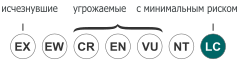
Least ConcernedIUCN 3.1 Least Concern : 20694305 |
|
This type of sunflower is named after Prince Maximilian Vid-Neuwid , who encountered him during his travels in North America.
Content
Botanical illustration (1879)
Branching perennial herbaceous plant, forming a thick rhizome and reaching a height of 50 to 300 cm. Thin, tall, straight stems and alternately arranged leaves are covered with coarse hairs.
The leaves are narrow, pointed, folded in the middle and up to 30 centimeters long on adult plants.
Baskets are surrounded at the base by spiky green petals. The central disk flowers are yellow-brown, and the outer bright yellow from 2 to 4 centimeters in length.
The plant propagates by seeds and vegetatively from the rhizome.
The homeland of Maximilian sunflower is the Great Plains in central North America . It grows in the eastern and western parts of the continent. Now its range is located in British Columbia , in the state of Maine , in South Carolina , Chihuahua and California . The plant thrives in a number of ecosystems, especially on the plains in central Canada and the United States. It is also cultivated as ornamental .
The thick rhizome is edible and looks like Jerusalem artichoke tubers . Eaten by Native American tribes such as Sioux . Flowers attract insects, and seeds are eaten by birds.
- ↑ For the conventionality of specifying the class of dicotyledons as a superior taxon for the plant group described in this article, see the APG Systems section of the Dicotyledonous article .
- Schilling EE Helianthus maximiliani // Flora of North America : North of Mexico: [ eng. ] : in 30 vol. / ed. by Flora of North America Editorial Committee. - New York: Oxford University Press, 2006 .-- Vol. 21: Magnoliophyta: Asteridae (in part): Asteraceae, part 3. - 642 p. - ISBN 0-19-530565-5 . - ISBN 978-0-19-530565-4 .