Maria I Tudor (February 18, 1516, Greenwich - November 17, 1558, London ) - the first crowned queen of England since 1553, the eldest daughter of Henry VIII from her marriage to Catherine of Aragon . Also known as Mary the Bloody (or Bloody Mary , English Bloody Mary ), Mary the Catholic .
| Mary I | |||||||
|---|---|---|---|---|---|---|---|
| Mary i | |||||||
 | |||||||
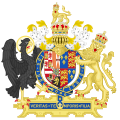 | |||||||
| Motto | Veritas Temporis Filia | ||||||
| Coronation | October 1, 1553 | ||||||
| Predecessor | Jane gray | ||||||
| Successor | Elizabeth I | ||||||
| |||||||
| Predecessor | Jane gray | ||||||
| Successor | Elizabeth I | ||||||
| |||||||
| Predecessor | Isabella Portuguese | ||||||
| Successor | Elizabeth Valois | ||||||
| Birth | February 18, 1516 Greenwich | ||||||
| Death | November 17, 1558 (42 years old) St James's Palace , London | ||||||
| Burial place | |||||||
| Kind | Tudors | ||||||
| Father | Henry VIII | ||||||
| Mother | Catherine of Aragon | ||||||
| Spouse | Philip II , King of Spain | ||||||
| Religion | Catholicism | ||||||
| Autograph |  | ||||||
| Awards | Golden Rose | ||||||


This queen was not erected a single monument in her homeland (there is a monument in her husband’s homeland - in Spain ), her name is associated with bloody reprisals, the day of her death (and at the same time the day of accession to the throne of Elizabeth I ) was celebrated in the country as a national holiday.
Content
- 1 Childhood and adolescence
- 2 A series of stepmother
- 3 Queen of England
- 4 Death of the Queen
- 5 Ancestors of Mary Tudor
- 6 Portraits of Maria Tudor
- 7 In culture and art
- 8 Comments
- 9 notes
- 10 Literature
Childhood and Youth
Before the birth of Maria Tudor, all the children of Henry VIII and Catherine of Aragon died during prenatal development or immediately after birth, and the birth of a healthy girl caused great joy in the royal family.
The girl was christened in the monastery church near the Greenwich Palace three days later, they named her in honor of Henry's beloved sister, Queen of France Maria Tudor .
The first two years of her life, Mary moved from one palace to another. This was due to the epidemic of English sweat , which the king feared, moving farther and farther from the capital.
The Princess’s retinue during these years consisted of a lady mentor, four nannies, a laundress, a chaplain, bedding and a staff of courtiers. They all dressed in the colors of Mary - blue and green.
By the fall of 1518 the epidemic receded and the courtyard returned to the capital and to its usual life [1] .
At this time, in France, Francis I ascended the throne. He was eager to prove his strength and power, for which he sought to enter into a friendly alliance with Henry through the marriage of Mary and the French Dauphin Francis .
Negotiations ended by the fall of 1518. Mary was supposed to get married when the Dauphin was fourteen years old. Among the conditions was the following: if Henry did not have a male heir, Maria would inherit the crown. However, Henry did not believe in such an opportunity, since he was still hoping for a son (Queen Catherine was in her late pregnancy), and it seemed inconceivable that a woman would rule the country. But in November 1518, Catherine of Aragon gave birth to a dead child, and Mary continued to be the main contender for the English throne.
Maria’s childhood was surrounded by a large retinue corresponding to her position. However, she rarely saw her parents.
Her high position was slightly shaken when the lover of King Elizabeth Blount gave birth to a boy ( 1519 ). He was called Henry , the child was revered as having a royal origin. He was assigned a retinue and granted titles corresponding to the heir to the throne.
The plan for the education of the princess was compiled by the Spanish humanist Vives . The princess had to learn to speak correctly, master grammar and read in Greek and Latin. Great importance was given to the study of the work of Christian poets, and for the sake of entertainment she was recommended to read stories about women who sacrificed themselves - Christian saints and ancient warrior virgins . In her free time, she was engaged in horse riding and falconry. However, there was one omission in her education - Mary was not at all prepared for government.
In June 1522, the emperor of the Holy Roman Empire, Charles V, arrived at the court of Henry. In honor of him, rich festivities were arranged; several months were prepared for this meeting. An agreement was signed on it to conclude an engagement between Maria and Karl (the engagement with the French dauphin was canceled).
The groom was sixteen years older than the bride (Mary at that time was only six). However, if Karl perceived this union as a diplomatic step, then Maria had some romantic feelings for her fiance and even sent him small gifts.
In 1525 , when it became clear that Catherine would not be able to give birth to an heir, Henry seriously thought about who would become the next king or queen. If his illegitimate son was granted titles earlier, then Mary received the title of Princess of Wales . This title was always worn by the heir to the English throne. Now she needed to manage her new holdings on the spot.
Wales was not yet a part of England, but only a dependent territory. Managing it was not an easy task, since the Welsh considered the British conquerors and hated them. The princess left for her new possessions at the end of the summer of 1525 with a huge retinue. Her residence in Ludlow represented the royal court in miniature. Mary was entrusted with the duties of administering justice and performing ceremonial functions.
In 1527, Henry cooled off in his love for Karl. The engagement between him and Maria was terminated shortly before Mary's departure to Wales. Now he was interested in an alliance with France. Mary could be offered as a wife to Francis I himself or to one of his sons. Mary returned to London. She is old enough to shine at the balls.
A series of stepmothers
In the summer of 1527, Henry decided to annul the marriage with Catherine, while Mary became the illegitimate daughter of the king and lost her right to the crown.
The next few years, Maria was a means of pressure on Henry against the Queen, Catherine did not recognize the invalidity of the marriage, and Henry, threatening her, did not allow her to see her daughter.
After the unauthorized divorce of Henry, the life of Mary did not improve at all. He married again, Anna Boleyn became his new wife, and Maria was sent to serve her stepmother, who tried to establish relations with her stepdaughter, but was refused every time. But soon Anna Boleyn was executed for false adultery and Henry VIII married the quiet and calm Jane Seymour . She gave birth to a king son Edward , but soon died of a maternal fever.
Now the king changed wives very quickly. After Jane was Anna Klevskaya , then Catherine Howard , and the last - Catherine Parr . Mary's life now depended on what kind of relationship she developed with the new wives of the king.
After the death of Henry, Mary was still not married, although she was 31 years old. She was the second pretender to the throne after Edward - the son of Heinrich and Jane Seymour. Edward was nine when he ascended the throne. He was a weak and sickly boy. Duke of Somerset and William Paget became regents at his place. They feared that if Mary got married, then with the help of her husband she would try to seize the throne. They tried to keep her away from the yard and in every possible way set the young king against her older sister.
The main clue to the friction was the reluctance of Mary, a faithful Catholic, to convert to the Protestant faith professed by King Edward.
At the beginning of 1553, Edward showed symptoms of a progressive stage of tuberculosis . A weakened teenager was forced to sign a law on inheritance. According to him, Jane Gray , the eldest daughter of the Duke of Suffolk , became the queen. Maria and her half-sister Elizabeth - the daughter of Anna Boleyn - were excluded from the candidates for the throne.
Queen of England
After the death of Edward, the sixteen-year-old Jane Gray really became the queen. During the succession crisis, Mary managed to escape reprisal and fled to East Anglia. The military operation against Mary was unsuccessful. Jane Gray did not have wide support in the English elite and managed to stay on the throne for only 9 days, after which the crown passed to Mary.
| Henry VII 1457-1509 | Elizabeth York 1466-1503 | ||||||||||||||||||||||||||||||||||||||||||||||||||||||||||||||||||||||||||||||||||||||||||||||||
| Jacob IV Stewart 1473-1513 | Margarita Tudor 1489-1541 | Archibald Douglas 1489-1557 | Arthur Tudor 1486-1502 | Catherine Aragon 1485-1536 | Henry VIII 1491-1547 | Anna Boleyn c. 1507-1536 | Jane Seymour c. 1508-1537 | Maria Tudor 1496-1533 | Charles Brandon c. 1444-1545 | ||||||||||||||||||||||||||||||||||||||||||||||||||||||||||||||||||||||||||||||||||||||||
| Maria de giz 1515-1560 | Jacob V Stewart 1512-1542 | Margarita Douglas 1515-1578 | Matthew Stewart 1516-1571 | Mary I 1516-1558 | Elizabeth I 1533-1603 | Edward VI 1537-1553 | Francis Brandon 1517-1559 | Henry Gray 1517-1554 | Eleanor Brandon 1519-1547 | Henry Clifford 1517-1570 | |||||||||||||||||||||||||||||||||||||||||||||||||||||||||||||||||||||||||||||||||||||||
| Maria Stewart 1542-1587 | Henry Stewart (lord darnley) 1545-1567 | Jane Gray c. 1537-1554 | Katerina Gray 1540-1568 | Maria Gray c. 1545-1578 | Margarita Clifford 1540-1596 | ||||||||||||||||||||||||||||||||||||||||||||||||||||||||||||||||||||||||||||||||||||||||||||
Notes: The heirs of Edward VI according to the will of Henry VIII: first stage second stage. Those who died on July 6, 1553 inclusive, and their spouses
After the reign of Henry VIII, who declared himself the head of the Church and excommunicated by the pope, more than half of the churches and monasteries in the country were destroyed. After Edward, whose close associates plundered the treasury, Mary had a difficult task. She got a poor country, which had to be revived from poverty.
For the first six months on the throne, Mary executed 16-year-old Jane Gray, her husband, Guildford Dudley , father, Henry Gray , and father-in-law - John Dudley . Being by nature not prone to cruelty, Maria for a long time could not decide to send her relative to the chopping block. Maria understood that Jane was only a pawn in the wrong hands and did not at all aspire to become a queen. At first, the trial of Jane Gray and her husband was planned as an empty formality - Maria hoped to immediately have mercy on the young couple. But the fate of the “Queen of the Nine Days” was decided by the rebellion of Thomas Wyatt, which began in January 1554. Jane Gray and Guildford Dudley were beheaded at the Tower on February 12, 1554.
She again brought closer to herself those people who had recently been against her, knowing that they were able to help her in running the country. She began the restoration of the Catholic faith in the state, the reconstruction of monasteries. However, the period of her reign had a large number of executions of Protestants.
From February 1555, bonfires were burning in England. In total, about three hundred people were burned, among them ardent Protestants, hierarchs of the church - Kranmer , Ridley, Latimer and others, whose conscience was both the Reformation in England and the split within the country. It was ordered not to spare even those who, facing a fire, agreed to adopt Catholicism. Subsequently, the reign of Elizabeth I came up with a nickname for her sister - Maria Bloody.
In the summer of 1554, Mary married Philip , son of Charles V. He was twelve years younger than his wife. Under a prenuptial agreement, Philip did not have the right to interfere in government; children born from this marriage became heirs to the English throne. In the event of the premature death of the Queen, Philip had to go back to Spain.
The people disliked the queen's new husband. Although the queen tried through parliament to decide to consider Philip king of England, the parliament refused her this.
The Spanish king was pompous and arrogant; the retinue who arrived with him behaved defiantly. Bloody skirmishes between the British and Spaniards began to take place on the streets.
Queen's death
In 1557, a “fever” ( English ague or fever ) of a viral nature came to Europe [comm. 1] , which became the worst epidemic of the XVI century [2] . In England, its peak, comparable in mortality with losses from black death [3] , occurred in the fall of the harvest of 1558: on the southern coast of the country more than half the population fell ill with a “fever” [4] . The then famous plague and English sweat struck people quickly and mercilessly; the new disease was long, sluggish, and its outcome was unpredictable [5] . Mortality was especially high among visitors from continental Europe, the nobility and the clergy [6] [7] , and Cardinal Pole and the Queen herself became the most famous victims of the “fever” [8] .
At the end of August 1558, twenty-year-old cameraman Maria (future Duchess Feria) came down from the “fever”, and when she recovered, it was Maria’s turn [9] . With the first manifestations of the disease, the queen retired to St. James's Palace [10] . Modern historians describe the course of the disease in different ways: David Lods believes that after the August attack there was a remission [11] , followed by a fatal exacerbation in October [11] ; Linda Porter believes that Mary slowly and inevitably faded throughout the fall [12] . By the end of October, she fell down completely and realized that she could not survive [12] . The people on whom she usually relied could no longer help her: Cardinal Pole suffered the same “fever”, and in October they came to London about the death of Charles V and his sister [13] [comm. 2] . Philip, who was busy with his father’s funeral and the war in Flanders , could not help, and was not going to: he was only interested in the bloodless transfer of the English crown to Elizabeth and the preservation of friendly relations with the new queen [14] .
Despite the loss of strength and enmity with her sister, Maria was also worried about the fate of the country [15] . On October 28, she approved the will in favor of the yet-unnamed successor and removed Philip from any rights to England [16] . On November 8, when Mary had already fallen into an unconscious state, her messengers conveyed the Queen’s oral blessing to Elizabeth [17] . Early in the morning of November 17, Mary regained consciousness briefly, listened to the Catholic Mass, and soon died quietly [18] . On the same day, learning about the death of the Queen, Cardinal Pole died [19] [20] .
Elizabeth, supported by the nobility and parliament, immediately took control of the country. The carefully planned and organized Maria’s funeral ceremony, which cost the treasury 7763 pounds , took place only December 13-14, 1558 [21] . The coffin was buried in the chapel of Henry VII of Westminster Abbey . In 1606, by the will of Jacob I , Elizabeth, who died in 1603, was reburied in the same grave [comm. 3] , and since then the half-sisters lie under one tombstone, on which a single sculpture is installed - Elizabeth [22] [23] . The Latin epitaph on the grave reads: “Allies on the throne and in the grave, sisters Elizabeth and Mary lie here in the hope of resurrection” ( lat. Regno consortes et urna, hic obdormimus Elizabetha et Maria sorores, in spe resurrectionis ) [24] [25] .
Ancestors of Mary Tudor
Portraits of Mary Tudor
Hans Holbein the Younger , 1536
"Master John", 1544
, 1550
Hans Evort , 1554
Hans Evort, 1554
Anthony More , 1554
In her youth, Maria Tudor was portrayed by Hans Holbein the Younger and “Master John” , in 1550, [26] , during her reign — Hans Eworth , who painted three different portraits, and Antonis More . In contrast to the numerous , executed in a catchy national English style, the portraits of Eworth and More in one way or another reproduce the manner of Titian [comm. 4] and do not belong to a new time , but to the already ending Renaissance [27] .
The earliest of the reliably attributed portraits of Mary was written in 1544 by "Master John." In this portrait, 28-year-old Maria is still beautiful, but her best years are already behind. Inexpressive eyes, the corners of the mouth lowered down are signs of mental suffering suffered in the 1530s [28] . These same features, captured in later portraits, determined the perception of the image of Mary by historians. believed that they depicted a "bile and limited" woman, the exact opposite of his father and sister [29] . Penry Williams wrote that Maria Eworth and Mora - “gloomy, faded and depressed [woman], devoid of the spark of the image of God ” and royal greatness [30] ; it is “an ordinary woman, able to win our sympathies, but not inspiring respect” [31] .
The most expressive [32] of the queen's lifetime images is a portrait in the chiaroscuro technique painted by Antonis More on the order of Charles V in 1554, shortly after his marriage to Philip [33] (in 1557 this portrait was reproduced in an anonymous pair image of Philip and Mary [ 34] ). Pestilence, the court painter of Karl and Philip, was not connected with English society and was not interested in varnishing the image of Mary; it is likely that the naturalism of his painting was dictated by the customer himself [35] . In the portrait of Mora, Maria, already a middle-aged woman, sits in a natural pose, her face is brightly lit, her facial features are incorrect [33] . Brooch on the neck of Mary, decorated with the [comm. 5] - a Habsburg wedding present, a rose in her right hand - the emblem of the Tudor house and at the same time the emblem of the Virgin Mary , and therefore, perhaps, a hint of the Queen’s expected pregnancy [35] . If this assumption is true, then Mary in this portrait is not an independent ruler, but only the king’s wife from the Habsburg house [36] .
Mary’s reign went to popularist cartoons [37] , depicting a “bloody” queen in the image of a female with many nipples, feeding bishops, priests and Spaniards [38] . An 18th-century historian Thomas Carte wrote that proclamations were secretly thrown into the houses of the nobles and the queen herself, in which Mary was depicted “naked, skinny, wrinkled and shriveled, with flabby and incredibly saggy breasts ...” [39] . Anonymous authors explained to the reader that the queen looks like this because the Spaniards crowding at the throne robbed her, leaving only skin and bones [40] .
Intravital sculptural portraits of Maria in profile were performed by the Habsburg court medalist ( Spanish: Jacome da Trezzo, Jacometrezzo ), who arrived in London in 1554 [41] . The funeral effigia of Mary has survived to this day [23] . The wooden head of this effigy is exhibited in a permanent exhibition of Westminster Abbey [23] .
In Culture and Art
Comments
- ↑ The current medical view of the events of 1557-1558 as an SARS epidemic that has not reached the scale of a pandemic is set forth, for example, in Cuhna, BD Influenza: historical aspects of epidemics and pandemics // Infectious Disease Clinics of North America. - 2004. - Vol. 18. - P. 141-155. Archived December 3, 2013.
- ↑ These deaths were not related to the “fever” epidemic. Maria of Austria shortly before her death suffered two heart attacks, and Charles V, according to modern research, died of malaria ( de Zulueta, J. The cause of death of Emperor Charles V // Parassitologia. - 2007. - June (vol. 49, no. 1-2 ). - pp . 107-109 . - PMID 18412053. )
- ↑ Whitelock, 2010 , p. 1: In 1603, Elizabeth was buried in the most honorable place of the Abbey, between Henry VII and Elizabeth of York. Yakov, having come to power, decided to take this grave for himself, which required the reburial of Elizabeth ..
- ↑ Titian has been a personal portrait painter of Philip II since 1549. Titian's direct and indirect connections with the court of Philip and Mary are examined in Hope, Charles. Titian, Philip II and Mary Tudor // England and the Continental Renaissance: Essays in Honor of JB Trapp . - Boydell & Brewer, 1990. - P. 53-66. - 322 p. - ISBN 9780851152707 . .
- ↑ This pearl, one of the largest in the world, belonged successively to the Portuguese, Spanish and English monarchs and disappeared without a trace in the 17th century. In 2004, the "Pearl of Mary Tudor" appeared in London - see Giant pearl linked to Bloody Mary (May 12, 2013).
Notes
- ↑ Ericsson, 2007 , p. 46-47.
- ↑ Porter, 2010 , pp. 7416-7420.
- ↑ Porter, 2010 , p. 4227: "In 1558, the year of Mary's own demise, a virus probably related to influenza caused one of the greatest losses of life in England in a single year since the Black Death.".
- ↑ Porter, 2010 , pp. 7422-7426.
- ↑ Porter, 2010 , pp. 7420.7436-7438.
- ↑ Porter, 2010 , pp. 7426-7438.
- ↑ Ericsson, 2007 , Ch. 2: "the victims of the insidious disease were primarily the richest and most privileged members of society (those who ate the best)."
- ↑ Porter, 2010 , p. 7441.
- ↑ Porter, 2010 , pp. 7441-7446.
- ↑ Porter, 2010 , "She retired to her apartments and never came abroad again." The author cites Clifford, L. Life of Jane Dormer, Duchess of Feria, ed. J. Stevenson - London, 1887, p. 7446.
- ↑ 1 2 Loades, 2004 , p. 206.
- ↑ 1 2 Porter, 2010 , p. 7449.
- ↑ Porter, 2010 , p. 7451-7455.
- ↑ Porter, 2010 , pp. 7461-7463.
- ↑ Porter, 2010 , p. 7465.
- ↑ Porter, 2010 , pp. 7465-7473.
- ↑ Porter, 2010 , pp. 7475-7477; 7509.
- ↑ Porter, 2010 , p. 7517.
- ↑ Ericsson, 2007 , Ch. 49.
- ↑ Porter, 2010 , pp. 7519-7521.
- ↑ Porter, 2010 , pp. 7533, 7536, 7546, 7550.
- ↑ Porter, 2010 , pp. 7580, 7582.
- ↑ 1 2 3 Royals and the Abbey. Burials. Mary I . Westminster abbey (2013).
- ↑ Whitelock, 2010 , Introduction. Resurrection (lat. Original).
- ↑ Porter, 2010 , p. 7582 (English translation).
- ↑ Porter, 2010 , p. 3406.
- ↑ Montrose, 2006 , p. 70.
- ↑ Porter, 2010 , p. 2486.
- ↑ Gibbs, 2006 , p. 296: "Her portraits show her a bitter and narrow-minded woman, curiously unlike her father, brother, and sister.".
- ↑ Gibbs, 2006 , p. 296: "Portraits of Mary Tudor convey very little of the majesty of Kingship ... she appears in the paintings by Antonio Mor and Hans Eworth as sour, inhibited, and drab: there is no reflection here of God's image on earth."
- ↑ Williams, 1998 , p. 86: "... rather plain woman who wins our sympathy but does not command our respect."
- ↑ Montrose, 2006 , p. 66: "most striking."
- ↑ 1 2 Montrose, 2006 , p. 66.
- ↑ Montrose, 2006 , p. 68.
- ↑ 1 2 Montrose, 2006 , pp. 66, 68.
- ↑ Montrose, 2006 , p. 68 provides a brief bibliography of authors supporting this version.
- ↑ Montrose, 2006 , p. 69: "crude woodcuts."
- ↑ Montrose, 2006 , p. 69.
- ↑ Carte, 1752 , p. 331: "naked, meager, wrinkled, and withered, with flabby breasts hanging down to a strange length."
- ↑ Carte, 1752 , p. 331.
- ↑ Bonomi, 2010 , p. 28.
Literature
- Horse P.A. ,. Maria I Tudor // Encyclopedic Dictionary of Brockhaus and Efron : in 86 volumes (82 volumes and 4 additional). - SPb. , 1890-1907.
- Ericsson, C. Maria Bloody. - AST, 2007 .-- 637 p. - ISBN 9785170462452 .
- Bonomi, C. Jacopo Nizzola da Trezzo, Medaglista alla Corte di Spagna . - Comune di Trezzo sull'Adda, 2010 .-- 51 p. Archived August 29, 2011 on Wayback Machine
- Carte, T. A General History of England, Volume 3 . - London, 1752.
- Gibbs, G. Marking the Days: Henry Machyn's Manuscript and the Mid-Tudor Era // The Church of Mary Tudor . - Ashgate, 2006 .-- P. 1–32. - 348 p. - ISBN 9781001519326 .
- Loades, D. Intrigue and Treason: The Tudor Court, 1547–1558. - London: Pearson Longman, 2004 .-- ISBN 0-582-77226-5 .
- Montrose, L. Elizabeth Through the Looking Glass // The Body of the Queen: Gender and Rule in the Courtly World, 1500-2000 . - Berghahn, 2006. - (Berghahn Series History / Gender Studies). - ISBN 9781845451592 .
- Palliser, DM A Developing Economy // The Cambridge Historical Encyclopedia of Great Britain and Ireland / ed. Haigh, C. .. - Cambridge University Press, 1990 .-- 392 p. - ISBN 9780521395526 .
- Porter, L. Mary Tudor: The First Queen . - Hachette Digital, 2010 .-- 9392 p. - ISBN 9780748122325 . . Page numbers are listed in the electronic publication for the Kindle Reader.
- Whitelock, A. Mary Tudor: England's First Queen . - 2010 .-- 384 p. - ISBN 9781408813683 .
- Williams, P. The Later Tudors: England, 1547-1603 . - Oxford University Press, 1998. - (New Oxford history of England). - ISBN 9780192880444 .