
Pleating or pleating (from French plissée - “wrinkle”, from Latin plicāre - “crease”; Indo-European root plek ) [1] [2] - a decorative element of clothing in the form of small, mechanically pressed, unstitched folds, which can be both flat (lying) and protruding accordion (corrugation).
As a rule, pleated skirts are made straight and flared (“sun” or “sun”), often pleated frill is used to trim skirts (bottom), dresses or blouses (sleeves or collar). To perform pleating, approximately three times more matter is required than the width of the finished product [3] [4] .

Ancient Egyptians in pleated clothing, approx. 1279-1257 BC (reign of Ramesses II )
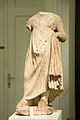
Marble sculpture of a girl in a pleated tunic , II century BC Kinski Palace, Prague

Pleated sleeve on a dress in 1830. Los Angeles County Museum of Art
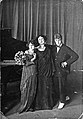
Sergey Yesenin , Isadora Duncan and her adopted daughter Irma. 1922 year. Irma and Isadora - in pleated dolphos dresses Mariano Fortuni .

Men in pleated kilts


See also
- Corrugation
Notes
- ↑ Indo-European root plek- . TheFreeDictionary.com. Date of treatment January 22, 2019.
- ↑ Plissé dictionary definition | plissé defined . www.yourdictionary.com. Date of treatment January 22, 2019.
- ↑ Pleating // Brief Encyclopedia of Household. - M .: Great Soviet Encyclopedia, 1959. - T. 2. - S. 468.
- ↑ P.I. Novoderezhkin. Sewing and knitwear. - Gos. publishing house of trade literature, 1959. - S. 106. - 344 p.