
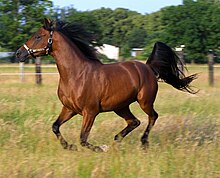
Domestic animals - animals that have been domesticated by a rational person and which he contains, providing them with shelter and food. They benefit him either as a source of material goods and services, or as companion animals that brighten up his leisure time . Most pets breed easily. Through selection , a person can control their reproduction and the characteristics that they transmit to their offspring.
Content
General characteristics
Some domestic animals ( farm animals ) bring immediate material benefits to humans, for example, as a source of food ( milk , meat ), materials ( wool , skin ). Other animals ( livestock and service animals ) benefit the person by performing work functions (transportation of goods, security, etc.).
The second large category is companion animals that take leisure, enjoyment and with whom you can communicate. For urban residents, the concept of “pets” is more often associated with the second category, that is, with “pets (pets)”. Many families that keep some animals at home, note that these animals create comfort, calm, relieve stress .
It should be borne in mind that animals of the same breed can often be used for various purposes. For example, someone breeds rabbits for meat and fur, while someone keeps the rabbit at home as a pet. Some waste products of the companion animal can be used as insignificant production raw materials. So, from a long-haired dog , as well as a cat or a rabbit , you can collect a certain amount of wool and use it to knit warm clothes for yourself or family members. Feathers of poultry are used for decorative crafts and fine art.
Pets can be kept in special rooms (stockyard, stable , doghouse), but they can also live directly in the person’s house. Of the animals that live in the house, some are kept in cages , aquariums , terrariums and other "houses", while others (for example, cats , dogs , rabbits and even monkeys ) are allowed to move freely around the room.
Pets in developed countries feed mainly on commercially produced feeds from specially selected ingredients. This is compound feed for farm animals, cat or dog food. These feeds are not only convenient to use, but also provide the animal with all the necessary substances. However, for a number of domestic animals, in particular most amphibians and reptiles , such feeds are not suitable. Their diet at home should be as close to natural as possible. In addition to pets, unwanted tenants - house animals can also be in the house. They settle in a house or near a person’s home without an invitation, without any benefit and sometimes cause a lot of harm. This, for example, rats , mice , cockroaches , ants . Domestic animals are part of a larger group of synanthropic animals living near human dwellings.
Captive breeding
Pets descended from wild animals living in the wild. Many wild animals can be tamed, especially at a young age, and even kept at home. It sometimes happens that wild animals are easily tamed, but with difficulty breed in captivity. But if the domesticated animals breed, their offspring must be tamed again.
Unlike wild animals tamed or kept in captivity, domestic animals tend to breed easily. In the case when such an easy reproduction is desirable, fertility is spoken of as a positive quality. The offspring of domestic animals does not need to be tamed - the characteristic features that make the animal domesticated are fixed in the genes and are inherited. This genetic set has developed in the process of selection , which people have been conducting for centuries.
The number of species of domestic animals is relatively small relative to the total number of species in the animal kingdom. So, in the world there are more than two thousand species of mammals , and there are about 40 species of domestic animals. If you remove organisms such as insects ( bee , cochineal , two or three species of silkworm ) from the list of domestic animals and two species of fish ( goldfish and carp , more in the aquarium section), then there will be only 27 species of “real” domestic animals.
Biological classification
All domestic animals are included in the general biological classification along with their wild relatives:
- Livestock, as a rule, belongs to the class of mammals , the order of artiodactyls and the order of ruminants . In the full sense, livestock , that is, animals, the existence of which is fundamentally dependent on humans and without which, in turn, it is difficult for humans to do, no more than 7-8 species. These species have played a historical role in the development of culture. These include a cow (or cattle ), a sheep , a goat ( cattle ), buffalo , dromedar , bactrian , llama , alpaca and reindeer . In Asia, the functions of the bull are carried out by the banteng and the guyala , and in Tibet - by the yak . Of non-ruminant artiodactyls, pig belongs to livestock. The cattle are domestic horses , ponies , donkeys and mules .
- Dog , cat , ferret - predatory ( Carnivora ).
- Rabbit - Hare ( Lagomorpha ).
- Guinea pig , mouse , decorative rat - rodents ( Rodentia ).
Poultry is classified as follows:
- order of chicken ( Galliformes ) - chicken , turkey , Japanese quail , guinea fowl , pheasant and peacock ,
- Anseriformes order - mute swan , goose , duck and musky duck ,
- squad of pigeon- shaped ( Columbiformes ) - a dove of blue and Turkish,
- Passeriformes order - canary ,
- order of parrots ( Psittaciformes ) - budgerigar .
Since the 19th century, domesticated ostriches , which belong to the ostrich-like order ( Struthioniformes ), have been bred in Africa, and then in Asia, Europe and North America [1] .
Farm Animals
Not all of the animals listed here are domesticated equally. The most domesticated farm animals. They have a highly developed ability to adapt (with the assistance of man) to a variety of external conditions. For example, they can tolerate extreme cold and heat and eat fodder, not only supplied by nature itself, but also prepared artificially. These properties are possessed by a cow, a sheep, a horse and a pig, and therefore they are common on the farm. But there are those who, such as buffalo , camel , reindeer , llama and alpaca (paco), live only in certain places - in very cold, or in hot bands of Asia and Africa, or in the high mountains of Peru .
Pets bring great benefits to humans. They are a source of food - ( milk , butter , cheese and other dairy products , as well as meat , fat ). Raw materials for the manufacture of clothing, shoes. They carry heavy loads and help to carry out agricultural work. Sometimes animals are kept for pleasure and entertainment, such as some birds. Birds are bred to obtain healthy products (meat, eggs, feathers , fluff ). Domestic insects - to get healthy foods. Bees produce honey , and silkworms produce raw materials for making silk . Supporters of the animal rights movement believe that people should not kill animals in order to use meat and skins . Some vegetarians (vegans), in addition to meat, also do not eat milk and eggs .
Breeding
The main feature of pets used by breeders is the diversity of their qualities. This is used to breed a variety of breeds. Thanks to painstaking selection work, in the last two centuries, some of the original animals have changed beyond recognition. An example is a short-haired cow, Leicester and Southdown sheep, an English horse and a heavy truck, and finally, the Yorkshire and Berkshire pig breeds. These changes in the animal organism and the consolidation of the desired heredity became possible as a result of long-term work carried out by many generations of breeders.
If you take the original animal and put it next to the animal bred, the selection results are often simply unbelievable. The English bull reaches a mass of up to 50-70 pounds. A Russian peasant sheep weighs 50-60 pounds , a Southdown breed sheep is fed up to 400-600 pounds, and besides, it gives 10-15 pounds of fine long hair. English pigs in one year reach a mass of 10-12 pounds (for comparison, to obtain such a mass, a Russian pig needs to be raised 3-4 years). There is nothing to say about the English horses and heavy trucks, they have long gained worldwide fame.
An interesting example of changes in the properties of domestic animals depending on the needs of a person is a merino sheep. The selection of its coat was determined by changes in demand for various types of wool. Over the past decades, sheep farmers have tried to change the length, fineness and other characteristics of merino wool.
Currently, breeders seek to create breeds that could be useful for several functions. For example, in cattle they try to combine milk production with the ability to fatten, and in sheep - the production of good wool with meatiness.
The work of Beckwell and the Collins brothers showed that through selection, you can achieve the desired changes in the properties of domestic animals, and you can only guess if there is a limit to these changes.
Darwin in his world-famous essay “On the Origin of Species” repeatedly referred to the achievements of pastoralists in breeding new livestock breeds. The entire first chapter of the book is devoted to the changes that animals and plants undergo as a result of their cultivation.
Domestication History
Little is known about how and when domestication began. There is practically no information about this either in the legends or in the historical chronicles. It is believed that a person of the stone period already had with him almost all the main domestic animals. The most ancient cultural monuments, including the Bible , speak of cows, sheep, horses and others, as the most ordinary accessories of the shepherd's and agricultural industries. The time when humans tamed modern domestic animals remains unknown, as is the origin of most domestic mammals.
It is believed, however, that each of the domestic animals had wild ancestors. This is proved by studies of bones found in the remains of pile structures. In the analysis of the excavations, it was possible to distinguish the bones of domestic animals from the bones of their relatives of wild animals. Thus, we can assume that in the prehistoric era, the same animals could be both wild and domesticated. Currently, the species to which some domestic animals belong are not found in the wild ( cow ).
The question of who was the ancestor of some of the pets is still controversial. So, some believe that the Russian domestic sheep came from mouflon , others from argali , and others from the North African wild sheep ( Ovis tragelophus ). The ancestor of the dog is who considers the wolf , who the jackal , and some both of these species (sometimes a coyote is added to them). According to modern concepts, dogs are wholly descended from wolves.
Wild representatives of many domestic animals became extinct. So, the founder of most breeds of cattle is considered the tour ( Bos primigenius ). He lived like a wild bull , not only in prehistoric, but also in relatively recent times. This is confirmed by the legends of Slavic folk poetry, ancient Russian epics, then the names of various tracts in which the name of the tour is heard and, finally, the positive news of chronicles and other monuments of ancient literature. Judging by these monuments, the ancient tour was well known to our ancestors, it was a massive animal, with long horns, bay uniforms, it was distinguished by tremendous strength and speed, it liked to stay in swampy areas in wooded areas, as if it were free for food and secluded. According to the epics , the boundaries of the tour’s habitat are determined by the Dnieper region , the Volyn land and Lithuanian forests, but the folk language and the names of different tracts in which the tour name is preserved expands these borders east to the headwaters of the Donets, and north to Ladoga (where Turova is a desert ), Gryazovets and Galich. Of the direct evidence of the tour, its description given by the famous Herberstein who came to Russia in the 16th century is especially remarkable. In order not to mix the tour with the bison that has been living and hitherto, Herberstein in his notes (“ Rerum Moscoviticarum commentarii ”) attached drawings of both animals.
Thus, the question of the origin of the domestic bull would be clear if it were not known that some of the domestic animals easily turn into wild ones. In America, before its discovery, there were no pets from the Old World. There were no horses, no cows, no pigs, no sheep, no goats. All of our original domestic animals were brought to America by Europeans and they all found such a favorable soil for themselves that they soon multiplied to overkill. Their number began to exceed the needs of the population. Under such conditions, of course, some animals were left unattended, began to lag behind herds, wander through the forests and gradually run wild. In this way, whole herds of wild bulls and horses began to be recruited in America. Natusius says he has had cases of running wild pigs and mating them with wild boars.
What happened to our pets in America and what happens in Europe in part is also repeated in the sparsely populated areas of Australia , where wild cattle and horses are not even safe for people. In the ease of wildness of domestic animals, some see as proof of their origin from wild species. Because it is as if some of the domestic animals so easily run wild, that their nature is more in tune with the wild state than the domestic, artificial state, from which they seem to strive to emerge. If domestication was a natural property of some animals, then it would not be so easy to do without human help and the transfer of single-species wild animals to their home state would not be difficult. Be that as it may, the question of the origin of our domestic animals, these closest servants and friends of man, should be considered open, since, according to the fair remark of Natusius, it lies outside of observations and experience.
As for pets, that is, animals living in the same house with a person, then dogs began to play this role before everyone else. In ancient Rome and early medieval Europe, pet was a common pet, as it hunted house rodents. However, due to the poor tameness of petting as a hunter of house pests, it was replaced by genes (for a short time in the Middle Ages) and cats, which remain common pets in our time, when the need to destroy rodents has already disappeared.
Homeless animals
Homeless animals are not domestic in relation to an individual person or family, but in relation to human society [2] . The term is close to the concept of “stray animals”, which includes all domestic and domesticated animals that have dropped out of human control, even temporarily (including lost or free-walking animals). On the other hand, stray animals can be fully or partially controlled by humans (see Guardian of Stray Animals ). Wild animals of cats and dogs ( dingo dogs) are not considered homeless animals.
As for species, dogs and cats predominate among stray animals.
See also
- Decorative rats
- Domestic foxes
- Companion animals
- Domestication
- Breed
- Rainbow Bridge (legend)
- Dog breeding
- Honoric
Notes
- ↑ Information from FAO 's publication on pets edited by Scherf (2000).
- ↑ Agafonov V. Protect animals from abuse. - M .: Russian United Democratic Party "Yabloko", Faction "Green Russia", V. A. Agafonov, 2007. - 85 p. - (Ser. "Environmental Policy").
Literature
- Pets / S. N. Bogolyubsky // Debtor - Eucalyptus. - M .: Soviet Encyclopedia, 1972. - ( Great Soviet Encyclopedia : [in 30 vols.] / Ch. Ed. A. M. Prokhorov ; 1969-1978, vol. 8). (Retrieved March 30, 2015) Archived March 30, 2015.
- Sovetov A.V. Pets // Brockhaus and Efron Encyclopedic Dictionary : in 86 volumes (82 volumes and 4 additional). - SPb. , 1890-1907.
- Tsalkin V.I. The oldest domestic animals of Eastern Europe. - M .: Nauka, 1970 .-- 280 p.