The Mound of Hog (Haga) [1] , or the Mound of King Björn ( Swedish: Hågahögen , Kung Björns hög ) is a burial mound found on the western outskirts of Uppsala , Sweden [2] . It is a magnificent monument of the northern Bronze Age .
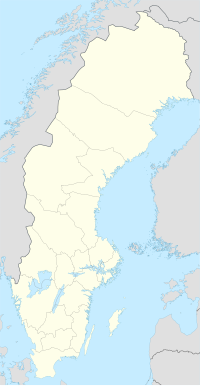
| Hoga Barrow | |
|---|---|
 | |
| A country: | Sweden |
| Height: | 7 |
| Coordinates | |

Content
Title
One of the names of the monument - Hågahögen - literally means “high hill”; the other is given in honor of the semi-legendary king of Sweden, Björn of Hoga , the character of the sagas that is believed to have lived in Uppsala in the 9th century. The name Mound of King Björn has been known since at least the 17th century and is first mentioned in a letter from 1704. Modern historians have rejected the relationship of King Björn with the mound, but the name is fixed in literature.
Description
Hoga Barrow is 7 meters high and 45 meters across. It was created around 1000 BC. e. on the seashore (since then the sea receded in the process of glacioisostasis ). A wooden burial chamber was placed inside the mound, in which there was a wooden coffin with the cremated remains of a short person. The hill poured on top was covered with turf . The burial of a noble Scandinavian was probably accompanied by human sacrifice, as evidenced by the human bones found there, from which the bone marrow was removed.
Inside the coffin, a rich set of artifacts made of bronze and gold was discovered: a bronze age sword with ornaments, a razor, two brooches, several gilded buttons, two tongs and other objects. All of them can come from one workshop on the island of Zealand . A total of 52 gold items were discovered, some with fragments only.
Study History
The mound was excavated in 1902-1903 by the Swedish archaeologist Oscar Almgren together with the future king Gustav VI Adolf [3] . In a nearby settlement, in strata belonging to the Bronze Age, only small archaeological works were carried out, however, they made it possible to find several stone foundations of the houses. Finds from the mound itself were placed in the Stockholm Historical Museum .
In 1986, the museum was stolen; one of the museum’s main valuables was stolen - a gold brooch from Hog Barrow. Its fragments were discovered near the main entrance of the museum a few months later when the snow melted.
Notes
- ↑ Natalya Zemlyanskaya. Sweden in your pocket. Guide. - Litres, 2017 .-- S. 149. - ISBN 545755225X .
- ↑ Location of Hogi Barrow
- ↑ Almgren, Oscar . "Kung Björns hög" och andra fornlämningar vid Haga , 1905