

Science in Sweden - scientific directions developed by scientists in Sweden .
Science in Sweden owes its development primarily to the talents of its people, Swedish education and pedagogy [1] . Swedish scientists made a significant contribution, including to the development of world culture and science. Swedish high-quality scientific and technological development is known throughout the world.
It is worth noting that in the XVIII century, the science of Sweden was influenced by educational ideas [2] , which penetrated from France and Great Britain . The development of natural science in Sweden is associated with the formation of the first universities in Uppsala and Lund , with the opening of astronomical observatories in Uppsala. The Royal Scientific Society in Uppsala was founded in 1710 and the Royal Academy of Sciences in Stockholm in 1739.
The first president of the academy was K. Linney. He had a great influence on the formation of science in Sweden. The Swedish Academy of Sciences in 1739 published the first Swedish scientific journal.
Content
Natural and technical sciences
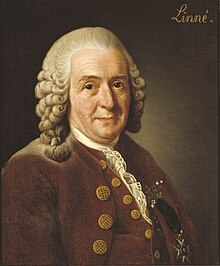
The naturalist and naturalist Karl Linney [3] greatly influenced the development of science in Sweden . He created a nature system, comprehensive for his time [4] , published in 1735, and for the first time he began to apply binary nomenclature in a consistent manner. Karl Linney was also an honorary foreign member of the St. Petersburg Academy of Sciences. Linnaeus is recognized as the “father” of modern taxonomy [5] [6] the vast world of animals and plants, laid the foundations for the taxonomy of fauna and flora . Linney himself discovered and described more than a thousand species of plants in Scandinavia .
Physics
A contemporary of Linnaeus, Anders Celsius (1701-1744) as a physicist and astronomer , immortalized his name in history by introducing a centigrade scale for thermometers . With the works of A. Celsius, the beginning in Sweden of a system of scientific works in the field of astronomy is connected. It was Celsius who created the oldest astronomical observatory in Sweden in 1741 in the city of Uppsala and was its director. One of the founders of the Academy of Sciences M. Trivaldom promoted research physics in Sweden, built the first steam-atmospheric machine in Scandinavia, and wrote a work on mining.
Chemistry
Significant success was achieved by Swedish science of the XVIII century. in the field of chemistry. A great contribution to the development of chemistry was made by Jöns Jakob Berzelius (1779–1848). He developed electrochemical and atomic theories and created scientific mineralogy. Svante Arrhenius (1859-1927) created the theory of electrolytic dissociation and received the Nobel Prize in Chemistry for this in 1903. Alfred Nobel (1833-1896) - the famous Swedish chemist, engineer in 1867 invented dynamite , which brought him fame and fortune. In general, Nobel owned 355 different patents, dynamite is the most famous. The main part of his fortune Alfred Nobel donated to the fund, from the funds of which the Nobel Prizes are awarded annually. Prizes are awarded in Stockholm and Oslo on December 10, the day the scientist died. T.V. Bergman improved the qualitative analysis of K. Scheele, as a skilled experimenter discovered manganese, for the first time received chlorine, potassium permanganate, glycerin, a number of acids and other compounds, described the method of production and properties of oxygen. A.F. Kronstedt discovered nickel, developed a classification of minerals based on their chemical properties ("The Experience of Describing the Kingdom of Minerals" 1758).
Metallurgy and shipbuilding
In the seventeenth and eighteenth centuries, metallurgy and metalworking technologies, military shipbuilding, and the manufacture of cold and firearms received significant development. In the history of the development of technology, a significant place is taken by the name of the Swedish inventor John Ericsson , the designer of the first ship's propellers, ships and steam locomotives. During the Civil War in the United States, it was he who built the first armored ship with a rotating gun turret. That same famous armored ship "Monitor". This ship to a large extent contributed to the victory of the northerners over the southerners at sea.
Researchers Travelers
The names of courageous Swedish polar explorers entered the history of Arctic exploration [7] . After traveling around Svalbard and Greenland, Eric Nordenskjöld became interested in the development of the Northern Sea Route . So, in the years 1878-1879, he first sailed on the ship "Vega" from the Atlantic Ocean to the Pacific Ocean along the coast of Siberia . The name of the Nordenscheld is the archipelago of islands in the Kara Sea .
Solomon Andre in 1897 was the first to try to reach the North Pole in an Orel balloon of his own design and construction, but the balloonist died on the way to the target. The name of the brave aeronaut is immortalized in the name of one of the peninsulas of the Svalbard archipelago - Andre Land . Klingenshern is known for his mathematical works, P. Artedi developed the systematics of fish, E. Aharius created the basics of lichenology. Significant influence on the development of technology, mining and metallurgy was provided in the XVIII century by K. Polham, engineer Carl Gustav Laval invented a steam turbine and separator, which revolutionized the dairy industry and other technological processes.
Social Sciences
Philosophy
The development of philosophical thought in medieval Sweden is closely connected with Christian mysticism and scholasticism , and towards the end of the 16th century the teachings of the French philosopher Pierre de la Ramet penetrate here. His followers opposed the scholastic method. We can say that independent secular philosophy in Sweden was born around the 17th century. G. Shernelm is called the first Swedish philosopher and poet, whose works and contributions are considered significant. His works combine the ideas of both Neoplatonism , Pythagoreanism , and natural philosophy . Rene Descartes sharing ideas refute medieval scholasticism. At the beginning of the XIX century, the philosophical thought of Sweden was influenced by the currents of “phosphorous” and “Yoticism”, that is, romanticism. The ideas of Bostremism in Sweden endured a crisis in Sweden at the beginning of the 20th century and interest in experimental psychology and positivism began to increase. Some students of Bostrem, such as V. Norstrom, began to share the ideas of neo-Kantianism and the philosophy of life, and, for example, P. Wickner became an adherent of the ideas of logical positivism. So, in 1910, a new Uppsala School was formed and it was the initial form of logical positivism. The founders of this school were A. Palen and A. Hegerstrom. They outstripped the ideas of the Vienna Circle in general terms. In the post-war period in Sweden, the integration of bourgeois philosophy on the basis of neopositivism intensifies. These ideas are shared by philosophers such as Moritz, Vedberg, Mark-Wogau. Empirical psychology and sociology are also becoming more widespread. The ideas of Marxism in Sweden penetrated in the middle of the XIX century, and already from the eighties of the 20th century they have received their maximum distribution. In 1917, the Communist Party was created in Sweden, and during this period the struggle between the two concepts of social development - the Marxist and the reformist - escalates. In 1968, the Marxist journal of social sciences, the Swede. Haften for Kritiska Studier. " The centers of philosophical science are the departments of philosophy of universities in Stockholm, Uppsala, Lund. In 1935, the philosophical journal Swede. Theoria. "
History
In the middle of the 13th century, church chronicles in Latin appeared in Sweden; in the 14th century, more meaningful rhymed chronicles appeared in ancient Swedish ( The Erica Chronicle , Swedish Erikskrönikan) [8] . The first famous historian in Sweden is called the theology professor of Uppsala University Eric Olay [9] , who lived in the XV century. In the second third of the 16th century, Swedish humanist historians create their historical works: the Lutheran Reformation activist Olaus Petri, the archbishop brothers, the Swedish Catholics John and Olaf Magnus [10] . In 1667, the College of Antiquities was founded, which was transformed into a historical museum in Stockholm around 1837. In 1710, the first historical scholarly society in Uppsala was formed in Sweden. During the period of the great power of Sweden, the State Archive of Sweden was created and the position of state historiographer, which existed until 1834, was established. In the XVII century, it was occupied by the German S. Pufendorf, the author of the apologetic history of the Swedish kings. At the end of the XVII century, Yu. Shefferus began the study of Scandinavian antiquities, historical sources are published. But Archbishop Eric Benzelius [11] makes attempts at their scientific criticism.
Scientific Institutions
In the field of research and development (R&D) an important role is played by the Swedish state, which after the Second World War began to pursue a coherent policy in the field of scientific research . The coordination of scientific activity and scientific and technical policy began to carry out the Advisory Council on Science, created in 1962 and headed by the Prime Minister. The Council includes ministers of education, finance, industry, agriculture, defense, representatives of leading industrial companies and outstanding scientists.
The Ministry of Education manages the research activities of universities and technical universities, other ministries are responsible for specific R&D areas carried out by the state and private research organizations. The leading functions of the development of research and development work are performed by seven state research councils. Development issues are addressed in particular in the field of natural sciences, engineering, medicine, the agricultural sector and forest land, considerable attention is paid to the humanities and social sciences, as well as research in the field of nuclear energy. The selection of the most important projects is carried out by a special body - the Scientific Preparatory Commission.
The main objective of the Royal Academy of Sciences is to promote the development of mathematics and natural sciences, the organization of congresses, symposia, relations with foreign and international scientific centers, as well as the awarding of the Nobel Prize in physics and chemistry. The number of members of the Academy in 1975 reached 160, and also included 120 foreign members. In turn, the Academy of Engineering Sciences, founded in 1919, has 382 members. The Academy of Engineering Sciences performs two functions: organizational and information in the field of technical sciences. There is an attachment for science and technology at the embassies in the USA , Japan and other countries.
Universities conduct basic research at research institutes and centers. Applied research and development work is carried out by research institutes and design bureaus of leading industrial concerns, as well as state research centers operating under the leadership of ministries. Among them are the Research Institute of Atomic Physics, the Aviation Technical Research Institute and others.
Universities in Uppsala, Lund, Stockholm and Chalmers Technical University in Gothenburg possess the most significant potential of higher education institutions. The Caroline Medical and Surgical Institute in Stockholm conducts research work in the field of medicine and physiology, awards the corresponding Nobel Prize.
About 1.5% of the gross national product is spent annually on research activities in which 26 thousand people were employed, as of 1975. Total research and development costs are estimated at 4.2 billion SEK. About a third of these funds are allocated by private industrial companies and foundations, such as the Wallenberg Foundation, Wenner-Gren and others. Funds from the state budget are used to finance basic research, as well as R&D in the military, energy and environmental sectors. In industry, about 2.7 billion SEK is spent on research, which is about a third of all funds allocated by Sweden for research activities.
See also
- Pedagogy in Sweden
- Universities of Sweden
- Royal Academy of Sciences
- Royal Institute of Technology
- Stockholm School
Notes
- ↑ Matsson-Popova S. Sweden in the “snuff box” // Around the World: magazine. - 2007. - November ( No. 11 (2806) ). - S. 163 . Archived on June 8, 2017.
- ↑ Andersson I. Swedish History = Ingvar Andersson. Sveriges historia. Stockholm, 1943: [trans. with swede. ] / Per. with swede. N.A. Karintseva. Ed. and with the foreword. I. Ya. Zutis. - M .: Publishing house of foreign literature, 1951. - 408 p.
- ↑ Bazilevskaya N.A. , Belokon I.P. , Shcherbakova A.A. Chapter 3. Systematics of plants // A Brief History of Botany : [ arch. March 23, 2016 ] / Ans. ed. L.V. Kudryashov. - M .: Nauka, 1968 .-- S. 26–41. - 311 p. - (Proceedings of the Moscow Society of Naturalists. Volume XXXI. Department of Biology. Section of Botany). - 8500 copies.
- ↑ Bobrov E.G. Karl Linney. 1707-1778 : [ arch. March 22, 2016 ]. - L .: Nauka, 1970 .-- 285 p. - 7000 copies.
- ↑ Pavlinov I. Ya. Systematics of modern mammals . - 2nd ed. - M .: Publishing house Mosk. University, 2006 .-- S. 9 .-- 297 p. - ISSN 0134-8647 .
- ↑ Bruberg G. Carl von Linney = Gunnar Broberg. Carl Linnaeus / Per. with swede. N. Hasso. - Stockholm: Swedish Institute , 2006. - 44 p. - ISBN 91-520-0914-9 . - ISBN 978-91-520-0914-7
- ↑ Starkov V.F. Essays on the history of Arctic exploration. Volume 2. Russia and the Northeast Passage .. - M .: Scientific World, 2001.
- ↑ The Chronicle of Duke Erik (Swedish: "Erikskrönikan") . Archived on April 5, 2016.
- ↑ Ericus Olai . - 1953. Archived on April 5, 2016.
- ↑ Savelieva E. A. The sea map of Olaus Magnus and its significance for European cartography / History of geographical knowledge and discoveries in the North of Europe .. - L. , 1973. - P. 59–87.
- ↑ Chernysheva O.V. Religion and the church of Sweden. From the Viking era to the beginning of the 21st century. - Moscow: Nauka, 2015 .-- ISBN 978-5-02-039184-0 .
Links
- Gunnar Matti. Vetenskapsakademiens historia: 1700-talet . http://www.kva.se .
- Yu.S. Deryabin, N.M. Antyushina. Nobel's legacy: What to learn from Sweden . https://www.vesmirbooks.ru/ . The whole world.
- Science and culture of Sweden . http://ru-world.net/ . Countries of the world.
- Science and culture of Sweden (inaccessible link) . http://sqom.ru . Archived on April 19, 2011.
- Science and technology ”: Sweden . http://www.rusemp.ru .
- Advances in Swedish Science http://www.swedenabroad.com . (inaccessible link)
- Higher Education and Science: Sweden is a country of intellectual growth . https://sweden.se/ .
- New benchmarks: science and education in Sweden . http://www.euromag.ru/ .
- Philosophy of Sweden . http://istina.rin.ru/ .
- CARTA MARINA. Sheets ABC. Olaf Magnus. Biography. . http://abodye.ru/ (1539).
- Profile of Carl Linnaeus on the official website of the RAS (Retrieved February 8, 2016)
Literature
- Great Soviet Encyclopedia / Glavn. ed. A.M. Prokhorov. - 3rd edition. - Moscow, 1969-1978. - T. 1-30.
- Northern Europe. Region of New Development / Ed. Yu.S. Deryabin, N.M. Antyushina. - “The Whole World”, 2008. - T. Nobel's Legacy (What to learn from Sweden). - S. 512. - ISBN 978-5-7777-0392-7 .
- Ingvar Andersson. History of Sweden (original name Sveriges Historia) . - Separate edition. - Moscow: Publishing House of Foreign Literature, 1951. - S. 408. - ISBN 978-5-458-29668-7 .
- Chernysheva O.V. Religion and the church of Sweden. From the Viking era to the beginning of the 21st century . - Moscow: Nauka, 2015 .-- S. 535. - ISBN 978-5-02-039184-0 .
- Tom Jackson Philosophy. Illustrated chronology of science . - Moscow: Litres, 2017 .-- ISBN 9785040622573 .
- Bazilevskaya N.A. , Belokon I.P. , Shcherbakova A.A. Chapter 3. Systematics of plants // A Brief History of Botany : [ arch. March 23, 2016 ] / Ans. ed. L.V. Kudryashov. - M .: Nauka, 1968 .-- S. 26–41. - 311 p. - (Proceedings of the Moscow Society of Naturalists. Volume XXXI. Department of Biology. Section of Botany). - 8500 copies.