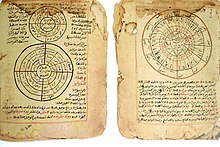
Tombouctou manuscripts are a preserved collection of manuscripts that were often preserved in ordinary houses in Tombouctou ( Mali ). The collection includes manuscripts about mathematics, astronomy, art, medicine and philosophy, as well as religion - they rewrote the Koran , and also preserved a schematic representation of a mosque in Medina. The number of manuscripts is about 700,000.
Manuscripts were written in Arabic and local languages, such as songai. The dates of the manuscripts ranged from the end of the 13th century to the beginning of the 20th. Manuscripts were often inherited. Libraries are being created in some houses - there is a famous library in the house of Mamma Haidara, about 20,000 manuscripts are stored there.
There is an organization called Lux-Development . Its purpose is:
- manuscript preservation
- scientific use of manuscripts
- the use of manuscripts for the development of the country
Manuscript Reduction
Their number is gradually decreasing. Mali news was about an imam who sold 4 manuscripts - each for $ 50. In 2008, due to the flood in one of the houses, about 700 manuscripts were destroyed. Many of the manuscripts were destroyed during the Tuareg Uprising in 2013.
Tombouctou Manuscripts in Culture
These manuscripts were described in the magazines Miracles of the African World and Hidden Treasures of Timbuktu: The Historic City of Islamic Africa. In 2008, a book was published about Tombouctou. In 2009, 3 films about these manuscripts were released. In 2013, the documentary film Lost Tombouctou Libraries was released. In 2016, a book was published in which they are mentioned. In 2017, one manuscript also mentioned these manuscripts.