The President of the Republic of Slovenia - the highest state post of the Republic of Slovenia , is the supreme commander of its armed forces. Elected by universal suffrage for a five-year term.
| President of the Republic of Slovenia | |
|---|---|
| Predsednik Republike Slovenije | |
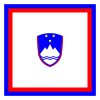 Standard of the President of Slovenia | |
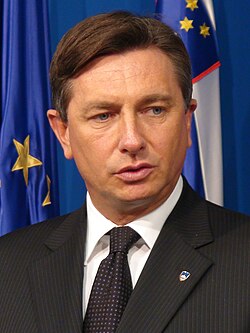 Position takes Borut Pahor since December 22, 2012 | |
| Leads | Slovenia |
| Official residence | Ljubljana , Presidential Palace |
| Term of office | 5 years, for no more than two consecutive terms |
| Salary | € 5.419.54 (per month) |
| Post has appeared | |
| Site | www.up-rs.si |
Authority
Slovenia is a parliamentary state, so the functions of the president are limited. The main ones include:
- calling for elections to the State Assembly;
- proclamation of laws;
- the appointment of public servants in cases established by law;
- the appointment and dismissal of plenipotentiary ambassadors and envoys of Slovenia and the adoption of credentials of foreign diplomatic representatives;
- publication of instruments of ratification;
- pardon decisions;
- resolving issues related to the awarding and awarding of honorary titles;
- proposal to the National Assembly of the candidacy of the Prime Minister;
- dissolution of the National Assembly in case of failure to elect the Chairman of the Government;
- in cases where the State Assembly cannot meet in connection with a state of emergency or a state of war, the President of the Republic may, on the proposal of the Government, issue decrees having the force of law, submitting them for approval at the first parliamentary meeting.
At the request of the National Assembly, the president must give an opinion on a specific issue.
The procedure for the election and termination of authority
The President of the Republic is elected by universal, equal, direct election by secret ballot, and the candidate is considered elected if he received a majority of the votes recognized as valid. The President of the Republic is elected for a term of five years and no more than two consecutive terms. If the term of office of the President of the Republic expires during the war or during the state of emergency, it shall be extended and expire six months after the end of the war or the lifting of the state of emergency.
The election of the President of the Republic is appointed by the Chairman of the National Assembly. The President of the Republic must be elected no later than 15 days before the end of the term of office of the incumbent. Only a Slovenian citizen can be elected President of the Republic. In addition, the post of President of the Republic is incompatible with the performance of other public duties or other professional activities.
The President of the Republic is liable in case of violation of the Constitution (dated December 23, 1991) or a serious violation of the law. In this case, the State Assembly has the right to initiate proceedings in the Constitutional Court to establish the responsibility of the President of the Republic. The President is removed from office on the basis of a decision of the Constitutional Court, adopted by a majority of at least 2/3 of the total number of judges of the Constitutional Court. After receiving a decision of the State Assembly to institute proceedings on the responsibility of the president, the Constitutional Court may decide on the temporary inability to exercise his powers by the president until a decision of the Constitutional Court is made.
In case of persistent inability to exercise his powers, death or resignation, as well as in the presence of other obstacles to the exercise of his powers by the president, the functions of the president are temporarily performed by the President of the National Assembly. In this case, the election of a new President of the Republic shall be called no later than 15 days after the termination of the powers of the former president. The Chairman of the National Assembly temporarily acts as the President of the Republic in the event of the removal of the President from office.
List of Presidents of Slovenia
The article presents the heads of state entities that existed in the territory of modern Slovenia, including autonomies, parts of the federation, unrecognized states.
Republic of Prekmurje (1919)
Republic of Prekmurje or Mursk Republic ( Slovenian. Murska republika , Hungarian. Muravidéki Köztársaság , German. Murrepublik , excellent Slovenian. Republika Slovenska okorglina ) - a short-lived national-state entity in the territory of Prekmurje (north-east of modern Slovenia ) -Sobot . It was proclaimed on May 29, 1919 and recognized by Austria. On June 6, 1919 , it was occupied by the troops of the Hungarian Soviet Republic , and after their defeat from Romania , on August 17, 1919 it was occupied by the army of the Kingdom of Serbs, Croats and Slovenes and incorporated into its province Slovenia that was enshrined in the Treaty of Trianon . Its founder and president was teacher Vilmos Tkalec .
| Portrait | Name (years of life) | Credentials | The consignment | ||
|---|---|---|---|---|---|
| Start | Ending | ||||
| Vilmos Tkalec (1894-1950) Slovene. Vilmoš Tkalec | May 29, 1919 | June 6, 1919 | independent | ||
As part of Democratic Federated Yugoslavia (1943-1945)
The Liberation Front of the Slovenian people ( Slovenian Osvobodilna fronta slovenskega naroda ) was de facto founded on April 26, 1941 at a meeting of representatives of Slovenian political parties and cultural figures. The original name "Anti-Imperialist Front" was changed on June 30, 1941 . October 3, 1943 at the Congress of Delegates of the Slovenian People ( Slovenian. Zbor odposlancev slovenskega naroda ), held in Kochevye (in which representatives of the Liberation Front and delegates elected in the territories controlled by him after the Italian surrender on September 8, 1943 took part), a plenum of 120 people was elected On February 19, 1944 , he proclaimed himself the interim parliament and supreme governing body of the country, called the Slovenian Council for National Liberation . Josip Widmar was elected President of his Presidium ( Slovenian. Predsednik predsedstva ) .
On November 29, 1943 , in the Bosnian city of Egg, at the second session of the Anti-Fascist Assembly of the People's Liberation of Yugoslavia , it was decided to build after the Second World War a democratic federal state of the Yugoslav peoples under the leadership of the Communist Party of Yugoslavia . The foundations of a federal structure of the country of 6 parts were laid ( Serbia , Croatia , Bosnia and Herzegovina , Slovenia , Macedonia and Montenegro ). As part of the formed federation, Slovenia was called the Federal State of Slovenia ( Slovenian. Zvezna država Slovenija ).
On November 29, 1945 , the Constituent Assembly finally abolished the monarchy and proclaimed the Federal People's Republic of Yugoslavia , with the transformation of federal states into people's republics, including the People’s Republic of Slovenia .
| Portrait | Name (years of life) | Credentials | the consignment | Position | ||
|---|---|---|---|---|---|---|
| Start | Ending | |||||
| one (I — II) | Josip Widmar (1895–1992) Slovene. Josip vidmar | October 3, 1943 | February 19, 1944 | independent member of the Liberation Front of the Slovenian people | Chairman of the Liberation Front of the Slovenian people | |
| February 19, 1944 | February 20, 1946 [1] | President of the Presidium of the Slovenian Council for National Liberation | ||||
As a member of the Federal Republic of Socialist Republic (1945-1963)
After the proclamation of November 29, 1945 by the Constituent Assembly of the Federal People's Republic of Yugoslavia, the states that were part of the Democratic Federal Yugoslavia were transformed into people's republics, including the People’s Republic of Slovenia ( Slovenian. Ljudska republika Slovenija ). Officially, this name was adopted on February 20, 1946 .
On November 19, 1946 , the constitutional assembly of the People’s Republic of Slovenia ( Slovenian. Ustavodajna skupščina Ljudske republike Slovenije ), which was headed by the President of the Presidium of the Slovenian Council for National Liberation Josip Widmar . On January 17, 1947 , the Constitutional Assembly completed the adoption of the Constitution and was transformed into the People’s Assembly of the People’s Republic of Slovenia ( Slovenian. Ljudska skupščina Ljudske republike Slovenije ) led by the President of its Presidium ( Slovenian. Predsednik predsedstva ). On January 30, 1953 , the presidium of the People’s Assembly was liquidated, and its president was the president of the People’s Assembly.
| Portrait | Name (years of life) | Credentials | the consignment | Position | ||
|---|---|---|---|---|---|---|
| Start | Ending | |||||
| one (II [2] —IV) | Josip Widmar (1895–1992) Slovene. Josip vidmar | February 20, 1946 [1] | November 19, 1946 | independent member of the Liberation Front of the Slovenian people → Communist Party of Slovenia [3] → Union of Communists of Slovenia [4] | President of the Presidium of the Slovenian Council for National Liberation | |
| November 19, 1946 | January 16, 1947 | President of the Presidium of the Constitutional Assembly of the People's Republic of Slovenia | ||||
| January 16, 1947 | January 30, 1953 | President of the Presidium of the People's Assembly | ||||
| 2 | Ferdo Kozak (1894–1957) Slovene. Ferdo kozak | January 30, 1953 | December 15, 1953 | Union of Communists of Slovenia | President of the People's Assembly | |
| 3 | Micha Marinko (1900-1983) Slovene. Miha marinko | December 15, 1953 | June 9, 1962 | |||
| four | Vida Tomšić (1913–1998) Slovene. Vida Tomšič nee Vida Burnot Slovene. Vida bernot | June 9, 1962 | April 7, 1963 [5] | |||
As part of the SFRY (1963-1991)
The new constitution of Yugoslavia, which entered into force on April 7, 1963 , proclaimed the country a socialist state, according to which its name was changed to the Socialist Federal Republic of Yugoslavia , and its constituent republics were called socialist, including the Socialist Republic of Slovenia ( Slovenian. Socialistična republika Slovenija ).
Under the new constitution, the parliament of the republic was called the Assembly of the Socialist Republic of Slovenia ( Slovenian. Skupščina Socialistične republike Slovenije ), the name of the post of its leader and head of state was changed to the president of the Assembly ( Serbohor. Predsjednik skupščine ).
On May 9, 1974 , an extra-parliamentary supreme collegial governing body was formed in Slovenia - the Presidium of the Socialist Republic of Slovenia headed by the President of the Presidium ( Slovenian. Predsjednik Predsedništva Sociјalističke Republike Slovenije ).
March 8, 1990 , the name of the republic was replaced by the Republic of Slovenia ( Serbohor. Republika Slovenija ). On June 25, 1991 , the Republic of Slovenia was proclaimed an independent state.
| Portrait | Name (years of life) | Credentials | The consignment | Position | ||
|---|---|---|---|---|---|---|
| Start | Ending | |||||
| (4) [6] | Vida Tomšić (1913–1998) Slovene. Vida Tomšič nee Vida Burnot Slovene. Vida bernot | April 7, 1963 [5] | June 25, 1963 | Union of Communists of Slovenia | President of the People's Assembly | |
| five | Ivan Machek (1908–1993) Slovene. Ivan Maček | June 25, 1963 | May 9, 1967 | President of the Assembly | ||
| 6 (I — II) | Sergey Kraiger (1914–2001) Slovene. Sergej Kraigher | May 9, 1967 | May 9, 1974 | |||
| May 9, 1974 | May 23, 1979 | President of the Bureau | ||||
| 7 | Victor Avbel (1914–1993) Slovene. Viktor Avbelj | May 23, 1979 | May 7, 1984 | |||
| eight | Franze Popit (1921–2013) Slovene. France popit | May 7, 1984 | May 6, 1988 | |||
| 9 | Janez Stanovnik (1922–) Slovene. Janez stanovnik | May 6, 1988 | May 10, 1990 | Union of Communists of Slovenia → Slovenian Social Democratic Change Party [7] | ||
| ten (I) | Milan Kuchan (1941–) Slovene. Milan Kučan | May 10, 1990 | June 25, 1991 [8] | independent | ||
Independence Period (since 1991)
On December 23, 1990 , a referendum on independence was held in the Republic of Slovenia, as a result of which on June 25, 1991 , it was proclaimed an independent state. Under the Brion Agreement, for three months, from July 8, 1991 to October 8, 1991 , Slovenia suspended the Declaration of Independence.
On December 23, 1991 , the post of President of the Republic of Slovenia was established ( Slovenian. Predsjednik Republike Slovenije ), which was taken by President of the Presidium Milan Kucan . The first presidential election took place in 1992 .
| Portrait | Name (years of life) | Credentials | The consignment | Elections | ||
|---|---|---|---|---|---|---|
| Start | Ending | |||||
| ten (I [9] —III) | Milan Kuchan (1941–) Slovene. Milan Kučan | June 25, 1991 [8] | December 23, 1991 | independent | ( 1990 ) | |
| December 23, 1991 | December 6, 1992 | |||||
| December 6, 1992 | November 23, 1997 | 1992 | ||||
| November 23, 1997 | December 22, 2002 | 1997 | ||||
| eleven | Janez Drnovšek (1950–2008) Slovene. Janez drnovšek | December 22, 2002 | December 23, 2007 | Slovenian Liberal Democracy | 2002 | |
| independent [10] | ||||||
| 12 | Danilo Turk (1952–) Slovene. Danilo Türk | December 23, 2007 | December 22, 2012 | independent | 2007 | |
| 13 (I — II) | Borut Pahor (1963–) Slovene. Borut pahor | December 22, 2012 | December 22, 2017 | Social Democrats | 2012 | |
| December 22, 2017 | acting | independent | 2017 | |||
See also
- Prime Minister of Slovenia
Notes
- ↑ 1 2 Proclamation of the People's Republic of Slovenia.
- ↑ Continuation of the powers of the President of the Presidium of the Slovenian Council for National Liberation Josip Widmar.
- ↑ In 1948, Josip Widmar, after the breakup of Josip Broz Tito with Stalin and the expulsion of the Communist Party of Yugoslavia from the Cominformburo , defiantly joined the Communist Party of Slovenia.
- ↑ In 1952, after the Sixth Congress of the Communist Party of Yugoslavia , the Communist Party of Slovenia was renamed the Union of Communists of Slovenia.
- ↑ 1 2 Proclamation of the Socialist Republic of Slovenia.
- ↑ Continuation of the powers of the President of the People’s Assembly Vida Tomšić.
- ↑ In April 1990, the Union of Communists of Slovenia changed its name to the Party of Social Democratic Changes of Slovenia .
- ↑ 1 2 Declaration of independence of the Republic of Slovenia.
- ↑ Continuation of the powers of the President of the Presidium of Milan Kuchan
- ↑ In 2006, Janez Drnovšek quit the Liberal Democracy of Slovenia party and founded the public Movement for Justice and Development .