The Museum of the Slovak Village ( Slovak. Múzeum slovenskej dediny ) is an open-air ethnographic museum located in the vicinity of the city of Martin in Slovakia [1] . The museum hosts various events every year, such as the reproduction of traditional professions, handicrafts, traditional rituals, customs and folklore, such as Easter in the countryside, Christmas in the countryside, Firefighters Day, Children's Sunday or Nikolaev Fair ".
| Museum of the Slovak Village | ||
|---|---|---|
| Slovak Múzeum slovenskej dediny | ||
 | ||
| Founding date | September 3, 1968 | |
| opening date | ||
| Founder | Jan Gerik | |
| Location | ||
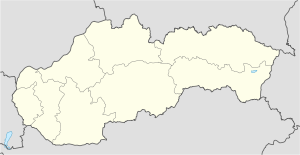
| Address | Martin , илиilina Region | |
| Site | www.skanzenmartin.sk www.snm.sk/?muzeum-slovenskej-dediny-uvodna-stranka | |

Content
History
The idea of creating an open-air museum on April 16, 1931 was served by Jan Gerik, secretary of the Slovak National Museum in Martin. The museum was planned on the model of the Scandinavian open-air museums and it was planned that it would be inhabited by families who would lead a traditional way of life there. Finally, the museum was opened in 1961 under the patronage of the Slovak National Museum in Martin [2] . In 1964-66, 218 objects from 113 villages were chosen to represent rural settlements from 13 regions of Slovakia in the museum. September 3, 1968 was laid the symbolic first stone of the museum. The first group of buildings from the Orava region was opened to visitors in 1972.
Objects
The museum displays the traditional folk architecture of northwestern Slovakia and the typical lifestyle of traditional rural communities in Slovakia from the 19th to the early 20th century. On an area of 15.5 hectares are located 129 residential, farm, technical, social and religious buildings. In addition, there is a tavern, a village shop, a garden house, a fire station, a wooden bell tower in the Renaissance style and an elementary school. In this museum, visitors can observe how processes such as making vegetable oil, making wool yarn and sewing clothes are performed. The buildings in the museum represent various historical regions of Slovakia: Orava , Liptov , Turjec and Kysuce. 22 objects (mainly agricultural buildings) have a replicated traditional interior inside and are open to visitors. Also, the museum often hosts agricultural exhibitions, during which traditional methods of growing vegetables, medicinal plants, trees and other plants are shown. One of the most interesting objects of the museum is the Catholic church from Rudno in 1792 with paintings and a baroque altar with statues of St. Stephen, St. Nicholas and the Virgin Mary.
Visitor Services
- Guided Tours
- Food and drinks in a pub from the village of Oravska Polgora
- Territory rental for family or corporate holidays
- Wedding ceremonies in the church from the village of Rudno
- Roman Catholic or Evangelical Masses
- Shop of souvenirs, literature and products of folk art
- Creative circles for primary schools
Gallery
See also
- Valashsky Open Air Museum
- Skansen
- Belarusian State Museum of Folk Architecture and Life
- Museum of Folk Architecture and Life of Ukraine
- Transcarpathian Museum of Folk Architecture and Life
Notes
- ↑ SNM-MT - Múzeum slovenskej dediny Martin Archival copy dated July 17, 2011 on the Wayback Machine - www.muzeum.sk (words.)
- ↑ Múzeum slovenskej dediny - Slovenské národné múzeum (words.)