The mass of an adult Grevy’s zebra is from 350 to 430 kg with a body length of about 3 m and a tail length of 50 cm. Growth at the withers is about 1.4 m. Grevy’s zebra is not only the largest zebra , but with the exception of domesticated animals, the largest representative of the equine family. The bands of this species are much thinner than other species, and are located close to each other. The pattern of the back is different from the pattern on the sides and legs, revealing a whole system of thin and diagonal stripes surrounding the base of the tail. The color of the stripes varies from blue-black to black-brown. Belly without stripes. The main color of Grevy’s zebra is white or white-yellow. Grevy’s zebra has no shadow stripes, but there is a wide dark strip that stretches along the spine .
This species has an elongated skull and wide hooves , like horses . Particularly noticeable are large, rounded and brown ears , as well as a light belly without stripes. Like all zebras, Grevy’s mane has a dark middle row of hair that continues to stretch along the back to the tail. At the grevy’s foals, the mane itself reaches the tail, but decreases over time.
Grevy's zebra habitats are the arid savannahs of East Africa in Kenya , Ethiopia and Somalia , in particular in the natural reserves of Ostturkan , Samburu and Meru . In some regions, Grevy’s zebra makes seasonal migrations, avoiding regular droughts .
After pregnancy lasting more than a year, one foal is born. It is painted brown or black, and characteristic stripes appear at the age of about four months. Three years later, the cub becomes sexually mature and leaves his mother. Males, as a rule, begin to mate no earlier than six years, because before that they are forced to concede to more mature rivals. The maximum life expectancy in captivity is 22 years.
The diet of Grevy’s zebras consists mainly of various herbs, including sedges , they also eat tree bark, leaves, buds and rhizomes. Moving through the pasture, zebras cut off the upper part of the grass, mainly cereals, facilitating access to the lower, most nutritious parts of plants by numerous African artiodactyls.
Eating exclusively low-calorie plant foods forces animals to graze up to 15 hours a day. In the hot season, zebras prefer to graze in the cool hours of the day - before sunrise and after sunset, using noon time to relax. On the contrary, in the rainy season they usually feed during the day.
Water plays a key role in determining the daily and seasonal activity of animals. Zebras need watering at least once a day, and nursing mares even more often. In the dry season, it is especially difficult for them to find water. When the rivers dry up, and small ponds turn into dirty puddles, zebras dig holes in their strong hooves with a depth of 50 cm and a diameter of up to 1 meter. Water, seeping through the sand, accumulates in the pit, and animals can drink it. When these "wells" dry up, mass migrations of large ungulates, primarily zebras, begin in search of pasture with fresh grass. Straying in huge herds, animals move hundreds of kilometers, again dispersing in fresh pastures.
Even in historical times, Grevy’s zebra was spread to Egypt and North Africa , where it was exterminated in ancient times. Presumably, it was she who was meant by ancient natural scientists, describing the “tiger horse”. Later, knowledge of this species was lost. The first scientific description was produced in 1882 by the French zoologist Emile Ustal .
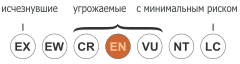
Grevy was hunted for zebras, as their skins were a favorite decoration of the interiors, and also because they were considered undesirable competitors for livestock on pastures. In reality, Grevy’s zebras feed on particularly harsh grass species that are indigestible to cows . In Somalia and Ethiopia, Grevy’s zebra is almost completely exterminated in our time, only in Kenya it was possible to implement effective protective measures. However, this species is considered endangered and is protected by the Convention on International Trade in Endangered Species of Wild Fauna and Flora (CITES). IUCN classifies Grevy’s zebra as a highly endangered species, as its populations continue to decline after a reduction of 70% in the 1980s .