The MSL classification is the levels of moisture sensitivity of electronic components, and the associated regulations for storing unsealed products and preparing them for sealing. The MSL classification was developed by the IPC ( ) association through the creation of the IPC-M-109 standard, and later the IPC / JEDEC J-STD-020E - a joint standard with the committee of engineers specializing in electronic devices ( JEDEC ) standard [1 ] . The classification has become widespread for the specification of plastic components and modules, and has also found its place in Russian state standards. [2]
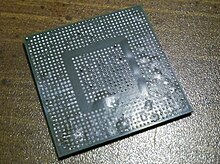
The MSL classification defines the maximum time interval during which the unpacked component can remain in room conditions until the soldering is completed. As room conditions, 30 ° C was taken at 85% relative humidity for MSL 1; and 30 ° C at 60% relative humidity for other levels. The reason for such limitations is the manufacturing technology of electronic components. Reducing the size of the crystals and miniaturizing the components' enclosures, reducing the cost of IC packaging leads to the appearance of various types of porosity in the components (including delamination of the housing elements); moisture that has penetrated into the component remains in the cavities there. [3] During a sharp heating of a component during soldering, evaporating and expanding water leads to mechanical damage.
The IPC-M-109 standard sets the following sensitivity levels for components:
- MSL 6 - obligatory drying before use
- MSL 5A - 24 hours
- MSL 5 - 48 hours
- MSL 4 - 72 hours
- MSL 3 - 168 Hours
- MSL 2A - 4 weeks
- MSL 2 - 1 year (30 ° C at 60%)
- MSL 1 - Unlimited indoor use (30 ° C at 85%)
MSL classification is also used in the repair of circuit boards and modules. Depending on the sensitivity to humidity of already installed components, the modules are dried for a very long time before repair, up to several weeks. [four]

Moisture-sensitive devices are packaged in sealed containers with the MSL class and are also often equipped with a desiccant ( silica gel ) and humidity indicator in accordance with the standard.
According to GOST R 56427-2015, the MSL classification is mandatory for microcircuits in a plastic construction. [2] At the same time, from the point of view of this GOST, ceramic designs of semiconductor elements are considered leakproof and are not classified according to the level of sensitivity to humidity. [2]
Notes
- ↑ IPC / JEDEC J-STD-020E, Moisture / Reflow Sensitivity Classification for Nonhermetic Surface Mount Devices, December 2014.
- ↑ 1 2 3 GOST R 56427-2015 // Soldering of electronic modules of electronic equipment. Automated mixed and surface mounting using lead-free and traditional technology. Technical requirements for technological operations
- ↑ Sensitivity of electronic components to humidity
- ↑ Qualified repair processes based on current norms and standards // Technologies in the electronic industry, No. 6'2010