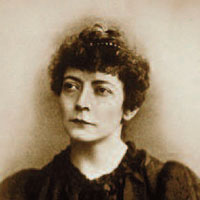
Keith Coleman (1856-1915) is the pseudonym for Irish-Canadian newspaper columnist Kathleen Blake Coleman. Coleman was the first internationally acclaimed war correspondent to describe the Spanish-American War for the Toronto Mail in 1898. Coleman was also the first president of the Canadian Women's Press Club, an organization for women journalists.
| Keith Coleman | |
|---|---|
| Kathleen Blake Coleman | |
 | |
| Birth name | Katherine Ferguson |
| Date of Birth | February 12, 1856 |
| Place of Birth | Castleblakeney , County Galway , Ireland |
| Date of death | May 16, 1915 (59 years old) |
| A place of death | Hamilton , Ontario , Canada |
| Citizenship | Canada |
| Occupation | war journalist |
Content
- 1 Early life
- 2 Journalism
- 3 Coverage of the Spanish-American War in Cuba
- 4 Late career
- 5 Links
Early life
Katherine Ferguson was born into the family of farmer Patrick and Mary Ferguson in Castleblakeney , County Galway in May 1856. [1] Katherine first studied at the Loretto Abbey in Ratfarnem and then completed her education in Belgium . [2] Already in adulthood, Katherine recalled how her parents influenced her love of creative activity; her father instilled in her a passion for books, and her mother, who was blind, taught her to play several musical instruments. The strongest influence on her intellectual life came from Uncle Thomas Nicholas Burke, a Dominican priest, a well-known liberal and speaker who taught her religious and social tolerance, which affected her work as a journalist.
Coleman at a young age married Thomas Willis, a wealthy landowner older than her, under the accepted name of Kathleen Blake. [1] The couple had a child who died in early childhood, and Willis died shortly afterwards. The marriage was unhappy, so Coleman did not inherit anything after her husband and emigrated to Canada a young widow in 1884. [3] [1] There she worked as a secretary until she married her boss, Edward Watkins. [4] She lived in Toronto and Winnipeg, where she had two children (Tedi and Patricia).
In 1889, after Watkins died, or more likely after their divorce [3] , Coleman first worked as a cleaner, thus trying to support herself and her children, and then began to write articles for local magazines, mainly Toronto’s Saturday Night ( Toronto's Saturday Night ). [four]
Journalism
Kathleen Blake Watkins moved to Toronto in 1890 in order to continue her journalistic activities: Whale from Mail was the first woman journalist to be responsible for her section in a Canadian newspaper. [3] Then she was hired by the Toronto Mail, later Mail and Empire . [4] In the 1890s and early 1900s, she maintained a seven- column page in the Toronto Mail, called Woman's Kingdom, and published once a week. She began to write articles on lighter topics typical of female speakers of that time, such as theater criticism, fashion or recipes, and in one of her most popular articles she gave advice to lovers. [3] She opposed the editors' claims that women were only interested in housework, fashion and her column of advice, and insisted on the right to write on other topics that she also considered interesting for them: politics, business, religion and science. [one]
Her column was so frank that it attracted wide readership, including Canadian Prime Minister Wilfrid Laurier . She also covered topics such as social reforms and women's issues, and studied the problems of domestic violence and poor working conditions for women. Coleman's articles were featured in newspapers throughout Canada, where she worked until May 1911. [one]
Kathleen Blake Watkins increasingly wrote articles covering areas of the mainstream news and soon became one of the "star" Mail reporters. In 1891, she interviewed the famous French actress Sarah Bernhardt , who performed in Canada. [4] Coleman was a special correspondent for the Toronto Mail during the World Exposition , Chicago , 1893; Winter Fair, San Francisco , 1894; in the British West Indies , 1894; during Queen Victoria’s diamond jubilee, London , 1897. Her reputation grew internationally, and in 1894 an American directory called her articles “brilliant” and noted that not a single woman journalist or a single man who had attained the rank of chief editor , had no such influence on the prestige and distribution of North American newspapers. [one]
Coverage of the Spanish-American War in Cuba
During the Spanish-American War of 1898, Kathleen Blake volunteered to go to Cuba to cover front-line events, and the Toronto Mail agreed, hoping in this way to get sensational material. However, Kathleen’s editors obliged her to write only “chatter”, as she called her, and not real news from the front, believing this unacceptable for a woman. [1] She received the right to be a war journalist from the US government , thus becoming the first woman in the world to be a recognized war correspondent.
She was authorized to escort American troops and resolutely opposed other correspondents and military authorities who almost managed to detain her in Florida . Blake persisted and arrived in Cuba in July 1898, shortly before the end of the war. Her stories about the aftermath of the war and her human sacrifices became the pinnacle of her career as a journalist and brought her worldwide fame. During her journey back to Canada, Kathleen stopped in Washington , where she contacted the International Union of Women Journalists. [one]
Late Career
After returning from Cuba, Watkins married Theobald Colman and moved to Copper Cliff, where her husband was a doctor at a Canadian copper company. In 1901, the Colmans moved to Hamilton, Ontario . [one]
In 1904, to combat discrimination against women journalists, she helped create the Canadian Women's Press Club and was its first president. Despite his pioneering work as a journalist and active writing on women's rights, Coleman publicly condemned feminism and the idea of female voting rights until 1910 [4] . Many other female journalists, including her Mail & Empire colleague, Catherine Hale (Amelia Birz Warnock), viewed Coleman as a pioneer and role model, and suffragists hoped she would become an activist in women's voting rights. Coleman's political duality partly came from the position of editors in the Toronto Mail and Mail and Empire; both newspapers strongly opposed this. In addition, Colman was not sure how much women and “objective” journalists should be involved in politics. [one]
Coleman was also a poet and published poetry collections. [5]
She contracted pneumonia and died on May 16, 1915 in Hamilton, Ontario.
Links
- ↑ 1 2 3 4 5 6 7 8 9 10 Biography - FERGUSON, CATHERINE, Kit Coleman - Volume XIV (1911-1920) - Dictionary of Canadian Biography . Date of treatment July 25, 2017.
- ↑ NWCI.ie, National Women's Council of Ireland | . Ella Hassett: Kit Coleman (1864 - 1915) Journalist, war correspondent (en-ie), National Women's Council of Ireland | NWCI.ie ' . Date of treatment July 25, 2017.
- ↑ 1 2 3 4 Kathleen Coleman , The Canadian Encyclopedia . Date of treatment July 25, 2017.
- ↑ 1 2 3 4 5 Kathleen Blake Coleman fonds (link not available) . Archived on April 22, 2014.
- ↑ Henry J. (Henry James) Morgan. Types of Canadian women and of women who are or have been connected with Canada:. - Toronto: W. Briggs, 1903.- 426 p.