Aleksander Nikolayevich Bernstein ( real name Solomon Natanovich Bernstein [1] ; May 7 (19), 1870 , Odessa - May 26, 1922 , Moscow ) - Russian and Soviet psychiatrist , psychotherapist and psychologist , doctor of medicine , professor . One of the pioneers, organizers and leaders of the Russian psychoanalytic movement. For the first time described schizophrenic dementia , as well as one of the signs of catatonia - a symptom of Bernstein .
| Alexander Nikolaevich Bernstein | |
|---|---|
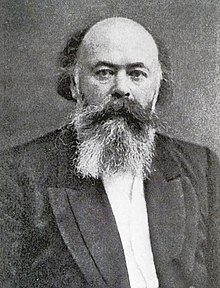 | |
| Date of Birth | May 7 (May 19 ) 1870 |
| Place of Birth | Odessa |
| Date of death | May 26, 1922 (52 years old) |
| A place of death | Moscow |
| A country |  Russian Empire Russian Empire  Soviet Russia Soviet Russia |
| Scientific field | psychiatry , psychotherapy , experimental psychology |
| Place of work | University of Moscow |
| Alma mater | Moscow University (1893) |
| Academic degree | Doctor of Medicine (1900) |
| Academic rank | Professor |
| supervisor | S. S. Korsakov |
| Known as | first described schizophrenic dementia , as well as one of the signs of catatonia - Bernstein's symptom . |
Content
- 1 Biography
- 2 Scientific activities
- 3 Family
- 4 Major works
- 5 notes
- 6 References
Biography
Alexander Nikolaevich Bernstein was born in 1870 in Odessa , in the family of the famous Russian physiologist N.O. Bernshtein . Sibling mathematician S. N. Bernshtein , father of the psychophysiologist N. A. Bernshtein [1] .
In 1888 A.N. Bernshtein graduated from the 3rd Odessa gymnasium, after which he entered the medical faculty of Moscow University . As a student, he worked in the laboratory of the clinic of nervous diseases, where, under the direction of L.O. Darkshevich , he studied the microscopic anatomy of the central nervous system , then in the psychiatric clinic at the university under the direction of S. S. Korsakov . After graduating with honors in 1893 , A. N. Bernstein traveled to Austria , Germany , France and Switzerland , where he got acquainted with the work of various psychiatric institutions [2] .
From 1893 to 1896 A.N. Bernstein was a senior resident , and from 1896 to 1902 assistant psychiatric clinic of Moscow University [2] . In 1895, he worked for some time at the E. Krepelin Clinic in Heidelberg . Along with medical activities, he studied philosophy and psychology , was the closest assistant to A. A. Tokarsky in the psychological laboratory of the clinic, taught classes in experimental psychology [3] . In 1900, A. N. Bernstein defended his doctoral dissertation on the topic “ Materials for the doctrine of the clinical significance of the muscular roller in mentally ill patients ” [1] . From 1901 to 1918 He was a private assistant professor at Moscow University [2] .
At the same time as working in the clinic, from 1899 to 1918 . A.N. Bernshtein was in charge of the Moscow Central Police Reception Center (now the V.P. Serbsky State Scientific Center for Social and Forensic Psychiatry ), where he organized the provision of psychiatric care to the poor, previously held in police stations. Attracted to work in this institution V. A. Gilyarovsky , E. K. Krasnushkina , Yu. V. Kannabikh . He organized in it biochemical , pathoanatomical and psychological laboratories, in which intensive scientific work was carried out. He gave a course of clinical lectures and conducted practical classes with students. In 1903, A.N. Bernshtein achieved the inclusion of the Central police emergency ward in the number of educational support structures of Moscow University [3] .
In 1902, A.N. Bernstein was sent abroad to prepare for a course in physiological psychology . He visited the psychological laboratories of W. Wundt and G. Ebbinghaus , a number of psychiatric clinics, and also listened to lectures by E. Kraepelin , R. Sommer , K. Wernicke . Upon his return to Moscow, he began reading a course of physiological psychology with practical exercises, which he taught until 1905 [3] . From 1919 to 1922 A.N. Bernshtein was deputy head of the Main Directorate of Scientific Institutions of the Academic Center of the People's Commissariat of the RSFSR . From 1921 until the end of his life, he was director of the Moscow Psychoneurological Institute [1] .
Alexander Nikolaevich Bernstein died on May 26, 1922 in Moscow . He was buried at the Novodevichy cemetery .
Scientific activity
A.N. Bernshtein was a supporter of the nosological trend in psychiatry . The main scientific works are devoted to applied and experimental psychopathology , psychiatric diagnosis and methodology . One of the organizers of psychiatric care for patients, including those under investigation [4] . He studied epilepsy and described one of the signs of oligophrenia [5] .
He developed programs, techniques and questionnaires for the study of personality and intelligence , including a technique for establishing a sequence of events and a test for combinatorics [5] . The method of Bernstein for determining the susceptibility of memory using tables with geometric figures was widely used. A.N. Bernshtein developed a methodology for the objective-psychological examination of the mentally ill. A. N. Bernstein distinguished between form, on the one hand, and the content of mental disorders , on the other [6] .
In 1905, A.N. Bernshtein was one of the initiators of the organization of temporary Pedagogical courses at the Moscow Pedagogical Assembly, in which in 1908 he opened and headed the psychological laboratory that published " Proceedings of the Psychological Laboratory at the Moscow Pedagogical Assembly ." In 1906 - 1916 A. N. Bernshtein participated in the organization and holding of All-Russian congresses on educational psychology and experimental pedagogy [5] .
In 1907, A.N. Bernshtein organized at the Central Police Reception Center Retraining courses (advanced training courses for doctors), at which Russian psychiatrists improved their skills [4] .
In 1912, he first described schizophrenic dementia [7] . In the same year, A.N. Bernshtein described one of the signs of catatonia - a symptom of Bernstein . It is observed in catatonics with waxy flexibility. If you give a forced position to the patient’s right hand, and then raise and hold his left hand in the air with a sharp movement, the right hand will drop by itself, while the left hand will be frozen in its position [8] .
In 1920, A.N. Bernshtein, together with F.E. Rybakov , contributed to the creation of the Moscow Psychoneurological Institute , which he headed after Rybakov’s death. A.N. Bernshtein was one of the first Russian psychiatrists to draw attention to the content and possibilities of psychoanalytic teaching . Under the leadership of Bernstein, new classrooms and laboratories were opened at the institute, including hypnology and psychoanalysis. He contributed to the organization of a scientific circle that studied the psychology of artistic creation using the psychoanalytic method. In 1921, A.N. Bernshtein opened at the psychology department of the institute " Orphanage-Laboratory for the Scientific Study of Childhood ", which became the first Russian structure for child psychoanalysis [5] .
A.N. Bernshtein, a member of the commission for the reform of medical education under the General Trade Union of the People's Commissariat of the RSFSR , was one of the founders and a member of the editorial board of the journal Psychotherapy. Review of issues of mental treatment and applied psychology ”, one of the organizers of the journal“ Modern Psychiatry ”, and also founded the“ Journal of Psychology, Neurology and Psychiatry ” [1] [2] .
Family
- His wife, Alexandra Karlovna Bernstein (1867-1941), worked as a sister of mercy in a psychiatric clinic.
- Sons - physiologist Nikolai Aleksandrovich Bernshtein and a scientist in the field of structural mechanics Sergey Aleksandrovich Bernshtein (1901-1958).
Major works
- Bernstein A.N. The world of sounds as an object of education and thought . - M .: “Typolithography by I. N. Kushnerev and Co.”, 1896.
- Bernshtein A. N. About bed rest, as applied to the treatment of the mentally ill. - SPb. : "Printing House J. Trey", 1896.
- Bernshtein A. N. On the perception of constant and variable irritations // " Questions of Philosophy and Psychology ." - M. , 1897, No. 36.
- Bernstein A.N. New trends in the theory of perception . - M .: “Typolithography by I. N. Kushnerev and Co.”, 1898.
- Bernstein A.N. Case of multiple neuritis due to persistent constipation (polyneuritis cophraemica), 1898.
- Bernstein A.N. An irresistible attraction to the introduction of unusual substances into the body. - Kiev: “Typolithography of I. N. Kushneryov and Co.”, 1899.
- Bernshtein A.N. Muscle roll and its pathological significance in the clinic of mental illness. - SPb. : “Edition of K. L. Ricker”, 1900.
- Bernshtein A. N. Materials for the doctrine of the clinical significance of the muscular roller in mentally ill patients. - M .: “Printing of S. P. Yakovlev”, 1900.
- Bernshtein A. N. Psychological and philosophical views of S. S. Korsakov // " Questions of philosophy and psychology ." - M. , 1901, No. 60.
- Bernstein A. Über eine einfache Methode zur Untersuchung der Merkfähigkeit resp. des Gedächtnisses bei Geisteskranken // " Zeitschrift für Psychologie und Physiologie der Sinnesorgane ", 1903, No. 32, p. 259–263.
- Bernshtein A. N. Sexual issues in the program of family and school education . - M .: “Typolithography by I. N. Kushnerev and Co.”, 1908.
- Bernstein A.N. Experimental-psychological methodology for the recognition of mental illness. - M .: “Printing of S. P. Yakovlev”, 1908.
- Bernshtein A. N. Clinical methods of psychological research of mentally ill patients, 1911.
- Bernshtein A. N. Clinical lectures on mental illness. - M .: "ed. V. M. Sablin ", 1912.
- Bernshtein A. N. Clinical methods of psychological research of mentally ill patients (2nd edition, corrected and supplemented). - M .: "State Publishing House", 1922.
Notes
- ↑ 1 2 3 4 5 EzheViKa, Jewish Encyclopedia // Bernstein, Alexander Nikolaevich
- ↑ 1 2 3 4 1biografia.ru // Alexander Nikolaevich Bernstein (Unavailable link) . Date of treatment May 31, 2015. Archived March 4, 2016.
- ↑ 1 2 3 All dictionaries // Bernstein, Alexander Nikolaevich (inaccessible link)
- ↑ 1 2 Russian Jewish Encyclopedia // Bernstein Alexander Nikolaevich
- ↑ 1 2 3 4 Scientific Pedagogical Digital Library // Alexander Bernshtein
- ↑ History of medicine // Russian psychiatry of the Zemstvo period
- ↑ Yu. A. Antropov , A. Yu. Antropov , N. G. Neznanov . Intelligence and its pathology // Fundamentals of the diagnosis of mental disorders . - 2nd — recycled. - Moscow : GEOTAR-Media , 1968 . - S. 257. - 448 p. - 1,500 copies - ISBN 978-5-9704-1292-3 . Archived March 4, 2016 on Wayback Machine
- ↑ Bernstein's symptom