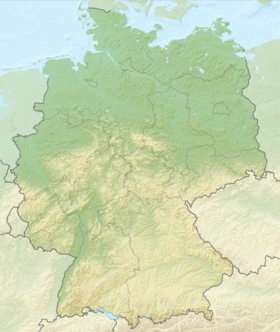
The Biosphere Reserve “Wasteland and Lakes of the Upper Puddle ” ( east puddle. Hornjołužiska hola a haty , German Oberlausitzer Heide- und Teichlandschaft ) is a biosphere reserve located in the historic Upper Luzica region of the eastern part of the federal state of Saxony , Germany . One of the 13 biosphere reserves in Germany included in the UNESCO register of the World Network of Biosphere Reserves (No. 134939). It is part of the eponymous natural park. The administration and information center of the reserve is located in the “House of a Thousand Lakes” in the village of Warta (Strozha).
| Wastelands and lakes of the Upper Puddle | |
|---|---|
| upper puddle. Hornjołužiska hola a haty | |
 | |
| IUCN Category - | |
| basic information | |
| Square | 30102 ha |
| Established | September 21, 1998 |
| Location | |
| A country |
|
| Land | Upper Puddle |
biosphaerenreservat-oberlausitz.de/... | |


Content
General characteristics
The reserve is located between the Upper Luzhytska plain in the south and the industrial zone of Upper Luzhniki in the north. In the west it borders with the city of Bautzen and in the east - with the district of Görlitz . The total area of the reserve is 30 102 hectares. 141.6 square kilometers are covered by forests and 27.5 square kilometers are occupied by various reservoirs. In total there are about 350 ponds and small lakes, which are artificial in nature and are connected by a system of trenches with plums and pipes. All reservoirs are combined into 39 groups, which are used on a farm with different intensities.
On the territory of the reserve there are several settlements in which about 12800 people live [1] .
History
The settlement of the territory of the modern reserve by Slavic tribes began in the 13th century. In the 16th century, German colonization of these lands began. Since the same century, permanent reclamation works began, as a result of which the forest area decreased. In the 19th century, after the introduction, agriculture began to develop intensively: potatoes, rye, buckwheat, barley and millet were grown on the drained fields. Beekeeping was actively developing.
In 1994, the territory of lakes for the first time received a temporary state conservation status of a biosphere reserve. In 1996, the reserve began the state program "Man and the Biosphere", which was the first step for the future inclusion of the reserve in the register of the international program "World Network of Biosphere Reserves" by UNESCO. September 21, 1998 the reserve received the international protected status of UNESCO.
Notes
Literature
- Anett Böttger: Paradies für Seeadler und Fischotter ... unterwegs im Biosphärenreservat Oberlausitzer Heide- und Teichlandschaft. In: Nationalpark. Nr. 140, 2008, S. 8-13.
- Böhnert, Buchwald und Reichhoff: Biosphärenreservatsplan Teil 1. Grundlagen für Schutz, Pflege und Entwicklung. Hrsg .: Biosphärenreservat Oberlausitzer Heide- und Teichlandschaft. 1. Auflage. Mücka 1996.
Links
- Official website (upper case) (inaccessible link) . Archived on July 9, 2017.