Museum of the village of Crimea - a historical and ethnographic museum in the village of Crimea, Myasnikovsky district, Rostov region . It is housed in the Crimean House of Culture. In 1987 he received the title of national. In the museum of the village you can get acquainted with the history, life and life of the Ani branch of the Armenians [1] .
| Museum of the village of Crimea | ||
|---|---|---|
| Established | February 16, 1980 | |
| Founder | Gadget Andirasovich Popovyan | |
| Address | with. Crimea, Rostov region | |
| Director | Alvard Lusegenovna Popovyan | |
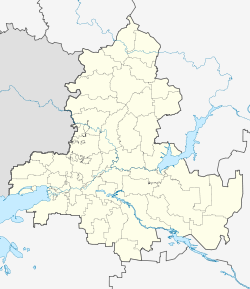

Museum Address: 344113, Rostov Region, s. Crimea, st. Myasnikyan. House of Culture.
Content
Museum History
The Folk Museum of Armenian Culture is located in the village of Crimea, Myasnikovsky District, Rostov Region. The current Armenians of the village are descendants of the Armenians who moved here from the Crimea .
At different times, the Crimean peninsula was inhabited by Armenians who migrated from Greater Armenia, Asia Minor and Bulgaria. Having lived there for six centuries, according to the decree of Catherine II of March 9, 1778, they were voluntarily relocated to the lands of the present Rostov Region. The Armenian colony on the Don was formed in 1779. Crimean urban residents moved to the city of Nakhichevan , and the rural population moved to the villages of Chaltyr , Topti (Crimea), Metz Sala ( Bolshoi Sala ), Sultan Sala and Nesvita (Nesvetay). Living in the Crimea, the Armenians preserved the dialect of the Armenian language, folk customs, rites, elements of folk life. Immigrants were given freedom of religion. They were allowed to build churches and belfries, perform church ceremonies, obey only the supreme patriarch of all Armenians - the Etchmiadzin Catholicos.
Historical documents, objects of Armenian culture and everyday life were collected in the historical and ethnographic museum created in 1980 in the village. The first head of the museum was Hayka Andirasovich Popovyan. Popovyan worked for many years at a local school, where he created a corner in the history of the village. But over time, this "small museum" ceased to meet the increased spiritual needs of the villagers. In 1979, the board of the collective farm. Lukashina (leader G. A. Srabionyan) decided to organize in a. Crimea, the museum of the history of the village and give him part of the premises of the local House of Culture. Next to the house of culture is the existing Armenian Church of St. Christ the Savior (Armenian Սուրբ Ամենափրկիչ, Surb Amenaprkich), built in the late XIX - early XX centuries.
The village culture house has an auditorium with 600 seats, a library. About 1340 items, books and documents were collected in the museum fund. The materials are presented in chronological order from the date of foundation of the village - I from 1779 to the present day. In 1987, the Museum of the Village of Crimea, by Order of the Ministry of Culture of the USSR, was awarded the title "People's Museum".
Exposition
Museum exhibits were collected by villagers and residents of the region. So Khacheres Grigorievich Gaybaryan made models of the village forge, peasant arba, the house of Lukashin; S. A. Tiratsuyan presented the museum with an old clay jug; Z. A. Khachikyan is a steelyard of the 19th century and others. The museum presents: a wooden yoke for oxen, rawhide bast shoes (charochas), woolen knee-high socks (khalchins)) and others. The museum contains materials about representatives of famous Crimean dynasties - Chubarov and Aidinovs, about famous athletes - Y. V. Yaltyryan, K. M. Termalayan, M. A. Deremyane, etc.
The museum exposition shows the history and culture of the Aniyan branch of Armenians, representatives of which are Armenians of the Don, the history of the multinational Myasnikovsky region. Here are also presented products of decorative art of the late XVIII - early XX centuries. The museum has valuable historical photographs, documents and manuscripts.
Museum materials were systematized by an employee of the Rostov Museum of Local Lore Nelli Grigorievna Fradkina and artist David Isaakovich Kobrin.
The museum maintains ties with the Rostov Museum of Local Lore, the Surb-Khach Museum of Russian-Armenian Friendship, and the National Historical Museum of Armenia .
Since 2005, Alvard Lusegenovna Popovyan, the head of the museum, is a man of an active life position, a local historian and a journalist. Since 2005, the main fund of the museum has tripled, interesting exhibits, documents and photographs have been collected, new stands have been created.
The museum is unique not only for its layouts and exhibits, but also for the fact that here, as when it was opened, active search work is in progress, the Search club operates. Thanks to the club, dozens of Crimean people’s burial places were found, relatives were finally able, decades later, to visit the grave of the dead, to honor their memory ... Among the first were found the burial places of Deremyan Asvatur Karapetovich, Andonyan Kaprel Asvaturovich, Babyan Semen Mikhailovich and many others.
From all over the country and even from abroad, letters are sent to the Crimean Museum asking for help and thanks for the memory. So, the museum began to be called a place of sacred memory of the fallen. So, the museum lives, works.
Literature
- Dodohyan S. Double Holiday / S. Dodohyan // Dawn of Communism. - 1985. - February 28. - S. 6.
- Crimean Museum - the keeper of the history of the Armenian people // Our time. - 1994. - June 5. - S. 2.
- Awarded the title of the people: [Museum of the village of Crimea] // Dawn of communism. - 1987. - Oct 31.
- Sargsyan O. Awarded the title of People / O. Sargsyan // Dawn of Communism. - 1987. - 30 Oct. - S. 1.
- Shaginyan S. Preserved the identity of the nation: [About the Museum p. Crimea] / S. Shaginyan // Dawn of Communism. - 1989. - Sep 30. - S. 4.
- Shaginyan S. Keeper of history / S. Shaginyan // Dawn of Communism. - 1989. - Oct 17. - S. 2.