Robert Arthur Talbot Gascoigne-Cecil, 3rd Marquis of Salisbury ( born Robert Arthur Talbot Gascoyne-Cecil, 3rd Marquess of Salisbury , February 3, 1830 - August 22, 1903 ) is a British statesman of the Cecil family , The 44th, 46th and 49th Prime Minister of Great Britain in 1885 , 1886 - 1892 and 1895 - 1902 , four times the Minister of Foreign Affairs (1878, 1885–86, 1886–92, 1895–1900), deputy of the House of Commons from the Conservative Party , member of the House of Lords . He pursued an imperialist policy aimed at increasing the territory of the British Empire in Africa and other regions. The father of Robert Cecil - the ideologist of the League of Nations .
| Robert Arthur Talbot Gascoigne-Cecil, 3rd Marquis of Salisbury | |||||||
|---|---|---|---|---|---|---|---|
| Robert Arthur Talbot Gascoyne-Cecil, 3rd Marquess of Salisbury | |||||||
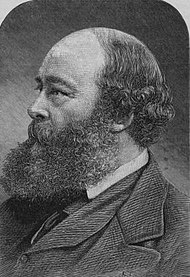 | |||||||
| Predecessor | William Gladstone | ||||||
| Successor | William Gladstone | ||||||
| |||||||
| Predecessor | William Gladstone | ||||||
| Successor | William Gladstone | ||||||
| |||||||
| Predecessor | Earl of Rosebury | ||||||
| Successor | Arthur Balfour | ||||||
| Birth | February 3, 1830 Hatfield | ||||||
| Death | September 22, 1903 (73 years old) Hatfield | ||||||
| Burial place | |||||||
| Kind | Cecil | ||||||
| Father | |||||||
| Spouse | |||||||
| Children | Robert Cecil | ||||||
| The consignment | |||||||
| Education | |||||||
| Religion | |||||||
| Autograph |  | ||||||
| Awards |
| ||||||
| Place of work | |||||||


Path to Premiership
The prime minister was born, raised, and died at Hatfield House . He was the second son of the 2nd Marquis of Salisbury from the Cecil family, who was descended from William Cecil (First Minister Elizabeth I) and from Robert Cecil (First Minister Jacob I). A mother from the Gascoigne clan was the heiress of large land holdings.
After the death of his mother, 10-year-old Robert was sent to Eton School . Teachers noted his closed nature, peers made fun of him. At age 15, his father returned him to his estate, having assigned private teachers to him. At the age of 18, Cecil-Gascoigne went to study in Oxford , but soon interrupted his studies due to poor health (which also distinguished his older brother) and, on the advice of doctors, went on a cruise to the shores of Australia and New Zealand .
Cecil returned from a 2-year wandering matured, he began to be interested in issues of public life. In 1853, he accepted the proposal of the Conservatives to be elected to the House of Commons from Stamford. Contrary to the opinion of his father, in 1857 he insisted on marriage with Georgina Alderson, a girl from a middle-income family. The family was large - five sons and two daughters.
After the death of his older brother in 1865, he used the courtesy title of the Viscount Cranborn, and before that was known as Lord Robert Cecil. After the death of his father in 1868, he inherited the title of Marquis of Salisbury, together with a seat in the House of Lords.
In the first 20 years of his political career, Salisbury only once entered the government ( Minister of Indian Affairs from July 1866 to March 1867). He was interested in the botany and the phenomenon of magnetism , built a laboratory for experiments with electricity at Hatfield Manor, popularly explained the Tory policy in newspaper articles, but he was suspicious of the Disraeli government.
In February 1874, Salisbury managed to overcome his prejudices and joined the Disraeli government, where he was initially responsible for managing British India , and in 1878 received a portfolio of the Minister of Foreign Affairs. This was a period when, after the next Russo-Turkish war, Russia sought to gain control of Constantinople . With their actions at the Berlin Congress, Salisbury managed to nullify the successes of Russian weapons, for which Queen Victoria encouraged him with the highest award - the Order of the Garter .
After the death of Disraeli in 1881, Salisbury was elected the new leader of the conservative party. After four years of active opposition to the liberals in parliament, in June 1885 he was finally able to form his own government. Six months later, he had to relinquish his post to Gladstone . The main subject of political battles at that time was the issue of homrul . Unlike Gladstone, Salisbury considered any concessions to the Irish unacceptable.
Head of Government
The pinnacle of Salisbury’s career was three premieres (1886-92, 1895-1900, 1900-02). At the same time as the Prime Minister, he preferred to retain the post of Minister of Foreign Affairs. Salisbury's main interest was to promote the imperial interests of Victorian England around the world. He often left other matters to the discretion of specific ministers.
Salisbury's goal was to establish a European “consensus”, and he managed to ensure that during these years there was not a single serious international conflict in Europe. Repeated clashes with France, Germany and Russia never resulted in an armed confrontation under Salisbury. The most acute were the Fashod crisis of 1898 and the Venezuelan crisis of 1895. Trying to expand the borders of the empire, Salisbury was one of the main driving forces of the " fight for Africa ." He sent Lord Kitchener to conquer Sudan , with his connivance Chamberlain unleashed a war with the Boers . Imperialist aspirations were justified by the civilizational mission of Europeans towards the "backward" races.
The "old" powers like the Ottoman Empire did not cause Salisbury (unlike his predecessor conservatives, among which Disraeli stands out), no sympathy. In 1896, he was ready for armed intervention to stop the massacre of Armenians in Turkey . He considered any allied obligations to be risky and tried to maintain neutrality in the era when Germany entered into an alliance with Austria, and France with Russia. The plans of the British-German alliance cherished by Chamberlain did not have his support.
Deteriorating health forced Salisbury to relinquish the post of Foreign Minister to Lord Lansdowne in 1900 and resign two years later. At the end of his era, Lansdowne began to abandon the earlier policy of isolationism , concluding a pact on alliance with Japan in January 1902. Salisbury died on August 22, 1903 . As prime minister, he was replaced by his nephew - Arthur Balfour . Salisbury was the last of the prime ministers appointed from the House of Lords, not the House of Commons.
Source
- British Encyclopedia Biography