Academic dishonesty, academic dishonesty, academic fraud - any kind of fraud associated with the implementation of tests , essays , exams , essays , term papers , diplomas , research papers , etc. This may include:
- Plagiarism : reproduction of the work of another author (person, team, organization, community or other author, including anonymous authors) without attribution (that is, on his own behalf).
- Fabrication : falsification of data, information or references to sources in the work.
- False : Providing false information to the teacher. For example, false excuses to pass the job later than others.
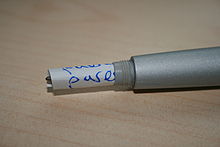
- Cheating : an attempt by a student to get help with a written work so that the teacher or examiner does not find out, including the use of cheat sheets .
- Bribing : getting the right test answers for money.
- Sabotage : an attempt to stop others from doing work. This includes tearing out pages from library books, intentionally damaging other people's experimental (laboratory) works.
- Teaching misconduct : academic fraud or deliberate misjudgment of student work.
Academic dishonesty is documented in all types of educational institutions from elementary school to graduate school . Throughout history, this behavior has been met with varying degrees of disapproval.
History
Today
Views
Reasons
Incentives to cheat
Some scholars argue that there are students with a pathological desire to cheat. Writer Thomas Mallon noted that scholars have found that plagiarism in literature ( Samuel Taylor Coleridge and Charles Reid are two significant examples) often occurs in a manner similar to kleptomania (a psychological illness associated with uncontrolled theft, even if it is against the interests of a thief). [1] On the other hand, Mallon concludes most likely that most cheaters make rational choices. [2]
Demographic and personal reasons
Studies have revealed a number of demographic characteristics that appear to be important factors affecting deception, including age, gender identity, and GPA. [3] Senior pupils, women and students with higher academic achievements [4] are less likely to cheat, while students participating in many extracurricular activities more often. Students participating in extracurricular activities may be less involved in school or need more free time, which interferes with their studies, creating a greater incentive to cheat. Younger students were found to be more likely to cheat: one study found that students were most likely to cheat during their second year of college. [5] Although it would seem that deception should decrease with the growth of moral development, in one experiment there was no connection between the student performing the moral development test and the likelihood of deception (that is, students at the preconventional stage of morality are just as likely to deceive as well as those at the postconventional stage). [6] Procrastination in universities was also recognized as a factor in increasing the frequency of seven different forms of academic dishonesty (using false excuses, plagiarizing, writing off someone else's work on exams, using forbidden funds on exams, wearing forbidden funds on exams, copying part of others' homework, fabrication or falsification of data), as well as a variety of violations. [7] This German group study, covering thousands of university students, argues that academic disruption can be a coping strategy to deal with the negative effects of school procrastination, such as poor performance.
Race , nationality, and class are weakly correlated with academic dishonesty. There is also no correlation with how religious the student is. Comparisons between students of different religions gave similar results, although the study showed that Jews tend to deceive less than representatives of other religions. [8] One of the strongest demographic correlations found with US academic dishonesty is language. It has been shown that students who speak English as a second language are more likely to be caught, as they often do not want to rewrite the text in their own words, fearing that the meaning of the sentence will be lost due to poor paraphrase skill. [9] In the University of California system, international students make up 10% of students, but they account for 47% of cases of discovered academic dishonesty. [10] In British universities, the proportion of students from outside the European Union is 12%, but this is 35% of cases of academic dishonesty. [eleven]
Contextual Reasons
It is much easier to trace the connection between dishonesty and the academic and social environment than with the student’s background. Contextual factors can be as vast as the social environment, and as specific as the instructions given by the teacher before the exam.
Contextual factors that can be monitored by teachers at least affect the likelihood of cheating. One study found that increasing the distance between students on an exam has little effect, and that bullying students on the contrary only stimulates this behavior. [12] In fact, tightening control on exams and other methods of detecting fraud in classes are largely ineffective. According to one survey of students at an American college, while 50% deducted at least once in the last 6 months, and 7% deducted more than five times in the same period, only 2.5% of deductors were caught. [13] As teachers invent more sophisticated deterrence methods, students come up with more sophisticated cheating methods (sometimes even considering it a game), which leads to what some teachers call an expensive and endless arms race . [14] Severity of punishment also has a weak correlation with the frequency of such behavior. It turned out that students with different ideas about the severity of the punishment had the same likelihood of cheating, which perhaps shows that they considered this difference in punishment insignificant, because no one would have discovered their deception. [15] However, if the teacher makes it clear that he disapproves of cheating, in the textbook, in the first lesson, or right before the test, the likelihood of cheating is reduced by 12%. [sixteen]
Teachers can unintentionally stimulate deception. One study showed a correlation between the frequency of cheating and how rude or unfair a teacher looks in the eyes of students, because students see cheating as a way to repay the teacher. [17] Also, students who feel part of the competition, as when assessing on the curve , are more likely to write off. [18]
Studies have also shown a correlation between student focus and cases of academic fraud. Those students who perceive classes as a way to learn skills write off less often those who focus on academic performance. [19] In other words, students who study for the sake of learning and demonstrate the value of education are less likely to write off than those who are primarily interested in grades and awards.
The most important contextual causes of academic disruption are often outside the reach of individual educators. One very important factor is time management . One study reported that two-thirds of teachers believed that poor time management was the main cause of fraud. [20] Often social obligations are to blame. It has been found that there is a strong correlation between extracurricular activities and cheating, especially among athletes, even those who play on a school team. [21] In addition, it was found that students cheat the more, the more time they spend playing cards , watching TV or drinking with friends. [22] In addition, membership in a brotherhood or sisterhood is also strongly correlated with academic dishonesty. [23]
One of the most important things that affect violations is their level of disapproval by peers, that is, social pressure . Psychologists note that all people strive to follow the norms of their group, which include norms about academic dishonesty. [24] Thus, students who believe their peers do not approve of cheating are less likely to cheat. Indeed, numerous studies show that the deciding factor in a student’s decision to deceive is the student’s perception of peer attitudes toward academic dishonesty. [25] For example, on average, 69% of students write off in colleges with low levels of disapproval by the community, while only 23% of students cheat in colleges with strong disapproval. [26] Pressure works in the opposite direction: as the study showed, the likelihood that a student will cheat increases by 41% if he saw someone else cheating. [27] However, even the fact that most students are categorically against cheating is not enough: there must be a community that ensures the implementation of these standards through peer pressure. For example, larger schools, which are usually more likely to be cheated than in smaller schools, tend to have weaker communities and are fragmented into different groups of peers that exert little social pressure on each other. [28] Another indicator of the college community — how many students live on campus — also shows a significant association with the frequency of charges. [29] In addition, many teachers argue that the smaller the class, the less they write off. [thirty]
Ethical Reasons
Regardless of what demographic factors or situation affects the student who decides to write off before he does this, he needs to overcome his conscience . It is also influenced by how strongly academic dishonesty is condemned, and what type of excuses the student uses to escape from guilt. For example, students who do not have a moral problem with academic dishonesty can write off without guilt. However, while many students are taught that cheating is bad, it has been shown that a third of students who strongly disapprove of cheating actually cheat. [31] People who cheat, despite their personal disapproval, use the so-called "neutralization", which justifies the need for cheating by mitigating circumstances. [32]
People who use neutralization support the social norm, but think up the reasons why they are allowed to violate it in each case. [33] Neutralization is not a simple rationalization after the fact, but rather a complex process that occurs both before, and during and after cheating. [34] Researchers found 4 main types of neutralization of academic dishonesty, which they divided by type of excuse. Non-recognition of liability - the blaming of others or circumstances that cause the student to write off. This is the most common form of neutralization in US colleges, where 61% of those who write off use this form of excuse. [35] The conviction of the convict is the accusation of teachers of hypocrisy or that they themselves provoked it. This is the second most common form of neutralization. It accounts for 28%. [35] The third most popular form of neutralization among students is an appeal to devotion , when the student believes that his responsibility to someone, usually to his peers, is more important than correct action from a moral point of view. About 6.8% of cheaters use this form of neutralization. [35] Unrecognition of harm - the belief that cheating does not make anyone worse. This is the fourth most common excuse - 4.2% of those who write off. [35]
Consequences
Deception has many effects on pupils and students, teachers, educational institutions and the educational system as a whole.
For example, students who cheated at least once using neutralization are more likely to be dishonest in life. [36] One study found that students who are dishonest in their studies are more likely to commit fraud or theft at work. [37] Students are negatively affected even after graduation. A diploma of higher education is an important document in the labor market . Potential employers use it as a measure of knowledge and ability. However, due to academic dishonesty, not everyone who has a diploma has made the same effort or the same skills. Thus, employers, faced with the fact that they do not know which of the graduates have skills and which “lemons” (see Lemon Market ), must pay all graduates based on the quality of work of the average graduate. The more students write off, the lower the quality of work of the average graduate of an educational institution, and therefore, the less employers are willing to pay a new graduate of this educational institution. For this reason, academic dishonesty negatively affects everyone, even decent students.
Academic dishonesty creates problems for teachers. [38] In economic terms, it causes the underproduction of knowledge, where the teaching work is the production of knowledge. [39] Cases of deception often cause emotional discomfort among faculty members, where many consider this to be disrespectful. One study said that 77% of teachers agreed with the statement that “dealing with a deceiving student is one of the most difficult aspects of work.” [40]
Violations can also negatively affect the reputation of the institution. Institutions affected by scandal-related scandals may become less attractive to potential sponsors, applicants, and especially potential employers. Conversely, universities with a low level of academic dishonesty can use their reputation to attract applicants and employers.
Ultimately, academic dishonesty destroys the academic world. This interferes with the main mission of education - the transfer of knowledge, allowing students to get a diploma without gaining knowledge. [41] Academic dishonesty creates an atmosphere that is not conducive to the learning process, which also affects honest students. [42] When an honest student sees cheaters who are afraid to be discovered, this may lower his “morale,” as he sees that the reward for his work has depreciated. Cheating is undermining the scientific community when students steal ideas. Ideas are the “capital and personality” of a professional author, and if ideas are stolen, this delays the pursuit of knowledge. [43]
Fraudulent publications that have not been officially recalled can remain a problem for many years: articles and books remain on the shelves and continue to be cited. In the case of S. Walter Polshock, an aspiring 1960s historian whose work turned out to contain completely fabricated material, was exposed in 1966 in The American Historical Review . [44] [45] However, his book was not removed from the shelves of many university libraries and it (along with its theses) was still quoted in 2013 - 47 years later. [46] [47] [48] [49]
Containment
All parties involved in dishonesty - not just the one who wins at its expense - can be punished.
Historically, fraud prevention has been entrusted to teachers. It used to be that in college, the professor spoke in loco parentis and was able to regulate student behavior as a parent. [50] Thus, teachers who discovered fraud could impose almost any punishment they saw fit. Students often did not have an appeal mechanism. Typically, examiners were hired to supervise exams. If the case was particularly serious, a dean or another person in a leadership position could be involved. Students of some schools were outraged by this inconsistent and paternalistic system, and they demanded that they be considered as adults.
Codes of Honor
At first at the College of William and Mary in 1779, and then at institutions such as the University of Virginia in the 1850s and Wesleyan University in 1893, students, with the consent of the teaching staff, created codes of honor. [51] B. Melendez of Harvard University defines the term “code of honor” as a code of academic conduct that includes a written promise of honesty that students sign, a student-controlled court that hears cases of alleged violations, absentee examinations, and the obligation of all students to enforce the code. [52] This system relied on student self-control, which was considered more appropriate for young gentlemen than the examination by examiners and teachers, which had existed before. Interestingly, US military academies have advanced the code of honor one step further by not allowing “tolerance,” which means if it is determined that the cadet or cadet has not reported a violation or openly defended someone who commits academically dishonorable acts (as well as other dishonorable actions or theft), then the person must be expelled along with the violator.
Mixed Judicial Colleges
However, many people doubted the appropriateness of relying on such an abstract concept as honesty. This doubt may have led to less than a quarter of American universities adopting codes of honor. [53] In addition, many teachers could not imagine the process initiated by the student, which would accuse the teaching staff fairly. In response to these concerns, in the middle of the 20th century, many educational institutions created mixed judicial colleges, consisting of both students and teachers. Such a device is similar to the traditional one in that it relies on teachers to detect evidence of cheating, but violators appear before a mixed board to determine the punishment. By the 1960s, more than a quarter of American universities had adopted this system. [53] And at that time even more than half of American universities continued to use the traditional system.
Student Legal Guidance
Beginning in the 1960s, the US Supreme Court began to move away from the doctrine of in loco parentis , giving college students more civil liberties, such as legal guarantees in disciplinary cases ( Dixon v. Alabama Board of Education, 1961). [54] In Cooper v. Blair (1973) admitted that dealing with cases of academic dishonesty requires legal safeguards, as this is a disciplinary rather than an educational matter. Such procedural rights of students in case of academic violations are not equivalent to ordinary procedural rights. For example, a student does not have the right to representation , and the principle of the presumption of innocence is not necessarily strictly enforced. The Order of the Western District of Missouri County General Order on Judicial Standards of Procedure and Substance in Review of Student Discipline in Tax Supported Institutions of Higher Education (1968) defines student legal guarantees as follows:
- The student should be notified in writing of the basis or grounds and nature of the evidence on which the charge is based.
- The student should be given the opportunity for a hearing where the disciplinary authority provides an equal opportunity to present the student’s position, explanations or evidence.
- No disciplinary action may be taken on grounds that are not supported by any substantial evidence.
These new rules put an end to the traditional system of control of academic dishonesty; students now had the right to a fair hearing. While educational institutions using codes of honor or mixed judicial colleges were not affected by these decisions, the rest of the educational institutions using the traditional system established commissions from the teaching staff, head teacher or dean who conducted the hearings.
Modified Codes of Honor
In the early 2000s, Donald L. McCabe and Linda Klebe Trevino proposed a new way to fight academic dishonesty, which was implemented at the University of Maryland . Modified codes of honor put students at the head of the hearing, making it clear that preventing such behavior among students is the responsibility of the students themselves, but at the same time with face-to-face exams controlled by non-students. [55] Researchers who advocate this type of code believe that conventional codes of honor are only suitable for special cases and are not applicable to most educational institutions. [56] According to proponents of this system, educational institutions with a large number of students, an underdeveloped student community, or without a history of student self-government will be unable to maintain a full code of honor. However, although a modified code of honor seems more effective than traditional fully teacher control of behavior, research shows that schools with a modified code of honor have a higher write-off percentage than schools with a full code of honor. [57]
Comparison of various containment systems
The study showed that there is a strong correlation between the form of maintaining academic integrity and the level of dishonesty. Several studies have found that students attending schools with codes of honor are less likely to cheat than students with a traditional system. [58] Another study found that only 28% of educational institutions with a code of honor had a high write-off rate, while among educational institutions with mixed judicial colleges, 81%. [26] The traditional system relies on control and punishment, and codes of honor rely on a student's sense of nobility and collective pressure. [59] As noted above, in the reasons section, tightening control and punishment is rarely effective, while there is a high correlation between peer pressure and decency. The modified code of honor attempts to cultivate disapproval of deceit among peers while maintaining traditional control; critics argue that control undermines the atmosphere of student self-control by reducing the effectiveness of the code of honor, which may explain why modified codes are less effective than full ones.
Teacher Control Issues
You can only rely on teacher control to a limited extent. One study found that up to 21% of teachers ignored a clear case of cheating at least once. [60] Another study found that 40% of teachers “never” reported fraud, 54% “rarely” reported, and only 6% reported all the violations they encountered. [61] A third survey of teachers showed that although 79% found fraud, only 9% punished the offender. [62] According to the manual for teachers:
Reasons for such inaction include reluctance to waste time and energy on a problem, reluctance to engage in emotional confrontation, fear of revenge on the part of the student, loss of students, allegations of harassment or discrimination, and even lawsuits for insult or defamation. [40]
There are other reasons. Some teachers are reluctant to report violations because they find the punishment too harsh. [63]
Some professors may have little incentive to counteract deception below the point where it is invisible to outsiders, as they are judged by the number of published papers [64] and grants won, and not by the quality of teaching. [65]
Others do not report abuses due to postmodern views on deception. Postmodernism calls into question the concepts of “authorship” and “originality”. From the point of view of culturology and historicism, the authors themselves are simply generalized images of their social environment, and in this way they simply rewrite already written cultural stories. Moreover, in some classes, teamwork is encouraged (see Composition studies). The postmodern view is as follows: “the concept of copyright infringement has limited epistemological significance. Under the ironic view of postmodernism, the differences between guilt and innocence, honesty, and scandalous scandal-ridden polemics become irrelevant. ” [66] However, there is an opinion that postmodernism is just moral relativism , so deception is accepted as a sound academic method, even if it is moral and legally wrong. One teacher wrote in an article in The English Journal that when he looked into a classroom where students took the test unattended and saw several students advising each other, he decided that they did not write off, but used unconventional techniques and cooperation in teaching, to overcome the obstacles that teachers put in their way. [67] The problems of cultural relativism also influence teachers' views on cheating; there is an objection that “students from certain cultures of the Middle East, Asia and Africa are confused by the idea that one can“ own ”an idea, since their cultures recognize words and ideas as the property of all people, not private property.” [68]
Another problem that may arise is that teachers can decide that this is not their job. The argument “they are teachers, not police officers” is often heard in the learning environment. [69] In economic terms, some teachers believe that they are paid to provide knowledge, and if a student loses this knowledge due to deception, he only fools himself with the money that he paid for tuition. [70]
See also
- Anti-plagiarism
- Academic Authorship
- Accreditation Factory
- Bullying in the academic community
- Burt, Cyril
- Diploma Factory
- Intellectual dishonesty
- Shyon, Yang Hendrick
- Obokata, Haruko
- Fraud at work
- Science Fraud
- Criticism of sources
- XF (degree)
- Atlanta Public School Fraud Scandal
Notes
- ↑ Mallon, 84.
- ↑ Sattler, S., Graeff, P., Willen, S. (2013).
- ↑ Donald L. McCabe and Linda Klebe Trevino, "Individual and Contextual Influences on Academic Dishonesty: A Multicampus Investigation", Research in Higher Education 38, no. 2, (1997), 380.
- ↑ Jude Carroll, A Handbook for Deterring Plagiarism in Higher Education (Oxford: The Oxford Center for Staff and Learning Development, 2002), 18.
- ↑ Kenneth J. Smith, Jeanette A. Davy, and Debbie Easterling, "An Examination of Cheating and its Antecedents Among Marketing and Management Majors", The Journal of Business Ethics 50, no. 1, (March 2004), 66.
- ↑ Tim West, Sue Ravenscroft, and Charles Shrader, "Cheating and Moral Judgment in the College Classroom: A Natural Experiment", Journal of Business Ethics 54, no. 2, (October 2004), 181.
- ↑ Patrzek, J .; Sattler, S .; van Veen, F .; Grunschel, C .; Fries, S. Investigating the effect of academic procrastination on the frequency and variety of academic misconduct: a panel study (Eng.) // Studies in Higher Education : journal. - 2014 .-- P. 1-16 . - DOI : 10.1080 / 03075079.2013.854765 .
- ↑ Bowers, 207
- ↑ Carroll, 21.
- ↑ Decoo, 25.
- ↑ Universities catch almost 50,000 student cheats , The Guardian (January 2, 2016). Date of treatment January 9, 2016.
- ↑ Joe Kerkvliet and Charles L. Sigmund, "Can We Control Cheating in the Classroom?"
- ↑ Labeff, et al., 192.
- ↑ Carrol, 61.
- ↑ Douglas N. Bunn, Steven B. Caudill, and Daniel M. Gropper, "Crime in the Classroom: An Economic Analysis of Undergraduate Student Cheating Behavior", The Journal of Economic Education 23, no. 3, (Summer 1992), 205.
- ↑ Kerkvliet and Sigmund, 331.
- ↑ Bushway and Nash, 628.
- ↑ Bernard E. Whitley, "Factors Associated with Cheating Among College Students: A Review", Research in Higher Education 39, no. 3, (June, 1998), 252.
- ↑ Anderman, E., & Midgley, C. (2004).
- ↑ Carroll, 18.
- ↑ McCabe and Trevino, "Multicampus Investigation", 382.
- ↑ Bowers, 104.
- ↑ McCabe and Trevino, "Multicampus Investigation", 383.
- ↑ F. Clark Power, Ann Higgins, and Lawrence Kohlberg, Lawrence Kohlberg's Approach to Moral Education (New York: Columbia University Press, 1989), 214.
- ↑ McCabe and Trevino, "Honor Codes and Other Contextual Influences", 532.
- ↑ 1 2 Bowers, 155.
- ↑ Bunn, Caudill, and Gropper, 204.
- ↑ Bowers, 199.
- ↑ Bowers, 169.
- ↑ Donald L. McCabe, Linda Klebe Trevino, and Donald L. Butterfield, "Honor Code and Other Contextual Influences on Academic Integrity: A Replication and Extension to Modified Honor Code Settings" Research in Higher Education 43, no. 3, (June 2002), 368.
- ↑ Bowers, 72.
- ↑ Richard A. Bernardi, Rene L. Metzger, Ryann G. Scofield Bruno, Marisa A. Wade Hoogkamp, Lillian E. Reyes, and Gary H. Barnaby. Examining the Decision Process of Students' Cheating Behavior: An Empirical Study (Eng.) // Journal of Business Ethics : journal. - 2004. - Vol. 50 . - P. 399 . - DOI : 10.1023 / B: BUSI.0000025039.47788.c2 .
- ↑ Kenneth J. Smith, Jeanette A. Davy, and Debbie Easterling. An Examination of Cheating and its Antecedents Among Marketing and Management Majors (Eng.) // Journal of Business Ethics : journal. - 2004. - Vol. 50 . - P. 66 . - DOI : 10.1023 / B: BUSI.0000020876.72462.3f .
- ↑ LaBeff, et al., 191.
- ↑ 1 2 3 4 Donald L. McCabe. The Influence of Situational Ethics on Cheating Among College Students (Eng.) // Sociological Inquiry : journal. - 1992. - Vol. 62 . - DOI : 10.1111 / j.1475-682X.1992.tb00287.x .
- ↑ Smith, Davy, and Easterling, 66.
- ↑ Sarath Nonis and Cathy Owens Swift, “An Examination of the Relationship between Academic Dishonesty and Workplace Dishonesty,” Journal of Business Education 77, no. 2, (November - December 2001), 69-77.
- ↑ Wilmshurst, Peter Dishonesty in Medical Research . Archived on May 21, 2013.
- ↑ Bunn, Caudill, and Gropper, 199.
- ↑ 1 2 Whitley and Keith-Spiegel, 11.
- ↑ Whitley and Keith-Spiegel, 5.
- ↑ Bowers, 2.
- ↑ Thomas Mallon, Stolen Words (San Diego: Harcourt, 2001), 4.
- ↑ Historical Fraud and the Seduction of Ideas: The Poulshock Case . History News Network . Date of treatment January 5, 2016.
- ↑ The Year When We Got Caught . History News Network . Date of treatment January 5, 2016.
- ↑ Margolies, Daniel S. Henry Watterson and the new South the politics of empire, free trade, and globalization . - Lexington, Ky. : University Press of Kentucky, 2006. - P. 317. - ISBN 9780813138527 .
- ↑ Farrar-Myers, Victoria A. Scripted for change: the institutionalization of the American presidency . - 1st. - College Station: Texas A & M University Press, 2007 .-- P. 252. - ISBN 9781603444637 .
- ↑ Sachsman, David. Sensationalism murder, mayhem, mudslinging, scandals, and disasters in / David Sachsman, David Bulla. - [Sl]: Transaction, 2013. - P. 144. - ISBN 9781412851138 .
- ↑ Skocpol, Theda. Protecting soldiers and mothers the political origins of social policy in the United States . - 1st Harvard University Press pbk. - Cambridge, Mass. : Belknap Press of Harvard University Press, 1995 .-- P. 581. - ISBN 9780674043725 .
- ↑ "Richard J. Hardy and David Burch," What Political Science Professors Should Know in Dealing with Academic Dishonesty, " Teaching Political Science 9, no. 2 (Fall 1981), 6.
- ↑ Joseph Roy Geiger, The Honor System in Colleges (Williamsburg, VA: College of William and Mary, 1937), 5.
- ↑ Donald L. McCabe, Linda Klebe Trevino, and Kenneth D. Butterfield, Academic Integrity in Honor Code and Non-Honor Code Environments: A Qualitative Investigation, The Journal of Higher Education 70, no. 2 (March - April 1999), 213.
- ↑ 1 2 Bowers, 184.
- ↑ Hardy and Burch, 6.
- ↑ McCabe, Trevino and Butterfield, “Modified Honor Code” 357.
- ↑ McCabe, Trevino and Butterfield, “Modified Honor Code,” 362.
- ↑ McCabe, Trevino and Butterfield, “Modified Honor Code,” 372.
- ↑ McCabe and Trevino, Academic Dishonesty, 532.
- ↑ McCabe and Trevino, Multicampus Investigation, 384.
- ↑ Whitley and Keith-Spiegel, 8.
- ↑ Schneider, A8.
- ↑ Donald L. McCabe, Kenneth D. Butterfield, and Linda Klebe Trevino, "Faculty and Academic Integrity: The Influence of Current Honor Codes and Past Honor Code Experiences," Research in Higher Education 44, no. 3 (June 2003), 368.
- ↑ Alison Schneider, "Why Professors Don't Do More to Stop Students who Cheat," Chronicle of Higher Education, January 22, 1999, A9.
- ↑ 2014 Report on Academic Conduct (Unavailable link) . Date of treatment September 10, 2014. Archived September 11, 2014.
- ↑ Emich.edu unopened (inaccessible link) . Date of treatment January 5, 2017. Archived on May 7, 2008.
- ↑ Ron Robin, Scandals and Scoundrels: Seven Cases that Shook the Academy.
- ↑ Kevin Davis, "Student Cheating: A Defensive Essay," The English Journal 81, no. 6 (October 1992), 72.
- ↑ SH McLeod quoted in Whitley, 20.
- ↑ Schneider, A9.
- ↑ Decoo, 152.