The elections to the 1977 Constituent Assembly ( Spanish: Cortes Constituyentes ) were held on June 15 and became the first parliamentary elections after the death of Francisco Franco . The previous free general elections were held in 1936 , before the outbreak of the Spanish Civil War and the establishment of the Franco dictatorship .
← 1971  1979 → 1979 → | |||
| Legislative Election in Spain | |||
|---|---|---|---|
| Constituent Assembly Elections | |||
| June 15, 1977 | |||
| Voter turnout | 78.83% | ||
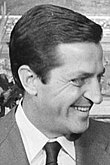 |  | 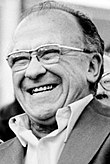 | |
| Party head | Adolfo Suarez | Felipe Gonzalez | Santiago Carrillo |
| The consignment | SDC | ISRP | KPI |
| Seats received | 165 | 118 | 20 |
| Votes | 6 310 391 (34.44%) | 5 371 866 (29.32%) | 1,709,890 (9.33%) |
 |  |  | |
| Party head | Manuel Fraga | Enrique Thierno Galvan | |
| The consignment | |||
| Seats received | sixteen | 6 | eleven |
| Votes | 1,526,671 (8.33%) | 816 582 (4.46%) | 514 647 (2.81%) |
| Other parties | Basque nationalists (8 places), Christian Democrats (2 places), left Republicans of Catalonia , left Basques, Aragonese autonomists and independents (1 place) | ||
 Provincial Congress of Deputies election map | |||
| Election result | The victory was won by the Union of the Democratic Center, having received 47% of the seats in the Congress of Deputies | ||
The elections were held on the basis of universal suffrage by secret ballot using a closed list of proportional representation in 52 constituencies corresponding to the 50 provinces of Spain and the African enclaves of Ceuta and Melilla . In the largest districts, Barcelona , Madrid and Valencia , 32, 31 and 15 members of the lower house of parliament were elected, respectively. In other constituencies, 3 to 12 deputies were elected. The exception was Ceuta and Melilla, which were single-mandate constituencies. The seats in parliament were distributed using the d'Ondt method , only lists for which at least 3% of the total number of voters voted were eligible to receive mandates, while empty ballots were also taken into account. Of all the parties that supported the Second Republic , or descended from them, only the Communists were legalized before the elections, and, therefore, were able to take part in them. [one]
The elections were held amid a poor economic situation in Spain. [2] The campaign was accompanied by demonstrations against alleged violations and bombings in many areas. In Barcelona, 2,000 demonstrators gathered outside the building where the local electoral council was located, claiming that they were not included in the voter lists. Two policemen were injured when a Molotov cocktail was thrown into their car. In Seville , three people, including two police officers, received minor injuries after a bomb explosion in court. Four more explosions occurred in Pamplona and two in Cordoba . [3]
The election results demonstrated the moderate sentiment of the majority of voters who voted for the center-right and center-left parties. Former Franco-minister Adolfo Suárez, appointed prime minister by the king on July 3, 1976 to carry out political reform, organized a broad coalition of centrist parties, the Union of Democratic Center , which was able to win the election, although it did not get a majority of the seats, which forced it to work with opposition parties on both sides of the political spectrum, including the right from the People’s Alliance and the left, socialists and communists .
A surprise was the successful performance of the recently re-established Spanish Socialist Workers' Party, which, led by young lawyer Felipe Gonzalez , won 118 seats, becoming the largest opposition force, ahead of the Communists, during the Franco dictatorship that became the main party of anti-Franco resistance. The election results disappointed the Communist Party, which, led by Santiago Carrillo, hoped to receive from 30 to 40 seats. [four]
The leading force on the right flank was the , created by Manuel Fraga , who was minister during the reign of Franco and received the post of Deputy Prime Minister and Minister of the Interior in the first post-Francoist government. Also, a number of nationalist parties representing the Catalans, Basques and Galicians were able to get parliamentary representation.
Background
In July 1976, Adolfo Suarez, on behalf of the king, formed a government of young Franco-reformists, which did not include prominent figures, for example, the famous and influential politicians Manuel Fraga and Jose Maria de Areilsa refused to enter it. [5] [6] [7] In his first speech, the new Prime Minister presented a draft reform of the political system of Spain, saying that his goal is that “the governments of the future be the result of the free will of the majority of the Spaniards,” [7] and announced that people will have the opportunity to freely express their will in the general election, which will be held in a year. [eight]
A bill on political reform proposed by the Suarez government stipulated that the new Cortes would consist of two houses, the Congress of Deputies and the Senate, consisting of 350 and 207 deputies, respectively, elected by universal suffrage, with the exception of some of the senators whom the king could appoint. [9] At the same time, all institutions of the Franco regime were implicitly canceled, without exception, therefore, the law on reform was actually more about liquidation rather than reform. [10] [11]
The Law on Political Reform was approved by the Frankist Cortes on November 18, 1976 [12] largely due to the fact that the Suarez government took a number of maneuvers to convince the majority of Francoist delegates to vote for its adoption. In particular, the commissioners who held high posts in the administration, in case of refusal to support the law, risked losing their posts, they promised to help others with the election to the new parliament. These and other tricks explain why the Franco-Cortes decided to "commit suicide." [13] [14] The government then announced a nationwide referendum on December 15 , at which Spanish citizens were to approve the Political Reform Act. A massive “Yes” campaign was launched, in which the government-controlled media actively participated. Largely due to this, it was possible to achieve a high turnout (77.72%) and an overwhelming majority of the votes for (97.36%). [10] [15] [16] Thus, political reform, and implicitly the Monarchy and the government of Suarez, were legitimized by universal suffrage. All this made it possible to call general elections. [13] [17] The first elections after the death of dictator Franco were appointed by royal decree No. 20/77 of March 18, 1977.
Legislature
The Spanish legislature, the Cortes , to be elected on June 15, 1977, was to consist of two houses: the Congress of Deputies (lower house, 350 deputies) and the Senate (upper house, from 207 to 248 deputies). The 1977 Political Reform Act provided for the election of a bicameral parliament, which was to draft and adopt a new constitution as soon as possible, thereby completing the reform of the political system created by Franco after his victory in the Civil War. The initiative to amend the constitution belonged to Congress and the government, demanding approval by an absolute majority in both houses. Ultimately, in order to break the possible impasse, it was planned to hold a joint meeting of both chambers as a single legislative body, at which a decision could be taken by an absolute majority of votes. [18]
Election System
The 1977 election was governed by a provisional royal decree that provided for voting on the basis of universal suffrage, with the participation of all citizens twenty-one years of age or older, with the right to vote.
348 seats in the Congress of Deputies were allocated to 50 multi-member constituencies , each of which corresponded to one of the 50 Spanish provinces, two more seats were intended for Ceuta and Melilla. Each province was entitled to at least two seats in Congress, the remaining 248 seats were distributed among 50 provinces in proportion to their population. Places in multi-member districts were distributed according to the d'Ondt method, using closed lists and proportional representation. In each of the multi-member districts, only parties that were able to overcome the threshold of 3% of valid votes, which included empty ballots, were allowed to distribute mandates.
Each of the 47 districts located on the peninsula had four Senate seats. The island provinces, the Balearic and Canary Islands , were divided into nine counties. Three large districts, Mallorca , Gran Canaria and Tenerife , each received three Senate seats, small districts, Menorca , Ibiza - Formentera , Fuerteventura , Homer - Hierro , Lanzarote and Palma - one at a time. Ceuta and Melilla were elected two senators each. In total, there were 207 deputies in the Senate elected by direct vote, using an with a partial voting block. Instead of voting for parties, voters will vote for individual candidates. In four-member districts, voters could vote for no more than three candidates, in three- and two-member districts for two candidates, in single-member districts for one candidate. In addition, the king himself could appoint members of the Senate, but no more than one fifth of the number of elected senators, while the number of seats in the upper house was limited to 248 deputies. [nineteen]
Campaign
Since the end of 1976, the government began to legalize opposition parties to the Franco regime, including the Spanish Socialist Workers and People’s Socialist Parties. New political entities have also emerged, such as the People's Alliance, led by former Minister Manuel Fraga. The ruling and the only party legitimate during the years of the Franco regime, the National Movement (the Spanish phalanx got this name over time) continued its activity, although in April 1977 the authorities began its dissolution. It was then that Suarez decided to organize a new political force, which will be represented in the elections. As a result, a broad coalition of the Union of the Democratic Center was created, which brought together a large number of small and medium-sized parties of diverse ideologies: social democrats , Christian democrats , liberals , centrists , independents and others. However, the Communist Party of Spain was still an illegal entity. The issue of its legalization was a stumbling block for the Suarez government. Nevertheless, on April 9, the Communist Party was finally legalized, [20] [21] despite strong resistance from the officers of the armed forces . The government managed to rectify the situation and the army commanders ultimately accepted the legalization of the Communists as a fait accompli. In turn, the Communist Party was to accept the monarchy as a form of government, as well as recognize the flag of the Kingdom of Spain , [22] refusing to use republican flags at its rallies. [23]
The hostility of some military commanders forced the government and opposition to exercise caution during negotiations on a new election law. During the election campaign, mass actions against alleged violations and terrorist acts took place. Nevertheless, in general, the campaign took place in a festive atmosphere. About 22,000 meetings were held with voters, demonstrations and rallies. [24] Socialists and communists were marked by the most massive rallies of their supporters, but the presence of the pro-government Union of the Democratic Center in the state media was overwhelming, influencing the outcome of the vote. In addition, Suarez refused to participate in debates with rivals, thereby limiting the presence of the opposition in government-controlled media. [25]
Despite the powerful financial resources and the presence of well-known politicians, the People’s Alliance could not conduct an effective campaign. One of the reasons for the failure of the coalition was the return to politics of Carlos Arias Navarro , one of the most famous politicians in Spain during the dictatorship of General Franco, chairman of the Council of Ministers of Spain in 1973-1976. His ultra-conservative stance adversely affected moderate voters, who preferred to cast their ballots to the Suarez centrists. The presence of Santiago Carrillo and several other communist politicians evoked memories of the civil war among older voters, thereby negatively affecting the position of the Communist Party. [25] While the Communist Party included a number of war veterans on its electoral lists, the Socialist Party relied on younger politicians.
Surveys
The results of pre-election polls are shown in the table below in reverse chronological order, showing the most recent first. The latest survey dates are shown, not the publication date. If this date is unknown, the publication date is indicated. The highest percentage in each survey is displayed in bold and highlighted in the color of the lead participant. The column on the right shows the difference between the two leading parties in percentage points. If a particular survey does not show data for any of the batches, the cells of this batch corresponding to this poll are shown empty.
| Organization | date | Limit inaccuracies | amount of respondents | Difference | ||||||||
|---|---|---|---|---|---|---|---|---|---|---|---|---|
| Election results | June 15, 1977 | 34.4 | 29.3 | 9.3 | 8.2 | 4.5 | 2.8 | 1.6 | 1.2 | 5.1 | ||
| Gallup | June 14, 1977 | 32.0 | 36.1 | 7.3 | 7.1 | 6.0 | 3.0 | 2.3 | 4.9 | ± 2.8 pp | 1,200 | 4.1 |
| Análisis y Alternativas | June 14, 1977 | 31.4 | 26.0 | 8.1 | 9.5 | 6.6 | 1.7 | 2.4 | 5.1 | ± 2.5 pp | 1,285 | 5.4 |
| Facta Vector | June 12, 1977 | 30.0 | 20.7 | 7.1 | 11.3 | 6.2 | 2.3 | 1.3 | 5.0 | ± 1.4 pp | 5,100 | 9.3 |
| Alef | June 11, 1977 | 33.7 | 20.0 | 10.8 | 11.3 | 8.0 | 11.4 | 13.7 | ||||
| Metra seis | June 10, 1977 | 34.4 | 24.2 | 9.7 | 4.9 | 6.8 | 3.1 | ± 2.4 pp | 1,700 | 10.2 | ||
| Sofemasa | June 8, 1977 | 34.0 | 27.0 | 8.1 | 9.2 | 5.4 | 1.5 | 1.0 | 2.6 | ± 0.8 pp | 15,875 | 7.0 |
| Metra seis | June 1, 1977 | 40.5 | 20.7 | 7.8 | 8.3 | 6.1 | 3.1 | 1.4 | 5.6 | ± 2.4 pp | 1,700 | 19.8 |
| Sofemasa | May 19, 1977 | 33.8 | 22.5 | 9.7 | 9.6 | 6.6 | 2.7 | 5.0 | ± 2.4 pp | 1,638 | 11.3 | |
| Sofemasa | May 5, 1977 | 33.5 | 21.9 | 8.8 | 7.9 | 9.0 | 2.5 | 1.8 | ± 2.5 pp | 1,595 | 11.6 | |
Results
The June 15, 1977 elections were held without incident and with a very high turnout, reaching almost 80% of the registered voters. The victory went to the Union of Democratic Center, headed by Adolfo Suarez, who managed to become the main political force at the national level, winning more than a third of the votes and 165 seats in the lower house, although he could not reach an absolute majority in the Congress of Deputies: for this, he lacked 11 seats . [26] [27]
The second place in the election went to the ISRP, which became the largest left-wing party, receiving almost 30% of the vote and 118 seats, eventually outstripping the Communist Party, which, despite being the leading force of anti-Franco resistance for a long time, took only the third place. Less than 10% of the vote cast for the Communists, which provided the party with only 20 deputy mandates. The failure of the Communists made a strong impression, as the party’s results did not match its role in the struggle against Franco’s dictatorship. The election results showed that communism in Spain is not as important as in Italy and France. [28] The Professor Enrique Tjerno Galvana , which, despite participating in the elections along with several small socialist parties, was able to get only 4.5% of the vote and six seats, could not achieve much success.
Along with the Communists, the unlucky coalition, the People’s Alliance Manuel Frag, who managed to get just a little more than 8.2% of the vote and 16 seats — 13 of which were former Franco ministers, can be attributed to the losers of the elections. [29] Fraga was not able to attract the votes of conservative voters, who largely preferred the pro-government Union of the Democratic Center. The Federation of Christian Democrats, created by Jose Maria Gil-Robles , a former leader of CEDA , the most influential right-wing party of the Second Republic, also failed. Even having created a coalition with a number of other Christian Democratic parties, it did not receive a single seat in the party, although it received more than 200 thousand votes. [30] [31] The party of the left-wing Christian Democrat, Joaquin Ruiz-Jimenez, the former Minister of Education in the 1950s, the Democratic Left, also a member of the Federation of Christian Democrats, was still able to hold the Senate of five deputies. This failure virtually eliminated Christian Democrats from Spanish political life.
The far-right and far-left parties were left without parliamentary representation following the election results. [32] The far right could not unite and opposed each other in the elections. The dissolution of the Spanish phalanx by the post-Frankist authorities led to the emergence of a number of organizations claiming to be the successor to the once-ruling National Movement. Among them were the new Spanish phalanx , the Genuine Spanish phalanx, the Independent Spanish phalanx, a number of regional and local parties, such as the Gipuzkoa Phalanx, as well as independent sections of such parties as The New Force or Jose Antonio Doctrinal Circles. As a result of this division, not a single extreme right education received a seat in Cortes. The most successful on the extreme right flank was the National Alliance on July 18, created by a number of far-right parties and groups led by Raimundo Fernandez-Cuesta, who had been Franco's comrade -in- arms since the 1930s . But the alliance was able to get only 0.37% of the vote, without a parliamentary representation.
The fact that none of the traditional republican parties or their heirs, such as the Republican Left or the Spanish Democratic Republican Action, was able to take part in these elections, was also influenced by the fact that the Ministry of Internal Affairs was not registered on time. The right-wing conservative historic Carlist party, led by Carlos Hugo, also faced a similar problem.
Congress of Deputies
| Parties and coalitions | Leader | Vote | Places | |||||
|---|---|---|---|---|---|---|---|---|
| Vote | % | ± p.p. | Places | +/− | ||||
| Union of Democratic Center | Spanish Unión de Centro Democrático, UCD | Adolfo Suarez | 6 310 391 | 34.44 | - | 165 [~ 1] | - | |
| Spanish Socialist Workers Party | Spanish Partido Socialista Obrero Español, PSOE | Felipe Gonzalez | 5 371 866 | 29.32 | - | 118 [~ 2] | - | |
| Communist Party of Spain | Spanish Partido Comunista de España, PCE | Santiago Carrillo | 1,709,890 | 9.33 | - | 20 [~ 3] | - | |
| [~ 4] | Spanish Alianza Popular, AP | Manuel Fraga Iribarne | 1,526,671 | 8.33 | - | sixteen | - | |
| - Socialist unity | Spanish Partido Socialista Popular-Unidad Socialista, PSP – US | Enrique Thierno Galvan | 816 582 | 4.46 | - | 6 [~ 5] | - | |
| cat. Pacte Democràtic per Catalunya, PDPC | 514 647 | 2.81 | - | 11 [~ 6] | - | |||
| - [~ 7] | Spanish Federación de la Democracia Cristiana – Equipo Demócrata Cristiano del Estado Español, FDC – EDCEE | Anton Canyellas | 414,732 | 2.26 | - | 2 [~ 8] | - | |
| Basque Nationalist Party | Basque. Euzko Alderdi Jeltzalea, EAJ | Juan de Ahuriagerra | 296 193 | 1,62 | - | eight | - | |
| Left Catalonia - Democratic Electoral Front [~ 9] | cat. Esquerra de Catalunya - Front Electoral Democràtic, EC – FED | Heribert Barrera | 143 954 | 0.79 | - | one | - | |
| Democratic Socialist Alliance [~ 10] | Spanish Alianza Socialista Democrática, ASDCI | Manuel Murillo / Jose Prat | 126 944 | 0.69 | - | 0 | - | |
| [~ 11] | Spanish Frente Democrático de Izquierdas, FDI | Lorenzo Benassar / Joaquin Aramburu | 122 608 | 0.67 | - | 0 | - | |
| National Alliance July 18 [~ 12] | Spanish Alianza Nacional 18 de Julio, AN18 | Raimundo Fernandez Cuesta | 106 078 | 0.58 | - | 0 | - | |
| Spanish Agrupación Electoral de los Trabajadores, AET | Jose Sanroma | 77 575 | 0.42 | - | 0 | - | ||
| Spanish Social Reform | Spanish Reforma Social Española, RSE | Manuel Cantarero | 64,241 | 0.35 | - | 0 | - | |
| [~ 13] | Basque. Euskadiko Ezkerra, EE | Francisco Letamendia | 61 417 | 0.34 | - | one | - | |
| Authentic spanish phalanx | Spanish Spanish Phalanx of the Committees for the National-Syndicalist Offensive (Auténtico), FE – JONS (A) | Pedro Conde | 46,548 | 0.25 | - | 0 | - | |
| [~ 14] | Spanish Frente por la Unidad de los Trabajadores, FUT | Jaime Pastor | 41,208 | 0.22 | - | 0 | - | |
| Spanish Candidatura Aragonesa Independiente de Centro, CAIC | Hipolito Gomez de las Roses | 37 183 | 0.20 | - | one | - | ||
| Basque Socialist Assembly | Basque. Euskal Sozialista Biltzarrea, ESB | 36,002 | 0.20 | - | 0 | - | ||
| Socialist Party of the Country of Valencia | cat. Partit Socialista del País Valencià, PSPV | Alphonse Cuco | 31 138 | 0.17 | - | 0 | - | |
| Independent Centrists | Spanish Candidatura Independiente de Centro | Jose Miguel Orty Bordas | 29,834 | 0.16 | - | one | - | |
| Galician Socialist Party | galis. Partido Socialista Galego, PSG | Jose Manuel Beiras | 27 197 | 0.15 | - | 0 | - | |
| Navarre Left Union | Spanish Union Navarra de Izquierdas, UNAI | 24,489 | 0.13 | - | 0 | - | ||
| Galician People's National Bloc | galis. Bloque Nacional Popular Galego, BNPG | 22,771 | 0.12 | - | 0 | - | ||
| Andalusian regional unity | Spanish Unidad Regional de Andalucía, URA | 21 350 | 0.12 | - | 0 | - | ||
| Catalan League - Catalan Liberal Party | cat. Lliga de Catalunya-Partit Liberal Català, LC – PLC | 20 109 | 0.11 | - | 0 | - | ||
| National Association for the Study of Actual Issues– People's Center | Spanish Asociación Nacional para el Estudio de Problemas Actuales-Centro Popular, ANEPA – CP | 18 113 | 0.10 | - | 0 | - | ||
| Navarre Autonomous Union | Spanish Unión Autónoma Navarra, UAN | 18,079 | 0.10 | - | 0 | - | ||
| One Canary People | Spanish Pueblo Canario Unido, PCU | 17 717 | 0.10 | - | 0 | - | ||
| Parties with less than 0.1% of the vote [~ 15] | 222 558 | 1.21 | - | 0 | - | |||
| Empty newsletters | 46,248 | 0.25 | - | |||||
| Total | 18 324 333 | 100.00 | 350 | - | ||||
| Invalid votes | 265,797 | 1.43 | - | |||||
| Registered / Turnout | 23,583,762 | 78.83 | - | |||||
| Source: Ministry of the Interior | ||||||||
- ↑ Of these, - 32, - 17, - 16, - 14, and - 6 - 5, , and - 4 , and MDS - 2 each
- ↑ Including, 8 deputies from
- ↑ Including, 8 deputies from OSPK
- ↑ Including Navarforalist alliance (21,900 votes (0.12%), 0 seats), Spanish National Union, Spanish Democratic Association, Coexistence of the Catalans in Catalonia and the Gipuzkoa Phalanx
- ↑ Of these, 5 deputies from the NSP and 1 from the
- ↑ Of these, 5 deputies from DCK , 4 from and 2 from
- ↑ Including the Union of the Center and Christian Democrats of Catalonia (172,791 votes (0.94%), 2 seats), the Basque Christian Democrats (26,100 votes (0.14%), 0 seats), the Democratic Union of the Country of Valencia and the Galician People the party
- ↑ Both from the Union of the Center and the Christian Democrats of Catalonia, of which 1 from the DSC and 1 from the
- ↑ Coalition of the Republican Left of Catalonia, the Workers Party of Catalonia and the Catalan State Party, an ally of the Left Democratic Front
- ↑ Including the Spanish Socialist Workers' Party (historical) (21,242 votes (0.12%), 0 seats), the Spanish Social Democratic Party (3,786 votes (0.02%), 0 seats), the Labor Party of Valencia and the Spanish Sector social reform
- ↑ Coalition of the Workers Party of Spain, the Independent Socialist Party, the Block of Independent Socialists and the Party of United Communists of the Canary Islands, an ally of the Left of Catalonia - Democratic Electoral Front
- ↑ New Force Coalition, Doctrinal Circles José Antonio, and the Association of Young Traditionalists supported by the National Confederation of Veterans and Traditional Communion
- ↑ Coalition and in the Basque Country
- ↑ Coalition of the Revolutionary Communist League, Communist Action, Left Communist Organization and POUM
- ↑ Basque Independent Democrats, Candidates for National Unity for Socialism, Balearic Autonomous Union, Left Center Albacete, Regionalist Unity, Navarre Independent Front, Canary People's Party, Social Christian Democrats of Catalonia, Socialist Movement, Carlists for Federalism and Self-Government, Social Agrarian Action, Basque Socialist Action action, Congress of Independent Girona Candidates, Aragonese Christian Democrats, Independent Rioja, Unity Candidates, Socialist Canary Islands Party, Independent Party of Madrid, Aragonese Autonomous Front, Proversa Party, Left Canary Unity, Galician Democratic Party, Democratic Union of the Balearic Islands, Federation of Workers, Radical Socialist Party of Valencia, Carlist Voters of the Country of Valencia, Group of Independent Urban and Rural Voters , United Left Regionalists, Independent Small Business Applicants, Ceuta Voters Association, Carlist Voter Group, Independent Spanish Phalanx , The Spanish Agrarian Party, the Independent Liberal Party, Andalusian left block, left-wing Andalusian candidates, independent candidates
Union of Democratic Center : 165 Spanish Socialist Workers Party : 118 Communist Party of Spain : 20 : 16 : 11 Basque Nationalist Party : 8 : 6 : 2 Republican Left of Catalonia : 1 : 1 : 1 independent: 1
Union of Democratic Center Spanish Socialist Workers Party Basque Nationalist Party
Senate
Of the 248 Senate members, 207 were elected in the provinces by direct vote, the remaining 41 were appointed by the king in accordance with the Law on Political Reform. Only 2,423,668 people (10.28%) participated in the elections to the upper house. 43,247 ballots (1.78%) were declared invalid, 23,875 (0.985%) were empty.
| Parties | Places | |||||||
| Union of Democratic Center | 106 | |||||||
| Spanish Socialist Workers Party | 47 | |||||||
| Senators appointed by the king | 41 | |||||||
| Independent | 17 | |||||||
| five | ||||||||
| United Socialist Party of Catalonia | four | |||||||
| four | ||||||||
| four | ||||||||
| Basque Nationalist Party | four | |||||||
| 3 | ||||||||
| Democratic convergence of Catalonia | 2 | |||||||
| 2 | ||||||||
| Independent Basque Nationalists | 2 | |||||||
| one | ||||||||
| Communist Party of Spain | one | |||||||
| Republican Left of Catalonia | one | |||||||
| one | ||||||||
| one | ||||||||
| one | ||||||||
| one | ||||||||
| Total | 248 | |||||||
Regional Results
Distribution of votes and mandates for parties and coalitions in the regions of Spain. [33]
| Region | SDC | ISRP | KPI | ON | NSP | DSC | FCD / QCD | BNP | Regionalists | Total | |||||||||
|---|---|---|---|---|---|---|---|---|---|---|---|---|---|---|---|---|---|---|---|
| Votes (%) | Places | Votes (%) | Places | Votes (%) | Places | Votes (%) | Places | Votes (%) | Places | Votes (%) | Places | Votes (%) | Places | Votes (%) | Places | Votes (%) | Places | ||
| Andalusia | 34.3 | 26 | 36.1 | 27 | 11.3 | five | 7.0 | 0 | 4.7 | one | - | - | 1,1 | 0 | - | - | 0.7 [~ 1] | 0 | 59 |
| Aragon | 37.0 | 7 | 24.7 | five | 4.9 | 0 | 8.8 | 0 | 9.8 | 1 [~ 2] | - | - | 1.4 | 0 | - | - | 6.4% [~ 3] | 1 [~ 4] | 14 |
| Asturias | 30.8 | four | 31.7 | four | 10,4 | one | 13.5 | one | 7.1 | 0 | - | - | 0.6 | 0 | - | - | 1.9 | 0 | ten |
| Balearic | 51.9 | four | 23.3 | 2 | 4.4 | 0 | 9.0 | 0 | 5.1 | 0 | - | - | - | - | - | - | 4.7 [~ 5] | 0 | 6 |
| Valencia | 33.0 | eleven | 36.3 | 13 | 9.1 | 2 | 5.9 | one | 4.6 | one | - | - | 2.6 | 0 | - | - | 1.6 [~ 6] | - | 29th |
| Galicia | 53.7 | 20 | 15,5 | 3 | 3.0 | 0 | 13.1 | four | 4.7 | 0 | - | - | 2.0 [~ 7] | 0 | - | - | 4.4 [~ 8] | 0 | 27 |
| Canaries | 60,4 | ten | 16.7 | 3 | 3.3 | 0 | 7.3 | 0 | 3.9 | 0 | - | - | - | - | - | - | 6.5 [~ 9] | 0 | 13 |
| Cantabria | 40,0 | 3 | 26.3 | one | 5,4 | 0 | 14.2 | one | 2.7 | 0 | - | - | 2,3 | 0 | - | - | - | - | five |
| Castile La Mancha | 42.5 | 12 | 29.8 | eight | 7.2 | 0 | 12.8 | one | 2,4 | 0 | - | - | 0.2 | 0 | - | - | 1.3 [~ 10] | 0 | 21 |
| Castile-Leon | 51,4 | 25 | 23.6 | eight | 3,7 | 0 | 11.7 | 2 | 3,5 | 0 | - | - | 2.2 | 0 | - | - | - | - | 35 |
| Catalonia | 16.9 | 9 | 28.5 | 15 [~ 11] | 18.3 | 8 [~ 12] | 3,5 | one | 1.4 | 0 | 16.9 | eleven | 5,6 | 2 [~ 13] | - | - | 5.3 [~ 14] | 1 [~ 15] | 47 |
| Madrid | 31.9 | eleven | 31.7 | eleven | 10.7 | four | 10.5 | 3 | 9.1 | 3 | - | - | 1,5 | 0 | - | - | 0 | 32 | |
| Murcia | 40.7 | four | 34.9 | four | 6.7 | 0 | 6.7 | 0 | 5,0 | 0 | - | - | 2.0 | 0 | - | - | - | - | eight |
| Navarre | 29.0 | 3 | 21.1 | 2 | 2,4 | 0 | 8.4 [~ 16] | 0 | 2,5 | 0 | - | - | 4.0 | 0 | 7.0 [~ 17] | 0 | 13.5% [~ 18] | 0 | five |
| Rioja | 41.3 | 2 | 26.3 | one | 2,8 | 0 | 14,4 | one | 2,3 | 0 | - | - | 2.6 | 0 | - | - | 5.8 [~ 19] | 0 | four |
| Basque Country | 12.8 | four | 26.5 | 7 | 4,5 | 0 | 7.1 | one | 1.8 | 0 | - | - | 2.6 [~ 20] | 0 | 29.3 | eight | 11.6 [~ 21] | 1 [~ 22] | 21 |
| Extremadura | 50,0 | eight | 30.8 | four | 5,4 | 0 | 7.8 | 0 | 1.8 | 0 | - | - | 0.6 | 0 | - | - | - | - | 12 |
| Ceuta | 36,2 | one | 32,4 | 0 | - | - | 12.0 | 0 | 11,4 | 0 | - | - | - | - | - | - | 4,5 [~ 23] | 0 | one |
| Melilla | 56.2 | one | 27,2 | 0 | 5,0 | 0 | 10.9 | 0 | - | - | - | - | - | - | - | - | - | - | one |
| Total | 34.44 | 165 | 29.32 | 118 | 9.33 | 20 | 8.33 | sixteen | 4.46 | 6 | 2.81 | eleven | 2.26 | 2 | 1,62 | eight | n / a | n / a | 350 |
- ↑ Andalusian regional unity
- ↑ Socialist Party of Aragon
- ↑ Independent Aragon centrists - 5.7%, Aragon autonomist front - 0.7%
- ↑ Independent Aragon Centrists
- ↑ Balearic Autonomous Union - 3.8; Democratic Union of the Balearic Islands - 0.9
- ↑ Socialist Party of the Country of Valencia
- ↑ Joint List of Galician People's and Galician Social Democratic Parties
- ↑ Galician Socialist Party - 2.4%, Galician People's National Bloc - 2.0
- ↑ One Canary People - 3.2%, Canary People's Party - 1.7%, Canarian Socialist Party - 0.9%, Left Canary Unity - 0.7%
- ↑ Left center of Albacete
- ↑ Joint list with the Socialist Party of Catalonia — Congress
- ↑ United Socialist Party of Caatalonia
- ↑ Union of the Center and Christian Democrats of Catalonia
- ↑ “Left Catalan” (Republican left of Catalonia and allies) - 4.7%, Catalan League – Catalan Liberal Party - 0.6
- ↑ Republican Left of Catalonia
- ↑ Navar Foreralist Alliance
- ↑ Navarre Autonomous Union with the participation of the Basque Nationalist Party
- ↑ Navarre Left Union - 9.4%, Navarre Independent Front - 4.1%
- ↑ Independent Rioja candidates - 4.1%, Independent Rioja group - 1.7
- ↑ Basque Christian Democrats
- ↑ Left Basque Countries - 6.0%, Basque Socialist Assembly - 3.5%, Basque Independent Democrats - 1.5%, Basque Nationalist Action - 0.6%
- ↑ Left Basque Country
- ↑ Ceuta Voter Association
The Union of Democratic Center won in 39 provinces. Socialists won elections in 9 provinces. The democratic agreement of Catalonia prevailed in Girona and Lleida , the Basque nationalists excelled in Biscay and Gipuzkoa .
After the election
After the elections in Spain, the so-called "imperfect bipartisan" party system emerged, the two main forces of which (SDC and ISRP), standing in the political "center", were able to collect 63% of the vote and get more than 80% of the seats (283 out of 350) in parliament. The leading force of the left flank was the Communists, the right - the People’s Alliance. The exception was the Basque Country , where the Basque Nationalist Party and one coalition of the Left Basque Countries received 8 seats, and Catalonia , in which 11 seats won the and one place was the coalition of the Left of Catalonia. [34]
Antonio Hernandez Gil was elected Chairman of Parliament. The chairman of the Congress was Fernando Alvarez de Miranda (CDC).
Adolfo Suarez, appointed king on July 5, 1976, remained prime minister.
The vote on the approval of the new constitution took place on October 31, 1978 . In Congress, the project was supported by 325 deputies (92.86%), 6 voted against, 14 people abstained, 5 were absent. In the Senate, 226 deputies (91.13%) cast their votes for the new constitution, 5 voted against, 8 abstained, 9 were absent.
Notes
- ↑ Emilio Torres Gallego. "Los republicanos y las elecciones" (Spanish) . El País (9 de febrero de 1979). Date of treatment December 30, 2016.
- ↑ Juan María Hernandez Puertolas. "Cómo empezar a salir de la crisis económica antes de fin de año" (Spanish) . La Vanguardia (14 de junio de 1977). Date of treatment December 30, 2016.
- ↑ "Left ahead in Spanish cities" . The Guardian (16 June 1977). Date of treatment December 30, 2016.
- ↑ "Santiago Carillo confident of obtaining 40 seats" (Spanish) . La Vanguardia (14 de junio de 1977). Date of treatment December 30, 2016.
- ↑ Ruiz, 2002 , p. thirty.
- ↑ Juliá, 1999 , pp. 218-219.
- ↑ 1 2 Tusell, 1997 , p. 34.
- ↑ Tusell, 1997 , p. 32.
- ↑ Tusell, 1997 , p. 37.
- ↑ 1 2 Juliá, 1999 , p. 220.
- ↑ Tusell, 1997 , pp. 36-37.
- ↑ Ruiz, 2002 , p. 31.
- ↑ 1 2 Juliá, 1999 , p. 222.
- ↑ Tusell, 1997 , p. 38.
- ↑ Tusell, 1997 , p. 39.
- ↑ Ruiz, 2002 , pp. 31-32.
- ↑ Ruiz, 2002 , p. 33.
- ↑ Ley 1/1977, de 4 de enero, para la Reforma Política . Documento BOE-A-1977-165 (Spanish) . Agencia Estatal Boletín Oficial del Estado (5 de enero de 1977) . Date of treatment December 30, 2016.
- ↑ "Real Decreto-ley 20/1977, de 18 de marzo, sobre Normas Electorales" (Spanish) . Agencia Estatal Boletín Oficial del Estado (23 de marzo de 1977). Date of treatment December 30, 2016.
- ↑ Ruiz, 2002 , p. 35.
- ↑ Tusell, 1997 , p. 42.
- ↑ Juliá, 1999 , pp. 226-227.
- ↑ Ruiz, 2002 , pp. 35-36.
- ↑ Martínez et al, 1998 , p. 280.
- ↑ 1 2 Preston, 2003 , pp. 408-410.
- ↑ Juliá, 1999 , p. 230.
- ↑ Ruiz, 2002 , p. 37.
- ↑ Martínez et al, 1998 , p. 281.
- ↑ Tusell, 1997 , p. 47.
- ↑ Ruiz, 2002 , pp. 37-39.
- ↑ Tusell, 1997 , p. 48.
- ↑ Ruiz, 2002 , p. 38.
- ↑ Elecciones Generales 15 de junio de 1977 (Spanish) . Historia electoral.com. Date of treatment January 1, 2017.
- ↑ Tusell, 1997 , p. 52.
Literature
- Santos Juliá. Un siglo de España. Política y sociedad. - Madrid: Marcial Pons, 1999 .-- 308 p. - ISBN 84-9537903-1 . (Spanish)
- Jesús Martínez et al. Historia de España. Siglo XX (1939-1996). - Madrid: Cátedra, 1998 .-- 520 p. - ISBN 9788437617039 . (Spanish)
- Paul Preston. Juan Carlos, el rey de un pueblo (volumen II). - Barcelona: ABC, SL, 2003 .-- 663 p. - ISBN 84-413-2063-2 . (Spanish)
- David Ruiz. La España democrática (1975-2000). Política y sociedad. - Madrid: Síntesis, 2002 .-- 256 p. - ISBN 84-9756-015-9 . (Spanish)
- Javier Tusell. La transición española. La recuperación de las libertades. - Madrid: Historia 16-Temas de Hoy, 1997 .-- 129 p. - ISBN 84-7679-327-8 . (Spanish)
Links
- Congreso / Junio 1977 (Spanish) . . - Datos completos del Ministerio del Interior. Date of treatment December 30, 2016.
- 15-J: 30 años de democracia en España (Spanish) . El Mundo . Date of treatment December 30, 2016.
- Elecciones Generales 15 de junio de 1977 (Spanish) . Historia electoral.com. Date of treatment December 30, 2016.
- Elecciones al Senado 15 de junio de 1977 (Spanish) . Historia electoral.com. Date of treatment December 30, 2016.