Methylenedioxymethamphetamine , MDMA , MDMA , 3,4-methylenedioxy- N- methamphetamine - a semisynthetic psychoactive compound of the amphetamine series , belonging to the group of phenylethylamines , commonly known under the slang name of the tablet form of ecstasy ( English ecstasy , XTC, other names - , Molly, Mandy) [1] .
MDMA is one of the most popular drugs , especially in the youth environment ( see ), and received a noticeable reflection in Western mass culture ( see ). Since the 1980s, MDMA has been distributed among rave culture and nightclub regulars[1] [2] . The production, storage, transportation and distribution of MDMA is prohibited by the UN Convention and is a criminal offense in most countries of the world .
In addition to recreational use , before its ban MDMA was used as an adjunct in psychotherapy [2] [3] [4] . Questions of harm and benefits of MDMA and its legalization , full or partial, became the subject of a long struggle in the " war on drugs " and were accompanied by moral panic ( see ), public and scientific scandals .
In the 21st century, the research of MDMA as a medicine was resumed: research organizations in the USA , Switzerland , Israel , and Great Britain test its potential use as a psychotherapeutic agent for the treatment of post-traumatic mental disorders [5] and depression [6] , as well as the possible use of its derivatives for the treatment of leukemia [7] . On August 17, 2017, the FDA granted psychotherapy using MDMA the status of “ post-traumatic stress disorder (PTSD) , since then the final third phase of the clinical trials of the method [8] . Nevertheless, as of 2019, MDMA does not have approved medical applications [5] , and additional research is needed in all these areas to determine the balance of risks and benefits ( see ) [6] .
Content
- 1 Discovery and early research
- 2 Discovery of psychoactive properties
- 3 Use in psychotherapy
- 4 Distribution
- 5 Prohibition
- 6 Drug Parties
- 7 Ecstasy Composition History
- 8 Harm MDMA and the “war on drugs”
- 9 Ecstasy-related anti-drug campaigns
- 10 RAVE Law
- 10.1 US Press on Ecstasy in the 1990s
- 10.2 Beginning of a public panic
- 10.3 NIDA Ecstasy Neurotoxicity Campaigns
- 10.4 Article in the journal Science in 2002
- 10.5 History of the review and adoption of the RAVE Law
- 10.6 RAVE Law Enforcement Practice and Criticism
- 11 MDMA studies of the late 1990s - early 2000s
- 12 David Nutt and the Ecstasy Harm
- 13 Modern research
- 14 Modern dynamics of the MDMA market
- 15 Notes
- 16 Literature
- 17 Links
Discovery and Early Research
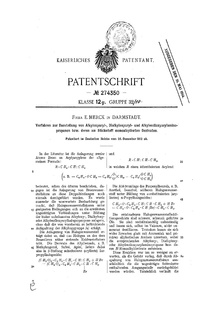
MDMA was first synthesized in an attempt to find new means to improve blood coagulation in 1912 by German chemist Anton Köllisch , who worked for the pharmaceutical company Merck . A patent under the number 274,350 with a description of the synthesis of this substance was granted on May 16, 1914 in the city of Darmstadt ( Germany ), but remained unattended. Researchers of that time did not know and did not suggest any special properties of the new chemical compound, and in the patent it was qualified as a by-product obtained in the synthesis of hydrastinin [9] [10] . Until 1953, MDMA was mentioned only twice in the scientific literature, both times as a by-product in the synthesis of other compounds [11] .
Discovery of Psychoactive Properties
Only about half a century later, the MDMA molecule again attracts the attention of researchers, already as a psychoactive compound - as a substance related to mescaline [12] . Short-term 1953 studies at the University of Michigan (commissioned by the US Army ) included experiments with 8 potential animal psychedelics. MDMA, code-named EA-1475 (from the English Edgewood Arsenal , where the drug was synthesized), was tested on rats, mice, guinea pigs, dogs and monkeys - the results were declassified in 1969. The aim of these works was to find new ways to manipulate consciousness , they were part of the infamous MK Ultra program, but were not particularly successful: human trials were curtailed after the death of Howard Blauer , one of the patients in the - from an overdose of MDA- related MDA compounds at the end of 1952 [13] [14] [15] .
For the first time in confiscated drug samples in the USA, MDMA was found in 1970, and until the mid-1970s it was rarely found almost exclusively in the Midwestern United States, probably as a legal substitute for the MDA , which was banned in 1970, [16] , which causes similar low prosocial effects and also, like MDMA later called the “hug substance” ( English hug drug ) [15] . MDMA became famous in the late 1970s thanks to the work of the American chemist and psychoactive substance researcher Alexander Shulgin . On September 8, 1976, on the advice of one of her students, Marie Kleinman, Shulgin synthesized and then tested MDMA on himself, using the method of gradually increasing the dose [12] [17] . An excerpt from the records of the laboratory journal Shulgin, describing the effect of taking 120 mg of the drug [18] :
I feel absolutely clear, and there is nothing but pure euphoria. I had never felt so beautiful and did not even believe that it was possible.
Clarity, purity and a magical sense of inner strength persisted throughout the day.
I am amazed at the depth of feelings ...
Original textI feel absolutely clean inside, and there is nothing but pure euphoria. I have never felt so great or believed this to be possible.
The cleanliness, clarity, and marvelous feeling of solid inner strength continued throughout the rest of the day and evening.
I am overcome by the profundity of the experience
Application in psychotherapy
Soon Shulgin, impressed by the effects of MDMA and having good connections in the scientific world, introduces the action of this substance to a wider circle of scientists - that is why he is called the “father” or “godfather” of MDMA and ecstasy [17] . In the first scientific articles devoted to MDMA, published in 1978, its effect on the human psyche is described as “an easily controlled altered state of consciousness with emotional and sensual shades” [19] .
One of Shulgin’s friends, the psychotherapist Leo Zef , was already struck by the therapeutic potential of MDMA back in 1977 and began to use it with enthusiasm in practice [17] . Dr. Zef contributed to the dissemination of information about the discovery among psychotherapists, especially of the holistic and New Age directions, close to the Esalen Institute [20] . Gradually, MDMA began to be used more and more as a drug that increases the effectiveness of psychotherapy sessions [21] [22] , especially when counseling couples and resolving family problems and conflicts [2] [23] .
In the early 1980s, MDMA was used in clinical practice by more than a thousand doctors - it is estimated that about half a million doses of the substance were used for psychotherapeutic purposes in the USA before it was banned [24] . Zef gave the MDMA the name “Adam,” based on his “ability to return the subject to a state of innocence that preceded the emergence of feelings of guilt, shame, and his own underestimation” [25] . MDMA was used by therapists with caution, they tried not to attract special attention to it, since the scientific community had not yet forgotten about the psychedelic revolution of the 1960s and no one wanted to repeat the story of LSD , which was banned after its wide distribution beyond the scope of psychotherapeutic use [26] [25] . Shulgin believed that with the discovery of MDMA, he was close to achieving his goal of finding the ideal psychotherapeutic remedy [27] : the range of MDMA applications offered by various psychologists and psychiatrists was very similar to that originally proposed by Freud for cocaine and included almost any psychological difficulties [12] [ 28] .
Distribution
Soon, information about MDMA became more widespread and its use spread beyond the limits of clinical practice, especially among New Age fans [29] [25] . Since the mid-1970s, MDMA is increasingly found in confiscated drug samples, and by 1980 it begins to prevail over MDA [30] , while the localization of its appearance is replaced by the West Bank of the United States [16] .
Since the 1980s, MDMA has begun to spread in the club subculture (especially in gay dance clubs) and among young yuppie professionals with countercultural roots from the 1960s and 1970s under a wide range of names [31] . It became especially popular and widely used in California , as well as in Texas , where MDMA was distributed in bars and nightclubs of Dallas and Fort Worth [12] . Anyone could also buy MDMA with a credit card in the catalog by calling the toll-free 800 number . MDMA was sold in the form of tablets in small brown bottles called “Sassyfras” - with a hint of sassafras ( English sassafras - from the oil of this bush, safrole - the precursor MDMA) and arrogance ( English sassy - arrogant) [25] [32] . The press, however, remained in relative ignorance of the substance until June 1984, when its distribution caught the attention of the San Francisco Chronicle [25] .
The name "Ecstasy" ( Eng. Ecstasy , ecstasy ) was coined in 1981 [33] by Michael Clegg from Dallas [34] [35] , which was part of the so-called "Texas group", which included in addition to it Former cocaine dealerships and starting legal large-scale production of MDMA in 1983 for recreational use, this group split off from the older “Boston group” that existed since 1976 [36] , which tried to limit the use of the substance it produces for therapeutic and spiritual purposes [37 ] [25] . Acquainted with the action of MDMA at the beginning of his career as a Catholic pastor , Clegg made his life mission to spread ecstasy to the masses [25] [35] . By the time the MDMA was banned in 1985, Clegg was the largest manufacturer and distributor of it in the United States [34] and, having accelerated production as much as possible in recent months, managed to produce a total of about 2 million tablets [38] . He commented on the choice of the name: “ Ecstasy ” was chosen for the obvious reason: because it would sell better than if you called it “ Empathy .” Empathy would be more appropriate, but how many people know what it is? "( Ecstasy was chosen for obvious reasons, because it would sell better than calling it Empathy. Empathy would be more appropriate, but how many people know what it means? ) [25] . Some members of the Texas group after the ban on MDMA retired, becoming millionaires, and some continued to conquer the market, selling either now illegal MDMA, or trying to circumvent the law by trading MDEA (Eva), a close chemical analogue of MDMA, which, however, did not gain much popularity due to worse than expressed empathogenic properties and a fairly quick ban by a new American law covering analogues of already banned drugs [39] .
Ban
The proliferation of MDMA has attracted the attention of a Texas Senator, Democrat Lloyd Bentsen , who proposed the Drug Enforcement Administration (DEA) to ban the substance [25] . The DEA decided to follow this proposal and a formal notice to ban the substance and put it on was published on July 27, 1984 in the Federal Register [40] . However, unexpectedly for the DEA and the general atmosphere of the Reagan era with its ongoing “ war on drugs ”, this decision provoked a legal protest by a group of psychotherapists led by Rick Doblin and George Greer, who proposed to include MDMA in Schedule III, which allows for prescription use , or even leave it uncontrollable, which therefore initiated the never-before-used procedure of public hearings that began in February 1985 [40] [41] [42] .
This controversy ultimately attracted the attention of the press [42] . Initially, the coverage of the problem was sensational , mixing articles warning about the possible dangers of the drug with articles with rave reviews about the alleged possibilities of MDMA [42] . Positive articles gave the floor to therapists and new age healers who used the drug on themselves and to treat other people since the 1960s and considered it the “universal key to consciousness” that LSD was supposed to be: it was argued that MDMA was able to give the result of “one year of therapy in a two-hour session” [43] [44] , and Rick Doblin praised the merits of the drug - the discovery of MDMA was positioned as an important step forward in the search for chemicals to achieve peace, understanding and happiness in an era of possible nuclear war [45] . The opposite side, which relied more on reports from government bodies and a group of scientists led by Lewis Seiden [46] , who discovered the suspected neurotoxicity of large doses of MDMA in rats, as well as rumors and fables, painted the drug in black colors, relying on the standard scheme of “drug panic” : 1) a sensational description of the action of the drug; 2) the use of loaded language and catchy expressions to attract the attention of the public; 3) the image of users of the substance - for ecstasy, gays , angry young people and the remains of the counterculture of the 1960s - as dangerous to the society of “others” [47] .
At the same time, the press was filled with exaggerations and ducks: later it turned out that instead of MDMA, MDA was tested on rats, moreover, real research results were much less categorical compared to their presentation by scientists in the media - although they were then called DEA by reason of an urgent temporary ban MDMA [48] ; claims that MDMA dries cerebrospinal fluid, severely damages the brain, drives you crazy, causes Parkinson's disease - were not based on anything [49] . A myth born at that time described that once during World War I, soldiers of two warring parties took the newly invented drug MDMA and as a result, instead of a fight, they arranged a friendly football match [49] . The culmination of exaggeration and high-profile statements by both sides was , in which representatives of MDMA lawyers met in a verbal duel with scientists who claimed the discovery of the drug's neurotoxicity in rats, and both sides reached clearly absurd statements about ecstasy [ 50] .
In 1985, without waiting for the slow-pending hearings to end, the DEA used the statutory prohibition right in exceptional circumstances - thus, MDMA was the first substance listed in Schedule I this way [51] , and became illegal in the United States from 1 July 1985 [40] . A press release issued by the DEA stated that “ all the information we have received indicates that dependence on MDMA has become a national problem and poses a serious threat to health ... These emergency actions are a temporary solution to curb the abuse of MDMA until the administrative process ” [49] [52] . At the same time, on the basis of a proposal by the DEA, MDMA was included in Schedule I on February 11, 1986, although the Commission’s conclusion also recommended that the substance be further studied [40] .
The hearing, however, continued, attracting experts from both sides in February, June and July 1985, and ended on May 22, 1986 with a recommendation by Judge Francis Young to reclassify MDMA to Schedule III [53] [49] [42 ] . DEA ignored the recommendations and included MDMA on Schedule I on an ongoing basis in November 1986 [42] . Further legal complications were caused by the fact that MDMA advocates discovered that, according to the procedure, only the US Attorney General had the right to add substances to the prohibited lists on a temporary basis since October 1984, but not the DEA, to which this right was formally transferred only after the temporary ban MDMA, and also that the decision on a permanent ban did not take into account some possible positive results of studies of the use of the substance [46] [42] . As a result, the court of appeal ruled that the MDMA should be removed from Schedule I from December 22, 1987 until the DEA reviews it in accordance with the rules [42] . The DEA re-examined as soon as possible and reiterated its decision to place MDMA on List I, where it returned again on March 23, 1987 [42] - the interval between these dates when MDMA was again not banned in the United States is called by the plaintiff “window Greenspoon "( English Grinspoon window ) [46] .
This decision by the DEA did not take into account the opinion of the part of the scientific community that advocated the lifting of the overly restrictive ban, which would allow the use of MDMA in therapy and scientific research [54] , but their desire for secrecy and countercultural roots played a cruel joke on MDMA supporters: at that time no formal controlled clinical trial of the safety and efficacy of a drug for psychotherapy has been conducted [46] [55] .
Soon after, the ban on MDMA in the USA was followed by bans in other countries (in some this substance was controlled even before - for example, in 1977 the United Kingdom banned its circulation as a potential hallucinogen , along with all other phenylethylamines substituted in the ring [56] ). By the beginning of the 1990s, the production of MDMA completely moved into the illegal, criminal sphere ( see table ).
| A country | Year | Status |
|---|---|---|
| Canada | 1976 | List III [16] |
| Canada | 2012 | List I [57] |
| United Kingdom | 1977 | Turnover prohibited without a license, Class A [56] |
| USA | 1985 | Turnover prohibited without a DEA license, Schedule I from November 13 [2] |
| UN | 1986 | No traffic, List I of the Convention on Psychotropic Substances [58] |
| Spain | 1986 | Turnover prohibited since May 30 [28] |
| Germany | 1986 | No turnover [59] |
| Greece | 1987 | No traffic, List I [28] |
| Netherlands | 1988 | List I of the Netherlands Opium Act [60] |
| the USSR | 1988 | No turnover [61] |
| Israel | 1991 | Turnover prohibited [28] |
| Singapore | 1992 | No traffic, class A [28] |
| PRC | 1997 | Turnover prohibited since March 14 [28] |
| Switzerland | 1999 | In July, recognized by the Supreme Court as a “soft drug” [28] |
Drug Party
The ban did not stop the subsequent spread of MDMA, as is the case with other psychedelics . The development of electronic music , which has traditionally been associated with psychedelic drugs, has contributed to a greater popularization of the drug [62] . MDMA has become the main “ party drug ” and has firmly integrated into the subculture of dance clubs and raves [29] .
According to rumors, the worldwide popularity of MDMA is due to the active dissemination and propaganda by its supporters of Osho , who brought the substance to the Netherlands, where it remained legal until 1988 [62] [63] . In Europe, the widespread spread of ecstasy in the club, woven with the advent of the rave movement, originates from the Balearic Islands in 1985 [62] , and quickly encompasses the whole world [64] .
The heyday of the raver movement — the Second Summer of Love — took place in England in 1988-1989 along with acid house music, and its symbol was Smily , a yellow smiling smiley [65] [29] . Then, at semi-legal raver parties along the M25 highway, which gathered tens of thousands of people and was accompanied by clashes with the police, ecstasy pills were literally smuggled in wheelbarrows from trucks [66] . Then the movement moved to a more legal position in the clubs and splashed out of England, in 1989 in the United States, and then around the world [62] .
In this early period of the spread of ecstasy - until about the mid-1990s - users of ecstasy preferred to take it in its pure form, refraining from any other drugs, including tobacco and alcoholic beverages [67] (which seriously affected the statistics on alcohol consumption in England [68 ] ). Sources of the substance at that time were clandestine laboratories, sometimes occupying even entire abandoned pharmaceutical companies in Eastern Europe, but mostly located in the Netherlands [69] . It was the Europeans who in the late 1980s came up with the classic form of distribution of MDMA - bright colored ecstasy pills with a diameter of about 8 mm, decorated with the brand of the manufacturer [12] .
Ecstasy spread in the USA and Europe at the beginning of the 2000s, then its consumption fell slightly and more or less stabilized [70] [71] . By this time - the beginning of the 2000s - the United States attributed the merger of law enforcement authorities ousted from the wild state of the subculture of raves with the subculture of commercial bars into a single legal club subculture, which caused the rapid spread of club drugs, including ecstasy, to a wider population, and, paradoxically , crime growth [71] , before the raver subculture extremely low [72] . The adoption of the in 2003 brought a slight drop in the spread of , as this strict law prohibits any promotion of the use of drugs - including even the creation of special medical services and simply free distribution of water to dance parties [71] , which led, according to sociologist Tammy Anderson ( born Tammy L. Anderson ), to a paradoxical ratio: with a decrease in the prevalence of ecstasy and molly the number of related medical complications in the United States more than doubled from 2005 to 2011 [73] . As a result, at many organized parties in the United States, club drugs are quietly tolerated, but they do not open their eyes to it, and the increased tolerance for excessive consumption of alcohol as an approved drug has become associated with this evolution [71] .
Ecstasy Composition History
Considered analogues of MDMA: MDA , MDEA , MBDB , surfactants - psychoactive substances . Sources: [75] [76] [77] [78] [79] , see also this article |
At the beginning of the spread of ecstasy, it differed from other illegal substances in high quality: in California, a 1986 analysis showed that the main impurity in street pills was MDA - also a psychoactive substance with a similar effect, but more toxic [30] [64] . In the 1990s, the quality of street ecstasy, as measured by the average amount of MDMA per tablet and the presence / absence of unhealthy impurities, declined until the middle of the decade, when many ecstasy pills completely ceased to contain MDMA [30] [64] [75] . Then, in the late 90s and early 2000s, quality again rose to the level of the 1980s [30] , after which it somewhat degraded by the end of the 2000s, which is associated with the limited availability of the MDMA piperonyl methyl ketone precursor (MDP2P) ( see ) [ 64] [80] . In the future, there was a tendency to a new increase in the content of MDMA in ecstasy tablets in connection with the transition to new precursors [76] [80] , continuing through 2016 [78] [81] . Studies of hair samples of people taking ecstasy almost always show the presence of MDMA (2008 and 2011) [64] , as well as analyzes of tablets sold in Europe and the USA [82] . Since the 2010s, MDMA powder, molly or mandi, which is known as a cleaner version of the drug than ecstasy tablets, has also spread [83] .
In general, under the name Ecstasy, the entire group of closely related MDMA empathogens is sometimes combined [84] and even a wider range of compounds and mixtures — stimulants of the nervous system [85] , since some tablets sold as “ecstasy” do not contain MDMA at all, and enough tablets are often found containing other empathogens-entactogens ( MDA , MDEA and others), as well as, in addition to or in their place, para-methoxyamphetamine (PMA), methamphetamine , caffeine , ephedrine , dextromethorphan , ketamine or, from the beginning of the 21st century, piperazines ( BZP , TFMPP , etc.) [12] [80] [85] [86] [87] (and hen "liquid Ecstasy" ( Engl. liquid ecstasy) also called GHB [85] ). So, during a significant decrease in the frequency of occurrence of MDMA in ecstasy tablets in the Netherlands in 2008-2010 (from 90% to 40%), the active substances in ecstasy tablets were 2C-B , amphetamine , methamphetamine , 4-fluoroamphetamine , ketamine , , and most often mCPP (more than 30% of tablets) and mephedrone (about 10%) [76] . Since 2014, ecstasy tablets in England have spread as active substances PMA and PMMA , which caused an increase in mortality from ecstasy [81] [88] .
At times, batches of “superstrong” ecstasy pass containing more than 150-200 mg of MDMA per tablet [81] [88] . The dynamics and current state of the composition of ecstasy tablets and molly powders can be traced to some extent due to analysis of samples anonymously sent to the website http://www.ecstasydata.org for testing [24] .
MDMA Harm and Drug War
In the 1990s, there was an increase in reports of a link between the use of ecstasy and a variety of psychological and psychiatric abnormalities. Scientists began to state the need to resume the study of ecstasy in psychotherapy. In 1992, the FDA authorized research in California to study the short-term effects of MDMA on human health. Studies have also been conducted in Switzerland [89] .
In the Western world, MDMA has been the subject of a long struggle in the “ war on drugs ” between proponents of the most severe ban on all drugs and staunch supporters of a milder balance of harm and benefit of psychotropic drugs. This struggle resulted in a series of political decisions, including scientific research. A large number of proposed studies, including pilot studies of the possibility of using MDMA to alleviate the psychological state of hopeless cancer patients, were either banned by the FDA , or led to many years of debate about ethics and protocols [90] , and the lack of research, in turn, served as an occasion for officials claim the lack of application of MDMA in medicine [91] [92] .
Proponents of the ban insist that the neurotoxicity of MDMA has already been demonstrated and proven, and that the belief that this drug is “safe” is widespread among users and legalization supporters is a myth, as over the years more and more new evidence of negative neuropsychobiological effects has gradually come to light. MDMA consumption [64] [67] . Another argument is the unpredictability of deaths from taking ecstasy and the application [93] . In politics, this view is primarily supported by conservatives [94] .
Proponents of the legalization of ecstasy (ranging from converting it to lighter drugs to the full resolution of recreational use) point out the problem in public debate around the issue of the dangers of MDMA, due to the fact that the current basis for the recognition of ecstasy as a dangerous substance and hard drug , are not confirmed by epidemiological studies, these findings are often not reproduced in subsequent experiments, and scientific studies of the issue are subject to conformist confirmation from bearing on the dangers of MDMA shift in and [82] . While unconditionally agreeing that ecstasy is not a “safe substance”, they indicate that the problems identified among consumers are far from the rhetoric of prohibitionists, and that many years of research have not found truly serious problems that would certainly have been found if they existed [82] .
Even critically critical of the legalization of ecstasy, authors note that the results of many works sponsored and promoted by the US government are misleading [12] . A classic example of this approach is the scandal with an article on dopaminergic neurotoxicity of recreational doses of MDMA in the journal Science in 2002 [82] [95] . From a political point of view, proponents of legalization point out that the MDMA ban , coupled with its widespread distribution , actually criminalized a significant proportion of the population, linking youth mainstream culture to breaking the law [96] .
Ecstasy-related anti-drug campaigns
Since the beginning of the 90s, several campaigns related to ecstasy-related deaths have taken place in English newspapers. The first systematic description of the seven related deaths from hyperthermia by Dr. John Henry of the National Board of Poisoning Substances [97] caused great resonance. In an article published in the August 1992 issue of Lancet, Henry argued that “ecstasy is universally mistaken as a safe drug,” and these first deaths could be the beginning of an epidemic, “The fact that these few people died is a tragedy in itself, but a far greater tragedy is the possibility that the situation will get worse every year. What we see before us now is a mass experiment, the final results of which will become known only in a few years ” [97] . For several years, his words from an interview with The Star in January 1992 became a symbol of anti-drug campaigns in the UK: “Accepting ecstasy is like playing Russian roulette” [98] .
A special unit of the British police was created to fight underground parties, and in 1994, despite the massive protests of the ravers, the “ Criminal Justice and Public Order Act ” was adopted, which, among other things, was introduced into the legislation the notion of “rave” made it punishable for meetings where music or sounds “are wholly or predominantly characterized by the emission of a succession of rep” etitive beats ) [99] [29] .
Two more campaigns were associated with the almost simultaneous deaths of Anna Wood in Australia [100] and Lee Betts in England at the end of 1995 [101] [29] . Girls died after taking only one ecstasy pill from hyponatremia ( see ), associated with excessive consumption of water [101] . The weekly coma and the death of Lee Betts were widely covered in the British press, and her parents then became activists of the anti-drug movement, in particular, giving permission to use video of Lee’s funeral for the campaign in schools and photography of Lee for the social advertising campaign: more than one and a half were posted around the UK thousand black posters with the word “Sorted” on the left and a photo of Lee on the right, signed “ Just one Ecstasy tablet took Leah Betts ,” “get sorted” in English slang means “get hold of drugs ”) [102] . Subsequently, it turned out that the money for this campaign was provided by the beer manufacturers Löwenbräu , who experienced a serious market contraction due to the spread of ecstasy, as well as the producers of the energy drink Red Bull , which was promoted as a legal substitute for MDMA, which somewhat spoiled the impression of the campaign [103] . Moreover, research in northeastern England concluded that the campaign contributed to the dissemination of information about ecstasy and, as a result, prompted young people to try it [103] . The consequence of this death was also the adoption of the Bill on the licensing of public recreational activities (drug abuse) ( Eng. The Public Entertainments Licences (Drug Misuse) Act 1997 ), which expanded the rights of the police to the possibility of closing parties and clubs, for which there is reason to believe that there are drug users there [104] [29] .
A similar-sized campaign in Australia after the death of Anna Wood (dozens of publications in the country's largest media outlets) focused on criticizing the rave movement and dance clubs, which the press described as hotbeds of drug abuse and crime. One of the opponents of the campaign, the organizer of the dance parties, Tony Papworth, commented on this: “What people don’t understand is that closing the dance parties will not solve the drug problem - that weekend, when Anna Wood died, six teenagers died of alcohol ”( Eng. What people fail to understand is that closing down dance parties is not going to solve the drug problem - the weekend that Anna Wood died, six teenagers died as a result of alcohol ). The campaign resulted in the adoption of new, more stringent rules for the organization of dance clubs [100] .
RAVE Law
US Ecstasy Press in the 1990s
For a decade to the mid-1990s, the US press did not pay much attention to ecstasy, which gradually spread [50] . Only a few resonant deaths from ecstasy in the mid-1990s changed the tonality of the press, which drew attention to the harm of ecstasy for the younger generation, the typical headline of the press was "agony of ecstasy" ( English agony of Ecstasy ) [50] . Discussions about a drug-use epidemic spreading among “unreasonable marginalized youth” that portray young people as victims of dangerous “others”, in the role of which cynical drug dealers and dance party organizers dance in black colors using a complex mixture of worked out negative stereotypes applied to cultural dissidents, citizens, foreigners and gays [107] .
There were no nationwide campaigns involving ecstasy-related deaths, similar to English or Australian, in the United States, but there were local counterparts: in 1998, there was a media campaign related to the death of 17-year-old Jillian Kirkland from Alabama [50] [73] . After an overdose of ecstasy on a rave at in New Orleans, she spent 16 days in a coma before dying in hospital [108] .
Beginning of a public panic
Since 1999, there has been a public panic associated with the “ecstasy of ecstasy” epidemic, which peaked in 2000-2002 [109] . During this period, there was a radical increase in the recognition of ecstasy: while before 1999, the word ecstasy was usually used in quotation marks in media headlines, by the end of 2000, quotation marks from headings practically disappeared [106] . The coverage of the problem was reminiscent of a previous mid-1980s surge , concentrating on the club's history of the drug, the association of its consumption with youth and its growing popularity [110] . The difference from other narcotic panics, for example, the crack cocaine of the 1980s, was that with a general critical and even sensational tonality, the campaign was not animal savvy, but rather even with latent frivolity: the main topics of concern for the press were the dangers of overdose and long-term consequences ecstasy , but not crimes committed by its users [111] .
The painting, drawn by the media, resembled the widespread cover art of Time magazine , depicting, in the words of Deborah Arens, “a slightly wonderful, but otherwise healthy teenager from the suburbs, half-illuminated by psychedelic flowers” ( English slightly spacy-looking but otherwise healthy suburban teenager half illuminated in psychedelic colors ) [112] . The difference with the previous campaign was the transition of the “potential threat” to the “real epidemic” in the media, which had seized not only large cities, but also spread to the suburbs and rural areas, as well as the changed “behavior of the average user of ecstasy”, which switched from using ecstasy only on raves for more regular consumption of pills at home instead of or with vodka and marijuana [110] . As LSD previously, ecstasy was associated in the media with the youth counter-cultural movement [113] . The picture was also full of descriptions, almost anthropological, of rave culture practices and alleged parafernals of using ecstasy: using the nipple to overcome the harmful effects of bruxism, glow sticks for more pleasure, and even water bottles that were associated with the need to combat ecstasy caused by dehydration, while while, in principle, a clear connection between these items and the consumption of ecstasy remains problematic [113] .
During this campaign, ecstasy was featured on the front covers of popular magazines, such as Time , and received lengthy journalistic investigations in major national newspapers such as the New York Times [110] . According to Deborah Ahrens, the coverage of the epidemic was somewhat correct, correctly indicating the growing popularity of ecstasy, but its use, even at its peak, was not a ubiquitous phenomenon, greatly inferior to marijuana prevalence [114] . Similarly, the press exaggerated, in its estimation, the dangers of ecstasy [115] .
NIDA Ecstasy Neurotoxicity Campaigns
One of the topics of the media debate was the alleged neurotoxicity of MDMA . Even during the hearings on his ban, she played a significant role . Using data on the neurotoxicity of the MDA -related compound that has spread since the 1960s, and then preliminary data on the temporary decrease in serotonin levels in animals after the introduction of MDMA [12] , experts on the part of the prohibition created public opinion on the real neurotoxicity of MDMA [51 ] , which was then confirmed several times during the anti-drug campaigns, operating, according to the supporters of legalization, with tense, misleading and simply incorrect data [90] [116] . Proponents of legalization note that the neurotoxicity of the recreational use of ecstasy is also a matter of debate in the mid-2010s, while the DEA website for a long time, up to the scandal with an article in Science in 2003, featured an categorical wording about the full proof of this effect. in the mid-1990s [90] [116] [117] .
One of these controversial campaigns was the educational program of the late 1990s - early 2000s on the dangers of ecstasy, promoted at one time by the National Institute on Drug Abuse, NIDA , Plain Brain / Brain After Ecstasy ”(“ Clean Brain / Brain After Ecstasy ”). The program operated on an image divided into two parts, taken from the work of McCann et al. In the 1998 Lancet magazine [118] . The left side showed the brain of a normal person, and the right side showed the brain after exposure to ecstasy in relation to the concentration of serotonin. This image was printed on cards distributed by hundreds of thousands in bars and restaurants in the United States, and was also used in television campaigns and websites. After harsh criticism that the initial study had serious methodological problems (the choice of a control group not exposed to ecstasy was very unsuccessful: the range of serotonin concentrations in it was so large - 35-fold that the authors had to use a logarithmic scale for presenting the results, and some of its members had a 50-fold excess of the level of serotonin over the average norm), that instead of the average representatives of both groups the most extreme ones were chosen (which is misleading use of individual variability to produce a dramatic effect) that the correlation revealed in the original study was replaced by a causal relationship and that the color sequence scales did not even match on parts of the image, the campaign was minimized, leaving however, the imprint on public opinion about the problem [90] [116] [119] .
During a Senate commission hearing on July 30, 2001, NIDA Director showed an image showing deterioration in cerebral blood flow two weeks after using ecstasy. At the same time, according to supporters of legalization, he made several manipulations: firstly, the study itself, where the images were taken from, did not find as a result of changes in the blood flow on average between user groups and controls, and secondly, although the measurements were two weeks after MDMA uses show a decrease in cerebral blood flow, measurements 2-3 months after ingestion show a return of blood flow to normal, thirdly, the shown image of a “healthy brain” with the inscription Baseline did not refer to the control group, but seriously ecstasy consumer (the average number of doses taken in this group was 211). Thus, the impression of permanent deterioration of cerebral blood flow after the use of ecstasy was misleading. Pictures from this study, specially processed to create “black holes” at the site of lowering blood flow, were also used on television: in the MTV documentary on ecstasy and during the Oprah Winfrey show , and created the myth “ecstasy eats holes in the brain” - formulated by Lesner practically by these very words. This campaign also left a mark on public perception of the problem [90] [116] .
Science Journal Article 2002
see also
video recording of his speech on the dangers of MDMA (2001 or 2002)
By the early 2000s, George Ricarti , a student of S. R. Schuster and Lewis Seiden , who discovered with them rats MDA neurotoxicity in 1985, was George Ricarti , a recognized specialist in the study of neurotoxicity MDMA [14] . Initially at Stanford University , and then at Johns Hopkins Bayview Medical Center , Ricarti built one of the most famous and well-funded neurotoxicity laboratories, focusing primarily on MDMA. Along with his wife, Una McCann, also a neuroscience specialist, he was a prominent proponent of the thesis that even a single recreational dose of MDMA could cause permanent brain damage [14] [90] [120] , and despite criticism of the methodology and presentation of their work [14] , they actively promoted the findings of their laboratory in the media [14] [120] , and also acted as experts: Ricarti was the main expert at the hearings on penalties for ecstasy production and traffic in 2000 [121] . According to Charles Grob, Ricarti was one of the key figures who influenced US drug policy regarding MDMA and ecstasy [14] .
A September 27, 2002 issue of Science magazine published an article by Ricarti et al titled “ Strong neurotoxic effect on dopaminergic neurons in primates caused by the usual recreational dosage of MDMA (Ecstasy) ” ( Severe Dopaminergic Neurotoxicity in Primates after a Single Recreational Dose Regime of MDMA (Ecstasy) ) [51] [122] . The main result of the article was the assertion that even a single dose of MDMA, comparable to the usual recreational one, can cause severe damage to dopamine neurons of the brain in primates; it was concluded that such damage causes Parkinson's disease in humans [51] .
Even before the magazine went into circulation, this article aroused sharp criticism [123] . Critics pointed to the logical incoherence of the conclusions of the article and expressed doubt about the scientific purity of the basic experiment. In addition, the more than 20% mortality rate used in the experiments of primates was called into question, since extrapolating this statement to known statistics on the use of ecstasy would lead to an annual number of deaths of several hundred thousand people, which would be a very noticeable social phenomenon, not really observable. A critical response was published in Science in June 2003 [124] .
Ricarti's article received widespread sensational coverage in the American press, in particular, thanks to press release formulations that exaggerated the alleged danger even further [112] . With serious scientific criticism of the work of the press, hesitated between the equivalent coverage of the views and arguments of both sides and the chilling descriptions of the alleged harm of MDMA from Ricarti supporters [125] . Deborah Ahrens writes that thanks to this, Ricarti's article is the most famous and widely publicized work on the dangers of ecstasy [126] .
September 12, 2003, a year after the initial publication, the same journal published the official recognition of this work as erroneous and its formal review [51] [127] . George Ricarti acknowledged his previous findings as untrue, citing the mistake of the MDMA supplier company, which “confused the labels of the substance containers,” which caused methamphetamine to be administered to primates instead of MDMA, and in very large doses, close to deadly [128] . Moreover, it turned out that the same bottle was used in several previously published works, which also needed to be withdrawn. In an interview, Dr. Ricarty commented on his mistake [129] :
We are scientists, not pharmacists. We get hundreds of chemicals - and we have no habit of testing them.
Original textWe're scientists, not chemists. We get hundreds of chemicals here - it's not customary to check them.
Some observers, in particular the authors of an editorial in Nature magazine, pointed out that during the publication of the article in the US Congress, hearings were held on the , which was supposed to introduce legal liability for club owners and organizers of ecstasy events. A public reaction to new scientific evidence on the risks of using MDMA could have promoted this tough law. It was also noted that neither the publisher of the original article, AAAS , the publisher of Science, nor the sponsor of the NIDA research lab at Ricarti, made sufficient efforts to clarify the situation that caused such a resonance. The editors of Nature pointed out, in addition, to the widespread publicity of the findings of the article by one of the AAAS board members and NIDA director , and disproportionate efforts to cover the recall of the article [130] .
Later this story caused a great scandal in the press [126] [116] [131] . The topic of the scandal was the obvious haste and categorical conclusions, due, according to some scholars, to political reasons and the desire of government drug control structures to overestimate the real harm caused by the use of recreational drugs in the youth environment [126] [132] . The explanation of the random substitution of substances was recognized as “funny” and “naive” [133] . At the same time, the specified supplier company (RTI International) officially stated that after a thorough check no evidence of label mismatch with the supplied substances was found [117] .
Critics of Ricarti’s laboratory found numerous violations in the methodology of the experiments conducted there, accusing him of creating “artisanal” results of anything neurotoxicity in order to support any state drug policy for grants from taxpayers' money [116] (as found by MAPS, Ricarti’s laboratory from 1989 to 2003 the year received from NIDA in the form of grants for various studies at least $ 16.4 million [120] [134] ). Ricarti's scientific reputation was irreparably damaged [51] .
NIDA director Leshner resigned shortly before, and the new director of the institute, Nora Volkova, called this incident a serious reason for losing confidence and, according to her, spent the whole weekend checking that there were no statements on the NIDA website that exaggerated the harm of ecstasy [116 ] .
RAVE Review and Adoption History
The political response to the drug panic due to ecstasy was the traditional US creative use of previous anti-drug legislation and the adoption of new broad anti-drug laws covering specific negative aspects of the new drug epidemic [135] . The severity of this answer, however, was lower than in previous cases (however, it didn’t exclude the possibility of harsh criminal prosecution), and the law passed as a result was the last in a series of toughening US drug laws [135] . This campaign against raves and clubs was the last major political campaign of the American War on Drugs , expanding the previous 1986 law enacted to combat the crack cocaine epidemic [73] .
In the middle of a public panic, in 2000, under the influence of the DEA's concern about the growing popularity of ecstasy and its alleged high toxicity, the Senate passed the Ecstasy Anti-Proliferation Act , which, similar to previous experience with the alleged crack cocaine epidemic, required review the penalties for the production and distribution of ecstasy [136] . The new sentencing rules, which relied heavily on findings from Dr. Ricarti’s work, despite being criticized by several participants in the hearings [121] , raised the ecstasy equivalent to marijuana from 35: 1 to 500: 1 - making it one of the most “difficult” federal law drugs ”, weaker than heroin, but stronger than crack cocaine [137] . At the level of legislation of individual states, however, such a tightening typically did not occur [137] .
In the same 2000, the provisions of the laws on drug traffickers began to be applied to prosecute rave organizers, using problematic and tense indirect arguments that the organizers of dance parties at least turn a blind eye to their use for drug distribution, knowing that it happens there [138] . As confirming such an interpretation of the arguments, prosecutors indicated, for example, the availability of places for recreation with a lower temperature and the sale of water [138] . The problematic nature of such associations, as well as the obvious difference between a constant brothel and a one-time dance evening, which also complicates the application of the old legislation, led to the loss of several cases, and as a result, to facilitate the work of prosecutors, a political campaign was launched in Congress led by Senator Joe Biden in 2002, which promoted the adoption of the Bill ( RAVE Act , Reducing Americans' Vulnerability to Ecstasy Act - Act to Reduce American Ecstasy Vulnerability) [139] [73] .
The senator expected a quick and easy passage of this law, but suddenly and with surprise, he faced fierce resistance from the American Civil Liberties Union and other human rights organizations, as well as the community of electronic music lovers who quickly collected thousands of signatures against [140] . As a result, the bill was not approved by the committee, but was specifically adopted in 2003 as an additional Illicit Drug Anti-Proliferation Act in the package of , which introduced a nationwide quick alert system for missing persons children, to avoid debate in parliament [141] [73] . This, however, required significant changes in the law itself, in particular, the exclusion of the term “rave” from it, the phrase that “the distribution and consumption of club drugs ... is deeply included in rave culture ", and" signs of drug use "for prosecutors in the form of, for example, selling water or glow sticks at dance parties [141] .
Even at the peak of this anti-drug political campaign, according to Deborah Arens, the content and rhetoric of the proposed political measures were surprisingly balanced in comparison with previous campaigns: for example, the official documents of the Office of National Drug Control Policy set out consumption statistics and the scientific data on ecstasy are fairly calm and relatively honest, although not completely balanced [142] . Further, this tendency to ambivalence developed and consolidated, manifested itself much more strongly in the new drug panic due to the epidemic of non-medical consumption of medical products in the 2010s, the main response to which was programs to help victims of addiction, rather than stigmatization or criminalization [143] .
RAVE Law Enforcement Practice and Criticism
The wording of the controversial Law on the Non-Proliferation of Prohibited Substances [144] , often referred to in the previous bill as the RAVE Law, prohibits “ to an individual deliberately open, operate, manage, control, rent and lease, provide for use or profit from any place for the purpose of production, distribution or use of any controlled substances, as well as for other purposes ”, under the threat of up to 20 years in prison and a fine of up to $ 250,000 [73] [145] . The main problem of the RAVE bill is its motivation part, which contained a rough list of actions that can be interpreted as supporting the spread of ecstasy [73] [146] . This list includes the creation of rooms and recreation areas for dancing parties, the sale or distribution of bottled water , glow sticks , massage oils , menthol nasal sprays, masks, as well as a nipple ( see here ) [146] [147] , and thus in fact outlaws strategies to minimize harm from ecstasy [71] [73] .
Although this part of the bill was not included in the final version of the adopted law [141] , US jurisprudence considers all the actions listed there as indicators of encouraging drug use [138] , so the organizers of dance parties are extremely reluctant to create medical services for them, organize the distribution of water or allow mobile tablet testing laboratories [73] [148] at festivals. Most modern researchers believe that this law did not achieve its goal, causing more harm than good - due to the actual prohibition of medical care for ravers and club visitors, the number of deaths and serious medical complications has increased, despite the decrease in the prevalence of ecstasy [73] [148] .
A new political campaign, this time for amendments to the law, unfolded in connection with the death on August 31, 2013 of 19-year-old Shelley Goldsmith, who died of heatstroke after taking molly powder at a rave in Washington [149] . The mother of the deceased girl, Dede Goldsmith, a year after her death, launched, in collaboration with Virginia senator Tim Kane’s office, as well as DanceSafe, Drug Policy Alliance, Electronic Music Alliance and other organizations, the political campaign “Amend the RAVE- act! ” [150] for amendments to the RAVE-act, which explicitly allows dance party organizers to create services and offer services aimed at minimizing harm, including from drugs, such as creating places for recreation, free distribution of water, medical assistance services and special services, n example, to test prospective drug composition [151] [152] [153] . Lawyers are also calling for a similar clarification, proposing to expand the responsibility of festival organizers regarding neglect of harm reduction measures [154] [155] , and indicating in addition that excessively broad formulations of the law theoretically allow prosecuting any organizer of music concerts and festivals who knows that they use drugs (and not knowing this in principle is impossible) [155] .
Also in the 2010s, several court decisions stated that the existing 500: 1 ratio for ecstasy was not scientifically based and thus excessively rigid - however, the courts continue to apply this ratio, which is still present in federal norms, so and smaller, which according to some authors requires clarification of the norms on the basis of the current state of knowledge about the problem [156] [121] . Similar calls for changing the thresholds between personal consumption and ecstasy drug trafficking in the direction of mitigation are expressed by Australian criminologists [157] .
MDMA Studies of the Late 1990s - Early 2000s
Laboratory studies of human MDMA, including clinical ones, were almost completely discontinued from the late 1980s to the late 1990s [90] .
In 1999, tests of the basic toxicity of MDMA in humans in Switzerland began for its possible use in psychotherapy. This caused an immediate reaction in the camp of prohibitionists, resulting in an exchange of letters and several editorial notes in the journal Neuropsychopharmacology . The essence of the claims of a group of Dutch scientists was that, in view of the alleged neurotoxicity of MDMA, it is unethical to test it on ecstasy people. The head of the Swiss group, Franz Vollenweider ( German Franz Vollenweider ), in his response letter rated the risks for the subjects as low, and he was supported by the editorial board of the magazine [90] . The finale of the first round of the discussion was the recognition by the Swiss court of MDMA “soft drug” in 1999 [28] . In 2001, Ricarti and McCann joined the discussion, pointing out their hypothesis of significant harm from a single recreational dose of ecstasy, which caused another editorial note [90] [158] .
In 2000, the world's first legal study of MDMA as a psychotherapeutic drug was launched from the time it was banned. By May 2002, in a Spanish study by the group of Jose Carlos Bouso ( Spanish: Jose Carlos Bouso ) on the potential benefits of MDMA for psychotherapy of women who have been abused and suffering from chronic therapy - resistant post-traumatic stress disorder , 6 patients were tested without complications, but under pressure from organs Madrid Drug Control Psychiatric Hospital refused to researchers further use of its premises. The study was finally buried in 2003 after repeated visits to Spain by Dr. Ricarti, who conducted a series of widely publicized and supported by the local drug control authorities lectures on his MDMA dopamine neurotoxicity results [90] [159] .
David Nutt and the Ecstasy Harm
In 2009, Professor David Nutt , then head United Kingdom, published an article [161] in the Journal of Psychopharmacology comparing the risks of ecstasy with the risks of equestrian sports : while medical complications come from about every 10,000 ecstasy pills, similar in severity incidents happen on average once per 350 man-hours of riding, which makes this sport, in his opinion, more dangerous than taking ecstasy, and " raises the critical question of why society is tolerant - and even encourages - on the contrary, certain forms of potentially dangerous behavior, but [rejects] others, such as taking [psychoactive] substances ” [160] . This caused a violent reaction of politicians, which, according to Natta, often arises in political discussions about recreational drugs and is based on a vicious circle of reasoning in terms of black-and-white thinking : “drugs are bad and illegal, so you can’t compare their harm with legitimate things, even in order to determine what will be legal and what will not ” [160] .
In 2009, David Nutt criticized a decision by the UK Home Office to transfer cannabis from class C to class B (with corresponding stricter liability for storing it) in a public lecture in terms of the fact that cannabis is a less harmful drug than alcohol and nicotine , and the ministry demanded that he resign as head of the Council [160] . Together with Nutt, in protest of this decision, several more members of the Anti-Narcotics Council resigned, giving rise to a public scandal [162] [163] . With financial support from Toby Jackson, the young director of the hedge fund, Nutt founded the Independent Scientific Committee on Drugs [160] . He also accused the governments of the United Kingdom and the United States of that shows the dangers of drugs [160] , criticized the inconsistent application in drug policies [93] , and compared government approaches to research on possible medical the use of psychedelics with the persecution of the church against Copernicus and Galileo [160] . Other authors [164] [165] [93] share a similar view on the irrationality of drug policy, which does not take into account scientific studies on the dangers of various recreational drugs.
In 2010, Nutt et al published in Lancet magazine an expert scale of the dangers of recreational drugs ( see ) [166] , which provoked another heated debate, both scientific [167] and public [160] . At the top of the list of harmfulness was alcohol, even ahead of heroin , and hallucinogenic mushrooms and ecstasy were in the tail [160] . Critics have rejected the methodology of matching drugs for harm, which does not take into account the interaction of drugs and the social context of their use, as well as reducing the whole multifaceted problem to a single numerical assessment [168] [167] - according to Jonathan Caulkins ( English Jonathan Caulkins ) it does scale "pseudoscientific exercise" [160] [169] . Also criticized was the proposal to follow these estimates in drug policy, as overly technocratic [160] [168] . Other researchers supported Natta, for example, an article in Addiction called this scale, with all its shortcomings, a “ quantum leap ” towards the development of more scientifically sound and rational solutions in drug policy [160] . An article by Natta and co-authors, according to Jürgen Rehm , is very influential, everyone knows it - both supporters and opponents, and she opened a new era by dividing research in this area into “before” and “after” [ 160] . It should be noted that all the works carried out in this paradigm of expert assessments of the harm of recreational drugs by various groups of experts show a high convergence of results ( see ) [170] , and their results are routinely used in educational programs for schoolchildren [171] and criminological reports [172] .
In 2013, David Nutt won the John Maddox Prize for advocating for a scientific foundation on socially significant issues, as one of the award committee members, neurologist Colin Blakemore , put it, “ In circumstances that would humiliate and silence most people, David Nutt continued to insist on the importance of scientific facts in understanding the dangers of drugs and in developing drug policies ” [160] .
Modern research
Since the prohibition of MDMA, its non-profit promoting its potential use as a psychotherapeutic tool ( see ) [41] , formed in 1985 [173] . Research is slow enough because of difficulties in obtaining the necessary funding, since MDMA is not interested in pharmaceutical companies, NIH and conventional funds, according to MAPS, because of the impossibility to patent its medical use and reluctance to finance studies that can show positive uses of substances, declared “hard drugs” [41] . The organization is criticized for being overly confident in the purely positive use of psychedelic psychotherapy [174] [175] .
In 1993-1995, studies of the first phase of the clinical trials of MDMA were conducted at the University of California at Los Angeles — testing the safety of its use in the form proposed for psychotherapy ( see ) [174] . Then, from the late 2000s, Israel [176] [177] , the United States, Canada, and Switzerland have undergone second-level clinical trials for the treatment of post-traumatic stress disorder using psychotherapeutic sessions under the influence of MDMA, in which veterans of military campaigns, women, sexually abused patients and other patients [41] [159] [174] : 130 patients participated in only 6 MAPS-sponsored studies [173] . The results of these pilot experiments have shown the likely long-term effectiveness of MDMA in the case of such disorders that are resistant to other treatments [5] . The issue of using MDMA in psychotherapy is actively debated in terms of the balance of possible benefits and harms for the patient ( see ) [178] [179] , and on November 29, 2016, the FDA gave permission to start the third final stage of large-scale clinical trials of MDMA, which will include a minimum 230 patients [173] . On August 17, 2017, the FDA granted psychotherapy using MDMA the status of “ post-traumatic stress disorder (PTSD) , and from this time the final third phase of the clinical trials of the method is underway [180] . Preliminary results published in 2018 show the high efficacy of active doses of MDMA (75 and 125 mg) in psychotherapy of PTSD compared with the active control (low dose of 30 mg MDMA) [181] . After trials, if they are successful, it may be possible to apply for inclusion of MDMA in the lists of medicines according to the accelerated procedure, since post-traumatic stress disorders are poorly treated by any known methods and often lead to suicide [41] [173] . In this case, as planned by MAPS, decisions will be made on applications by 2021 [41] [173] . In parallel with 2013, clinical trials of the possibility of using MDMA in psychotherapy of sociophobia in cases of autism spectrum disorders [41] , as well as to alleviate the psychological state of hopeless patients [159] .
MDMA was used unofficially as an agent that suppresses tremor in Parkinson's disease [56] , the effectiveness of its (+) - isomer for this purpose has been demonstrated in mouse models and other animals, but no official trials have been conducted in humans [51] [ 182] [183] .
Oncologists are interested in the effect of MDMA to induce apoptosis of lymphoma cells in cultures. In 2006, scientists from the University of Birmingham demonstrated that ecstasy can stop the growth of cancer cells - however, in order to achieve this effect, the patient must take a lethal dose of the drug. In a study published in 2012, scientists from the University of Western Australia reported that they made some changes to the MDMA molecule, resulting in a 100-fold increase in the efficiency of the drug [64] [184] [185] .
Studies are continuing on the short- and long-term effects of MDMA on the body in laboratory animals, experimental volunteers (in studies on psychotherapy and the effects of MDMA) [55] and recreational users of illegally produced substances. For the latter, there is a transition from cross-sectional studies comparing user groups at one point in time to prospective studies that allow one to understand the causal relationships and dynamics of ecstasy / MDMA users with memory deficiencies and mental abilities previously identified in cross-sectional studies. they initially had them, or developed later, as Ecstasy / MDMA was used, and whether they are related to the use of other drugs often observed among intensive users or and x combinations [64] . The main issue of the neurotoxicity of MDMA with its moderate use , around which spears have been broken for many years by supporters of a complete ban on the substance and advocates of its use in medicine and even for recreational purposes, is not resolved as of 2013 [24] .
| Key issues of the influence of MDMA, the study of which is not completed [24] |
|---|
|
The modern dynamics of the MDMA market
The 2010s were marked by a new improvement in the quality of ecstasy and the spread of MDMA powders, while its use has spread beyond the dance subculture and is already assessed as a mainstream phenomenon [78] [186] [187] . MDMA sales account for a significant share of the total illegal trafficking of substances through closed online stores on the darknet , and sociological studies of buyers indicate that MDMA purchased in this way, like other substances, is of higher quality than usual [78] . By 2015, the average MDMA content in Ecstasy tablet increased significantly, hundreds of new brands of tablets of various shapes, colors and even fluorescent colors in the dark are registered annually [78] , sometimes with a very high MDMA content, up to 400 mg, which caused an increase overdoses and related complications [78] . In 2015, the European press, especially in France, Belgium, the Netherlands and the United Kingdom, attracted strong attention to deaths after taking high-dose ecstasy pills [78] .
Notes
- ↑ 1 2 United Nations. Office of Drugs and Crime. Prevention of amphetamine-type stimulants among young people. Policy and Programming Guide = Preventing Amphetamine-Type Stimulant Use among Young People: a Policy and Programming Guide. - United Nations Publications, August 2007.- S. 7. - 31 p. - ISBN 978-92-1-4480297 .
- ↑ 1 2 3 4 Shelygin K.V. , Popov A.A. MDMA ("Ecstasy"): effects and consequences of use (Russian) // Narcology . - 2007. - T. 6 , No. 6 . - S. 57-64 . - ISSN 1682-8313 .
- ↑ Greer, E. Using MDMA in psychotherapy (Eng.) // Advances: Journal of the Institute for the Advancement of Health. - 1985. - Vol. 2 , no. 2 . - P. 57-59 .
- ↑ Riedlinger J. The scheduling of MDMA: a Pharmacist's perspective // J. of Psychoactive Drugs. - 1985. - T. 17 , No. 3 . - S. 167-171 .
- ↑ 1 2 3 Sessa B. , Nutt D. Making a medicine out of MDMA (Eng.) // The British journal of psychiatry: the journal of mental science. - 2015. - Vol. 206 , no. 1 . - P. 4-6 . - ISSN 1472-1465 . - DOI : 10.1192 / bjp.bp.114.152751 . - PMID 25561485 .
- ↑ 1 2 Patel R. , Titheradge D. MDMA for the treatment of mood disorder: all talk no substance? (English) // Therapeutic advances in psychopharmacology. - 2015. - Vol. 5 , no. 3 . - P. 179-88 . - DOI : 10.1177 / 2045125315583786 . - PMID 26199721 .
- ↑ Ecstasy can help in the fight against blood cancer . BBC (August 19, 2011). Date of treatment August 29, 2011. Archived February 4, 2012.
- ↑ Kai Kupferschmid. All clear for the decisive trial of ecstasy in PTSD patients : [ eng. ] // Science. - 2017 .-- 26 August. - DOI : 10.1126 / science.aap7739 .
- ↑ The origin of MDMA (ecstasy) revisited: the true story reconstructed from the original documents . Archived on August 26, 2011.
- ↑ Bernschneider-Reif S. , Oxler F. , Freudenmann RW The origin of MDMA ("ecstasy") - separating the facts from the myth (Eng.) // Die Pharmazie. - 2006. - Vol. 61 , no. 11 . - P. 966–72 . - PMID 17152992 .
- ↑ Holland J. The hystory of MDMA, 2001 , p. eleven.
- ↑ 1 2 3 4 5 6 7 8 Karch Steven B. A Historical Review of MDMA // The Open Forensic Science Journal. - 2011. - Vol. 4 . - P. 20-24 . Archived on April 7, 2016.
- ↑ Holland J. The hystory of MDMA, 2001 , p. 11-12.
- ↑ 1 2 3 4 5 6 Grob Charles S. Deconstructing Ecstasy: The Politics of MDMA Research (English) // Addiction Research. - 2000. - Vol. 8 , no. 6 . - P. 549-588 . Archived August 4, 2005.
- ↑ 1 2 Shulgin A., Shulgin A. MDA in PiHKAL . Archived on May 20, 2016.
- ↑ 1 2 3 Passie T. , Benzenhöfer U. The History of MDMA as an Underground Drug in the United States, 1960-1979 // Journal of psychoactive drugs. - 2016. - P. 1-9 . - DOI : 10.1080 / 02791072.2015.1128580 . - PMID 26940772 .
- ↑ 1 2 3 Benzenhöfer Udo , Passie Torsten . Rediscovering MDMA (ecstasy): the role of the American chemist Alexander T. Shulgin (English) // Addiction. - 2010 .-- Vol. 105 , no. 8 . - P. 1355-1361 . - ISSN 1360-0443 . - DOI : 10.1111 / j.1360-0443.2010.02948.x . - PMID 20653618 .
- ↑ Shulgin A., Shulgin A. MDMA in the PiHKAL book . Archived on August 26, 2011.
- ↑ Alexander T. Shulgin, David E. Nichols. Characterization of three new psychotomimetics (English) // The Psychopharmacology of Hallucinogens, Stillman, RC Willette, RE (Eds). - New York: Pergamon, 1978.
- ↑ Iversen L. Ch. 8. Ecstasy // Speed, Ecstasy, Ritalin: The Science of Amphetamines (English) . - OUP Oxford, 2008 .-- S. 150. - ISBN 9780198530909 .
- ↑ Holland J. The hystory of MDMA, 2001 , p. 12.
- ↑ Colleen M., Godfrey J. Altered State: A History of Ecstasy and Rave Culture, 2004 , p. 36.
- ↑ Greer GR, Tolbert R. Ecstasy: the clinical, pharmacological, and neurotoxicological effects of the drug MDMA. - Heidelberg: Springer, 1990.
- ↑ 1 2 3 4 Meyer JS 3,4-methylenedioxymethamphetamine (MDMA): current perspectives (English) // Substance abuse and rehabilitation. - 2013 .-- Vol. 4 . - P. 83-99 . - ISSN 1179-8467 . - DOI : 10.2147 / SAR.S37258 . - PMID 24648791 .
- ↑ 1 2 3 4 5 6 7 8 9 Holland J. The hystory of MDMA, 2001 , p. 13.
- ↑ Pentney AR An exploration of the history and controversies surrounding MDMA and MDA (Eng.) // Journal of psychoactive drugs. - 2001. - Vol. 33 , no. 3 . - P. 213-21 . - DOI : 10.1080 / 02791072.2001.10400568 . - PMID 11718314 .
- ↑ Holland J. The hystory of MDMA, 2001 , p. 12-13.
- ↑ 1 2 3 4 5 6 7 8 9 . Ecstasy: The Complete Guide: A Comprehensive Look at the Risks and Benefits . - Inner Traditions / Bear & Co, 2001 .-- 454 p. - ISBN 9780892818570 .
- ↑ 1 2 3 4 5 6 Bearn J. , O'Brien M. "Addicted to Euphoria": The History, Clinical Presentation, and Management of Party Drug Misuse (Eng.) // International review of neurobiology. - 2015. - Vol. 120 . - P. 205—33 . - DOI : 10.1016 / bs.irn.2015.02.02.005 . - PMID 26070759 .
- ↑ 1 2 3 4 Parrott AC Is ecstasy MDMA? A review of the proportion of ecstasy tablets containing MDMA, their dosage levels, and the changing perceptions of purity (Eng.) // Psychopharmacology. - 2004. - Vol. 173 , no. 3-4 . - P. 234–41 . - DOI : 10.1007 / s00213-003-1712-7 . - PMID 15007594 .
- ↑ Ahrens D. Drug Panics in the Twenty-First Century, 2013 , p. 404.
- ↑ Colleen M., Godfrey J. Altered State: A History of Ecstasy and Rave Culture, 2004 , p. 41.
- ↑ Iversen L. Ch. 8. Ecstasy // Speed, Ecstasy, Ritalin: The Science of Amphetamines (English) . - OUP Oxford, 2008 .-- P. 151. - ISBN 9780198530909 .
- ↑ 1 2 Summary & Review of “Ecstasy Rising” an ABC News Special Report (April 2004). Archived on August 26, 2011.
- ↑ 1 2 Ecstasy Rising , Primetime Thursday , ABC News (April 1, 2004).
- ↑ Beck J. , Rosenbaum M. Pursuit of Ecstasy: The MDMA Experience . - State University of New York Press, 1994. - P. 18-19. - 239 p. - (SUNY Series in New Social Studies on Alcohol and Drugs). - ISBN 9780791418185 .
- ↑ Colleen M., Godfrey J. Altered State: A History of Ecstasy and Rave Culture, 2004 , p. 39-41.
- ↑ Holland J. The hystory of MDMA, 2001 , p. 13-14.
- ↑ Colleen M., Godfrey J. Altered State: A History of Ecstasy and Rave Culture, 2004 , p. 43-44.
- ↑ 1 2 3 4 Holland J. The hystory of MDMA, 2001 , p. fourteen.
- ↑ 1 2 3 4 5 6 7 Emerson A. , Ponté L. , Jerome L. , Doblin R. History and future of the Multidisciplinary Association for Psychedelic Studies (MAPS ) // Journal of psychoactive drugs. - 2014 .-- Vol. 46 , no. 1 . - P. 27-36 . - DOI : 10.1080 / 02791072.2014.877321 . - PMID 24830183 .
- ↑ 1 2 3 4 5 6 7 8 Ahrens D. Drug Panics in the Twenty-First Century, 2013 , p. 405.
- ↑ Ahrens D. Drug Panics in the Twenty-First Century, 2013 , p. 405-406.
- ↑ Adler J. , N EWSWEEK, Apr. 15, 1985, at 96. Getting High on Ecstasy (English) // Newsweek . - 1985. - No. April 15 . - P. 96 . Archived on April 20, 2016.
- ↑ Colleen M., Godfrey J. Altered State: A History of Ecstasy and Rave Culture, 2004 , p. 42.
- ↑ 1 2 3 4 Holland J. The hystory of MDMA, 2001 , p. fifteen.
- ↑ Ahrens D. Drug Panics in the Twenty-First Century, 2013 , p. 406-407.
- ↑ Ahrens D. Drug Panics in the Twenty-First Century, 2013 , p. 406.
- ↑ 1 2 3 4 Colleen M., Godfrey J. Altered State: A History of Ecstasy and Rave Culture, 2004 , p. 43.
- ↑ 1 2 3 4 Ahrens D. Drug Panics in the Twenty-First Century, 2013 , p. 407.
- ↑ 1 2 3 4 5 6 7 Freye E. , Levy JV Pharmacology and Abuse of Cocaine, Amphetamines, Ecstasy and Related Designer Drugs: A comprehensive review on their mode of action, treatment of abuse and intoxication . - Springer Netherlands, 2009. - (Biomedical and Life Sciences). - ISBN 9789048124480 .
- ↑ Ahrens D. Drug Panics in the Twenty-First Century, 2013 , p. 404: “[a] ll of the evidence DEA has received shows that MDMA abuse has become a nationwide problem and that it poses a serious health threat ... This emergency action is a stopgap measure to curb MDMA abuse until the administrative process can be completed. ".
- ↑ Holland J. The hystory of MDMA, 2001 , p. 14-15.
- ↑ Holland J. The hystory of MDMA, 2001 , p. 14-16.
- ↑ 1 2 MAPS . INVESTIGATOR'S BROCHURE: 3,4-methylenedioxymethamphetamine (MDMA ) . - 7. - August 1, 2013.
- ↑ 1 2 3 Advisory Council on the Misuse of Drugs. MDMA ('ecstasy'): A review of its harms and classification under the Misuse of Drugs Act 1971 . - Home Office of UK, 2009.
- ↑ Controlled Drugs and Substances Act . Date of treatment January 27, 2016.
- ↑ Decision to place MDMA into Schedule I . UNODC . Commission on Narcotic Drugs (February 11, 1986). Date of treatment May 9, 2015.
- ↑ Soellner R. Club drug use in Germany (English) // Substance use & misuse. - 2005. - Vol. 40 , no. 9-10 . - P. 1279–93 . - DOI : 10.1081 / JA-200066791 . - PMID 16048817 .
- ↑ Soudijn MRJ , Vijlbrief MFJ The production of ecstasy in the Netherlands // Routledge Handbook of Criminology / Ed. by Smith CJ , Zhang SX , Barberet R. - Taylor & Francis, 2011 .-- S. 248—259. - (Routledge International Handbooks). - ISBN 9781135193850 .
- ↑ Salamatov V. Bad habits and addictions. Mental health . - LitRes, 2015 .-- S. 35. - ISBN 9785457834125 .
- ↑ 1 2 3 4 Holland J. The hystory of MDMA, 2001 , p. 17.
- ↑ Colleen M., Godfrey J. Altered State: A History of Ecstasy and Rave Culture, 2004 , p. 44-45.
- ↑ 1 2 3 4 5 6 7 8 Parrott AC Human psychobiology of MDMA or 'Ecstasy': an overview of 25 years of empirical research (English) // Human psychopharmacology. - 2013 .-- Vol. 28 , no. 4 . - P. 289-307 . - ISSN 1099-1077 . - DOI : 10.1002 / hup.2318 . - PMID 23881877 .
- ↑ Colleen M., Godfrey J. Altered State: A History of Ecstasy and Rave Culture, 2004 , p. 73-74.
- ↑ Colleen M., Godfrey J. Altered State: A History of Ecstasy and Rave Culture, 2004 , p. 125.
- ↑ 1 2 Reid LW , Elifson KW , Sterk CE Hug drug or thug drug? Ecstasy use and aggressive behavior (English) // Violence and victims. - 2007. - Vol. 22 , no. 1 . - P. 104-19 . - DOI : 10.1891 / vv-v22i1a007 . - PMID 17390566 .
- ↑ Colleen M., Godfrey J. Altered State: A History of Ecstasy and Rave Culture, 2004 , p. 313-314.
- ↑ Holland J. The hystory of MDMA, 2001 , p. eighteen.
- ↑ Kelly BC Mediating MDMA-related harm: preloading and post-loading among Ecstasy-using youth (Eng.) // Journal of psychoactive drugs. - 2009. - Vol. 41 , no. 1 . - P. 19-26 . - DOI : 10.1080 / 02791072.2009.10400671 . - PMID 19455906 .
- ↑ 1 2 3 4 5 Philip R. Kavanaugh, Tammy L. Anderson. Neoliberal Governance and the Homogenization of Substance Use and Risk in Night-time Leisure Scenes // British Journal of Criminology. - 2016 .-- DOI : 10.1093 / bjc / azv123 .
- ↑ House of Commons. Science and Technology Committee. Drug classification: making a hash of it? Fifth Report of Session 2005–06: Report, together with formal minutes, oral and written evidence . - London, 18 July 2006. - Report of the British Parliamentary Commission on the relevance of the current classification of drugs to their real harm. - Archived from the original on May 31, 2012.
- ↑ 1 2 3 4 5 6 7 8 9 10 Tammy L. Anderson. Molly Deaths and the Failed War on Drugs . Contexts American Sociological Association (November 20, 2014). Date of treatment May 2, 2016. Archived on October 9, 2015.
- ↑ Buckley NA . Ch. 9. Methylenedioxymethamphetamine (Ecstasy, MDMA) // Medical Toxicology of Drug Abuse: Synthesized Chemicals and Psychoactive Plants : [ eng. ] / Barceloux DG , Palmer RB . - Wiley, 2012 .-- P. 126-155. - ISBN 9780471727606 .
- ↑ 1 2 Vogels N. , Brunt TM , Rigter S. , van Dijk P. , Vervaeke H. , Niesink RJ Content of ecstasy in the Netherlands: 1993-2008 // Addiction (Abingdon, England). - 2009. - Vol. 104 , no. 12 . - P. 2057–66 . - ISSN 1360-0443 . - DOI : 10.1111 / j.1360-0443.2009.02707.x . - PMID 19804461 .
- ↑ 1 2 3 BruntTM , Niesink RJ , van den Brink W. Impact of a transient instability of the ecstasy market on health concerns and drug use patterns in The Netherlands (Eng.) // The International journal on drug policy. - 2012. - Vol. 23 , no. 2 . - P. 134-40 . - ISSN 1873-4758 . - DOI : 10.1016 / j.drugpo.2011.05.01.016 . - PMID 21741814 .
- ↑ Ecstasy in Vlaanderen Template: Ref-nd / Red. Decorte T. - Acco, 2005.- S. 50. - (Sociaal drugsonderzoek). - ISBN 9789033458279 .
- ↑ 1 2 3 4 5 6 7 European Monitoring Center for Drugs and Drug Addiction. Recent changes in Europe's MDMA / ecstasy market. April 2016 . - Luxembourg: Publications Office of the European Union, 2016. - (EMCDDA Rapid Communication). - ISBN 978-92-9168-911-8 . - DOI : 10.2810 / 817237 .
- ↑ Vidal Giné C. , Ventura Vilamala M. , Fornís Espinosa I. , Gil Lladanosa C. , Calzada Álvarez N. , Fitó Fruitós A. , Rodríguez Rodríguez J. , Domíngo Salvany A. , de la Torre Fornell R. Crystals and tablets in the Spanish ecstasy market 2000-2014: Are they the same or different in terms of purity and adult? (English) // Forensic science international. - 2016. - Vol. 263 . - P. 164-168 . - ISSN 1872-6283 . - DOI : 10.1016 / j.forsciint.2016.04.01.016 . - PMID 27129144 .
- ↑ 1 2 3 United Nations Office on Drugs and Crime. UNODC, World Drug Report 2012 (2012). Date of treatment August 9, 2013. Archived on August 13, 2013.
- ↑ 1 2 3 Office for National Statistics. 10. Amphetamines, including ecstasy // Deaths Related to Drug Poisoning in England and Wales: 2014 registrations . - UK, September 3, 2015 .-- P. 18. - 52 p. - (Statistical bulletin).
- ↑ 1 2 3 4 Cole JC MDMA and the "ecstasy paradigm" // Journal of psychoactive drugs. - 2014 .-- Vol. 46 , no. 1 . - P. 44-56 . - DOI : 10.1080 / 02791072.2014.878148 . - PMID 24830185 .
- ↑ Kahn DE , Ferraro N. , Benveniste RJ 3 cases of primary intracranial hemorrhage associated with "Molly", a purified form of 3,4-methylenedioxymethamphetamine (MDMA ) // Journal of the neurological sciences. - 2012. - Vol. 323 , no. 1-2 . - P. 257-60 . - ISSN 1878-5883 . - DOI : 10.1016 / j.jns.2012.08.08.031 . - PMID 22998806 .
- ↑ Gowing LR , Henry-Hedwards SM , Irvine JR , Ali RL Ecstasy: MDMA and Other Ring-substituted Amphetamines . - World Health Organization, 2001. - 86 p.
- ↑ 1 2 3 King LA , Kicman AT A brief history of 'new psychoactive substances' (Eng.) // Drug testing and analysis. - 2011. - Vol. 3 , no. 7-8 . - P. 401-3 . - ISSN 1942-7611 . - DOI : 10.1002 / dta.319 . - PMID 21780307 .
- ↑ Testing data for Ecstasy tablets in the USA .
- ↑ Testing data for ecstasy tablets in Switzerland and Germany (German) . Archived on August 26, 2011.
- ↑ 1 2 Max Daly, Harry Shapiro. Further down a stony road - reporting on the DrugScope 2014 street drugs survey . DrugScope (2015). Date of treatment May 12, 2016. Archived May 12, 2016.
- ↑ Holland J. The hystory of MDMA, 2001 , p. twenty.
- ↑ 1 2 3 4 5 6 7 8 9 10 Rick Doblin. Exaggerating MDMA's Risks to Justify A Prohibitionist Policy . MAPS (January 16, 2004). Date of treatment February 16, 2016. Archived December 27, 2015.
- ↑ Justin Smith. The Values and Control of MDMA // Contemporary Justice Review. - 2007. - Vol. 10 , no. 3 . - P. 297-306 . - ISSN 1477-2248 . - DOI : 10.1080 / 10282580701526104 .
- ↑ See article by Andreae MH , Rhodes E. , Bourgoise T. , Carter GM , White RS , Indyk D. , Sacks H. , Rhodes R. An Ethical Exploration of Barriers to Research on Controlled Drugs (Eng.) // The American journal of bioethics: AJOB. - 2016. - Vol. 16 , no. 4 . - P. 36-47 . - ISSN 1536-0075 . - DOI : 10.1080 / 15265161.2016.1145282 . - PMID 26982922 .
and discussion in papers cited in
Andreae MH , Rhodes E. , Bourgoise T. , Carter GM , White RS , Indyk D. , Sacks H. , Rhodes R. Research With Controlled Drugs: Why and Why Not? Response to Open Peer Commentaries on "An Ethical Exploration of Barriers to Research on Controlled Drugs" // The American journal of bioethics: AJOB. - 2016. - Vol. 16 , no. 4 . - P. W1-3 . - ISSN 1536-0075 . - DOI : 10.1080 / 15265161.2016.1153170 . - PMID 26982938 . - ↑ 1 2 3 Monaghan M. , Pawson R. , Wicker K. The precautionary principle and evidence-based policy (English) // Evidence & Policy: A Journal of Research, Debate and Practice. - May 2012. - Vol. 8 , no. 2 . - P. 171-191 . - DOI : 10.1332 / 174426412X640072 .
- ↑ Colleen M., Godfrey J. Altered State: A History of Ecstasy and Rave Culture, 2004 , p. 91.
- ↑ MDMA / Ecstasy: Utopian Pharmacology . Date of treatment February 21, 2016. Archived on February 20, 2016.
- ↑ Colleen M., Godfrey J. Altered State: A History of Ecstasy and Rave Culture, 2004 , p. 12.
- ↑ 1 2 Colleen M., Godfrey J. Altered State: A History of Ecstasy and Rave Culture, 2004 , p. 326-327.
- ↑ Colleen M., Godfrey J. Altered State: A History of Ecstasy and Rave Culture, 2004 , p. 327.
- ↑ Colleen M., Godfrey J. Altered State: A History of Ecstasy and Rave Culture, 2004 , p. 253-264.
- ↑ 1 2 Gibson Chris, Pagan Rebecca. Rave culture in Sydney, Australia: mapping youth spaces in media discourse (2006). Date of treatment June 4, 2016.
Homan Shane. After the Law: the Phoenician Club, the Premier and the death of Anna Wood (1998). Date of treatment June 4, 2016. - ↑ 1 2 Colleen M., Godfrey J. Altered State: A History of Ecstasy and Rave Culture, 2004 , p. 336-343.
- ↑ Colleen M., Godfrey J. Altered State: A History of Ecstasy and Rave Culture, 2004 , p. 337.
- ↑ 1 2 Colleen M., Godfrey J. Altered State: A History of Ecstasy and Rave Culture, 2004 , p. 339.
- ↑ Colleen M., Godfrey J. Altered State: A History of Ecstasy and Rave Culture, 2004 , p. 346-350.
- ↑ Ahrens D. Drug Panics in the Twenty-First Century, 2013 .
- ↑ 1 2 Ahrens D. Drug Panics in the Twenty-First Century, 2013 , p. 403.
- ↑ Ahrens D. Drug Panics in the Twenty-First Century, 2013 , p. 407-408.
- ↑ John Cloud. Ecstasy Crackdown Time (Apr. 01, 2001). Date of treatment May 2, 2016. Archived on September 12, 2015.
- ↑ Ahrens D. Drug Panics in the Twenty-First Century, 2013 , p. 403, 408-409.
- ↑ 1 2 3 Ahrens D. Drug Panics in the Twenty-First Century, 2013 , p. 409.
- ↑ Ahrens D. Drug Panics in the Twenty-First Century, 2013 , p. 409-410.
- ↑ 1 2 Ahrens D. Drug Panics in the Twenty-First Century, 2013 , p. 410.
- ↑ 1 2 Ahrens D. Drug Panics in the Twenty-First Century, 2013 , p. 411.
- ↑ Ahrens D. Drug Panics in the Twenty-First Century, 2013 , p. 411-412.
- ↑ Ahrens D. Drug Panics in the Twenty-First Century, 2013 , p. 412-413.
- ↑ 1 2 3 4 5 6 7 Donald G. McNeil Jr. Research On Ecstasy Is Clouded By Errors . New York Times (December 2, 2003). Archived on August 26, 2011.
- ↑ 1 2 Ronald Bailey. The Agony of Ecstasy Research . Reason Magazine (December 3, 2003). Archived on August 26, 2011.
- ↑ McCann UD , Szabo Z. , Scheffel U. , Dannals RF , Ricaurte GA Positron emission tomographic evidence of toxic effect of MDMA ("Ecstasy") on brain serotonin neurons in human beings (English) // Lancet (London, England) . - 1998. - Vol. 352 , no. 9138 . - P. 1433-7 . - DOI : 10.1016 / S0140-6736 (98) 04329-3 . - PMID 9807990 .
- ↑ Dumit J. Your Brain on Ecstasy // Picturing Personhood: Brain Scans and Biomedical Identity . - Princeton University Press, 2004 .-- S. 148-150. - (In-formation series). - ISBN 9780691113982 .
- ↑ 1 2 3 Iversen L. 8.4.4. Is ecstasy a serotonin neurotoxin in human users? // Speed, Ecstasy, Ritalin: The Science of Amphetamines (English) . - OUP Oxford, 2008 .-- S. 165. - ISBN 9780198530909 .
- ↑ 1 2 3 Hennig AC An Examination of Federal Sentencing Guidelines' Treatment of MDMA ('Ecstacy') // Belmont Law Review. - 2014 .-- T. 1 . - S. 267-309 .
- ↑ George A. Ricaurte, Jie Yuan, George Hatzidimitriou, Branden J. Cord, Una D. McCann. Severe Dopaminergic Neurotoxicity in Primates After a Common Recreational Dose Regimen of MDMA ("Ecstasy") (Eng.) // Science. - 2002. - Vol. 297 , no. 5590 . - P. 2260-2263 . - DOI : 10.1126 / science.1074501 .
- ↑ Scientists Sharply Criticize Conclusions of New MDMA (Ecstasy) Report . MAPS Archived on August 26, 2011.
- ↑ Mithoefer M. , Jerome L. , Doblin R. MDMA ("ecstasy") and neurotoxicity (English) // Science (New York, NY). - 2003. - Vol. 300 , no. 5625 . - P. 1504-5; author reply 1504-5 . - ISSN 1095-9203 . - DOI : 10.1126 / science.300.5625.1504 . - PMID 12791964 .
- ↑ Ahrens D. Drug Panics in the Twenty-First Century, 2013 , p. 410-411.
- ↑ 1 2 3 Ahrens D. Drug Panics in the Twenty-First Century, 2013 , p. 413.
- ↑ Ricaurte GA , Yuan J. , Hatzidimitriou G. , Cord BJ , McCann UD Retraction. Paper on toxic party drug is pulled over vial mix-up (Eng.) // Science. - 2003. - Vol. 301 , no. 5639 . - P. 1479 . - PMID 12970544 .
- ↑ Knight J. Agony for researchers as mix-up forces retraction of ecstasy study (Eng.) // Nature. - 2003. - Vol. 425 , no. 6954 . - P. 109 . - ISSN 1476-4687 . - DOI : 10.1038 / 425109a . - PMID 12968135 .
- ↑ Scientists admit: we were wrong about 'E' . The Observer (September 6, 2003). Archived on September 12, 2014.
- ↑ Editorial. Ecstasy's after-effects (Eng.) // Nature. - 2003. - Vol. 425 , no. 6955 . - P. 223 . - ISSN 1476-4687 . - DOI : 10.1038 / 425223a . - PMID 13679872 .
- ↑ Ecstasy Scandal Grows as Second Study Retracted . Drug War Chronicle (September 19, 2003). Archived on August 26, 2011.
- ↑ Morris K. Concern over research reawakens ecstasy neurotoxicity debate // The Lancet Neurology. - 2003. - Vol. 2 , no. 11 . - P. 650 . - ISSN 1474-4422 . - DOI : 10.1016 / S1474-4422 (03) 00570-2 .
- ↑ A comprehensive list of newspapers that have covered the Ricaurte study story . MAPS Archived on August 26, 2011.
- ↑ MAPS now has information on National Institute on Drug Abuse (NIDA) Funding of Ricaurte . MAPS (October 13, 2004). Date of treatment May 16, 2016. Archived May 16, 2016.
- ↑ 1 2 Ahrens D. Drug Panics in the Twenty-First Century, 2013 , p. 418.
- ↑ Ahrens D. Drug Panics in the Twenty-First Century, 2013 , p. 418-419.
- ↑ 1 2 Ahrens D. Drug Panics in the Twenty-First Century, 2013 , p. 419.
- ↑ 1 2 3 Ahrens D. Drug Panics in the Twenty-First Century, 2013 , p. 420-421.
- ↑ Ahrens D. Drug Panics in the Twenty-First Century, 2013 , p. 421.
- ↑ Ahrens D. Drug Panics in the Twenty-First Century, 2013 , p. 421-422.
- ↑ 1 2 3 Ahrens D. Drug Panics in the Twenty-First Century, 2013 , p. 422.
- ↑ Ahrens D. Drug Panics in the Twenty-First Century, 2013 , p. 423.
- ↑ Ahrens D. Drug Panics in the Twenty-First Century, 2013 , p. 423-424.
- ↑ Ahrens D. Drug Panics in the Twenty-First Century, 2013 , Note 135, p. 422-423.
- ↑ Ahrens D. Drug Panics in the Twenty-First Century, 2013 , p. 422-423.
- ↑ 1 2 Raving Lunacy , Fox News (July 25, 2002). Archived on April 19, 2016.
- ↑ Ahrens D. Drug Panics in the Twenty-First Century, 2013 , p. 420.
- ↑ Luis-Manuel Garcia. Drugs policies and electronic music culture . Resident Advisor Date of treatment May 3, 2016. Archived April 12, 2016.
- ↑ Amend the RAVE-act! (eng.) . Date of treatment May 3, 2016.
- ↑ Leah Sottile . Mom asks legislators to just say no to avoidable drug ODs , Aljazeera America (October 25, 2014 5:00 AM ET). Archived February 26, 2016. Date of treatment May 3, 2016.
- ↑ Mariah Blake. This Law Made It a Lot More Dangerous to Take Ecstasy . Mother Jones (Jan. 9, 2015 7:30 AM EST). Date of treatment May 3, 2016. Archived on September 28, 2015.
- ↑ Anna Schumacher. Why Making the Music Festival Drug Scene Safer Is So Hard . Cosmopolitan (Mar 26, 2016). Date of treatment May 3, 2016. Archived April 12, 2016.
- ↑ Lomazow R. Prosecuting a Festival: Holding Electric Dance Music Festivals Liable for Drug-Related Deaths Occurring Therein // Cardozo Pub. L. Pol'y & Ethics J .. - 2014 .-- T. 13 . - S. 303-332 .
- ↑ 1 2 Epstein JA Molly and the Crack House Statute: Vulnerabilities of a Recuperating Music Industry // University of Miami Business Law Review. - 2014. - T. 23 , No. 1 . - S. 95-129 .
- ↑ Ahrens D. Drug Panics in the Twenty-First Century, 2013 , p. 430-431.
- ↑ Caitlin Hughes, Alison Ritter, Nicholas Cowdery, Benjamin Phillips. Evaluating Australian drug trafficking thresholds: Proportionate, equitable and just? (eng.) . Report to the Criminology Research Advisory Council (March 12, 2014). - "p. 49: Analysis of the retail value, harm and social cost from a 'trafficable quantity' of each drug type shows that some thresholds are much too low (MDMA) and some too high (cannabis). "This suggests that the historic emphasis upon using the same threshold for MDMA as heroin, methamphetamine and cocaine is problematic, as it ignores the higher harm potential of the latter drugs." Date of treatment May 18, 2016. Archived March 16, 2016.
- ↑ See McCann UD , Ricaurte GA Caveat emptor: editors beware // Neuropsychopharmacology: official publication of the American College of Neuropsychopharmacology. - 2001. - Vol. 24 , no. 3 . - P. 333-6 . - DOI : 10.1016 / S0893-133X (00) 00171-8 . - PMID 11256359 .
and works indicated on PubMed. - ↑ 1 2 3 Mithoefer MC , Grob CS , Brewerton TD Novel psychopharmacological therapies for psychiatric disorders: psilocybin and MDMA (English) // The Lancet. Psychiatry. - 2016. - ISSN 2215-0374 . - DOI : 10.1016 / S2215-0366 (15) 00576-3 . - PMID 27067625 .
- ↑ 1 2 3 4 5 6 7 8 9 10 11 12 13 14 Kupferschmidt K. The dangerous professor (Eng.) // Science (New York, NY). - 2014 .-- Vol. 343 , no. 6170 . - P. 478-81 . - ISSN 1095-9203 . - DOI : 10.1126 / science.343.6170.478 . - PMID 24482461 .
- ↑ Nutt DJ Equasy — an overlooked addiction with implications for the current debate on drug harms (Eng.) // Journal of psychopharmacology (Oxford, England). - 2009. - Vol. 23 , no. 1 . - P. 3-5 . - DOI : 10.1177 / 0269881108099672 . - PMID 19158127 .
- ↑ Minister 'backs adviser autonomy' , BBC News (November 6, 2009). Date of treatment November 10, 2009.
- ↑ Three more drugs advisers resign , BBC News (10 November 2009). Date of treatment November 10, 2009.
- ↑ Manning P. Drugs and Popular Culture in the Age of New Media, 2013 , p. 29.
- ↑ Editorial. Reforming international drug policy (Eng.) // Lancet (London, England). - 2016. - Vol. 387 , no. 10026 . - P. 1347 . - ISSN 1474-547X . - DOI : 10.1016 / S0140-6736 (16) 30115-5 . - PMID 27115796 .
Stevens A. , Measham F. The 'drug policy ratchet': why do sanctions for new psychoactive drugs typically only go up? (English) // Addiction (Abingdon, England). - 2014 .-- Vol. 109 , no. 8 . - P. 1226–32 . - ISSN 1360-0443 . - DOI : 10.1111 / add.12406 . - PMID 24400910 . - ↑ 1 2 Nutt DJ , King LA , Phillips LD , Independent Scientific Committee on Drugs. Drug harms in the UK: a multicriteria decision analysis (English) // Lancet (London, England). - 2010 .-- Vol. 376 , no. 9752 . - P. 1558–65 . - ISSN 1474-547X . - DOI : 10.1016 / S0140-6736 (10) 61462-6 . - PMID 21036393 .
- ↑ 1 2 Caulkins JP , Reuter P. , Coulson C. Basing drug scheduling decisions on scientific ranking of harmfulness: false promise from false premises (English) // Addiction (Abingdon, England). - 2011. - Vol. 106 , no. 11 . - P. 1886–90 . - ISSN 1360-0443 . - DOI : 10.1111 / j.1360-0443.2011.03461.x . - PMID 21895823 .
See also the answers to this paper and to Natta's original paper, listed on PubMed. - ↑ 1 2 Rolles S. , Measham F. Questioning the method and utility of ranking drug harms in drug policy (Eng.) // The International journal on drug policy. - 2011. - Vol. 22 , no. 4 . - P. 243-6 . - ISSN 1873-4758 . - DOI : 10.1016 / j.drugpo.2011.04.004 . - PMID 21652195 .
- ↑ German Lopez. How scientists rank drugs from most to least dangerous - and why the rankings are flawed . Vox (December 4, 2015, 9:10 am ET). Date of treatment May 1, 2016.
- ↑ van Amsterdam J. , Nutt D. , Phillips L. , van den Brink W. European rating of drug harms (English) // Journal of psychopharmacology (Oxford, England). - 2015. - Vol. 29 , no. 6 . - P. 655-60 . - ISSN 1461-7285 . - DOI : 10.1177 / 0269881115581980 . - PMID 25922421 .
- ↑ Joint Consortium for School Health. Addressing Substance Use in Canadian Schools: A Knowledge Kit for Counsellors and Health Workers (English) (2009). Date of treatment May 2, 2016. Archived on April 18, 2016.
- ↑ Caitlin Hughes, Alison Ritter, Nicholas Cowdery, Benjamin Phillips. Evaluating Australian drug trafficking thresholds: Proportionate, equitable and just? (eng.) . Report to the Criminology Research Advisory Council (March 12, 2014). Date of treatment May 18, 2016. Archived March 16, 2016.
- ↑ 1 2 3 4 5 Dave Phillips. FDA Agrees to New Trials for Ecstasy as Relief for PTSD Patients . The New York Times (NOV. 29, 2016). Date of treatment November 30, 2016. Archived November 30, 2016.
Oleg Lishchuk. In the United States allowed large-scale clinical trials of Ecstasy . N + 1 (November 30, 2016). Date of treatment November 30, 2016. Archived November 30, 2016. - ↑ 1 2 3 Kupferschmidt K. Can ecstasy treat the agony of PTSD? (English) // Science (New York, NY). - 2014 .-- Vol. 345 , no. 6192 . - P. 22-3 . - ISSN 1095-9203 . - DOI : 10.1126 / science.345.6192.22 . - PMID 24994631 .
- ↑ Hendy, Katherine M. Affecting Chemicals: An Ethnography of Clinical Research, MDMA (Ecstasy), and the Experimental Structuring of Effects . - PhD thesis of UC Berkeley, 2015.
- ↑ Israeli soldiers will be treated with ecstasy News Vitaminov.net. Archived on August 26, 2011.
- ↑ Ecstasy Will be prescribed to Israeli soldiers . News site of the city of Vladivostok. Archived on August 26, 2011.
- ↑ Parrott AC The potential dangers of using MDMA for psychotherapy (Eng.) // Journal of psychoactive drugs. - 2014 .-- Vol. 46 , no. 1 . - P. 37-43 . - DOI : 10.1080 / 02791072.2014.873690 . - PMID 24830184 .
- ↑ Rick Doblin, George Greer, , Lisa Jerome, Michael C. Mithoefer. A reconsideration and response to Parrott AC (2013) “Human psychobiology of MDMA or 'Ecstasy': an overview of 25 years of empirical research” // Human Psychopharmacology: Clinical and Experimental. - 2014-03-01. - Vol. 29 , no. 2 . - P. 105-108 . - ISSN 1099-1077 . - DOI : 10.1002 / hup.2389 .
- ↑ Kai Kupferschmid. All clear for the decisive trial of ecstasy in PTSD patients : [ eng. ] // Science. - 2017 .-- 26 August. - DOI : 10.1126 / science.aap7739 .
- ↑ Mithoefer, Michael C. et al. 3,4-methylenedioxymethamphetamine (MDMA) -assisted psychotherapy for post-traumatic stress disorder in military veterans, firefighters, and police officers: a randomised, double-blind, dose-response, phase 2 clinical trial : [ eng. ] // The Lancet Psychiatry. - Vol. 5, no. 6. - P. 486-497. - DOI : 10.1016 / S2215-0366 (18) 30135-4 .
- ↑ Huot P. , Fox SH , Brotchie JM Monoamine reuptake inhibitors in Parkinson's disease (Eng.) // Parkinson's disease. - 2015. - Vol. 2015 . - P. 609428 . - DOI : 10.1155 / 2015/609428 . - PMID 25810948 .
- ↑ Sotnikova TD , Beaulieu JM , Barak LS , Wetsel WC , Caron MG , Gainetdinov RR Dopamine-independent locomotor actions of amphetamines in a novel acute mouse model of Parkinson disease (eng.) // PLoS biology. - 2005. - Vol. 3 , no. 8 . - P. e271 . - ISSN 1545-7885 . - DOI : 10.1371 / journal.pbio.0030271 . - PMID 16050778 .
- ↑ Wasik AM , Gandy MN , McIldowie M. , Holder MJ , Chamba A. , Challa A. , Lewis KD , Young SP , Scheel-Toellner D. , Dyer MJ , Barnes NM , Piggott MJ , Gordon J. Enhancing the anti- lymphoma potential of 3,4-methylenedioxymethamphetamine ('ecstasy') through iterative chemical redesign: mechanisms and pathways to cell death (Eng.) // Investigational new drugs. - 2012. - Vol. 30 , no. 4 . - P. 1471-83 . - ISSN 1573-0646 . - DOI : 10.1007 / s10637-011-9730-5 . - PMID 21850491 . Archived on May 31, 2012.
- ↑ Doctors will treat blood cancer with “corrected” ecstasy . Archived on May 31, 2012.
- ↑ UNODC . World Drug Report 2018, Booklet 2, GLOBAL OVERVIEW OF DRUG DEMAND AND SUPPLY: Latest trends, cross-cutting issues . - United Nations , 2018.
- ↑ UNODC . World Drug Report 2018, SUMMARY, CONCLUSIONS, AND POLITICAL IMPLICATIONS (rus.) . - UN , 2018.
Literature
- Colleen M. , Godfrey J. An altered state: the history of ecstasy and rave culture (Russian) / Transl. from English I. Shebukova. - 2nd, add. ed. - M .: Ultra-Culture, 2004 .-- 360 p. - ISBN 9785980420499 .
- Manning P. Drugs and Popular Culture in the Age of New Media . - Taylor & Francis, 2013 .-- (Routledge Advances in Criminology, V. 15). - ISBN 978-1-315-87108-0 .
- Holland J. Ch. 1. The hystory of MDMA // Ecstasy: The Complete Guide: A Comprehensive Look at the Risks and Benefits. - Inner Traditions / Bear & Co, 2001. - P. 11-20 . - ISBN 9780892818570 .
- Smith J. The Values and Control of MDMA // Contemporary Justice Review. - 2007. - Vol. 10 , no. 3 . - P. 297-306 . - ISSN 1477-2248 . - DOI : 10.1080 / 10282580701526104 .
- Karch SB A Historical Review of MDMA // The Open Forensic Science Journal. - 2011. - Vol. 4 . - P. 20-24 . Archived on April 7, 2016.
- Emerson A. , Ponté L. , Jerome L. , Doblin R. History and future of the Multidisciplinary Association for Psychedelic Studies (MAPS ) // Journal of psychoactive drugs. - 2014 .-- Vol. 46 , no. 1 . - P. 27-36 . - DOI : 10.1080 / 02791072.2014.877321 . - PMID 24830183 .
- Ahrens D. Drug Panics in the Twenty-First Century: Ecstasy, Prescription Drugs, and the Reframing of the War on Drugs // Albany Goverment Law Review. - 2013 .-- Vol. 6 . - P. 396-434 .
Links
- MDMA Scientific Literature, Government Hearings, and Archive . MAPS Archived on February 20, 2016. - an archive of materials and literature related to MDMA from an association promoting its psychotherapeutic use