Gvardia Ludowa (GL - “People’s Guard” ) is a military organization of the Polish Workers' Party , which was created in January 1942 and in 1942-1943 in the Governor General ( Third Reich ), that is, in the Polish territories occupied by Germany .
| Ludov Guard polish Honoria ludowa | |
|---|---|
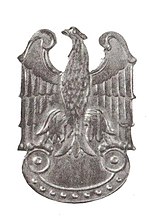 " Piast eagle" - emblem of the Guard Lyudova | |
| Years of existence | January 6, 1942 - January 1, 1944 |
| A country |  Poland Poland |
| Subordination | Polish Workers Party |
| March | March of the Guard Ludova - song "My ze spalonych wsi" ("We are from the burnt villages") |
| Participation in | The Second World War |
| Marks of Excellence |  |
Content
Background
The anti-fascist struggle of the left and communist forces in the initial period of the German occupation of Poland was largely complicated by the lack of a single organizational structure (the Communist Party of Poland was dissolved in the summer of 1938 by the decision of the Comintern - although this decision was subsequently declared unfounded [1] ), as well as with the death in September 1939 of a number of activists who took part in battles with German troops (in particular, the communists of the Warsaw organization participated in the defense of the capital as part of the labor brig the hells of the defense of Warsaw and workers' battalions [2] ).
The formation of clandestine organizations and groups of socialist orientation began in 1940-1941 (in particular, at the beginning of 1940 the “ Society of Friends of the USSR ”, the Warsaw Communist organization “ Hammer and Sickle ”, the group “Bulletinists” and the “Labor Guard” arose in the capital Lodz in December 1940 was formed "Committee of sabotage"). Somewhat later, in 1941, other clandestine organizations arose: "Proletarian", " Worker and Peasant Combat Organization " ("RCHO"), " Spartacus " and others.
Their consolidation began at the end of September - beginning of October 1941, at the end of 1941 the Union of the Liberation Struggle ( Związek Walki Wyzwoleńczej, ZWW ) organization was formed, whose leadership included Jerzy Albrecht, Jozef Bolzezhak, Marian Spykhalsky and Franciszek Lenczycki.
Under ZWW, a military organization was created, consisting of several small battle groups.
In October 1941, the ZWW issued a declaration calling for the beginning of the struggle against the invaders and the creation of a united anti-fascist front.
In January 1942, after the creation of the Polish Workers' Party, the manifesto “ To Workers, Peasants, Intelligentsia! ” Was published To all Polish patriots! "With a call to intensify the fight against the Nazis.
Organizational
The general leadership of the partisan units and groups was carried out by the High Command ( Dowództwo Główne ). The first military leader, from January to September 1942, was Marian Spykhalsky, from September 1942 to December 1943, this position was held by Franciszek Juzvjak (“ Vitold ”).
The management of the main areas of activity was entrusted to the departments of the main command:
- Division I (Operations Division)
- the “passport bureau” was in charge of the department, which collected, studied and systematized samples of documents of the occupation administration and the German military authorities, as well as the production of fake documents.
- II department (information department)
- Division III (weapons and ammunition department)
- already in the summer of 1942, the first underground workshop for the repair and production of weapons was created under him (explosives, incendiary bottles , mines and hand-held filipino grenades were made here) [3] .
- IV department (organizational department)
- V-th department (propaganda department)
- from May 1, 1942 he published the newspaper "Gvardzista" (" Gwardzista ");
- later began broadcasting underground radio station to them. T. Kosciuszko.
- VI-th department (health department)
In December 1942, a youth organization was created - the Union of the Struggle of the Young ( Związek Walki Młodych, ZWM ). The head of ZWM was originally Ganna Savitskaya, and after her death on March 18, 1943, Jan Krasitsky.
Armed structure
Depending on the level of training, the availability of weapons and equipment and the tasks performed, the armed units of the Guard Lyudova were divided into several categories:
- guerrilla units
- “ Attack groups ” ( grupy wypadowe ) - were created mainly in rural areas; in comparison with partisan detachments, they were smaller in numbers; members of the groups lived in villages under the guise of peasants, were engaged in farming, but from time to time they committed attacks or sabotage [4] .
- “ Special groups ” ( grupy specjalne ) - consisted of the most trained fighters, were subordinate to the district command or directly subordinate to the High Command; in comparison with partisan detachments, they were smaller in numbers; acted mainly in cities, engaged in armed security work, sabotage, destroyed police officers, representatives of the occupation administration, Gestapo agents and traitors [5] ;
- “ Garrison reserves ” - activists and supporters of the Guards of Ludova organized into groups and groups, undergoing military training, but practically having no weapons.
- " Outposts " - supporters and sympathizers who were in a legal position and did not take an active part in combat activities; conducted intelligence activities, information gathering, distributed leaflets, provided supplies for combat units, accommodation and treatment of sick and wounded, were owners of safe houses, liaisons and carried out other assignments [6]
The composition of the fighting detachments of the Guard of Ludova not only accepted Poles, but also representatives of other nationalities (in particular, Jews) and Soviet prisoners of war.
Administrative division
Organizationally, the territory of occupied Poland was divided into six districts [7] :
- 1st District ( Warsaw and the Warsaw Voivodeship);
- consisted of three districts: “Warsaw-city”, “Right-bank suburban” and “Left-bank suburban”
- 2nd district (Lublin Voivodeship, part of the Lviv Voivodeship on the right bank of the San River, the Hungarian, Sokolovsky and Siedletski counties of the Warsaw Voivodeship);
- consisted of three districts: Lublin, Janow Lubelski and Siedlce
- 3rd district (Kielce Voivodeship);
- consisted of three districts
- 4th district (Krakow Voivodeship, part of the Lviv Voivodeship);
- consisted of six districts
- 5th arrondissement ( Dombrowski Basin , Katowice , Bielsko-Biala );
- consisted of four districts
- 6th district ( Lodz , Plotsky district , Poznan , Pomerania).
- consisted of four districts: “Lodz-Gorod”, “Lodz Suburban”, “Poznan” and “Plock”
The primary links of the clandestine organization were cells (“ placówka ”) - as a rule, “triples” of three people. At the local level , the administrative functions were performed by the commune , district (district) and voivodship (regional) people's councils.
Printed media and other forms of campaigning
The leadership of the Guard Lyudova attached great importance to information support of their activities and work with the population - the publication of three central and five district newspapers was organized:
- The newspaper Gwardzista , the central publication of the Guard of Ludova, was published in Warsaw on May 1, 1942.
- the newspaper "Liberty Tribune" - the central party publication of the Polish Workers' Party , was issued on February 1, 1942, from April 1, 1942 it was printed in a printing way; the editor was first Sigmunt Jarosz, and then Andrzej Weber;
- the newspaper Tribuna Klopska, the central publication for peasants, was issued since March 1942, distributed throughout Poland, and the editor was Vladislav Kowalski;
- Glos Lodz newspaper - district publication;
- The Glos Warsaw newspaper is a district publication, issued since November 20, 1942;
- the newspaper "Tribune of Lubelsk" - district publication;
- the newspaper Tribuna Lyuda - a district publication (published from July 1942 to April 1943, circulation of 3 thousand copies) [8]
- The newspaper “Tribune Zaglebbya” is a district publication, issued since May 25, 1942, distributed in the Dombrow Basin.
The printed publication of the Union of the Struggle of the Young was the newspaper Walka Młodych .
In addition, local publications, leaflets, and appeals were issued (in total, during the period of the occupation, over 165 types of brochures, newspapers, leaflets, and other printed publications were issued [9] ), other forms of visual agitation were widely used: hand-drawn or executed with using stencil posters and caricatures; wall paintings and slogans; the slogans of the occupation administration changed, the names of Nazi functionaries (for example, instead of “Hitler” they wrote “Hycler” - “flayer”) [10] .
The important functions of strengthening patriotic ideas, inspiring and consolidating the nation were performed by poetry and musical art, street songs were of particular importance. They composed new texts on popular melodies, old folk songs, religious songs, carols, etc. (for example, the well-known song of the folk kuyavyak “Why are you, the girl, standing under the maple?” Was performed with the words “Why are you, Hitler, standing under Moscow? ”) [11] .
Various forms of oral agitation were also used: individual and group conversations, and in some cases, holding meetings and rallies (mainly in rural areas).
Activities
In 1939-1940, underground activists established contacts with several partisan detachments and small groups of military personnel of the defeated Polish army, who decided to continue the armed struggle against the German invaders, and subsequently ensured their activities [12] .
Subsequently, some of these units were destroyed by the Germans, others broke up, and still others became part of the underground network.
In February 1942, the Warsaw organization of the Guard Ludova established contacts with the Jewish anti-fascist underground in the Warsaw ghetto , Petr Kortin (“ Andrzej Schmidt ”) was sent to the ghetto to communicate with him, assistance was provided in the creation of the PPR section, printing house and Jewish battle group [13] . In Krakow, cooperation with the anti-fascist underground in the Krakow ghetto was established, and the Jewish combat group Iskra was accepted into the Lyudova Guard [14] . In Brody, a link was established between the Guardia Ludova and the Jewish ghetto, the distribution of the newspapers “Liberty Tribune” and “Guardzista” was started in the ghetto, and later a Jewish partisan detachment was created (which in April 1943 became part of the Guard Ludova) [15] .
On May 10, 1942, the first partisan detachment of the Guard of Ludova was formed in Piotrkovsky Forests - a detachment named after Stefan Chernetsky (initially - 14 soldiers, commander Franciszek Zubrzycki, " Small Franek "). The second detachment, which was led by August Lange, was sent from Warsaw to the Ilzhansky County of the Kielce Voivodeship.
In June 1942, there were already 12 partisan detachments, at the end of 1942 - 30 detachments [16] , in 1943 - 80 detachments [17] .
In the summer of 1942, the Central Committee of the PPR entered into negotiations with the leadership of the Polish socialists, during which positive results of a general nature were achieved (cooperation at the level of local organizations in Silesia was strengthened, relations with left-wing peasant groups were established) [18] . In 1943, after the victory of the Soviet troops near Stalingrad , the activists of two more Polish anti-fascist organizations joined the Lyudova Guard: Utro and the Military organization named after General Sikorsky [19] . At the same time, a tacit agreement on joint actions was concluded with a democratic organization of syndicalists, grouped around the publication "Right" (whose leadership did not make public the fact of the conclusion of this agreement, fearing pressure from anti-communist forces) [20] . In addition, by 1943 relations with trade union activists were established: in November 1943, an underground conference of representatives of Polish trade unions was held in Warsaw at the initiative of the Warsaw PPR section, and subsequently, at the beginning of 1944, the Warsaw Trade Union Council was formed, which included activists PPR [21] .
In total, in the years 1942-1943, 101 combat detachments of the Guard Ludova were created, 17 of them were destroyed in battles with the Nazis, the gendarmerie and the police, 3 were destroyed by NSZ militants, 23 were converted (merged) into larger formations, 6 - sent for the Bug (with the task of acting on Soviet territory) and 52 - became part of the Army Ludova [22] .
At the first stage, the intensification of armed struggle was limited by the lack of finances, weapons, and military equipment; in order to overcome the chronic shortage of funds and resources, in September 1942, a “National Donation Committee” was created and bonds were issued for settlements with the population (in the amount of 1 million zlotys for the territory of the “ general government” and 250 thousand marks for Silesia). Subsequently, during the development of the partisan movement, the problem of providing the partisan units with food was rather acute: the occupation authorities pumped out a huge amount of food from Poland, the average peasant farm was obliged to donate 35-40 pounds of bread a year, meat and fats were taken almost completely (all cattle and the bird on the farms were registered, received tags with numbers, and the peasants did not have the right to sell or otherwise manage them without the permission of the occupation authorities wa). As a result, many peasant farms simply did not have any significant food reserves [23] .
The amount of military assistance from the Soviet command until 1944 was negligible:
- in 1941, only one group was deployed to Poland - 11 trained Polish communists with personal weapons were parachuted on the night of December 27-28, 1941 [24] ;
- On May 20, 1942, another group was dropped - 8 Polish communists with personal weapons and a radio station [25] [26] ;
- the first batch of weapons for the Guard Ludova was dropped from the plane on the night of June 8–9, 1943 in the vicinity of the Yamy Lyubartovsky district, and in 1943, 117 PPSh machine guns, 125 TT pistols, ammunition for them, 200 kg of explosives and several radio transmitters [3] ;
- in August 1943, a third group (16 Polish communists under the command of Commander Kasman and 90 partisan Poles from Soviet and Polish partisan detachments operating in Belarus) was sent to Polish territory with weapons and a radio station. After crossing the Bug, the group split up: 7 Communists and 42 partisans began guerrilla activities in the Lublin region, and the rest - in Parczew forests [27] . In December 1943, two liaisons from the group (K. Vyrvas and S. Kurland) were sent to Warsaw [28] .
Also, by order of the Soviet command, assistance to the units of the Guard Lyudova was provided by Soviet partisans [29] .
- So, in September 1943, Soviet partisans from the compound of A.F. Fedorov transferred a batch of weapons and ammunition to the GL detachments of the Lublin Voivodeship [30] .
- in December 1943, a partisan detachment under the command of V.P. Chepigi transferred to the detachment GL operating in the Lubelskie Voivodeship the Soviet 14.5-mm anti-tank rifle (which was the first anti-tank gun to enter service with GL) [31]
Another source of help was former Soviet prisoners of war: in total, 7-8 thousand Soviet prisoners of war participated in the Polish Resistance movement (including 6 thousand in the formations of the Guard Ludova and Army Ludova, 1 thousand in the Khlopsky Battalions and about 1 thousand in the AK) . In total, from the fall of 1941 to the spring of 1942, 32 partisan detachments and groups from former Soviet prisoners of war appeared and were created in Poland; by the spring of 1943, most Soviet citizens had transferred from AK formations to Guards of the Ludova [32] . It is noted that in the units of the Guards of Ludova, Soviet fighters were engaged in military training of Polish partisans, they often became "military specialists", and in some cases even commanders of combat units [33] .
- So, the Soviet officer N. I. Slugachev (" Tadek Russky ") who escaped from captivity became one of the deputy commanders of the partisan detachment named after Bartoszcz Hłowacki, who acted in the Cracow Voivodeship, together with him in the detachment were three more Soviet patriots - “ Nikolai ”, “ Makosh ” and “ Wladek Russki ” [34] .
- Soviet officer V.I. Degtyarev, who fled from the concentration camp in the Bialystok Voivodship in January 1942, created a combat group, which initially included Red Army soldier Nikolai Turkov and Poles Yan Narovsky and Adele Narovsky. Subsequently, the group grew into a partisan detachment of 150 people [35]
- in the Masovian Voivodeship, the first partisan group initially consisted of 15 people (8 activists of the Guard Ludova and 7 escaping Soviet prisoners of war armed with 3 rifles and 2 grenades), after the defeat of several police posts based on the group, a partisan detachment armed with a light machine gun was created , several assault rifles and other weapons [36] .
- in the Lublin Voivodeship, as part of the 2nd district of the Guard of Ludova, from the former Soviet prisoners of war, the Russian partisan detachment "Fyodor" was created; Art. RKKA lieutenant F. N. Kovalev (" Theodore Albrecht "), the commissar - Yakov Pismenny. Subsequently, F. N. Kovalev became deputy commander of the 2nd district of the Guard Lyudova [37] .
- in the Radomsk voivodship, in April 1943, the commander of the detachment of the Guard of Ludova named after Marian Lyangevich was Art. lieutenant of the Red Army, pilot V.P. Voichenko (" Sashka ") [38] ; later he became the commander of the Sokol detachment from former Soviet prisoners of war, then - the chief of the operational department of the Radomsky district of the Army Ludova (died in December 1944) [39] .
- fighter pilot A. Kuznetsov, who fled from the Lodz prisoner of war camp, became the commander of a partisan detachment operating in the Pruszków region [40] .
In total, the Guard Ludova’s units conducted more than 1,400 operations [41] (including 237 battles), they destroyed 71 German officers, 1,355 gendarmes and police officers , 328 German agents; as a result of sabotage on the railways, they derailed 116 freight and 11 passenger trains, destroyed 9 long sections of railways and stopped traffic for 3137 hours; destroyed and incapacitated 132 cars and 23 locomobiles ; 13 bridges, 36 railway stations, 19 post offices, 292 volost departments, 11 factories and industrial enterprises [42] , 4 fuel depots with fuel and oil products [43] , 10 sawmills, 9 livestock stamping points, 145 milk collection points were destroyed and burned [ 44] , as well as a number of other objects.
The maximum scope of the combat activities of the Guard Ludova was achieved in the Lublin and Kielce voivodships, to a lesser extent - in the Warsaw, Krakow, Lviv voivodships, and in Silesia and Lodz it was necessary to act mainly in the form of sabotage.
Combat Operations
The largest battles with the invaders are:
- June 10, 1942 - the battle of the detachment of F. Zubrzycki with German gendarmes between the villages of Polykhno and Kolo in the Piotrkovsky forests;
- September 25, 1942 - detachment of the Guard Ludova, commanded by Jozef Rogulsky ( Vilk ), occupied and held the town of Dzhevits for several hours, partisans defeated the gendarme post and the rural municipality council and freed the peasants arrested for refusing to make food supplies [45] ;
- December 6-8, 1942 - the first battle in the Parczew Forests, a joint operation of the Polish detachment J. Balcezak and the Soviet detachment " Fedor " (Theodore Albrecht), 80 partisans repulsed the attacks of the punitive detachment and broke out of the encirclement with battle [34] ;
- December 17, 1942 - detachment to them. Bema occupied and for some time held the town of Lubelsky Island ;
- December 30, 1942 - a battle near Voida, conducted by a detachment of guardsmen together with a detachment of "Battalions of cotton";
- February 2, 1943 - a battle near Zaborechny, conducted by a detachment of guardsmen together with a detachment of "Battalions of cotton";
- April 22-24, 1943 - the second battle in the Parczew forests. The German command made an attempt to encircle and destroy the Soviet and Polish partisan detachments in the area, up to 7 thousand soldiers, gendarmes and police participated in the raid with the support of 20 aircraft. The partisans suffered losses, but managed to get out of the encirclement [46] ;
- in the village of Chekai, the partisans defeated and burned the police station, captured 15 rifles, 3 pistols and several sets of police uniforms [47] .
- May 12, 1943 - detachment to them. Bartosz Głowacki defeated a detachment of gendarmes and temporarily occupied the town of Zharnovets. The partisans seized the police station (11 rifles and 3 revolvers were captured here), defeated the rural municipality and only the post office building remained under the control of the gendarmes. However, since the partisans made a mistake (did not cut the telephone wires), the gendarmes blocked in the building called for reinforcements from the district center. When reinforcements approached, partisans fired at the first car with gendarmes and retreated [48] .
- June 1, 1943 - detachment to them. T. Kosciuszko, together with the detachment of the "Battalions of cotton" and the Soviet partisan detachment to them. Kotovsky, under the command of Captain Mikhail Atamanov ("Bears of Tatar") occupied the city of Bilgoraj [49] ;
- June 1, 1943 - GL detachments occupied the city of Jozefow in the Lublin Voivodeship [50] ;
- June 18, 1943 - shelling of German military echelons on the Krasnobrod - Zvezhinets leg , several Nazis destroyed;
- June 1943 - capture and retention for four hours of the town of Busk;
- June 1943 - capture of the town of Radomsko ;
- July 7, 1943 - a battle in the ентwiętokrzysk forests at the foot of the Deer Mountain, in which a squad named after Marian Langevich defeated the German squad;
- August 7, 1943 - battle in the Skierniewice forests;
- October 19, 1943 - a 12-hour battle in the woods near the village of Dobiec in Ilzh County, in which the GL units of the Sovinsky and Chekhovsky names defeated the German detachment;
- October 23-24, 1943 - the battle at Dyably Gougu in the Piotrkov Forests, in which a detachment named after Bem defeated a German detachment, the Nazis lost 30 soldiers killed and 10 wounded; further, a detachment to them. Bema was surrounded on Devil's Mountain, but repulsed three Nazi attacks and withstood the bombing. October 29, 1943, having divided into groups, the detachment left the encirclement [51] ;
Sabotage and other armed actions
- 1942 [ specify ] - a raid on the Khorsnitsa railway station (Lubelskie Voivodeship), five partisans shot and killed 3 German soldiers, destroyed a communications center (cut communication lines and destroyed vehicles) and expropriated money from the box office [52] ;
- June 22, 1942 - three Gestapo agents were killed in Warsaw, in the Saska Kemp region [53]
- June 27, 1942 - a raid on the Kristino quarry in Tenchinka, 30 partisans from the GL detachment named after Ludwik Varynsky attacked the guards of the mine, locked the miners in the warehouse building and seized almost half a ton of dynamite [54] (20 boxes of 25 kg each), the shaft of the mine, and the rest managed to move to the location of the detachment [55] .
- October 9, 1942 - detachment to them. T. Ko Костciuszko seized the prison building in the town of Krasnik , from where 45 arrested people were released [56] , at the same time the town of Tshidnik was attacked;
- October 24, 1942 - operation of a special group of the General Staff of GL; explosions were made in the capital's cafe-club Café Club for German officers [57] , in the Mitropa restaurant at the Main Station, and in the printing house of the newspaper New Warsaw Courier, published by the occupation authorities [58] ;
- November 22, 1942 - in the city of Radom, grenades were thrown at the Apollo cinema, 7 were killed and several other Nazis were wounded [59]
- November 30, 1942 - a joint operation of a special group of the General Staff of GL and three combat groups of the Warsaw organization, a raid on the capital branch of the Savings Bank ( Komunalną Kasę Oszczędności ) at the intersection of Chatsky and Traugutta streets, in which 19 soldiers participated. General management of the operation was carried out by F. Yuzvyak. Money stolen (1,052,433 zlotys) collected by the occupation authorities from the inhabitants of Warsaw as an indemnity;
- December 15, 1942 - the only pyrite mine in Poland was put out of action for several days; the operation was commanded by Ignacy Robb (" Narbutt ").
- December 22, 1942 - "Christmas action" in Krakow. The plan of the operation provided for the simultaneous attack of three objects that hosted festive events for the Germans (Café Zaneriya, Bizank Restaurant, and Skala Cinema). In practice, two groups succeeded in completing the task - grenades were thrown at the Tsiganeriya cafe (the Jewish combat group Iskra, commanded by Idek Lieber, was operating here) and at the Bizan restaurant. At the same time, in the center of the city, the underground fighters laid bouquets of red roses on the pedestals of the monuments destroyed by the Germans Adam Mickiewicz in the Main Market, Vladislav Jagello in the square named after Mateyka and Tadeusz Kosciuszko on Wawel (on the ribbons bandaging the bouquets it was written “What you swore we will do”), and on the Batoria street they hung a national white-red flag [60] .
- January 10, 1943 (Warsaw) - cars on the Main Station were set on fire;
- January 15, 1943 (Warsaw) - a raid on Bank Społem insurance offices, money was stolen;
- January 17, 1943 (Warsaw) - raids on the Apollo, Helgoland, Kammerspiel cinemas and a second raid on the Main Station;
- February 1943 (Warsaw) - the tunnel was blown up; a grenade was thrown at a cafe on Brodna;
- February 28, 1943 (Warsaw) - raid on the building of the printing yard ( Państwową Wytwórnię Papierów Wartościowych ), in which fighters of the special group of the GL High Command (Jan Strzeszewski, Franciszek Bartoszek and Edward Bonislavsky) participated - 2 guards were killed and their weapons were captured.
- March 5, 1943 (Warsaw) - the commandant of the “blue police” in Warsaw Roshchinsky was hanged in his own apartment (this action had a demoralizing effect on other employees of the “blue police”) [61]
- March 18, 1943 (Warsaw) - a Gestapo agent was killed in a shootout with Gestapo agents and police, and Hanka Savitskaya and Tadeusz Olszewski ("Zavisha") were killed [62] .
- April 20, 1943 (одódзь) - in the center of the city, on the birthday of Adolf Hitler, the Guards of the Ludova "Promieniści" attacked a gun shop on ul. Piotrkovskaya, 83 [63]
- April 23, 1943 (Warsaw) - a car with gendarmes was thrown with hand grenades on Fret Street;
- July 11, 1943 (Warsaw) - three battle groups threw grenades at the capital's café-club Café Club for German officers and fired at a tram with German troops on the square at the Iron Gate;
- July 15, 1943 - in the center of Warsaw, on the Uyazdovsky alleys, they threw hand grenades at an SA column, 30 Nazis were killed and wounded;
- October 23, 1943 (Warsaw) - attack on the restaurant "Bar Podlaski" (" Bar Podlaski "), intended "only for members of the SS and police officers";
- sabotage on the railways (for example, on the night of October 8, 1942, railroad tracks were blown up on the main highways of the Warsaw railway junction) [64]
- the systematic destruction of communication lines and power lines (in particular, regular sabotage on the lines of power supply to mines and metallurgical enterprises in Silesia).
Assistance to the population and other forms of activity
- fighters of the Guard Ludova released a significant number of arrested and prisoners of war from police stations, prisons and camps: over 600 people during 1942 [65] , and about 1,500 people in 1943 [66] ;
- when attacking police stations, rural municipality administrations and representatives of the occupation administration, “black lists” of unreliable persons were destroyed; lists of persons who were to be sent to forced labor in Germany, documents on peasants' non-fulfillment of food supplies, lists of tax arrears, etc.
- среди населения распределяли продовольствие и товары с захваченных продовольственных складов и магазинов (в общей сложности, крестьянам было возвращено почти 100 вагонов зерна, картофеля и др. сельскохозяйственной продукции) [44] …
Помощь партизанам Чехословакии
В течение 1943 года на территорию Польши в районах деятельности партизан Гвардии Людовой были сброшены с парашютами несколько прошедших подготовку в СССР чехословацких партизан [67] :
- в марте 1943 года в районе города Вышкув был сброшен связной Рудольф Ветшина;
- 22 июня 1943 года - связной Карол Шмидке ;
- 10 сентября 1943 года в районе города Островец - организаторы партизанских групп Рудольф Пешл и Рудольф Прохазка.
Парашютисты были встречены партизанами Гвардии Людовой, которые обеспечили их продуктами питания, предоставили сопровождение, проводников и вывели к территории Чехословакии.
Взаимоотношения и столкновения с иными польскими силами
С момента активизации действий, Гвардия Людова столкнулась с враждебным отношением со стороны националистической организации NSZ ( Narodowe Siły Zbrojne ), сопровождавшимся вооружённым противостоянием:
- в 1943 году в лагере отряда им. Бартоша Гловацкого в Хороберских лесах вступивший в отряд агент NSZ Мундек Добай бросил гранату в землянку, где проходило совещание командиров отряда. В результате взрыва погибли 2 и были ранены 3 партизана, террорист скрылся [68] .
- 22.01.1943 - в местечке Джевица при нападении отряда GL "Львы" на фабрику " Gerlach " были убиты пять активистов NSZ, а также владелец предприятия А. Кобыляньский и фармацевт (возможно, связанные с NSZ или NOW-AK). По некоторым сведениям, нападение было совершено в ответ на убийство нескольких бойцов GL, ранее совершенное NSZ [69] ;
- 22.07.1943 — в Присуских лесах у деревни Стефанув (Опочинский уезд) отряд NSZ "Сосна" атаковал отряд GL имени Людвика Варыньского, были убиты 7 бойцов GL [70] . Командиром отряда NSZ являлся Губерт Юра (псевдоним " Том "), поддерживавший связь с радомским гестапо [71] .
- 31.07.1943 газета «Велька Польска» (печатный орган партии «Стронництво народове», вооружёнными формированиями которой являлись отряды NSZ) призвала активистов NSZ начать уничтожение " коммунистических партизанских отрядов и банд " [72]
- 09.08.1943 — у деревни Боров (под Красником) отряд NSZ уничтожил отряд GL имени Яна Килиньского, были убиты 26 бойцов Гвардии Людовой;
- 26.08.1943 — у лесничества Фаниславице (Смоховские леса), отряды NSZ под командованием «Жбика» и «Вилька» силой разоружили отряд GL из 35 человек, при этом один из бойцов Гвардии Людовой был убит и ещё один — тяжело ранен…
- 27.10.1943 газета «Велька Польска» (печатный орган партии «Стронництво народове», вооружёнными формированиями которой являлись отряды NSZ) призвала своих сторонников « немедленно приступить к беспощадной борьбе, преследующей цель уничтожить коммунистические организации в Польше » [73]
Отношения с Армией Крайовой были не вполне однозначными: с одной стороны, руководство АК резко реагировало на случаи перехода своих бойцов в ряды Гвардии Людовой (особенно — с оружием), это рассматривалось как «дезертирство». Кроме того, уже в 1942 году была замечена слежка контрразведки АК за активистами Гвардии Людовой [74] .
С другой стороны, известны случаи взаимодействия бойцов и подразделений AK и GL в борьбе с немецкими оккупантами.
А 18, 22 и 25 февраля 1943 года делегация ППР и Гвардии Людовой провела переговоры с представителями Делегатуры о урегулировании отношений, активизации и координации боевых действий, создании единого антифашистского фронта.
Тем не менее, к концу 1943 года отношения между АК и Гвардии Людовой начинают ухудшаться.
- 07.10.1943 — во Влощовском уезде Келецкого воеводства отряд АК «Орёл» убил шесть активистов ППР, семь бойцов Гвардии Людовой, одного активиста «Батальонов хлопских» и трех солдат АК, «сотрудничавших с коммунистами» [70]
- 17.10.1943 — в деревне Каргове отряд АК «Орёл» окружил и атаковал отряд Гвардии Людовой имени Бартоша Гловацкого. Партизаны Гвардии Людовой с боем прорвались из окружения, но потери составили 11 бойцов убитыми, позднее скончались еще трое раненых, в результате общие потери составили 14 бойцов убитыми и умершими от ран [70] .
- 07.12.1943 в Опатовском уезде боевой группой АК были убиты шесть бойцов из отряда Гвардии Людовой имени Завиши Чёрного [70]
- в течение декабря 1943 года в северной части Люблинского воеводства боевой группой АК были убиты командир отряда АК Ян Дадун (« Януш ») - сторонник союза с ППР и 8 бывших солдат АК, перешедших в отряды Гвардии Людовой [70]
1 января 1944 года Крайова Рада Народова приняла решение о расформировании Гвардии Людовой, которая вошла в состав Армии Людовой [75] .
See also
- Армия крайова
- Польское подпольное государство
- Национальные вооружённые силы
- Крестьянские батальоны
Notes
- ↑ Владислав Гомулка. Статьи и речи (пер. с польск.). М., 1959. стр.366
- ↑ Антифашистское движение Сопротивления в странах Европы в годы второй мировой войны. М., изд-во Соцэкгиз, 1962. стр.45
- ↑ 1 2 Боевое содружество польских и советских партизан. / ред. П. П. Вершигора. М., Соцэкгиз. 1959. стр.64-65
- ↑ А. Ф. Федоров. Последняя зима. М., «Советский писатель», 1981. стр.103
- ↑ Збигнев Залуский. Пропуск в историю. М., «Прогресс», 1967. стр.304
- ↑ Зенон Клишко. Варшавское восстание. Статьи, речи, воспоминания, документы. М., Политиздат, 1969. стр.136
- ↑ Мариан Яниц. Идут партизаны. М., Воениздат. 1965. стр.6
- ↑ Т. Ю. Григорьянц. Оккупационная политика фашистской Германии в Польше (1939—1945 гг.) М., «Наука», 1979. стр.172
- ↑ История Второй мировой войны 1939—1945 (в 12 томах) / редколл., гл. ed. А. А. Гречко. том 8. М., Воениздат, 1977. стр.197
- ↑ Л. И. Танаева. Художники сражающейся Польши // Искусство Центральной и Юго-Восточной Европы в борьбе с фашизмом, 1939—1945. Sat ст., редколл., отв. ed. Н. М. Вагапова и В. Г. Клюев. М., «Наука», 1986. стр.195-207
- ↑ И. И. Никольская. Польские музыканты в рядах Сопротивления // Искусство Центральной и Юго-Восточной Европы в борьбе с фашизмом, 1939—1945. Sat ст., редколл., отв. ed. Н. М. Вагапова и В. Г. Клюев. М., «Наука», 1986. стр.114-122
- ↑ В. И. Клоков. Борьба народов славянских стран против фашистских поработителей. Киев, изд-во Академии Наук УССР, 1961. стр.24
- ↑ Мария Руткевич. Граница бытия. М., «Молодая гвардия», 1966. стр.150
- ↑ Юзеф Зайонц. Шли бои. М., Воениздат, 1968. стр.27
- ↑ Ю.А. Шульмейстер. Гитлеризм в истории евреев. Киев, Политиздат Украины, 1990. стр.177
- ↑ Армии стран Варшавского договора. (справочник) / А. Д. Вербицкий и др. М., Воениздат, 1985. стр.102-105
- ↑ Ф. Г. Зуев. Польский народ в борьбе против фашизма. М., «Наука», 1967. стр.71
- ↑ В. С. Парсаданова. Советско-польские отношения в годы Великой Отечественной войны. М., «Наука», 1982. стр.106
- ↑ Зенон Клишко. Варшавское восстание. Статьи, речи, воспоминания, документы. М., Политиздат, 1969. стр.26
- ↑ Боевое содружество советского и польского народов. / редкол., гл.ред. П. А. Жилин. М., «Мысль», 1973. стр.69
- ↑ История Второй мировой войны 1939—1945 (в 12 томах) / редколл., гл. ed. А. А. Гречко. том 7. М., Воениздат, 1976. стр.421
- ↑ Збигнев Залуский. Пропуск в историю. М., «Прогресс», 1967. стр.305
- ↑ А. Ф. Федоров. Последняя зима. М., «Советский писатель», 1981. стр.102
- ↑ Мария Руткевич. Граница бытия. М., «Молодая гвардия», 1966. стр.139
- ↑ Мария Руткевич. Граница бытия. М., «Молодая гвардия», 1966. стр.153
- ↑ Документы стойкости и героизма / ред. В.С. Рыкин. М., Политиздат, 1986. стр.97
- ↑ Справка сотрудника секретариата ИККИ об особой группе, направленной в Польшу в 1943 г. для организации связи с Москвой. Москва, 29 февраля 1944 г. Совершенно секретно (Печ. по: РЦХИДНИ. Ф. 495. Оп. 74. Д. 434. Л. 34–36. Подлинник.)
Русский архив: Великая Отечественная. Том 14 (3-1). СССР и Польша. – М.: ТЕРРА, 1994. - ↑ В. С. Парсаданова. Советско-польские отношения в годы Великой Отечественной войны. М., «Наука», 1982. стр.150
- ↑ Вавилон — «Гражданская война в Северной Америке» / [под общ. ed. Н. В. Огаркова ]. — М. : Военное изд-во М-ва обороны СССР , 1979. — С. 495-496. — ( Советская военная энциклопедия : [в 8 т.] ; 1976—1980, т. 2).
- ↑ В. И. Клоков. Плечом к плечу (советские люди в партизанском движении европейских стран) // Советские партизаны: из истории партизанского движения в годы Великой Отечественной войны / ред.-сост. В. Е. Быстров, ред. З. Н. Политов. М., Госполитиздат, 1961. стр.798
- ↑ М. Мочар. Цвета борьбы. М., издательство иностранной литературы, 1963. стр.145
- ↑ В. С. Парсаданова. Советско-польские отношения в годы Великой Отечественной войны. М., «Наука», 1982. стр.104-105
- ↑ Советские военнопленные и движение Сопротивления на польских землях в годы Второй мировой войны. / сб. статей, отв. ed. Ю. С. Новопашин. М.: ИСМ, 1991. стр.97-99 — ISBN 5-201-00722-8
- ↑ 1 2 В. И. Клоков. Плечом к плечу (советские люди в партизанском движении европейских стран) // Советские партизаны: из истории партизанского движения в годы Великой Отечественной войны / ред.-сост. В. Е. Быстров, ред. З. Н. Политов. М., Госполитиздат, 1961. стр.775
- ↑ А. Луковец. На польской земле // Не знавшие страха / сб., сост. С. А. Лесневский. М., Воениздат, 1972. стр.37-39
- ↑ Януш Пшимановский, Ханна Прокопчук, Роман Мурани. Memory. (в 2-х частях). Часть I. Варшава. "Интерпресс", 1987. стр.16
- ↑ А. Ф. Федоров. Последняя зима. М., «Советский писатель», 1981. стр.91-92
- ↑ И. Ф. Золотарь. Друзья познаются в беде. М., «Советская Россия», 1973. стр.51-52
- ↑ Антифашистская солидарность в годы второй мировой войны, 1939—1945 / редколл., А. Н. Шлепаков, В. А. Вродий и др. Киев, «Наукова думка», 1987. стр.148
- ↑ Антифашистская солидарность в годы второй мировой войны, 1939—1945 / редколл., А. Н. Шлепаков, В. А. Вродий и др. Киев, «Наукова думка», 1987. стр.149
- ↑ В. С. Парсаданова. Советско-польские отношения в годы Великой Отечественной войны. М., «Наука», 1982. стр.118
- ↑ Боевое содружество польских и советских партизан. / ред. П. П. Вершигора. М., Соцэкгиз. 1959. стр.16-17
- ↑ Антифашистская солидарность в годы второй мировой войны / колл. авторов, редколл., отв. ed. А. Н. Шлепаков. Киев, «Наукова думка», 1987. стр.104
- ↑ 1 2 Польское рабочее движение в годы войны и гитлеровской оккупации (сентябрь 1939 — январь 1945) / М. Малиновский, Е. Павлович, В. Потеранский, А. Пшегонский, М. Вилюш. М., Политиздат, 1968. стр.289
- ↑ Польское рабочее движение в годы войны и гитлеровской оккупации (сентябрь 1939 — январь 1945) / М. Малиновский, Е. Павлович, В. Потеранский, А. Пшегонский, М. Вилюш. М., Политиздат, 1968. стр.203
- ↑ В. И. Клоков. Плечом к плечу (советские люди в партизанском движении европейских стран) // Советские партизаны: из истории партизанского движения в годы Великой Отечественной войны / ред.-сост. В. Е. Быстров, ред. З. Н. Политов. М., Госполитиздат, 1961. стр.785
- ↑ И.М. Шевцов. Тадеуш Русский. М., Воениздат, 1969. стр.26
- ↑ Владислав Махеек. Хлопцы из леса // Январское наступление: польские писатели о событиях Второй мировой войны 1939—1945 / сб., сост. Вл. Бурич. М., «Молодая гвардия», 1985. стр.178-185
- ↑ Януш Пшимановский, Ханна Прокопчук, Роман Мурани. Memory. (в 2-х частях). Часть I. Варшава. "Интерпресс", 1987. стр.18
- ↑ Л.Н. Бычков. Партизанское движение в годы Великой Отечественной войны в 1941-1945 (краткий очерк). М., "Мысль", 1965. стр.378
- ↑ Януш Пшимановский, Ханна Прокопчук, Роман Мурани. Memory. (в 2-х частях). Часть I. Варшава. "Интерпресс", 1987. стр.22
- ↑ И.М. Шевцов. Тадеуш Русский. М., Воениздат, 1969. стр.11
- ↑ Józef Bolesław Garas. Oddziały Gwardii Ludowej i Armii Ludowej 1942—1945: (Wydanie 2. poprawione i uzupełnione). Warszawa, Wydawn. Ministerstwa Obrony Narodowej, 1971. str. 62
- ↑ Е. С. Березняк. Пароль «Dum spiro…» / лит. запись Б. Н. Хандроса. Киев, Политиздат Украины, 1987. стр.81-82
- ↑ Юзеф Зайонц. Шли бои. М., Воениздат, 1968. стр.86-90
- ↑ Waldemar Tuszyński. Ruch oporu w Polsce 1939-1943. Krajowa Agencja Wydawn. RSW Prasa - Ksia̜żka - Ruch, 1985. str.55
- ↑ Богдан Чешко. Нападение на «Кафе-Клуб» // Январское наступление: польские писатели о событиях Второй мировой войны 1939—1945 / сб., сост. Вл. Бурич. М., «Молодая гвардия», 1985. стр.120-127
- ↑ Польское рабочее движение в годы войны и гитлеровской оккупации (сентябрь 1939 — январь 1945) / М. Малиновский, Е. Павлович, В. Потеранский, А. Пшегонский, М. Вилюш. М., Политиздат, 1968. стр.208
- ↑ Waldemar Tuszyński. Ruch oporu w Polsce 1939-1943. Warszawa, Krajowa Agencja Wydawnicza, 1985. str. 55
- ↑ Юзеф Зайонц. Шли бои. М., Воениздат, 1968. стр.28-30
- ↑ Ryszard Nazarewicz. Armii Ludowej dylematy i dramaty. Warszawa, Oficyna Drukarska, 1998. str.138 ISBN 83-909166-0-6
- ↑ Ганка // Герои Сопротивления. / сб., сост. А. Я. Манусевич, Ф. А. Молок. 2-е изд., испр. and add. М., «Просвещение», 1977. стр.97-114
- ↑ Stanisław Gajek. Młodzi z garnizonu Łódź. "Promeniści". Wyd. 3, uzup. Warszawa 1972, ss. 155-159.
- ↑ Зенон Клишко. Варшавское восстание. Статьи, речи, воспоминания, документы. М., Политиздат, 1969. стр.23
- ↑ А. М. Самсонов. Крах фашистской агрессии 1939—1945. — М.: Наука, 1980
- ↑ А. М. Самсонов. Крах фашистской агрессии 1939—1945. — М.: Наука, 1980
- ↑ Честмир Аморт. СССР и освобождение Чехословакии. М., "Прогресс", 1976. стр. 73
- ↑ И.М. Шевцов. Тадеуш Русский. М., Воениздат, 1969. стр.29-30
- ↑ Czesław Brzoza, Andrzej L. Sowa. Historia Polski 1918-1945. Wydawnictwo Literackie, 2006. str.633
- ↑ 1 2 3 4 5 Р. Назаревич. Некоторые проблемы взаимоотношений между различными группировками в польском движении Сопротивления // Вторая мировая война. Материалы научной конференции, посвященной 20-й годовщине победы над фашистской Германией (14-16 апреля 1965 г.). Книга 3. Движение сопротивления в Европе. М., «Наука», 1966. стр.241-257
- ↑ Marek Jan Chodakiewicz, Piotr Gontarczyk, Leszek Żebrowski "Tajne oblicze GL-AL i PPR. Dokumenty". Tom 2. Warszawa, Burchard Edition, 1999. стр. 10. ISBN 83-87654-03-5
- ↑ " ...koniecznością dnia dzisiejszego jest również czyn, którego naczelnym zadaniem jest przed wybuchem powszechnego powstania, oczyszczenie terenu Polski ze stanowiących „drugą okupację” partyzanckich oddziałów i band komunistycznych. ... Zadanie to – zniszczenie oddziałów i band komunistycznych – przypada naszym własnym, polskim oddziałom partyzanckim, zorganizowanym przez Narodowe Siły Zbrojne "
газета "Wielka Polska", № 29, 31.07.1943 - ↑ Зенон Клишко. Варшавское восстание. Статьи, речи, воспоминания, документы. М., Политиздат, 1969. стр.32
- ↑ Польское рабочее движение в годы войны и гитлеровской оккупации (сентябрь 1939 — январь 1945) / М. Малиновский, Е. Павлович, В. Потеранский, А. Пшегонский, М. Вилюш. М., Политиздат, 1968. стр.189
- ↑ Гвардия Людова // Большая Советская Энциклопедия. / ed. A.M. Prokhorova. 3rd ed. Т.6. М., «Советская энциклопедия», 1971. стр.153
Literature
- Гвардия Людова // Вавилон — «Гражданская война в Северной Америке» / [под общ. ed. Н. В. Огаркова ]. — М. : Военное изд-во М-ва обороны СССР , 1979. — ( Советская военная энциклопедия : [в 8 т.] ; 1976—1980, т. 2).
- Ф. Юзьвяк. Польская рабочая партия в борьбе за национальное освобождение. М., 1953.
- Мечислав Мочар. Цвета борьбы. М., изд-во иностранной литературы, 1963—200 стр.
- Мариан Яниц. Идут партизаны (воспоминания). М., Воениздат, 1965.
- Тадеуш Петчак. Подпольный фронт. М., Политиздат. 1966 — 160 стр.
- Янина Бальцежак. Мои двадцать лет. М., 1967.
- Станислав Валах. Партизанские ночи. М., «Молодая гвардия», 1974.
- Русский архив: Великая Отечественная. Том 14 (3-1). СССР и Польша. — М.: ТЕРРА, 1994. — 492 стр.
- Rozkazy i odezwy Dowództwa Glównego Gwardii Ludowej (1942—1944). Lódź, 1946.
- «W dziesiątą rocznicę powstania Polskiej Partii Robotniczej. Materiały i dokumenty». Warszawa, 1952.
- Edwin Rozłubirski. Wspomnienia partizanta. Warszawa, 1954 — 82 s.
- Zgineli w walce: sylwetki bojownikow AL i GL / red. I. Nowakowska (przedmova W. Machejka). Warszawa, Ksiaska i Wiedza, 1957 — 316 s.
- Jerzy Klechta. Z walk GL i AL w Warszawie 1942-1944. Warszawa, WMON, 1968.
- Józef B. Garas. Oddziały Gwardii Ludowej i Armii Ludowej 1942—1945. Warszawa, 1971.
- Tadeusz Czaika. Cherwone punkty. Lublin, Wydo-wo Lubelskie, 1983