2016 Republican Party Primaries - held to select a nominee ( born nominee , single party candidate) from the Republican Party in the 2016 presidential election . They took place from February 1 to June 7, 2016 in 50 states, Washington and dependent territories of the USA . [1] Based on the results of these primaries and caucuses , 2472 delegates of the Republican National Convention were elected, and a candidate from the Republican Party to the post of US President Donald Trump was elected.
← 2012  2020 → 2020 → | |||
| US Republican Party Primaries | |||
|---|---|---|---|
| February 1 - June 7, 2016 | |||
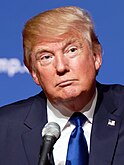 |  | ||
| Candidate | Donald Trump | Ted cruise | |
| From | New York | Texas | |
| Seats received | 1441 (delegates) | 551 (delegates) | |
| Votes | 13 477 237 (44.3%) | 7 733 533 (25.4%) | |
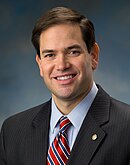 |  | ||
| Candidate | Marco Rubio | John Caseic | |
| From | Florida | Ohio | |
| Seats received | 173 (delegates) | 161 (delegates) | |
| Votes | 3 513 387 (11.5%) | 4 206 762 (13.8%) | |
 First place in votes and the number of delegates Donald Trump (40) Ted Cruise (11) Marco Rubio (3) John Caseic (1) | |||
Former Massachusetts Governor Mitt Romney , party nominee in 2012, hinted at the possibility of a third attempt to take the presidency in early 2015, but said on January 30 that he would not seek nomination. [2] On March 23, 2015, Texas Senator Ted Cruz was the first to officially nominate his candidacy. In the following months, another 16 candidates entered the race, bringing the total number of candidates to seventeen.
Prior to the primaries, former Texas Governor Rick Perry , Wisconsin Governor Scott Walker , Louisiana Governor Bobby Jindal , South Carolina Senator Lindsay Graham and New York Ex-Governor George Pataki left the race due to low support. At the caucus in Iowa on February 1, businessman Donald Trump , in spite of the victory predicted in most polls, took second place, losing to Ted Cruz. After that, ex-Governor of Arkansas Huckabee , Kentucky Senator Rand Paul and ex-Senator from Pennsilvania Rick Santorum withdrew, due to their poor results. After the primaries in New Hampshire , where Trump won a landslide victory, New Jersey Governor Chris Christie , business woman Carly Fiorina and former Virginia Governor Jim Gilmore left the race. After completing the primaries in South Carolina and Trump's second victory, ex-Florida governor Jeb Bush withdrew. On March 1 , in the so-called “ Super Tuesday, ” Trump won 7 states, Cruise - 3, and Florida Senator Marco Rubio - 1; neurosurgeon Ben Carson completed the campaign a few days later. On March 15 , after losing to Florida (his home state), Rubio completed the campaign [3] , while Ohio Governor John Casey won his first victory in his state and remained in the race. After the victory of Donald Trump at the primaries in Indiana on May 3, Ted Cruz refused to participate further [4] , and John Caseic [5] also left the presidential race.
On May 4, 2016, only one candidate remained a participant in the race - Donald Trump .
On May 26, 2016, it became known that Donald Trump got 1238 votes of delegates, of which 1237 votes are necessary for the automatic nomination of a presidential candidate. Thus, Trump won the Republican Party primaries and automatically became the Republican Party presidential candidate.
Content
- 1 Applicants and results
- 1.1 Candidates for the primaries
- 1.2 Candidates withdrew to the primaries
- 1.3 Results for the number of delegates
- 1.4 Results by the number of votes
- 1.5 Results by district
- 2 Race timeline
- 2.1 2012-14: Early polls
- 2.2 2014-15: Jeb Bush - poll leader
- 2.3 Mid 2015: Donald Trump and the growing popularity of outsiders
- 2.4 End of 2015: Stabilization, six leading candidates
- 3 State and Territory Results
- 4 notes
Candidates and Results
This section lists all candidates (retired or with an active campaign) who participated in at least one debate, were present in recognizable opinion polls and registered with the federal election commission.
Primary Candidates
| Candidate | Last position held | Campaign Logo | Number of delegates [6] | Number of votes [7] | Victory in the states and territories | ||
|---|---|---|---|---|---|---|---|
| Donald Trump | President of The Trump Organization (since 1971) | 1436 | 11 677 003 (41.6%) | 40 [8] | |||
Ted cruise | Texas Senator (since 2013) | Completed the campaign: May 3 | 551 | 7 513 842 (26.8%) | 11 [9] | ||
Marco Rubio | Florida Senator (since 2011) | Completed the campaign: March 15 | 173 | 3 497 773 (12.5%) | 3 [10] | ||
John Caseic | Ohio Governor (since 2011) | Completed the campaign: May 4 | 160 | 3 930 874 (14.0%) | 1 [11] | ||
Ben Carson | Director of the Johns Hopkins Children's Hospital Clinic (1984—2013) | Completed the campaign: March 4 (Supported by Donald Trump) | 9 | 731 842 (2.8%) | - | ||
Jeb Bush | Florida Governor (1999-2007) | Completed the campaign: February 20 (Supported by Ted Cruise) | four | 276 945 (1.0%) | - | ||
Rand Paul | Kentucky Senator (since 2011) | Completed the campaign: February 3 (Supported by Donald Trump) | one | 64 869 (0.24%) | - | ||
Mike Huckabee | Governor of Arkansas (1996-2007) | Completed the campaign: February 1 (Supported by Donald Trump) | one | 49,607 (0.19%) | - | ||
Carly Fiorina | Hewlett-Packard CEO (1999-2005) | Completed the campaign: February 10 (Supported by Ted Cruise) | one | 38 376 (0.14%) | - | ||
Chris Christie | Governor of new jersey (since 2010) | Completed the campaign: February 10 (Supported by Donald Trump) | - | 56 965 (0.21%) | - | ||
Rick Santorum | Pennsylvania Senator (1995-2007) | Completed the campaign: February 3 (Supported by Marco Rubio) | - | 16,604 (0.06%) | - | ||
Jim Gilmore | Governor of Virginia (1998-2002) | Completed the campaign: February 12 | - | 2 669 (0.01%) | - | ||
| Other candidates | - | 33,418 (0.13%) | - | ||||
| Non-Committed Delegates | 130 | 72,663 (0.27%) | one US Virgin Islands | ||||
| Total | 2467/2472 | 28 054 934 (one hundred%) | 56/56 (84%) | ||||
| The boldface indicates the states and territories where the candidate has a majority in the state delegation at the first vote; Rule 40 (b) requires 8 states / territories. | |||||||
Candidates who left before the primaries
- Former governor
Texas
Rick perry
Dropped out
September 11, 2015
(Supported by Ted Cruise )
then Donald Trump ) - Governor
Wisconsin
Scott Walker
Dropped out
September 21, 2015
(Supported by Ted Cruise ,
then Donald Trump ) - Governor
Louisiana
Bobby jindal
Dropped out
November 17, 2015
(Supported by Marco Rubio ,
then Donald Trump ) - State senator
South Carolina
Lindsey graham
Dropped out
December 21, 2015
( Supported by Jeb Bush ,
then - Ted Cruise ) - Former governor
New york city
George Pataki
Dropped out
December 29, 2015
(Supported by Marco Rubio )
then John Caseic )
Delegate Results
Voting Results
District Results
Race Timeline
In the 2012 presidential election, Republican candidate Mitt Romney lost to incumbent Democratic President Barack Obama . Fearing that the long run of the primaries could seriously damage the 2016 nominee, the party leadership decided to cut it - the 2016 Republican National Convention will be held from July 18 to July 21 and will be the earliest since the 1948 convention, which put forward Thomas Dewey in June 1948 . [12] For comparison, the 2012 Republican National Convention was held on August 27-30.
After announcing the start of the Ohio governor’s election campaign on July 21, 2015, the number of candidates reached sixteen, and thus these primaries officially became the largest in terms of the number of participants in the history of the Republican Party, surpassing the 1948 primaries. And after joining the presidential race of ex-Governor of Virginia Jim Gilmore on July 30 as the seventeenth candidate, these primaries became the largest in the number of participants in American history, ahead of the democratic primaries in 1972 and 1976, in which 16 candidates each participated.
In mid-December 2014, ex-Florida governor Jeb Bush , whom many considered a possible nominee due to his relatively moderate views, his experience as governor of the vacillating state , a recognizable name and wide access to sponsors, was the first candidate to form a political action committee ( The Political Action Committee (PAC); and the exploratory committee . Many other candidates followed suit. The first candidate to officially announce the start of the campaign was Texas Senator Ted Cruz , who was popular with grassroots conservatives because of his connection to the Tea Party .
Participants in the 2016 primaries reflect various trends in the Republican Party, among them there are “grassroots conservatives” represented by Cruz and neurosurgeon Ben Carson , and “Christian right” represented by former Arkansas Governor Mike Huckabee and ex-Senator from Pennsylvania by Rick Santorum , and the moderate "establishment" presented by Bush and New Jersey Governor Chris Christie . In addition, some candidates, such as Caseik, Louisiana Governor Bobby Jindal , Wisconsin Governor Scott Walker , Florida Senator Marco Rubio and Kentucky Senator Rand Paul , are equally sympathetic to conservatives and moderate. Two of the candidates have already participated in the 2012 primaries: Santorum and former Texas Governor Rick Perry . Finally, some candidates, including Carson, businessman Donald Trump, and ex- CEO of Hewlett-Packard Company Carly Fiorina , have no political experience, which they positioned as one of their main advantages.
These primaries are also often called the most diverse in American history. They are attended by two Hispanics (Cruz and Rubio), a woman (Fiorina), an Indian (Jindal) and an African American (Carson). Cruz, Jindal, Rubio, Santorum and Trump are children of immigrants.
2012-14: Early polls
After the defeat of Mitt Romney in 2012 , the Republicans did not have one specific favorite. Assumptions about the growing popularity of the more right-wing political spectrum, whose representative could be nominated, have become relatively popular: a number of young senators associated with the Tea Party , such as Ted Cruz from Texas, Rand Paul from Kentucky and Marco Rubio from Florida, were considered as possible options. Rubio, in particular, was in the spotlight immediately after the 2012 elections. In most polls from late 2012 to mid-2013, Rubio was the leader, being young, clearly expressing his thoughts, having support among both conservatives and moderate, as well as Hispanic in origin and actively promoting immigration reform, which was seen by many as an opportunity to make many Hispanics supporters of the Republican Party.
However, another point was expressed that the candidate should be a popular governor of a traditionally democratic or vacillating state , which would confirm the fact that such a governor could become a good president. Potential candidates to meet these criteria were former Florida Governor Jeb Bush , former Virginia Governor Jim Gilmore , Ohio Governor John Caseyk , New York Governor George Pataki and New Jersey Governor Chris Christie . Christie's popularity, in particular, grew due to his manner of speaking loudly and directly at public events; as the governor of New Jersey, rather a democratic state, he began to get ahead of Rubio in polls from mid-2013 to early 2014, when he became a defendant in a scandal that damaged his reputation and rating. Although Christie was acquitted, he was never able to restore the status of the leader of the race.
After Christie's rating drop, from January to November 2014, poll results fluctuated. Potential candidates with often good results were Rand Paul, Wisconsin congressman and Vice Presidential candidate in 2012, Paul Ryan, and previous candidates in the previous primaries, such as former Arkansas Governor Mike Huckabee and then Texas Governor Rick Perry ; overall, there was uncertainty in the upcoming nominee elections.
2014-15: Jeb Bush - Survey Leader
Although Jeb Bush often showed poor results from polls, he was considered one of the likely candidates because of his ability to raise significant funds, as well as his experience as governor of Florida (one of the vacillating states deciding the outcome of the election). In November 2014, Bush finally secured his leadership in the polls. Around the same time, talk began about the possibility of the third attempt of the previous nominee Mitt Romney to compete for the presidency. From November 2014 to the end of January 2015, his ratings in polls grew, challenging Bush. Although Romney admitted that he was pondering this idea after his defeat, in the end, on January 30, he refused to run.
However, by the end of February, less than a month after Romney’s refusal, Bush had another competitor - Wisconsin Governor Scott Walker , who, in particular, was pushing for popularity in his traditionally democratic state. Walker and Bush balanced each other in polls from late February to mid-June. Their confrontation also allowed other candidates, such as Rubio, Paul, and Huckabee, as well as newcomers like Ted Cruise and neurosurgeon Ben Carson , to improve their polling results.
Mid 2015: Donald Trump and the growing popularity of outsiders
After Donald Trump launched his election campaign, many noticed his unique, frank character, sharp communication and rhetoric that contradicted typical traditional political candidates. A similar style had an effect on potential Republican voters, and Trump began typing in polls, showing good results in early voting in Iowa, New Hampshire and South Carolina.
After the successes of Trump, who had never previously held political posts, the main focus began to shift to candidates who were usually called “outsiders,” as a result of which the two other nominees began to grow rapidly: Ben Carson, who was second in the polls after the first debate, and Carly Fiorina, who got into the top three after the second debate. This shocked many political analysts. In mid-September, the first two candidates completed their campaigns. Rick Perry announced the end of the campaign on September 11, 2015 due to the failure of the first debate, unsuccessful attempts to raise money and an indictment against him. Ten days later Walker dropped out of the race due to low polls.
End of 2015: Stabilization, Six Leading Candidates
In late September, polls identified six leading public opinion candidates: Trump, Carson, Rubio, Fiorina, Bush and Cruz, respectively. Other candidates - Christie, Huckabee, Paul and Caseic - received 3% or less, leaving behind the top ten others - Santorum, Jindal, Pataki, Graham and Gilmore - had less than 1%. After the third debate, support for Bush and Fiorina begins to fall while Cruz began to rise in polls. Soon, Trump and Cruz became leaders, together making up more than 50% of the party electorate.
In October, most commentators said that the final four candidates who could qualify for the nomination were revealed: Trump, Carson, Rubio, and Cruz. Trump and Carson were outsiders, not only that, they were very different - Trump’s harsh nature with a tough look at foreign policy against softly speaking Carson. Rubio attracted Hispanics and supported immigration reform, spoke convincingly at debates and raised capital, while Cruz had connections with the Tea Party and Christian conservative voters. Soon after the attack on Paris, Jindal dropped out of the race. The attacks increased the popularity of Trump and Cruise, whose campaigns were based on tough positions on immigration, while Carson began to lose ground due to a slurred position on foreign policy.
In December, Cruz overtakes Carson in polls and takes second place after Trump, having 18%. Carson caught up with Rubio at 10%. On December 21, 2015, Graham completed his campaign, eight days later Pataki did it.
State and Territory Results
| date of carrying out | State / Territory | amount delegates | Type of election | Percentage of votes and the number of delegates | ||||||||
|---|---|---|---|---|---|---|---|---|---|---|---|---|
| Donald Trump | Ted Cruz | John Caseic | Marco Rubio | Ben Carson | Jab Bush | Carly Fiorina | Rand Floor | Mike Huckabee | ||||
| 1st of February | Iowa [13] | thirty | Focus | 24.3% (7 delegates) | 27.6% (8 delegates) | 1.9% (1 delegate) | 23.1% (7 delegates) | 9.3% (3 delegates) | 2.8% (1 delegate) | 1.9% (1 delegate) | 4,5% (1 delegate) | 1.8% (1 delegate) |
| February 9th | New Hampshire [14] | twenty | Primaries | 35.3% (11 delegates) | 11.7% (3 delegates) | 15.8% (4 delegates) | 10.6% (2 delegates) | 2.3% | eleven% (3 delegates) | 4.1% | ||
| February 20th | South Carolina [15] | fifty | Primaries | 32.5% (50 delegates) | 22.3% | 7.6% | 22.5% | 7.2% | 7.8% | |||
| February 23 | Nevada [16] | 28 | Focus | 45.9% (14 delegates) | 21.4% (6 delegates) | 3.6% (1 delegate) | 23.9% (7 delegates) | 4.8% (2 delegates) | ||||
| March 1 | Alabama [17] | fifty | Primaries | 43.4% (36 delegates) | 21.1% (13 delegates) | 4.4% | 18.7% (1 delegate) | 10.2% | ||||
| Alaska | 28 | Focus | 33.5% (11 delegates) | 36.4% (12 delegates) | 4.1% | 15.1% (5 delegates) | 10.9% | |||||
| Arkansas | 40 | Primaries | 32.8% (16 delegates) | 30.5% (15 delegates) | 3,7% | 24.9% (9 delegates) | 5.7% | |||||
| Vermont | 16 | Primaries | 32.7% (8 delegates) | 9.7% | 30.4% (8 delegates) | 19.3% | 4.2% | |||||
| Virginia | 49 | Primaries | 34.7% (17 delegates) | 16.9% (8 delegates) | 9.4% (5 delegates) | 31.9% (16 delegates) | 5.9% (3 delegates) | |||||
| Georgia | 76 | Primaries | 38.8% (42 delegates) | 23.6% (18 delegates) | 5.6% | 24.4% (16 delegates) | 6.2% | |||||
| Massachusetts | 42 | Primaries | 49.3% (22 delegates) | 9.6% (4 delegates) | eighteen% (8 delegates) | 17.9% (8 delegates) | 2.6% | |||||
| Minnesota | 38 | Focus | 21.3% (8 delegates) | 29% (13 delegates) | 5.8% | 36.5% (17 delegates) | 7.3% | |||||
| Oklahoma | 43 | Primaries | 28.3% (13 delegates) | 34.4% (15 delegates) | 3.6% | 26% (12 delegates) | 6.2% | |||||
| Tennessee | 58 | Primaries | 38.9% (33 delegates) | 24.7% (16 delegates) | 5.3% | 21.2% (9 delegates) | 7.6% | |||||
| Texas | 155 | Primaries | 26.7% (48 delegates) | 43.8% (104 delegates) | 4.2% | 17.7% (3 delegates) | 4.2% | |||||
| 5th of March | Kansas | 40 | Focus | 23.3% (9 delegates) | 48.2% (24 delegates) | 10.7% (1 delegate) | 16.7% (6 delegates) | |||||
| Kentucky | 46 | Focus | 35.9% (17 delegates) | 31.6% (15 delegates) | 14.4% (7 delegates) | 16.4% (7 delegates) | ||||||
| Louisiana | 46 | Primaries | 41.4% (18 delegates) | 37.8% (18 delegates) | 6.4% | 11.2% (5 delegates) | ||||||
| Maine | 23 | Focus | 32.6% (9 delegates) | 45.9% (12 delegates) | 12.2% (2 delegates) | 8% | ||||||
| March, 6 | Puerto rico | 23 | Primaries | 13.6% | 9% | 1.4% | 73.8% (23 delegates) | |||||
| March 8 | Idaho [18] | 32 | Primaries | 28.1% (12 delegates) | 45.4% (20 delegates) | 7.4% | 15.9% | |||||
| Hawaii [19] | 19 | Focus | 42.4% (11 delegates) | 32.7% (7 delegates) | 10.6% | 13.1% (1 delegate) | ||||||
| Mississippi [20] | 40 | Primaries | 47.3% (24 delegates) | 36.3% (13 delegates) | 8.8% | 5.1% | ||||||
| Michigan [21] | 59 | Primaries | 36.5% (25 delegates) | 24.9% (17 delegates) | 24.3% (17 delegates) | 9.3% | ||||||
| 10th of March | US Virgin Islands | 9 | Focus | one | one | - | 2 | |||||
| March 12th | Washington, DC [22] | 19 | Focus | 13.8% | 12.4% | 35.5% (9 delegates) | 37.3% (10 delegates) | |||||
| Guam | 9 | Focus | - | one | - | - | ||||||
| March 15th | Illinois | 69 | Primaries | 38.8% (56 delegates) | 30.3% (6 delegates) | 19.7% (7 delegates) | 8.7% | |||||
| Missouri | 52 | Primaries | 40.8% (37 delegates) | 40.6% (15 delegates) | 10.1% | 6.1% | ||||||
| Ohio | 66 | Primaries | 35.6% | 13.1% | 46.8% (66 delegates) | 2.9% | ||||||
| North Carolina | 72 | Primaries | 40.2% (29 delegates) | 36.8% (27 delegates) | 12.7% (9 delegates) | 7.7% (6 delegates) | ||||||
| Northern Mariana Islands | 9 | Focus | 72.8% (9 delegates) | 24% | 2.1% | 1.1% | ||||||
| Florida | 99 | Primaries | 45.7% (99 delegates) | 17.1% | 6.8% | 27% | ||||||
| March 22 | American Samoa | 9 | Focus | - | - | - | ||||||
| Arizona | 58 | Primaries | 47.1% (58 delegates) | 24.9% | 10% | |||||||
| Utah | 40 | Focus | fourteen% | 69.2% (40 delegates) | 16.8% | |||||||
| April 3 | North Dakota | 28 | Focus | one | 10 | - | ||||||
| 5th of April | Wisconsin | 42 | Primaries | 35.1% (6 delegates) | 48.2% (36 delegates) | 14.1% | ||||||
| April 9th | Colorado | 37 | Focus | - | 34 | - | ||||||
| April 16th | Wyoming | 29th | Focus | 7% (1 delegate) | 70.9% (23 delegates) | 2.6% | 14.5% (1 delegate) | |||||
| April 19th | New York | 95 | Primaries | 60.4% (90 delegates) | 14.5% | 25.1% (5 delegates) | ||||||
| 26 April | Delaware | 16 | Primaries | 60.8% (16 delegates) | 15.9% | 20.4% | ||||||
| Connecticut | 28 | Primaries | 57.7% (28 delegates) | 11.7% | 28.5% | |||||||
| Maryland | 38 | Primaries | 54.4% (38 delegates) | 18.9% | 23% | |||||||
| Pennsylvania | 71 | Primaries | 56.7% (57 delegates) | 21.6% (4 delegates) | 19.4% (4 delegates) | |||||||
| Rhode Island | 19 | Primaries | 63,8% (12 делегатов) | 10,4% (4 делегата) | 24,4% (5 делегатов) | |||||||
| May 3 | Индиана | 57 | Праймериз | 53,3% (57 делегатов) | 36,6% | 7,6% | ||||||
| May 10 | Западная Виргиния | 34 | Праймериз | 77% (30 делегатов) | 9% | 6,7% (1 делегат) | ||||||
| Небраска | 36 | Праймериз | 61,4% (36 делегатов) | 18,4% | 11,4% | |||||||
| May 17 | Орегон | 28 | Праймериз | 66,6% (18 делегатов) | 17% (4 делегата) | 16,3% (4 делегата) | ||||||
| May 24th | Washington | 44 | Праймериз | 75,8% (40 делегатов) | 10,5% | 9,8% | ||||||
| June 7th | Калифорния | 172 | Праймериз | |||||||||
| Монтана | 27 | Праймериз | ||||||||||
| Нью-Джерси | 51 | Праймериз | ||||||||||
| Нью-Мексико | 24 | Праймериз | ||||||||||
| Южная Дакота | 29th | Праймериз | ||||||||||
Notes
- ↑ Huffington Post
- ↑ WSJ Staff. Text of Romney's Statement on Decision Not to Run in 2016 . WSJ. Дата обращения 6 марта 2016.
- ↑ Марко Рубио вышел из президентской гонки в США . lenta.ru. Дата обращения 5 мая 2016.
- ↑ Основной соперник Трампа вышел из предвыборной гонки . lenta.ru. Дата обращения 5 мая 2016.
- ↑ Джон Кейсик подтвердил, что вышел из предвыборной гонки в США
- ↑ interactives.ap.org
- ↑ thegreenpapers.com
- ↑ Алабама , Американское Самоа , Аризона , Арканзас , Вашингтон , Вермонт , Виргиния , Гуам , Гавайи , Делавэр , Джорджия , Западная Виргиния , Иллинойс , Индиана , Калифорния , Кентукки , Коннектикут , Луизиана , Массачусетс , Миссисипи , Миссури , Мичиган , Монтана , Мэриленд , Небраска , Невада , Нью-Гэмпшир , Нью-Джерси , Нью-Йорк , Нью-Мексико , Орегон , Пенсильвания , Род-Айленд , Северная Дакота , Северная Каролина , Северные Марианские Острова , Теннесси , Флорида , Южная Каролина , Южная Дакота
- ↑ Айдахо , Айова , Аляска , Вайоминг , Висконсин , Канзас , Колорадо , Мэн , Оклахома , Техас , Юта
- ↑ Вашингтон (округ Колумбия) , Миннесота , Пуэрто-Рико
- ↑ Огайо
- ↑ First on CNN: Republicans moving to overhaul 2016 primary process - CNNPolitics.com . CNN Дата обращения 25 марта 2016.
- ↑ The Washington Post#Iowa Caucus Results .
- ↑ The Washington Post#New Hampshire .
- ↑ The Washington Post#South Carolina .
- ↑ The Washington Post#Nevada .
- ↑ The Washington Post#Super Tuesday .
- ↑ The Washington Post#Idaho .
- ↑ The Washington Post#Hawaii .
- ↑ The Washington Post#Mississippi .
- ↑ The Washington Post#Michigan .
- ↑ The Washington Post#Washington, DC .