
Freshwater pollution - the ingress of various pollutants into the waters of rivers , lakes , groundwaters . Occurs when direct or indirect ingress of pollutants into the water in the absence of quality measures for the purification and removal of harmful substances.
In most cases , freshwater pollution remains invisible as pollutants are dissolved in water. But there are exceptions: foaming detergents, as well as oil products floating on the surface and untreated sewage. There are several natural pollutants. The aluminum compounds in the ground enter the freshwater system as a result of chemical reactions . High water leaches magnesium compounds from the soil of meadows, which cause enormous damage to fish stocks.
However, the amount of natural pollutants is negligible compared to that produced by humans . Thousands of chemicals with unpredictable effects fall into water pools every year, many of which are new chemical compounds. High concentrations of toxic heavy metals (such as cadmium, mercury, lead, chromium), pesticides, nitrates and phosphates, petroleum products, surfactants , drugs and hormones that can also be found in drinking water can be detected in water. water . As you know, annually up to 12 million tons of oil gets into the seas and oceans.
Acid rains also make a certain contribution to the increase in the concentration of heavy metals in water. They are able to dissolve minerals in the soil, which leads to an increase in the content of heavy metal ions in water. From nuclear power plants, radioactive waste enters the water cycle in nature.
The discharge of untreated wastewater into water sources leads to microbiological pollution of the water. According to the World Health Organization ( WHO ), 80% of the world's diseases are caused by inappropriate quality and unsanitary conditions of water. In rural areas, the problem of water quality is particularly acute - about 90% of all rural residents in the world constantly use polluted water for drinking and bathing.
Sources of pollution:
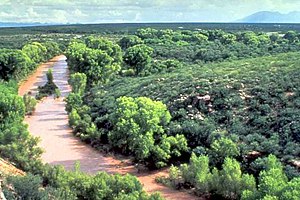
- Pollutants get into fresh water in various ways: as a result of accidents, intentional discharges of waste, spills and leaks.
- The largest potential source of pollution is farms, which occupy almost 80% of the land in England and Wales. Part of the untreated animal manure covering the soil enters the sources of fresh water.
- In addition, farmers in England and Wales annually contribute 2.5 million tons of nitrogen, phosphorus and potassium to the soil, and some of these fertilizers fall into fresh water. Some of them are persistent organic compounds that penetrate the food chain and cause environmental problems. Today in the UK they are curtailing the production of organochlorine compounds produced in large quantities in the 1950s.
- An increasing threat to freshwater reservoirs is represented by effluents discharged by fish farms, due to their widespread use of pharmaceuticals to combat fish diseases.
- Rapid groundwater pollution around cities. Source - increasing number of contaminated wells due to improper operation.
- Forestry and open drainage are sources of a large number of substances that fall into fresh water, primarily iron, aluminum and cadmium. With the growth of trees, the acidity of forest soil increases, and torrential rains form very acidic runoffs, harmful to wildlife.
- Once in the river, slurry can cause a serious environmental disaster, since its concentration is 100 times higher than that of wastewater treated in sewage treatment plants.
- Atmospheric pollution of fresh water is especially harmful. There are two types of such pollutants: coarse ( ash , soot , dust and liquid droplets) and gases ( sulfur dioxide and nitrogen dioxide ). All of them are products of industrial or agricultural activity. When these gases combine with water in a raindrop, concentrated acids are formed - sulfuric and nitric.
Content
Pollutant Spread
Solid and liquid pollutants from the soil enter water sources as a result of the so-called. leaching. Small amounts of waste dumped on the ground are dissolved by rain and fall into groundwater, and then into local streams and rivers. Liquid wastes quickly penetrate fresh water sources. Solutions for spraying crops either lose their activity upon contact with soil, either fall into local rivers, or leach in the ground and penetrate into groundwater. Up to 80% of such solutions are wasted, since most of them simply fall into the soil.
The time required for the penetration of pollutants (nitrates or phosphates) from the soil into groundwater is not known exactly, but in many cases this process can last tens of thousands of years. Pollutants entering the environment from industrial enterprises are called industrial effluents and emissions.
Groundwater pollution is becoming increasingly relevant. With the help of modern technologies, people are increasingly using underground waters, draining and polluting them. Around the cities, private construction of housing and small enterprises, with autonomous water supply, is booming. For example, in the suburbs from 50 to 200 wells of different depths are drilled daily. For various reasons (ignorance, for example), the vast majority of wells are operated without observing the rules for using such water sources. This leads to rapid local pollution of groundwater in this region.
Determination of pollution
Contamination may be indicated by signs such as dead fish, but there are more sophisticated methods for detecting it. Freshwater pollution is measured by at least 15 indicators; as a result, water belongs to one of the pollution classes . One of the indicators is biological oxygen consumption (BOD) - the specific amount of oxygen consumed by aquatic organisms for the oxidation of impurities over a certain time period (mg O 2 / dm 3 ) [1] . This indicator allows you to assess the degree of water pollution with biodegradable organic compounds.
Heavy Metals
Lead is found in fresh water in dissolved form. One of the sources of lead pollution is fishing sinkers, which are constantly thrown out when tangles are tangled. Swans are severely affected by lead, swallowing sinkers along with algae. It remains in the stomach of the birds, gradually dissolving and causing their death. A “broken neck” (when the muscles cannot hold the bird’s long neck, and as a result, it slowly dies of hunger) is a sign of lead poisoning. Another heavy metal, cadmium, penetrates the freshwater environment, affects fish, and through them it enters the human body.
Legislation
Laws are an effective means of preventing pollution, but it is difficult to enforce them. Therefore, the new international initiative - “the party responsible for the pollution pays” - is ideal in essence, but rarely yields results. The World Health Organization (WHO) has published guidelines on acceptable levels of pollution. For example, the cadmium content in water should not exceed 0.003 mg / L.
England was probably the first in the world to adopt a law on river pollution, since in 1197 King Richard I of Lionheart signed the first charter of the Thames.
Today, the European Community issues water quality guidelines, but European governments are in no hurry to comply with these requirements. So, in 1992, 9 out of 12 EU member states exceeded the nitrate content in their bodies of water . Under the new legislation, by 2002 all EU members were required to create special treatment plants for water treatment for urban and industrial consumption in order to prevent river pollution. In most countries, this work has been completed.
In Russian law
Water pollution - in the legislation of the Russian Federation is regarded as an environmental crime , the objective basis of which is pollution, pollution, depletion of surface water, groundwater, sources of drinking water supply, as well as other changes in their properties, during which significant damage was caused to the animal or plant world, fish stocks, forestry or agriculture.
Depending on the severity of the consequences, water pollution can be considered as an administrative or criminal offense.
See also
- Water treatment
- Oceans pollution
Notes
- ↑ Rodionov A.I., Klushin V.N., Sister V.G. Technological processes of environmental safety / Fundamentals of environmental science. - 4th edition. - Kaluga: Publisher N.F. Bochkareva, 2007 .-- S. 392. - ISBN 5-89552-248-3 .
Literature
- Marshall Cavendish Partworks // ISSN 1684-582X
- Pollution, self-purification and restoration of aquatic ecosystems. M .: Publishing house MAKS Press. 2005.
- Introduction to biochemical ecology. M .: Publishing house of Moscow University. 1986.
- Maksimov V. N. et al. An experimental study of the reaction of Fagopyrum esculentum seedlings to water pollution // Problems of ecological monitoring and modeling of ecosystems. 1986.Vol. 9, 87-97.
- Response of test organisms to water pollution by a quaternary ammonium compound // Water Resources. 1991. No. 2. P. 112-116.
- Fellenberg G. Environmental pollution. M .: World. 1997.232 s.
- Rand G., Petrocelli S. Fundamental of Aquatic Toxicology. New York et al .: Hemisphere Publishing Corporation, 1985, 666 p. ISBN 0-89116-382-4 .
- Ostroumov SA Biological Effects of Surfactants. CRC Press. Taylor & Francis. Boca Raton, London, New York. 2005.279 p. ISBN 0-8493-2526-9 . ISBN 978-0-8493-2526-7 . [Electronic book text: ISBN 6610517002 ; ISBN 9786610517008 ];
- To the study of the danger of pollution of the biosphere: the effect of sodium dodecyl sulfate on planktonic filtrators // DAN. 2009, T. 425, No. 2, p. 271-272.
Links
- Russian legislation for the protection of water bodies
- Online map of surface water quality of the Russian Federation . Flags indicate objects with long-term data
- Article Novosibirsk fights for the cleanliness of the city and the Ob reservoir
- Her Majesty - Water!
Articles
- Types of water pollution and their impact on health .
- Drinking water pollution. Types of Impurities
- Hygienic assessment of the effects of drinking water on health
- Drinking water may contain drugs and hormones.
- Novosad Elena Vyacheslavovna . Volga pollution during the formation of the oil industry in Russia. (based on the materials of the Bulletin of Fisheries) .. - Questions of the history of natural science and technology / Institute of the History of Natural Science and Technology S. I. Vavilova RAS (Moscow); 13940. - Moscow: Nauka, 2006 - S. 61 - 72. - [1] , text read: [2]
International agreements
- Convention on the Protection and Use of Transboundary Watercourses and International Lakes
- Protocol on Water and Health
- Protocol on civil liability and compensation for damage caused by the transboundary effects of industrial accidents on transboundary waters
- Agreement between the Government of Ukraine and the Government of Russia on the joint use and protection of transboundary water bodies