Luigi Berlinguer ( Italian: Luigi Berlinguer ; born July 25, 1932 , Sassari , Sardinia ) - Italian lawyer, university professor and politician, Minister of Education in 1993 and 1996-2000, one of the initiators of the Bologna process .
| Luigi Burlinguer | |||||||
|---|---|---|---|---|---|---|---|
| ital. Luigi berlinguer | |||||||
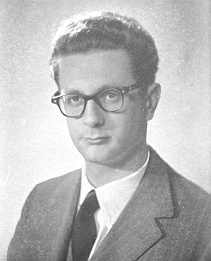 Luigi Burlinguer. The official photo of the deputy of the parliament of the IV convocation (1963-1967). | |||||||
| |||||||
| Head of the government | Massimo D'Alema | ||||||
| Successor | |||||||
| |||||||
| Head of the government | Massimo D'Alema | ||||||
| |||||||
| Head of the government | Romano Prodi | ||||||
| Predecessor | (Minister of Public Education) (Minister of Universities and Scientific Research) | ||||||
| Successor | (Minister of Universities and Scientific Research) | ||||||
| |||||||
| Head of the government | Carlo Azello Ciampi | ||||||
| Predecessor | |||||||
| Successor | |||||||
| Birth | July 25, 1932 (87 years old) Sassari , Sardinia | ||||||
| Birth name | |||||||
| The consignment | ICP (before 1991) DPS (1991-1998) LD (1998-2007) DP (since 2007) | ||||||
| Education | |||||||
| Profession | lawyer | ||||||
| Activities | politics teaching | ||||||
| Awards |
| ||||||
| Site | http://www.luigiberlinguer.eu/ | ||||||
| Place of work | |||||||


Biography
The early years
Born July 25, 1932 in Sassari, brother of diplomat and cousin of Enrico Berlinguera [1] . In 1946 he entered the named after Azuni in Sassari, and in 1950 he graduated from it, having received at the final exam a grade of 8 in Italian and Greek languages, mathematics and physics, 7 in Latin history and philosophy, 9 in natural sciences and stories [2] .
Scientific career
In 1955 he graduated from the Faculty of Law of the , defending under the scientific supervision of Professor Antonio Era (Antonio Era) a thesis on the role of communal councils (consigli comunitativi) in the anti-feudal movement of 1795-1796 in (historical region of Sardinia) . In 1959 he became an ordinary assistant in the history of Italian law at the same university. In 1962, after the death of Professor Era, Burlinguer continued his studies under the guidance of Professor Domenico Maffei, one of the largest experts in Italian law, and after his supervisor moved to the Siena . In 1969 he returned to Sassari and began teaching the interpretation of the sources of Italian law, and in 1970 he entered the Department of the History of Economic and Legal Institutions of Sardinia and the Department of the History of Political Institutions, where he taught as part of a course in political science, which was further developed through the efforts of Luigi Berlinguera. In the 1972-1973 academic year he headed the Faculty of Law in Sassari, in 1973-1974 - at the University of Siena, where from 1985 to 1993 he held the post of rector, and at the University of Sassari his students founded the Department of History [3] .
Political career
In 1951, Luigi Burlinguer joined the Communist Youth Federation ( FGCI ), in 1952 - the Italian Communist Party . He served as secretary of the provincial branch of the youth federation in Sassari, then - secretary of the regional branch and member of the national board of FGCI. He was a member of the secretariat of the IKP branch in Sassari, the regional committee of the Communist Party in Sardinia. He was the mayor of Sennori ( province of Sassari ) and a member of the provincial council. In 1975, he was elected to the regional council of Sardinia on the list of the Communist Party, in 1980 he was re-elected, but in 1983 passed his mandate ahead of schedule [4] .
In 1963, he was elected to the Chamber of Deputies on the list of the IKP [1] .
On April 28, 1993, the first government of Champi was formed, in which Luigi Burlinguer received a portfolio of the Minister of Universities and Technological and Scientific Research [5] . Already on May 4, 1993, together with a group of center-left ministers, he resigned in protest of the parliamentary vote, which refused to strip Bettino Craxi of parliamentary immunity [6] .
In 1994 and 1996, Luigi Burlinguer was re-elected to the House according to the lists of the heir to the IKP, the Democratic Party of the Left Forces, created in 1991 [1] .
From May 17, 1996 to October 21, 1998 - Minister of Public Education and at the same time Minister of Universities and Technological and Scientific Research in the first government of Romano Prodi [7] . In 1998, during the celebrations in Paris on the occasion of the 800th anniversary of the Sorbonne, Luigi Berlinguer, together with the Ministers of Higher Education of France, Germany and the United Kingdom, signed the Sorbonne Declaration as the representative of Italy, which laid the foundations of the Bologna Process and preceded the 1999 Bologna Declaration, signed by all countries The European Union and laid the official foundation for the convergence of national higher education systems in Europe [8] .
From October 21, 1998 to December 22, 1999 - Minister of Public Education in the first government Massimo D'Alema , from December 22, 1999 to April 25, 2000 he held the same chair in the second government of D'Alema [9] . During this period, Luigi Burlinguer drafted a bill on school reform, passed through parliament in 2000 as Act No. 30 (in the press they began to call it “Burlinguer Reform”). Among the main measures proposed by law was the transition to a two-stage secondary school. The first stage, consisting of three two-year stages, ends with a state exam. The second stage begins with the introductory year, when all students study subjects in six fields of knowledge (humanities, natural sciences, engineering, technology, art and music), and at the end of the year they pass the state exam, based on which their specialty is determined. At the end of the second and third years, students pass exams for the first three years of the second stage and have the right to change their specialization. The final three-year anniversary is intended for specialized study of subjects selected by each student. However, the victory of the center-right in the 2001 parliamentary elections entailed the rejection of a number of provisions of this reform [10] [11] .
In 1998, the DPS was reorganized into the Left Democrats party , in 2001, Luigi Berlinguer was elected to the Senate from Tuscany by the list of the Olive Tree , receiving 50.34% of the vote in the Pisa constituency (the strongest of his rivals, the candidate from the Freedom House Virgilio Luvisotti (Virgilio Luvisotti), received 35.47%) [12] .
In 2007, the Left Democrats party joined the newly created Democratic Party , and in 2009, Luigi Burlinguer was elected to the European Parliament on its list [13] .
State Awards
He was awarded three times by presidential decree [14] :
- - Commander of the Order of Merit for the Italian Republic (June 2, 1986)
- - Cavalier of the Grand Cross of the Order of Merit for the Italian Republic (December 27, 1992)
- - Gold medal "For contribution to the development of culture and art" (June 2, 1988)
Foreign awards:
- - A large cross with a star and a shoulder ribbon of the Order of Merit for the Federal Republic of Germany (1998)
- - Order of the Legion of Honor (France, 2005)
Notes
- ↑ 1 2 3 Giorgio Dell'Arti. Luigi Berlinguer (Italian) . Cinquantamila giorni . Corriere della Sera (29 novembre 2014). Date of treatment December 26, 2015.
- ↑ Al liceo era bravo, ma nella sua pagella ci sono un 7 in condotta e un 5 in storia (Italian) . Corriere della Sera (22 agosto 1996). Date of treatment December 28, 2015.
- ↑ Tra diritto e storia (Italian) . Rubbettino Editore Date of treatment December 29, 2015.
- ↑ Luigi Berlinguer (Italian) . Regione Toscana. Consiglio Regionale. Date of treatment January 1, 2016.
- ↑ I Governo Ciampi (Italian) . XI Legislatura della Repubblica italiana . Camera dei Deputati (Portale storico). Date of treatment December 26, 2015.
- ↑ Guido Crainz. Il paese reale: dall'assassinio di Moro all'Italia di oggi . - Donzelli Editore, 2012 .-- P. 297. - ISBN 9788860367327 .
- ↑ I Governo Prodi (Italian) . XIII Legislatura della Repubblica italiana . Camera dei Deputati (Portale storico). Date of treatment December 29, 2015.
- ↑ Sacha Garben. EU Higher Education Law: The Bologna Process and Harmonization by Stealth . - Kluwer Law International, 2011 .-- P. 11-12. - ISBN 9789041133656 .
- ↑ Luigi Berlinguer (Italian) . Incarichi di governo . Camera dei Deputati (Portale storico). Date of treatment December 29, 2015.
- ↑ Paolo Franco Comensoli. Da Berlinguer a Gelmini ecco perchè in Italia la società della conoscenza non ci sarà (Italian) . il Sussidiario (24 aprile 2010). Date of treatment January 1, 2016.
- ↑ Luigi Berlinguer. Riforma della scuola spieghiamo cos'è davvero (Italian) (link not available) . L'Unità (9 aprile 2001). Date of treatment January 1, 2016. Archived March 4, 2016.
- ↑ Senato del 13 Maggio 2001 (Italian) . Regione TOSCANA: Collegio Pisa . Ministero dell'intero . Date of treatment December 31, 2015.
- ↑ Tutti gli eletti al Parlamento europeo (Italian) . Corriere della Sera (9 giugno 2009). Date of treatment December 29, 2015.
- ↑ Luigi Berlinguer (Italian) . ONORIFICENZE . Presidenza della Repubblica. Date of treatment December 30, 2015.
Links
- Luigi Berlinguer (Italian) . Facebook Date of treatment January 1, 2016.
- Luigi Berlinguer (Italian) . Twitter Date of treatment January 1, 2016.
- Luigi Berlinguer (Italian) . Gruppi parlamentari . Camera dei Deputati (Portale storico). Date of treatment December 26, 2015.
- Luigi Berlinguer (Italian) . Dati anagrafici e incarichi . Senato della Repubblica . Date of treatment December 26, 2015.
- Luigi Berlinguer (Italian) . Cronologia delle legislature . European Parliament . Date of treatment December 26, 2015.
- Merlo Francesco. L 'importanza di chiamarsi Berlinguer (Italian) . Corriere della Sera (19 maggio 1996). Date of treatment January 1, 2016.