Skjaulvandi ( Isl. Skjálfandi ) is a fjord (from a geological point of view, a bay) in the north of Iceland . Translated from the Icelandic language, the name of the bay means “trembling,” which may be due to earthquakes in this area.
| Schiaulvandi | |
|---|---|
| fig. Skjálfandi | |
 Schiaulvandi Bay in 2008 | |
| Specifications | |
| Flowing rivers | Schiaulvandaflout , Lachsau |
| Location | |
| A country |
|
| Region | Nordyurland-Estra |

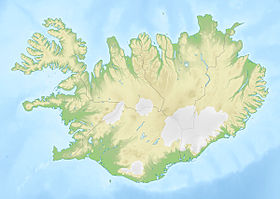

The bay formed as a result of glacial activity has two powerful flowing streams: Schiaulvandaflout , the glacial river, and Lahsau, a freshwater river. Lakhsau (Salmon River) is known for its salmon, and part of the river is protected by the Ramsar Convention .
The only city near the bay is Husavik , facing the snow-covered mountain ranges of Wiknafödl and Kinnarfödl on the other side of the bay. The highest point reaches 1200 m.
The bay is famous for its abundance of species of whales, dolphins and birds.
There are two islands in the bay. The largest of them, Flatey ("flat island"), is located close to the opposite shore relative to Husavik. There is a village on the island, currently uninhabited, with several houses, a school and a church. There is no ferry service to Flatey. The smaller island is called Lundey, the name translates as "island of dead ends": a large colony of dead ends lives on the rocks in the summer. Lundey is located close to Husavik.
The Swede Gardar Swavasson was one of the first Scandinavians to settle in Iceland in about 860 AD. e. He built a house by the bay, but spent only a few winter months in it before leaving Iceland.