Hafiz Mirza Nasir Ahmad (November 16, 1909 - June 9, 1982) III Caliphate-ul-Masih is the head of the Ahmadian Muslim community . He was elected the third successor to Mirza Gulam Ahmad , on November 8, 1965, immediately the day after the death of his predecessor and father, Mirza Bashiruddin Mahmoud Ahmad . Mirza Nasir Ahmad is credited with expanding the missionary work that was begun by his predecessor, II Khalifa, of the promised messiah. He represented the Ahmadiyah Muslim community in the Pakistan National Assembly in 1974. However, despite all his efforts, the National Assembly of Pakistan issued a verdict that Ahmadis are not Muslims . In this difficult time, he proved himself to be a major religious leader and ruled the community throughout this period. [3]
| Mirza Nasir Ahmad | |||||||
|---|---|---|---|---|---|---|---|
| Urdu مرزا ناصر احمد | |||||||
 | |||||||
| Predecessor | Mirza Bashiruddin Mahmoud Ahmad | ||||||
| Successor | Mirza Tahir Ahmad | ||||||
| Birth | |||||||
| Death | Islamabad Pakistan [2] | ||||||
| Burial place | |||||||
| Father | Mirza Bashiruddin Mahmoud Ahmad | ||||||
| Mother | Mahmud Begum | ||||||
| Spouse | 1. The back of Sayyida Mansour Bekum (1934-1981) 2.Tahira Sadika Nasir | ||||||
| Children | 5 children | ||||||
| Autograph | 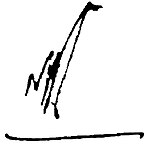 | ||||||
Content
Childhood, Adolescence, Youth, and Education
Mirza Nasir Ahmad was born in Kadian , India , on November 16, 1909. He received both religious and secular education. Mirza Nasir Ahmad learned all 114 chapters of the Qur'an by heart at the age of thirteen under the guidance of his father Mirza Bashiruddin Mahmoud Ahmad . His father paid great attention to the religious education of his children. To achieve this, Mirza Nasir Ahmad entered the madrasah of Ahmadiyya, Kadian , India. He graduated from this religious school with honors in July 1929. After graduating from high school with the aim of obtaining a higher education, he entered the State College in Lahore , [4] and in 1934 received a bachelor's degree in humanities. [five]
On August 5, 1934, Mirza Nasir Ahmad married Mrs. Sayyida Mansur Begam, the granddaughter of Mirza Ghulam Ahmad and the eldest daughter of Mr. Nawab Muhammad Ali Khan from Malerkotl [6] , India . A month after the conclusion of the marriage, Mirza Nasir Ahmad left for England , and entered graduate school . In England, at the Beylliol College of Oxford University , Mirza Nasir Ahmad earned a master 's degree in humanities from political science , philosophy, and economics . He impressed his teachers as a deep-thinking student with impeccable behavior. During a subsequent visit to England , he met with one of his former teachers, who expressed his gratitude to him at the residence of the Ahmadi Muslim community . The professor told other members of the Ahmadian community that he often noticed signs of leadership in the behavior of Mirza Nasir Ahmad, and was sure that one day he would become a leader. [7]
In November 1938, he returned to his hometown of Kadian , where he was appointed professor at the University of Ahmad - Higher Theological Educational Institution for the training of missionaries of the Ahmad Muslim community . In 1939, he was appointed rector of the University of Ahmadiya, and remained in this post for five years. From May 1944 to November 1965, he was at Taalimul Islam College, first in Kadian , India , and after the partition of the country , in Rabwa, Pakistan . During the anti-Ahmadian riots in 1953 , Mirza Nasir Ahmad was imprisoned for a short time. He was released on May 28 of that year. [5] After his liberation, and until his election by Caliphat-ul-Masih , he served in various other institutions of the Ahmadi Muslim community .
Caliphate
On November 9, 1965, after the Ishaa prayer at the Mubarak Mosque in Rabwe, Pakistan , Mirza Nasir Ahmad was elected III Caliphat-ul-Masih . Mirza Aziz Ahmad chaired the meeting of the supreme electoral body of the Ahmad Muslim community .
Shortly after his election as Khalifa of the Promised Messiah, he founded the Fazle Umar Foundation in honor of the memory of the II Khalifa of the Promised Messiah Mirza Bashiruddin Mahmoud Ahmad . One of the projects of this fund included the construction of a library. In 1971, a library of the Caliphate was opened in Rabwa, Pakistan . Currently, it contains over 100,000 books. It also contains rare manuscripts and scientific publications .
Africa
In 1970, the III Caliph of the Promised Messiah, Hazrat Mirza Nasir Ahmad, made a nine-week tour in various African countries. During his visit, he attended numerous receptions arranged in his honor, and examined the educational , social, as well as spiritual and educational institutions of the Ahmadi Muslim community in various African countries. He launched a project called the Nusrat Jahan Plan and called on members of the Ahmadi community to make financial donations . According to this plan, doctors and teachers of the Ahmadian community were to serve in numerous medical clinics and secondary schools throughout the African continent .
Ahmadi Muslim Community and National Assembly of Pakistan
In 1974, after riots and violence against Ahmadi Muslims , Pakistani Prime Minister Zul Fikar Ali Bhutto faced tremendous pressure from religious leaders who sought to declare Ahmadi a non-Muslim minority . Under pressure from religious leaders, some legislative and constitutional amendments were passed. According to these amendments, Ahmadi Muslims were boycotted socially. Criminal prosecutions for Islamic religious practices were provided against them. From now on, they were forbidden to call themselves Muslims and practice Islam. [3] An investigation was conducted into these events in the Pakistan National Assembly . Mirza Nasir Ahmad, along with his delegation of four prominent scholars of the Ahmadi community , led a debate in the Pakistan National Assembly for 11 days. Mirza Nasir Ahmad personally answered all the charges that were brought against Ahmadiyyat. [8] ] In the end, the National Assembly of Pakistan declared Ahmadi non-Muslim.
London
In 1978, Mirza Nasir Ahmad went to London , where a conference was held entitled "The Salvation of Jesus from Death on the Cross." This conference was held at the Kensington Commonwealth Institute. The conference was attended by scholars representing the world's major religions. They read their reports discussing the circumstances of the crucifixion of Jesus Christ . At this conference, the Ahmadi point of view on the death of Jesus was presented. The Ahmadi point of view on this issue was expressed in a report by Sir Zafrullah Khan and Mirza Muzaffar Ahmad. In this regard, the Christian church issued a statement rejecting Ahmadiyyat as a religious denomination that does not represent the teachings of Islam , and refused to be involved in the debate that, with the opening of the Shroud of Turin, was resumed at this conference. [9] Representatives of Pakistan , India , Africa , Asia , Europe and the United States attended this conference. Mirza Nasir Ahmad delivered a speech on this issue. He explained how Jesus was saved from death on the cross . He spoke of his journey east. In addition, he touched on the question of the Unity of God and explained in detail the status of the prophet Muhammad . [ten]
Compilation of Ahmadi texts
During his Caliphate, Mirza Nasir Ahmad led the compilation and compilation of the full dreams , knowledge and verbal revelations of Mirza Gulam Ahmad , which have already been published in various books of Mirza Gulam Ahmad, as well as in various magazines and newspapers. The collected version of all his revelations was published in the book "Tazkira." Full dialogues and statements by Mirza Gulam Ahmad were collected in accordance with the directives of the III Caliphate-ul-Masih . The book was published in the form of his sayings, “Malfuzaat,” which included his conversations, speeches, Q&A sessions, sermons, and random remarks.
Spain

In 1980, Mirza Nasir Ahmad went to Spain . There he laid the first stone in the foundation of the Basharat mosque in Pedro Abad . It was the first mosque that was built in Spain 750 years after the expulsion of Muslims from the Iberian Peninsula . [11] It was here that he came up with the motto "Love for all, hatred of no one." The construction of the mosque was completed after his death in 1982.
Marriage, Children, and Family
On August 5, 1934, Mirza Nasir Ahmad was married to Madame Sayyid Mansur Begam. She was the daughter of Mr. Nawab Muhammad Ali Khan from Malerkotl, and Ms. Nawab Mubarak Begam, daughter of Mirza Gulam Ahmad . [5] They had five children together:
- Son Mirza Anas Ahmad
- Daughter Amatul Shakur
- Daughter Amatul Halim
- Son Mirza Farid Ahmad
- Son Mirza Luckman Ahmad
A year after the death of his wife Mansoura Begam, Mirza Nasir Ahmad decided to enter into a new marriage. On April 11 , 1982 [5] he married Ms. Tahir Siddik Nasir, the daughter of Abdul Majid Khan from Veroval. This marriage lasted only a few months until the day of the death of Mirza Nasir Ahmad on June 9, 1982.
Death
In June 1982, in Islamabad , Pakistan , Mirza Nasir Ahmad suffered a severe heart attack . He died on June 9, 1982 at 12:45 a.m. The body of Mirza Nasir Ahmad was transported to Rabwa. He was buried in the Bahishti Makbar cemetery. His memorial prayer was performed at the head of Mirza Tahir Ahmad , who was elected to the post of IV Caliphate-ul-Masih immediately after his death.
Notes
- ↑ Hadhrat Khalifatul Masih III (en) - Election as Khalifa , Review of Religions , March, 2008
- ↑ The Life of Hadhrat Khalifatul Masih III (rh) .
- ↑ 1 2 2nd Amendment of Pakistan Constitution , Gazette of Pakistan, Extraordinary, Part I, 21 September 1974
- ↑ Government College University (Lahore) - Wikipedia, the free encyclopedia
- ↑ 1 2 3 4 Early Life of Mirza Nasir Ahmad . Review of Religions (March 2010). Date of treatment September 11, 2010.
- ↑ Malerkotla - Wikipedia, the free encyclopedia
- ↑ Hadhrat Khalifatul Masih III: A brief history of his life before his 16 1⁄2 year Khalifat, Muslim Herald (July 1982). Date of treatment March 13, 2011.
- ↑ thepersecution.org: Mahzarnama - The Memorandum
- ↑ The Review of Religions, March 2008, Vol. 103, issue 03, © islamic publications 2008
- ↑ A Brief History of Ahmadiyya Movement in Islam - Conference in London
- ↑ Ahmad, Mirza Nasir. An Elementary Study of Islam . Date of treatment March 13, 2011.