Kanuti ( Kanuti National Wildlife Refuge ) is a US wildlife reserve in the Yukon-Koyukuk Census Area ( Alaska ).
| Canuti | |
|---|---|
| English Kanuti National Wildlife Refuge | |
 The meanders of the Kanuti river bed. October 2011 | |
| IUCN Category IV (Species or Habitat Management Territory) | |
| basic information | |
| Square | 6 600 km² |
| Established | December 2, 1980 |
| Management organization | U.S. Fish and Wildlife Service |
| Location | |
| A country |
|
| Nearest town | Allakaket |
official site | |

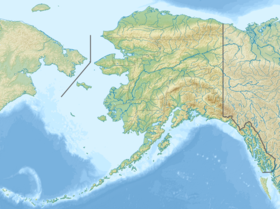

Created December 2, 1980 . Area - 6 600 km².
Content
History
The Kanuti National Wildlife Reserve was created on December 2, 1980 by the Alaska National Interest Lands Conservation Act .
Description
The reserve partially includes the basin of the Koyukuk River and its tributary, the Kanuti River.
On the territory of the reserve hunting and fishing are allowed.
The most convenient way to get there is through the Bettles Civil Airport , which connects with Fairbanks and nearby airports (Allakaket, Anuktuvut Pass) and also operates flights for air taxi services. From Bettles, the reserve can be reached on foot or by boat; the reserve territory is impassableː has no paths. In winter, ski or dog sledding can be accessed from the Dalton Highway.
Nature
The nature of the reserve is an example of the boreal ecosystem ( taiga - subarctic coniferous forests) Alaska, dominated by spruce forests, as well as such species of birch and poplar .
Due to the wetlands of the reserve, it is a nesting and migration site for thousands of birds. The Kanuti River is a place of migration of fish of the salmon family ( chinook salmon , chum salmon , coho salmon , nelma ). Nelma makes a huge spawning path (over 1600 km). Forests of Kanuti reserve - a habitat for 37 species of mammals, including baribal , elk , wolf , beaver, muskrat, marten, and mink. In winter, the Caribou from the Western Arctic find refuge in the reserve.