Aleksander Nikolayevich Shkarin , ( March 29 ( April 11 ) 1876 , St. Petersburg - August 15, 1920 , Petrograd ) - one of the first pediatricians of Russia, doctor of medicine, full professor and head of the Department of Children's Diseases of the Imperial Military Medical Academy , head of the children's clinic Mikhailovskaya Hospital of the Baronet Willie .
| Alexander Nikolaevich Shkarin | |
|---|---|
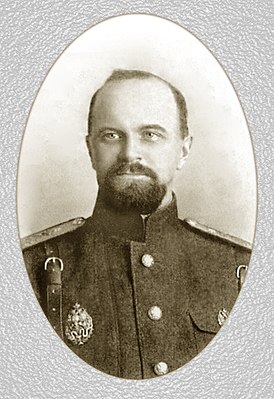 “A children's doctor should love children .... Only with such an attitude to his patients, the children's doctor, having received special knowledge, will find true satisfaction from his profession; in it he will find a source of energy for further work. " A. N. Shkarin | |
| Date of Birth | March 29 ( April 11 ) 1876 |
| Place of Birth | Saint Petersburg , Russian Empire |
| Date of death | August 15, 1920 ( 44) |
| A place of death | Petrograd , RSFSR |
| A country |  Russian Empire Russian Empire  RSFSR (1917-1922) RSFSR (1917-1922) |
| Scientific field | pediatrics |
| Place of work | IMHA |
| Alma mater | Imperial Military Medical Academy (1900) |
| Academic degree | Doctor of Medicine (1902) |
| supervisor |
|
| Famous students |
|
Hereditary honorary citizen (personal nobility since 1901, hereditary since 1916), State Councilor . Chairman of the Nativity of Alexander-Joseph Brotherhood [1] , vowel of the St. Petersburg City Council .
Content
- 1 Biography
- 2 Contribution to Pediatric Science and Practice
- 3 Family
- 4 Addresses in Petersburg
- 5 Interesting facts, memories of contemporaries
- 6 Selected Scientific Papers
- 7 See also
- 8 Notes
- 9 Literature
Biography
Born in the family of the architect Nikolai Pavlovich Shkarin (1845 (46) - 1898) and his wife Vera Alexandrovna (Ur. Reztsova). In 1895, he graduated from the Seventh St. Petersburg Classical Gymnasium with a silver medal [2] , after which he entered the Imperial Military Medical Academy .
From the first years of his studies at the Academy, A. N. Shkarin became interested in pediatrics. As a student, under the guidance of Professor N. P. Gundobin , he wrote on the material of the Clinic for Pediatric Diseases of the Military Medical Academy and the St. Petersburg Educational House "On the bacteriology of purulent pleurisy in children." At the conference of the Military Medical Academy, this work was awarded a gold medal.
After graduating with honors from the Academy in 1900, A.N. Shkarin was competitively admitted to the clinic of the Department of Children's Diseases of the Academy, where in March 1902 he defended his thesis for the degree of Doctor of Medicine on the topic: “On the protein composition of the cerebral cortex depending on age and some other physiological conditions. " This work, in which data on the biochemical composition of the cerebral cortex were first presented, was carried out under the direction of N.P. Gundobin and the future head of the Military Medical Academy A. Ya. Danilevsky .
Soon after receiving a doctorate in medicine for academic purposes, A.N. Shkarin was sent abroad. At the University of Vienna, he was fortunate enough to study acute infections in the clinic of the famous professor, an active propagandist of natural feeding T. Escherich , as well as pediatrics with Professor K. Pirke . Following this, he continued to study childhood diseases, first in Breslavl under the guidance of Professor Adalbert Czerny [3] , then in Berlin in the educational house of O. Heibner [4] . Finally, in Paris, Alexander Nikolayevich studied the physiology and pathology of newborn children in the clinic of the famous obstetrician Buden [5] and at the same time attended a course of bacteriology at the Pasteur Institute , got acquainted with the organization of children's hospitals, the “Drop of Milk” items [6] , and children's consultations. In 1903, A. N. Shkarin took part in the children's section of the 75th congress of German naturalists and doctors in Dresden, and in 1904 in Nuremberg, in the First International Congress on School Hygiene [7] .
After returning to St. Petersburg, A.N. Shkarin, after reading test lectures in October 1906, was elected a privat-docent . Following this, he began lecturing first to fourth-year students, and from 1907 he began to read a privately-assisted course on children's diet and began to conduct classes in the outpatient clinic at the children's clinic. After the death of N.P. Gundobin, being the youngest of the five applicants, A.N. Shkarin was elected an extraordinary professor in the department of childhood diseases at the Military Medical Academy on November 7, 1908. By this time, he was the author of 20 works, three of which were “On goiter asthma in children,” “Design and maintenance of a summer nursery shelter in the village,” and “A brief outline of the activities of city hospitals in Berlin based on reports from 1904-1905.” and tipped the scales in his favor.
A. N. Shkarin gave his first lecture as the head of the department to students of the Academy on November 23, 1908. In it, he emphasized the need for a deep acquaintance with the anatomical, physiological, and physiological and chemical characteristics of childhood, the importance of studying the pathogenesis of eating disorders in infants age, constitutional abnormalities, childhood infectious diseases, metabolic research.
As the head of the children's clinic in the department, A.N. Shkarin paid special attention to the organization of medical business. In 1910, on his initiative, chambers for babies and the first dairy kitchen in Russia were equipped in the clinic. This made it possible to increase the admission of children of the first year of life to the clinic. Their number increased from 10 to 20%. A little later, in 1913, at the clinic of childhood diseases of the Military Medical Academy, Professor A. N. Shkarin and privat docent P. S. Medovikov opened a consultation for infants.
The innovations of A. N. Shkarin quickly found their place in the program for teaching children's diseases. More attention in lectures and practical exercises began to be given to dietetics and pathology of infancy - primarily nutritional disorders in children of the first year of life. The program of his lectures included such important sections of childhood pathology as diseases of the newborn, diathesis , etc.
From 1901 until the end of his life, A. N. Shkarin was a member of the St. Petersburg Scientific Society of Pediatric Doctors. In the years 1912-1913. he was elected as a fellow chairman of the board of the company. Alexander Nikolaevich was a member of the organizing committee of the First All-Russian Congress of Pediatric Doctors. He headed the commission on the organization of inspection by delegates of scientific, educational and medical institutions of St. Petersburg. At this congress, it was decided to create the All-Russian Society of Pediatric Doctors, whose board member was elected Professor A. N. Shkarin.
Of the 12 years when Professor A.N. Shkarin headed the Department of Children's Diseases of the Military Medical Academy, more than half of the time was spent in the difficult years of the First World War and the Civil War. The staff was reduced, and collateral sharply worsened. Despite all the difficulties, Alexander Nikolaevich preserved and even increased the best traditions of the department. He began promising new scientific research, significantly improved the methodology of teaching pediatrics.
During the years of devastation in revolutionary Petrograd, the Bolsheviks did not dare to touch the former "old-regime" professor. Having survived the difficult post-revolutionary years, A.N. Shkarin, in the prime of his creative powers, tragically died under very ridiculous circumstances. As follows from family recollections, on August 1, 1920, he was called to the child of the Bolshevik functionary D.N. Avrov , who sent him his motorcycle with a driver. Returning late at night, on the corner of Nevsky Prospect and Nadezhdinskaya Street. The motorcycle crashed while colliding with a truck. The seriously wounded Alexander Nikolaevich was taken to the nearby hospital "In memory of the victims of the revolution . " For a short time A.N. Shkarin regained consciousness. Through his wife, Alexander Fyodorovna, he ordered his library to be transferred to the academy and the children's clinic, and requested that Maslov be made his successor in the department.
Alexander Nikolayevich Shkarin died at the age of 44 on August 15, 1920, and was buried at the Theological Cemetery (Academic Site of the All-Russian Military Academy). The manuscripts of the works of A. N. Shkarin were transferred to M. S. Maslov. In 1922 and 1923 in the “Medical Newspaper”, M. S. Maslov published the last 2 unpublished works of A. N. Shkarin: “The body weight of newborns in 1919 compared with the weight of newborns in 1913 (according to the Nadezhda obstetric institution)” and “On pathogenesis edema in children with starvation. "
Contribution to Pediatric Science and Practice
- He continued and developed the study of anatomical and physiological characteristics of childhood, begun by N.P. Gundobin.
- One of the first undertook a comprehensive study of the physiology and pathology of infants, thereby laying the foundations of clinical neonatology. Particular attention was paid to the study of nutritional disorders at an early age. For the first time in Russia, he organized a department and advisory receptions for children in their first months of life.
“Infants, as an object of clinical study, are of exceptional interest to the pediatrician: in infancy, the characteristics of the child’s body are most affected both in physiological conditions and in case of illnesses; in view of this, acquaintance with the pathology and physiology of infancy is the basis for the study of modern pediatrics. ”
- Shkarin A. N. Essay on modern views on the pathogenesis of nutritional disorders in infants
- He turned out to be one of the pioneers in the development of rational dietetics and the author of the first empirical formula for calculating the required volume of milk for infants (“Shkarin's formula”). Remaining a consistent advocate of natural feeding, using the example of the dairy cuisine organized by him at the clinic clinic, he substantiated the need for the wide distribution of dairy cuisines in Russia, which became especially relevant during the First World War and the Civil War.
- Armed with the ideas of T. Escherich and A. Czerny, he was the first in Russia to raise the question of the human constitution and its anomalies (diathesis) in childhood. Studying exudative-catarrhal diathesis, for the first time in an urine sediment he found an excess of epithelial cells (Shkarin's symptom or “epithelial flowability”). A. N. Shkarin paid special attention to the general features inherent in children with constitutional abnormalities that allow the clinician to take into account their influence on the course of various diseases. In particular, he pointed out the peculiarity of the course of infections in children with exudative-catarrhal diathesis (the predominance of the exudative component of inflammatory reactions).
- He put forward a position on the need to take into account when determining the nature of a child’s disease, not only external factors, but also the pathogenetic role of the individual properties of the child’s body, predisposing to certain pathological conditions.
- One of the first to see prospects opening up to pediatrics using biochemical techniques. He wrote:
“Along with the general progress of pediatrics as an independent scientific discipline, as the pathology of early infancy becomes paramount in the study of the pathogenesis of childhood diseases in general, clinical studies at the bedside of a sick child become deeper and more versatile, thanks in part to the use of new methods of scientific research . In this regard, physiological and chemical methods have played a special role in recent decades. With the help of the latter, it was possible to come closer to studying those intracellular disorders that occur so easily in young children and are of exceptional importance for them in the development of many diseases associated with impaired intracellular nutrition. The study of metabolism in infants with nutritional disorders, in turn, contributed to the development of a deeper look at the essence of these disorders and put forward a number of facts characterizing the influence of various individual tissue features of the body on the chemistry of its intermedial life. ”
- Shkarin A.N. Constitutional anomalies in children to their clinical significance // Doctor. gas. - 1916, - No. 42
- Along with his predecessor and teacher, professor N.P. Gundobin, he dealt with demography and child mortality in Russia, participated in the development of a program to reduce it. A. N. Shkarin was one of the founders in January 1904 of the "Union for the fight against child mortality in Russia" [8] . He was a member of the board of the Union and for many years headed the museum of this organization in house No. 5 on 10th Rozhdestvenskaya Street . The museum was closed by the Bolsheviks in 1918.
- In the last years of the existence of the Russian Empire in St. Petersburg, such pillars of Russian pediatrics as N. I. Bystrov , N. P. Gundobin , D. A. Sokolov , K. A. Raukhfus , V. N. Reitz , A passed away A. Russov . In fact, A.N. Shkarin turned out to be one of the few representatives of the old Russian school of pediatricians who, at the turn of the epoch, managed to preserve its best traditions and ensure continuity of generations, while laying the foundations of Soviet pediatric science. Not without reason, among the students of Alexander Nikolaevich there were immediately two future academicians of the Academy of Medical Sciences of the USSR Mikhail Stepanovich Maslov and Alexander Fedorovich Tour .
Family
- Father: Nikolai Pavlovich Shkarin (1845 (46) - 1898) - architect, buried at the Nikolsky cemetery of the Alexander Nevsky Lavra ;
- Mother: Vera Aleksandrovna (Ur. Reztsova) - head of the Shelter of the Nativity of Christ;
- Wife: Alexandra Fedorovna (ur. Dievskaya);
- Son: Sergei Alexandrovich Shkarin (born 1902) - graduated from Petrograd Institute of Technology, Ph.D. N., participant of the Second World War;
- Grandson Vladimir Sergeevich Shkarin
- Grandson: Alexander Sergeyevich Shkarin (10/19/1932, Leningrad - 08/31/1992), captain of the sea; candidate of technical sciences.
- Granddaughter Anna Alexandrovna Shkarina (born 07/07/1962 born in Leningrad) process engineer
- Great-great-grandson Anton Sergeyevich Shkarin (born 06.06.1989 Leningrad) engineer
- Great-grandson: Sergei Alexandrovich Shkarin (born December 23, 1953, Vladivostok) - engineer;
- Grandson Sergey Sergeevich Shkarin (1938-1944 Leningrad)
- Grandson Alexey Sergeevich Shkarin
- Daughter: Margarita Alexandrovna Peshekhonova (03/28/1899 - 04/19/1977, Cannes ) - wife of the doctor of medicine Vladimir Sergeevich Peshekhonov (08 (21) .07.1891 - 05/04/1931, Berlin ) [9] , which belonged to the family of icon painters of His Imperial Court, well-known Petersburg. Majesties [10] . After the revolution, she emigrated to Estonia, Germany and France;
- Granddaughter: Natalia Vladimirovna Prisovskaya (Peshekhonova ur.) (11/3/1920, Revel ) - lives in Houston ( Texas , USA);
- Great-grandson: Alexander I. Prisovsky (07/25/1948, Paris ) - geologist (geophysicist), lives in Houston ;
- Daughter: Tatyana Aleksandrovna Avrorova - taught music at the Theological Academy;
- Uncle (father's brother): Konstantin Pavlovich Shkarin (1845 - 06/29/1898, St. Petersburg) - actor of the Imperial Alexandrinsky Theater [11]
Addresses in Petersburg
Until 1904, A.N. Shkarin lived at 12, Zakharyevskaya Street. , then rented an apartment in a tenement house belonging to his wife’s uncle - V.F. Dievsky - on 3rd Rozhdestvenskaya Street. 6. After 1917, he occupied an apartment on Kirochnaya Street .
Interesting facts, memoirs of contemporaries
- Not being a life doctor , A.N. Shkarin in 1908-1909. Acting as attending physician to Grand Duchess Maria Alexandrovna (Duchess of Edinburgh, Duchess of Saxe-Coburg-Gotha) at her request when she visited Russia.
- For many years, A. N. Shkarin was the trustee, and in recent years, the chairman of the Christ Nativity fraternity [1] , which in 1864 was organized by the priest A. V. Gumilevsky at the Nativity of Christ Church of St. Petersburg [12] . Under the brotherhood, there was a children's shelter for 40 girls and 40 boys, as well as a children's hospital. The mother of A.N. Shkarina, Vera Alexandrovna, was in charge of the shelter. Alexander Nikolayevich himself was a doctor here. After the death of his mother’s brother in 1914, the technological engineer Nikolai Aleksandrovich Reztsov [13] , who had been performing these duties for a long time, took up the post of chairman of the fraternity. The brotherhood and shelters were liquidated by the Bolsheviks in 1918, and the Church of the Nativity of Christ at the 6th Christmas Day was later destroyed. In its place until today remains a faceless square.
- In accordance with family chronicles, before the Revolution of 1917 in St. Petersburg, A. N. Shkarin owned a house. This could not be documented. Perhaps we are talking about house number 5 on 10th Rozhdestvenskaya Street. which, in 1910, with the aim of organizing its own museum in this building, was bought out with funds from the Union for Combating Child Mortality in Russia [8] . The museum was headed and, probably, it was A. N. Shkarin who managed the building.
- For several years, A.N. Shkarin was the official consultant to the first Nadezhda maternity hospital in Russia, now known as Maternity Hospital No. 6 named after prof. V. F. Snegirev ” [14] , located on Nadezhdinskaya street. This was the same street on which in 1920 he was in a car accident that cost him his life. Perhaps, after calling the Bolshevik D.N. Avrov to the child, Alexander Nikolaevich was in a hurry to this maternity hospital.
- For many years at the Military Medical Academy, A.N. Shkarin headed a group of music lovers organized by him, which was very popular among the staff of the Academy and among students. As Academician A.F. Tur testified, for many future pediatric doctors, including for himself, the interest in pediatrics began with the musical circle of A.N. Shkarin.
- Private Associate Professor M.F. Rudnev , who worked with A.N. Shkarin from 1908 to 1920, and who knew him from his studies at the 7th gymnasium, described the personal qualities of Alexander Nikolaevich:
“A whole series of high moral qualities and advantages of his nature: high correctness as a consultant and exemplary behavior towards colleagues, crystalline honesty, disinterestedness, modesty, kindness and responsiveness to other people's misfortune, cordial attitude towards children - all this evoked love for him from the outside those who knew him closely ”
- Rudnev MF Journal for the Study of Early Childhood. - 1924.— T. 2, No. 1-2. - S. 85
.
- According to the recollections of Academician A.F. Tour , when a fifth-year student of the Military Medical Academy, he first came to the Department of Children's Diseases with a request to study in a student scientific circle, A.N. Shkarin warmly greeted him and suggested a topic for independent research. A.F. Tur noted that A. N. Shkarin paid special attention to teaching child examination skills during rounds in the clinic and at outpatient receptions. Alexander Nikolayevich liked to invite employees and students working at the department to himself and continued his scientific debates and discussions over tea.
Selected Papers
In total, Alexander Shkarin wrote 40 scientific papers. Twice (in 1912 and 1913), under his editorship, collections of scientific works of employees of the Academy’s children’s clinic were published [15] .
- Shkarin A. N. About the protein composition of the cerebral cortex depending on age and some other physiological conditions // The dissertation for the degree of Doctor of Medicine // (From the Physiological and Chemical Laboratory of Professor A. Ya. Danilevsky), St. Petersburg: prince’s printing house V.P. Meshchersky, 1902. −127 p.
- Shkarin A. N. Materials for the study of organized proteins of the cerebral cortex / Composition of Dr. Alexander Shkarin; From the Physiological and Chemical Laboratory of Academician A. Ya. Danilevsky. St. Petersburg: type. Academy of Sciences, qualification 1903. −4 s.
- Shkarin A. N. On goiter asthma in children. From the Children's Clinic of the Military Medical Academy, Professor N. P. Gundobin, St. Petersburg: printing house of the Builder magazine, 1903. −60 p.
- Shkarin A. N. About the esophagus in children −1903
- Shkarin A. N. A brief outline of the activities of city hospitals in the city of Berlin according to reports for 1904-1905. / Comp. Privat-docent of the Military Medical Academy A.N. Shkarin: St. Petersburg, city printing house, 1907. −27 p.
- Shkarin A. N. The device and maintenance in the village of a summer shelter-nursery: A guide for those wishing to arrange a nursery in the village / Comp. A. N. Shkarin, Professor - St. Petersburg: Chancellery for Exercise all orphanages of the Office of the institutions of the Empress Mary, 1910. —27 p.
- Shkarin A. N. A brief outline of the activities of city hospitals in the city of Berlin according to reports for 1904-1905. −1907 g.
- Shkarin A.N. Constitutional anomalies in children and their clinical significance // Doctor. gas. - 1916, - No. 42, —C. 3-4.
- Shkarin A. N. Scientific study of the child as the basis of the modern organization of the fight against infant mortality // Izvestia Imperial VMA. — 1913. — T. XXVI. — P. 4.
- Shkarin A.N. Notes on childhood diseases of the 4th year of the Military Medical Academy; Compiled and published by students P. Onufriev and N. Osinovsky [Editor M. F. Rudnev], St. Petersburg: lit. Bogdanova, [1913]. −137 s
- Shkarin A. N. Introduction to the course of childhood diseases // News of the Military Medical Academy, —1908
- Shkarin A. N. About feeding a healthy and sick child: Lectures on children's dietetics For doctors and students / A. N. Shkarin, Privat-docent of the Military Medical Academy // St. Petersburg, "Pract. medicine ”(V. S. Ettinger), 1909. —138 p.
- Shkarin A. N. Essay on modern views on the pathogenesis of eating disorders in infants — 1912
- Shkarin A. N. About feeding a healthy and sick child: Lectures on children's dietetics For doctors and students / A. N. Shkarin, Privat-docent of the Military Medical Academy // 2nd edition, revised St. Petersburg, “Pract. medicine ”(V. S. Ettinger), 1912. —178 p.
- Works of the Children's Clinic by Professor A. N. Shkarin.: Proceedings of doctors of the Children's Clinic of the Imperial Military Medical Academy / Military Medical Academy, St. Petersburg: B.I., 1913, −150 p.
- Shkarin A. N. From the practice of dietary treatment of nutritional disorders in infants −1911
- Shkarin A.N. Fiftieth anniversary of the Nativity of Christ: Historical outline / Comp. A.N. Shkarin. // Petrograd: printing house "New time" (A. S. Suvorin), 1914. −32 p.
- Shkarin A. N. Fundamentals of the modern method of dietary treatment of diarrhea in artificially fed infants: Clinical studies (on the issue of the therapeutic value of protein milk) / A. N. Shkarin, ordinary professor of the Military Medical Academy - Petrograd: “Practical medicine” (V. S. Ettinger), 1917. —29 p.
- Shkarin A. N. The body weight of newborns in 1919 compared with the weight of newborns in 1913 (according to the Nadezhda obstetric institution) −1922
- Shkarin A. N. About the pathogenesis of edema in children with fasting −1923
See also
St. Petersburg branch of the Union of Pediatricians of Russia
Notes
- ↑ 1 2 Christendom Alexander-Joseph Brotherhood
- ↑ St. Petersburg 7th gymnasium
- ↑ Adalbert Czerny
- ↑ Otto Geibner
- ↑ Pierre Biden
- ↑ “Drop of milk”
- ↑ History of hygiene and child health in Russia
- ↑ 1 2 Union to Combat Child Mortality in Russia
- ↑ Graveyard Tegel. V. S. Peshekhonov
- ↑ Vasily Makarovich Peshekhonov. Icon painter of the Court of His Imperial Majesty
- ↑ Alexandrinsky Theater (pre-revolutionary troupe
- ↑ Gumilevsky Alexander Vasilievich
- ↑ Reztsov Nikolay Aleksandrovich
- ↑ Maternity hospital No. 6 named after prof. V. F. Snegireva
- ↑ Russian National Library
Literature
- Mikirtichan G.L. M.S. Maslov (1885-1961) .- M: Medicine, 1990. −174 p. (unavailable link) ;
- History of the Department and Clinic for Children's Diseases of the VMA ;
- Семейный архив Сергея Александровича Шкарина.
- Семейный архив Наталии Владимировны и Александра Игоревича Присовских