| Metric | Imperial | |
|---|---|---|
| Width | 85.6 ± 0.13 mm | 3 3 ⁄ 8 inches |
| Height | 53.98 ± 0.06 mm | 2 1 ⁄ 8 inches |
| Thickness | 0.76 ± 0.08 mm | 1 ⁄ 32 inch |
| Rounding radius | 3.18 ± 0.3 mm | 1 ⁄ 8 inch |
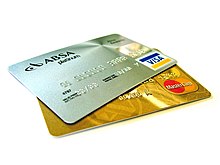
A plastic card is a plate of standard sizes (most often 54x86x0.76 mm) made of special plastic that is resistant to mechanical and thermal influences. Cards differ in their purpose, functional and technical characteristics.
Plastic cards are used (several applications for one card are possible):
- to identify their owner ;
- as an analogue of means of payment;
- to participate in loyalty programs (mini-cards / key chains, gift, discount, advertising / club cards, badges / certificates, quality certificates for finished products, contactless cards, etc.);
These all cards are combined - standards that define almost all the properties of plastic cards, starting from the physical properties of plastic, the size of the card, and ending with the content of the information placed on the card in one way or another:
- ISO-7810 “Identification Cards - Physical Characteristics”;
- ISO-7811 “Identification Cards - Recording Methods”;
- ISO-7812 “Identification cards - numbering system and procedure for registration of issuer's identifiers” (5 parts);
- ISO-7813 “Identification cards - cards for financial transactions”;
- ISO-4909 “Bank cards - the content of the third track of the magnetic strip”;
- ISO-7816 “Identification cards - cards with a microcircuit with contacts” (6 parts).
Content
- 1 Types of plastic cards by appointment
- 2 Types of plastic cards by technology
- 3 Types of Card Personalization
- 4 Types of card protection
- 5 Payment card manufacturing technology
- 5.1 Technology for the production of magnetic stripe cards
- 5.2 Technology for the production of microprocessor cards (smart cards)
- 5.2.1 Base for mounting a microcrystal
- 5.2.2 Microcrystal Attachment
- 5.2.3 Microcrystal mounting
- 5.2.4 Sealing
- 5.2.5 Formation of the recess in the map
- 5.2.6 Module implantation
- 5.3 Technology for the production of contactless microprocessor cards
- 6 Optical memory cards (laser cards)
- 7 Card blank production technology
- 7.1 Lamination method
- 7.2 Automated cutting and punching machines
- 7.3 Inspection and packaging of blanks
- 7.4 Injection molding method
- 7.5 Materials for making cards
- 8 See also
- 9 notes
- 10 Literature
Types of plastic cards by appointment
- identification cards :
- passports
- driver’s license , vehicle registration certificate
- social cards (e.g. student social card in Moscow)
- identity cards (for various groups of people, for example, voters, the poor, etc.)
- cards of deputies for voting
- Business Cards
- loyalty cards (the purpose is determined depending on the type of loyalty program): discount cards , gift certificates , club cards , accumulative / bonus cards
- bank payment cards
- credit cards
- debit cards
- customs cards
- communication cards
- SIM cards (only early SIM cards were run in full size according to ISO 7810)
- USIM cards
- R-UIM cards
- payphone cards
- prepaid cards
- scratch cards . Usually designed to pay for communication services.
- fare cards ( electronic travel card )
- fuel cards
- telephone cards (wired, wireless and IP-telephony)
- digital tv access cards
- electricity payment cards
- parking payment cards
- cards with computer game activation keys
Types of plastic cards by technology
- cards without digital media
- barcode cards
- magnetic stripe cards , store tens of bytes on the magnetic stripe
- smart cards - cards with a chip ( microprocessor with built-in memory of about 32 KB), which, depending on the communication method, emit: [1]
- contactless cards (RFID, for example, NFC)
- contact cards ( ISO / IEC 7810 , ISO / IEC 7816 and others)
- combined magnetic chip cards contain both a chip and a magnetic strip
Card Personalization Types
- barcode - drawing alphanumeric information encoded in the form of strokes on a card;
- Embossing (embossing) - the application of digital-alphanumeric information on the surface of a plastic card in the form of embossed signs with possible subsequent staining. Provides the ability to mechanically copy data (e.g. using an imprinter). Sign embossing is possible only with horizontal orientation of the card. Embossing is carried out by two types of fonts: 4.5 mm high - large (only numbers); 3 mm high - small (numbers and letters).
- indent printing - drawing digital-alphanumeric information on the surface of a plastic card in the form of flat characters with possible subsequent typing (coloring). It is typical for cards intended only for "electronic" use;
- magnetic strip - drawing on a card a magnetic information carrier with subsequent recording of information on it; It has three tracks for recording: one for alphanumeric information and two tracks for numbers.
- subscription panel - a special layer deposited on the surface of the card, allowing you to make inscriptions;
- scratch-panel - an opaque protective layer applied to the surface of the card on top of the protected information (pin code, winning word, account recharge code, etc.);
- a chip is a microprocessor-based storage medium that is mounted on a card. It either has a contact pad or uses radio communication ( RFID ).
Card Protection Types
- hologram
- micro font, trace elements
- overprint
- guilloche patterns
- iris print
- UV visible paints
- Embossing (embossing) - the information located in the embossing zones is intended for visual reading and optical recognition, as well as for obtaining prints by contact copying (that is, using imprinters ) as a way of protection against counterfeiting;
- holographic lamination
- original signature of the owner - the signature strip on the back of the plastic card serves as additional protection against falsification.
- a complex non-standard form of the card is a rather rare occurrence, due to the high price of die-cutting stamps, it is most often used in organizations where they practice the manufacture of non-standard plastic products, for example, plastic key rings
- non-standard surface design (use of lamination mirrors with micro-engraving of protective elements, printing on special types of plastic, for example, lenticular), use of textured lamination films
Payment Card Production Technology
Magnetic Stripe Card Technology
The production of bank cards is a complex technological process requiring special equipment and materials. In addition, card blanks containing signs of payment and security elements of payment systems can be issued exclusively at enterprises that have been certified both in quality management and in the physical and logical security of production in accordance with payment system standards.
The production process of cards with a magnetic strip can be divided into several stages:
- printing blanks of the front and back sides of cards.
- layout of the multilayer base of cards, its integration into a common package and the pressing of magnetic strips (these operations are performed at a separate workplace).
- the sintering process of a multilayer base with printing elements, a laminate and a magnetic strip is carried out on a special multi-story press while maintaining the set temperature and pressure controlled by a microprocessor system with subsequent cooling of the bag. While one batch of sheets undergoes hot processing, the other cools. This organization of the process ensures the continuity of production.
- feeding finished sheets with magnetic stripes to the cutting machine. After preliminary cutting of sheets into strips (if technologically necessary), the final cutting of blanks with a magnetic strip occurs.
Then, a blank with a magnetic strip, depending on the task, goes to other stages of production - personalization and reading of information, recording quality control.
However, the technology of magnetic cards, as is known, has significant drawbacks, which include the ability to read, destroy and rewrite information by almost any user who has access to the corresponding recording and reading device. For this reason, magnetic stripe cards are not fully suitable for storing confidential information.
Thanks to the intensive development of microelectronics in the early 1970s , when specialists learned how to create microcircuits with information storage functions with the ability to perform arithmetic operations that took up an area of just a few square millimeters on a single chip, microprocessor or smart card technology was made possible.
Technology for the production of microprocessor cards (smart cards)
The main component of a microprocessor card is a module - a functionally complete product that allows you to place the chip in a plastic card and then interacts with the terminal. The module protects the microcrystal from undesirable external influences, in particular, from the ingress of moisture on it, because of which it can cease to function. For a contact smart card, the module must have contacts interacting with the terminal device. In the case of a contactless smart card, a bus is laid that connects the module to the inputs of the interface chip, which is built into a plastic card along with its other elements.
Microcrystal mounting base
When creating the module, the microcrystal is attached to the base, which is a kind of printed circuit board that determines the topology of the module, including the method of mounting the microcrystal and the connection point of its terminals. On the finished smart card, the visible metallized surface of the contact pads is one of the sides of the base. The topologies used by specific module manufacturers and the topologies of the various smart card chips may vary.
At the initial stage of the development of smart card technology, the output frames were made only in the form of plates or strips, from which individual frames could be separated separately. Currently, the production method is widely used, in which the frames are located on a rolled up ribbon. Perforated tape can be used in equipment necessary for the automated production of modules. Rolls with lead frames are made of flexible foil-coated polyester fiberglass. The thickness of the layer of copper foil is about 30 microns. An etching method forms a contour on the tape corresponding to the topology of the module pads. Then the contact surface is gilded with a layer thickness of 35 μm, made on a sublayer of Nickel deposited on the copper surface of the output frame. In some cases, the contact pads are metallized with nickel with a layer thickness of 6 μm.
Microcrystal Attachment
At the next stage, the microcrystal is attached to the output frame. This process is called crystal attachment. It consists in gluing crystals to the place indicated on the lead frame. The glue is squeezed out by a syringe onto the surface of the output frame, the microcircuit is placed on top and pressed. The microcircuit, the output frame and the glue are thermofixed.
Microcrystal Mounting
After the microcircuit is glued, it needs to be attached to the pads of the output frame. Currently, two different methods of microcrystal mounting are widely used. In the first method, the lead frames are attached by soldering to the crystal, on the contacts of which a solder is applied in a special way. For this purpose, copper balls can be superimposed on the crystal contacts, which are then enveloped with solder.
The second process is called wire mounting. A fragment of a wire 27 microns thick is laid from the microcircuit to each of the contact pads. Currently, gold is mainly used as a material for the manufacture of wire. However, some companies continue to use aluminum or silver. Despite the higher cost, the use of gold has several advantages. Gold wire is the most suitable material at a high pace of assembly equipment, as it has high ductility and does not break when fed from bobbins. The most significant of them is that gold is not subject to corrosion that occurs when using aluminum wire in combination with a gold output frame, as well as the fact that aluminum mounting in just two to three months can become brittle, which is unacceptable for smart cards whose service life is at least seven years according to ISO standards.
Sealing
After the wire installation is completed, the module is sealed by coating the reverse side of it with polymer to protect it from environmental influences.
Formation of a recess in a map
At the next technological stage, the module is connected to a plastic card. In order to place the module in a plastic card, a recess (cavitation) must be made in its surface in size without violating the requirements of ISO standards for the thickness of the card (it should be 0.76 mm).
The formation of the recess in the map can be performed in several ways:
- by gluing three to four layers of plastic sheet material, usually polyvinyl chloride. Then - milling holes according to the mounting size of the module;
- production of cards using the injection molding method, creating recesses according to specified parameters. In this case, the card is made of ABS plastic or polycarbonate.
Module implantation
After the recess is made in the plastic base, the module can be mounted on a card on an adhesive film, followed by heat setting under pressure. The gluing process is activated by heating and pressure. The finished card can be tested, programmed and verified, and then used for specific applications. Another option for module implantation is the use of liquid glue based on cyanacrylate. When using this method, the module is pressed into the recess, which ensures the spreading of the adhesive mass, dosed by the spot method, with a thickness of about 20 microns. After this, the glue polymerizes.
Contactless Microprocessor Card Technology
When forming a multilayer base with printing elements, the package contains inlets (microcircuits with a conductor mounted as several loops that perform the function of an antenna), usually located in the middle of the layer. The location of the microcircuits in the workpiece coincides with the placement of cards on the sheet and is optimized for all technological stages - printing, sintering, cutting. After the sintering process in the laminators, the sheets are fed into the cutting presses, where the blanks are cut down, which already contain contactless microcircuits in the thickness of the material. Next comes the personalization process.
Optical memory cards (laser cards)
Optical memory cards have a larger capacity than memory cards, but data on them can be recorded only once. Such cards use WORM technology (write once read many, that is, write once - read multiple times). Запись и считывание информации с такой карты производится специальной аппаратурой с использованием лазера (откуда другое название — лазерная карта). Технология, применяемая в картах, подобна той, которая используется в лазерных дисках. Основное преимущество таких карточек — возможность хранения больших объёмов информации, свыше 4 мегабайт. Носителем информации на них является оптическая лента. На одной такой карточке можно разместить до 2000 страниц текста. Помимо текстовой информации, на оптической карте можно хранить графические, звуковые, программные файлы и т. п.
Запись/считывание информации производится на основе оптической технологии. Обеспечивается возможность многоуровневой защиты информации.
Устройство ввода/ вывода данных на лазерную карту легко подключается к обычному персональному компьютеру и позволяет работать в режиме WORM. Записанную на карте информацию нельзя стереть, но существует возможность многократного ввода данных на носитель в пределах имеющегося объёма памяти.
При этом WORM обеспечивает постоянное хранение истории записи информации на карту и попыток доступа к данным.
Лазерные карты предназначены для хранения информации и создания банков данных в медицинских учреждениях, архивах и библиотеках.
Области применения лазерных оптических карт:
- службы безопасности — хранение данных для биометрической идентификации (образцы подписи, отпечатки пальцев, отпечатки ладоней). Лазерные карты могут использовать многоуровневую защиту в виде магнитных кодов, штрих-кодов, цветной термопечати и т. д.;
- медицина — хранение историй болезни пациентов, рентгенограмм, результатов анализов, ЭКГ, УЗИ, предписание врачей и т. д.;
- страхование — хранение атрибутов страхового полиса , паспортных данных владельца, полной информации об объектах страхования (имущество, недвижимость, автомобиль, здоровье и пр.);
- архивы и библиотеки — хранение текстов и рисунков и т. д.;
- хранение данных по автотранспортным средствам;
- водительское удостоверение;
- удостоверение личности;
- банковские карты.
В банковских технологиях оптические карточки распространения пока не получили вследствие высокой стоимости как самих карточек, так и считывающего оборудования.
Технология производства заготовок карт
Метод ламинирования
Метод ламинирования применяется сейчас для большей части изготавливаемых пластиковых карт, к которым предъявляются повышенные требования. При ламинировании отдельные слои листового материала формируются в цельный остов карты под воздействием высоких температур и давления.
Для формирования многослойных листов основы карт в технологической цепи их производства используются мощные гидравлические прессы с подогревом и охлаждением. Пресс контролирует встроенная микропроцессорная система, задающая циклы формирования каждого вида изделия. Конструкция современных прессов предусматривает обогрев одной стопы и охлаждение другой. В формовочных плитах прессов имеются каналы для ускоренного водяного охлаждения после завершения нагрева. Такая мера также обеспечивает непрерывный технологический процесс.
В процессе производства листы, загруженные в специальные ячейки, подаются со столов с роликами в загрузочные секции пресса, которые поочередно подводятся подъемным механизмом под уровень сборочного стола. Загруженные секции пресса механически помещаются в нагревательно-прессовальный узел.
При завершении цикла нагрева процесс повторяется: охлаждённые ячейки со спрессованными листами поочередно выдвигаются из пресса на сборочные столы. Здесь снимаются верхние полированные металлические пластины, обеспечивающие требуемую гладкость поверхности, а готовые листы многослойного пластика подаются на конвейер для дальнейшей обработки или складируются.
Автоматизированные резательные и вырубные машины
Резательная машина и вырубной пресс-перфоратор снабжены оптической системой позиционирования листа, обеспечивающей индивидуальную сверку расположения полиграфического оформления с эталоном для каждой карточки на этих этапах процесса. Это позволяет выдерживать точность изготовления до + 0,01 мм на всех этапах создания изделия независимо от усадки материалов в процессе послойного формирования многослойного листа.
Оператор укладывает полиграфически оформленные, подвергнутые горячему формированию и проверке на качество, листы пластика на стапельную доску, после чего разрезает их до требуемого размера. При этом маркируются некондиционные карты. Разрезанные листы подхватываются с рабочего стола вакуумным подъемным устройством и устанавливаются на фотоэлементы резательной машины. Захваты позиционируют лист с помощью шаговых двигателей, управляемых датчиками системы позиционирования печати. После позиционирования лист зажимается и вырубается на отдельные карты, которые автоматически по конвейеру подаются в приемные устройства.
Отделочный вырубной пресс с автоматическим позиционированием печати рассчитан на автоматический приём от резательной машины полос с картами из ПВХ, АБС или других материалов, толщиной от 0,4 до 0,8 мм.
Чистовой вырубной пресс выполняет окончательную вырубку карт в соответствии со стандартными размерами по ISO и позволяет изготовить миллионы карт в течение гарантированного срока его службы. Он обеспечивает обрезку карт с получением высококачественной хорошо выраженной кромки. Перфораторы могут быть рассчитаны на работу с любыми форматами листов при производительности 30 000 карт в час и более.
Вырубленные карты автоматически доставляются конвейером к другим отделочным участкам в темпе, соответствующем заданной производительности линии.
Аппараты для нанесения голограмм позволяют уменьшать отходы дорогостоящего сырья и брак фольги. Типичный современный аппарат включает сдвоенный канал для одновременного тиснения голограмм на двух карточках при производительности до 7500 карт в час.
Карты подаются из сдвоенного магазина в два канала, каждый из которых имеет индивидуальный датчик оптического обнаружения изображения и геометрической привязки каждой накладываемой голограммы.
В аппаратах предусматривается возможность независимого возвратно-поступательного перемещения оптических датчиков по каждому каналу аппарата, что обеспечивает необходимую позиционную точность.
После операции тиснения ножи отделяют лишнюю фольгу от поверхности карточки, создавая ровную кромку. Готовые карточки автоматически направляются на специальный переворачивающий карты конвейер, подающий их к устройству тиснения панелей для подписи.
Устройство тиснения панелей для подписи аналогично голограммному аппарату и включает сдвоенные каналы для их одновременного наложения на две карты, прошедшие процесс вырезки на отделочном штампе. Его производительность составляет до 8000 карточек в час.
В устройстве тиснения подписных панелей, как и в голограммном аппарате, имеются самовыравнивающиеся головки, которые управляются независимо и обеспечивают выдержку заданной температуре, необходимой для припрессовки подписных панелей к поверхности карты на заданном месте. Независимые регуляторы температуры с цифровым отсчётом в каналах этих устройств обеспечивают прецизионное регулирование подогрева головок.
Готовые карточки направляются в сдвоенный магазин для автоматической подачи их на инспекционный участок конвейера.
Контроль и упаковка заготовок
Карты, поданные конвейером в инспекционный коллектор, направляются под контролирующую головку, где одновременно полностью проверяются обе их стороны. При этом контролируются следующие параметры:
- верность позиционирования печатного изображения относительно края карты;
- цветовые характеристики, оттенки;
- верность позиционирования магнитной полосы;
- верность позиционирования голограммы;
- верность позиционирования панели для подписи;
- микротрещины, царапины;
Прошедшие электронную инспекцию карточки сбрасываются на конвейер для визуального контроля на предмет обнаружения дефектов послойного формования или присутствия пыли, а также дефектов, которые не могут быть обнаружены данным электронным контролирующим устройством. В конце линии установлено автоматическое упаковочное устройство, на которое поступают карты, прошедшие инспекционный участок конвейера. Устройство отсчитывает требуемое число карточек для укладки в коробки, которые после закрытия обертываются термоусадочной плёнкой.
Метод литья под давлением
Литьё под давлением используется главным образом при изготовлении электронных телефонных, а также SIM-карт для мобильных телефонов. В последнее время по этой технологии производят бесконтактные микропроцессорные пластиковые карты. При этом способе изготовления карт полиграфическое изображение наносится на каждую карту в отдельности, а затем они покрываются лаком, который служит защитной плёнкой вместо ламината. Углубление для имплантации чипового модуля формируется пресс-формой. В качестве сырья используется гранулированный акрилнитрил-бутадиен-стирол (АБС). Гранулы подаются в бункер, а затем поступают в зону разогрева. Расплавленная масса порционно впрыскивается под большим давлением в форму, как правило, рассчитанную на изготовление нескольких заготовок. Одна из проблем, которую приходится решать при выпуске карт методом литья под давлением, является удаление облоя, образующегося при выемке готовых карточных заготовок из форм.
Материалы для изготовления карт
В настоящее время наиболее часто применяемым для изготовления карточек материалом остается поливинилхлорид (ПВХ). Он легко поддается обработке и достаточно устойчив к температурным режимам, в которых используются карты. Кредитные карточки во всем мире производятся исключительно из ПВХ. Поливинилхлорид, употребляемый как основа карт, может быть окрашен в различные цвета. Он нейтрален по окраске — это особенно благоприятно при изготовлении цветной печати, цвета которой не искажаются, а белый цвет остается чистым.
Из-за наличия хлора в составе поливинилхлорида его относят к вредным для окружающей среды веществам, а исходный материал — винилхлорид — является канцерогенным веществом. Однако поливинилхлорид может быть использован вновь и по этой причине не загрязняет окружающую среду.
ПВХ используется особенно часто при изготовлении карт методом ламинирования. В технологии изготовления карт литьём под давлением он не применяется. Акрилнитрил-бутадиен-стирол (АБС) является аморфным термопластиком так же, как и ПВХ. Его отличают высокая прочность и термостойкость. АБС имеет весьма ограниченные возможности при окраске внутреннего слоя и ламината. Отрицательного воздействия на окружающую среду у АБС не выявлено. Исходный материал бензол, используемый для его изготовления, относится к канцерогенным веществам.
В настоящее время из АБС изготавливают SIM-карты для мобильных телефонов, карты медицинского страхования . В сфере упаковочных материалов традиционно применяется полиэтилен-терефталат (ПЭТ), известный как полиэстер. ПЭТ — термопластик, который используется при производстве только таких карт, для которых важна их безвредность для окружающей среды, и не предъявляются жесткие требования к термостойкости. Кроме того, необходимо учитывать, что материал ПЭТ имеет весьма ограниченные возможности при окраске. Отрицательного воздействия на здоровье и окружающую среду у материала ПЭТ не выявлено. Переработка для повторного использования производственных отходов, полученных в процессе изготовления пластиковых карт, а также отслуживших пластиковых карт, связана с большими затратами из-за того, что они покрыты полиграфической краской. ПЭТ используют в технологиях ламинирования и литья под давлением.
Кроме уже названных материалов, для изготовления пластиковых карт используется поликарбонат (ПК), который устойчив к высоким температурам и используется прежде всего для изготовления высококачественных карт. ПК хорошо поддается окраске, однако не может быть переработан и использован повторно. Смесь из ПВХ и ПК используется некоторыми производителями карт для термостойких SIM-карт мобильных телефонов. Эту карту, однако, нельзя сравнить с карточкой, изготовленной исключительно из ПК. Использование для производства карточек смеси ПК с ПВХ имеет скорее чисто экономические, чем экологические причины, так как карточки из ПК дорогостоящи, а их изготовление достаточно сложно.
ПК может быть использован в технологиях ламинирования и литья под давлением.
See also
- Смарт-карта
- Бесконтактная карта
- Карта с магнитной полосой
Notes
- ↑ {title} (недоступная ссылка) . Дата обращения 28 января 2014. Архивировано 14 января 2012 года.
Literature
- Wolfgang Rankl, Smart Card Handbook — Chapters 1 «Introduction», 2 «Card types», ISBN 978-1-119-99188-5