Rituximab (trade names: Rituxan, Atsellbiya, Mabtera, Redditux, R-Mab) is an antitumor agent from the group of monoclonal antibodies .
| Rituximab | |
|---|---|
 | |
| Monoclonal antibody | |
| Gross formula | C 6416 H 9874 N 1688 O 1987 S 44 |
| Molar mass | 143859.7 g / mol |
| Cas | |
| Drugbank | |
| Source organism | chimera mouse / human |
| Target | Cd20 |
| Classification | |
| ATX | |
| Pharmacokinetics | |
| Bioavailable | 100% (IV) |
| The half-life. | from 30 to 400 hours (depending on the dose and duration of treatment) |
| Excretion | Presumably: subjected to phagocytosis and catabolism in RES |
| Dosage Forms | |
concentrate for solution for infusion, subcutaneous solution | |
| Route of administration | |
| Intravenously, infusion (slowly), via a separate catheter | |
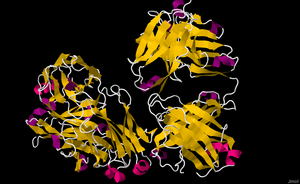
It is a synthetic (genetically engineered) chimeric monoclonal mouse / human antibody that is specific for the CD20 antigen found on the surface of normal and malignant B-lymphocytes. By structure, rituximab belongs to class G1 immunoglobulins (IgG1 kappa), its molecule contains murine variable fragments of light and heavy chains and a human constant segment. Rituximab consists of 2 heavy chains of 451 amino acids and 2 light chains of 213 amino acids and has a molecular weight of approximately 145 kD. The affinity of rituximab for the CD20 antigen is approximately 8 nM. Chimeric anti-CD20 antibodies are produced in mammalian cells (Chinese hamster cell culture) in the medium, into which the chimeric gene obtained by genetic engineering has been introduced.
Content
- 1 Pharmacology
- 2 Pharmacokinetics
- 3 Clinical studies
- 4 Use in elderly patients
- 5 Use of the substance Rituximab
- 6 Contraindications
- 7 Restrictions on use
- 8 Use during pregnancy and lactation
- 9 Side effects of the substance Rituximab
- 10 Rituximab monotherapy
- 11 Updating information
- 12 Interaction
- 13 Overdose
- 14 Dosage and administration
- 15 Precautions for Rituximab
- 16 Notes
- 17 Literature
- 18 Links
Pharmacology
Pharmacological action - antitumor. Rituximab specifically binds to the CD20 transmembrane antigen (hydrophobic protein with a molecular weight of 35 kD). This antigen is localized on the surface of pre-B lymphocytes and mature B-lymphocytes, but is absent on hematopoietic stem cells, pro-B cells, normal plasma cells, and healthy cells of other tissues. This antigen is expressed in more than 90% of B-cell non-Hodgkin lymphomas. The CD20 antigen regulates all stages of B-lymphocyte maturation, starting from the early stages, and also functions as a regulator of calcium ion transport through the cell membrane. After binding to the antibody, the CD20 molecule is not discharged from the cell surface into the extracellular space and is not internalized, and CD20 does not circulate in the plasma as a free antigen.
The mechanism of antineoplastic action: The rituximab Fab fragment binds to the CD20 antigen on lymphocytes and, with the participation of the Fc domain, initiates immunological reactions mediating B cell lysis (shown in vitro). Possible mechanisms for cell lysis include complement-dependent cytotoxicity (CLCT) and antibody-dependent cell-mediated cytotoxicity (AZCT). It has also been shown that rituximab induces apoptosis in cells of the DHL-4 line of human B-cell lymphoma.
Rituximab binds to lymphoid cells of the thymus, white pulp of the spleen, and most peripheral blood B-lymphocytes and lymph nodes.
After the first injection of rituximab, the median of the number of B cells in peripheral blood decreases to a level below normal, and after 6-9 months it begins to recover, returning to normal by 12 months after completion of therapy.
Human anti-chimeric antibodies were detected in 4 out of 356 patients (approximately 1% of patients), and an objective clinical response was observed in 3 patients.
Pharmacokinetics
In patients who received intravenous infusion, single doses of rituximab 10, 50, 100, 250 or 500 mg / m2, serum levels and T1 / 2 of rituximab increased in proportion to the dose. In 14 patients with iv infusion at a dose of 375 mg / m2 who received therapy for 4 weeks, after the first infusion, the average serum T1 / 2 was 76.3 hours (in the range of 31.5-152.6 hours), after the fourth infusion - 205.8 hours (in the range of 83.9-407.0 hours). A wide range of half-lives may reflect the variability of the tumor mass in different patients and changes in the population of CD20-positive (normal and malignant) B cells after repeated injections. When rituximab was administered at a dose of 375 mg / m2 as an iv infusion with a weekly interval of 203 patients, the average Cmax after the fourth injection was 486 μg / ml (in the range of 77.5-996.6 μg / ml). Serum levels of rituximab negatively correlated with the magnitude of the tumor load. The median serum level in equilibrium was higher among responders compared with non-responders, but no differences were found in the elimination rate (measurement of serum T1 / 2). Rituximab is capable of cumulation, is found in the body within 3-6 months after the end of treatment.
Clinical
The study included patients (N = 296) with recurrent or therapy-resistant B-cell non-Hodgkin lymphoma of low malignancy or follicular. Dosage regimens were different: patients received rituximab at a dose of 375 mg / m2 in the form of iv infusions carried out with an interval of one week, 4 infusions (N = 166), or 8 (N = 37). Clinically, these studies also differed, such as initial treatment, initial treatment for large tumor mass, and re-treatment.
Initial therapy, 4 weekly injections. In a multicenter open study with 4 rituximab infusions (N = 166), exclusion criteria from which were large tumors (more than 10 cm) or the number of peripheral blood lymphocytes more than 5000 cells / μl. The total frequency of remission was 48%, full remission - 6%, partial remission - 42%. The median time before the response to therapy was 50 days and the median time to disease progression in patients responding to therapy was 11.2 months (range from 1.9 to 42.1+, “+” means the current response). Disease-related signs and symptoms (including B symptoms) were present in 23% (39/166) of patients at the start of the study and disappeared in 64% (25/39) of these patients.
Multivariate analysis showed that the total frequency of remission in patients with histological tumor subtypes B, C, and D (according to the IWF - International Working Formulation) was higher than with subtype A (58 and 12%, respectively); in patients with the largest tumor lesion with a diameter of less than 5 cm - higher than with a lesion with a diameter of more than 7 cm (53 and 38%) and in patients with chemosensitive relapse - higher than with chemically resistant (defined as a duration of remission of less than 3 months) (53 and 36% respectively). The total frequency of remission in patients who had previously undergone an autologous bone marrow transplant reached 78% (18/23). Factors such as age ≥60 years, extranodal localization of lesions, previous anthracycline therapy, and bone marrow damage did not correlate with a lower remission rate.
Initial therapy, 8 weekly injections. In a multicenter study similar to the previous one, during 8 rituximab infusions (N = 37), the total remission rate was 57%, total remission was 14%, partial remission was 43%, and the median time to disease progression in patients responding to therapy was 13 , 4 months (range from 2.5 to 36.5+).
The effectiveness of therapy in patients with a large (more than 10 cm in diameter) tumor mass (N = 39) is slightly lower (total remission rate is 36%), with repeated treatment (N = 60) it is also slightly lower (38%).
Use in elderly patients
During clinical trials, 24% of patients were aged 65 to 75 years, 5% - from 75 years and older. Significant differences in the duration of the response to therapy and the frequency and severity of side effects in the elderly compared with the same parameters in the age group of patients under 65 were not found.
Use of Rituximab
Non-Hodgkin's B-cell lymphomas (recurrent or chemo-resistant, low-grade or follicular) in adults.
Contraindications
Hypersensitivity to rituximab or to mouse proteins.
Application restrictions
High tumor load (foci larger than 10 cm), tumor lung infiltration, history of pulmonary insufficiency, cardiovascular disease (angina pectoris, arrhythmia), neutropenia (less than 1500 cells / μl), thrombocytopenia (less than 75000 cells / μl), children (safety and efficacy in children have not been established).
Pregnancy and lactation
Prescribing to pregnant women is possible only if the benefits of therapy exceed the potential risk to the fetus. Long animal studies have not been conducted to establish potential carcinogenicity, mutagenicity, effects on fertility, and the toxic effect of rituximab on the animal reproductive system has not been studied. Whether rituximab can have a damaging effect on the fetus when given to pregnant women and whether it affects the ability to give birth is unknown. IgG class immunoglobulins are known to cross the placental barrier, therefore, rituximab can cause depletion of the B-cell pool in the fetus. During and for 12 months after the end of rituximab treatment, women of childbearing age must use effective methods of contraception.
The FDA category of action for the fetus is C.
It is not known whether rituximab with breast milk is excreted in women. However, given the fact that IgG class immunoglobulins circulating in the mother’s blood pass into breast milk, rituximab should not be given to nursing mothers.
Side effects of the substance Rituximab
Fatal infusion reactions. There are reports of deaths within 24 hours after rituximab infusion. These deaths were due to the development of a complex of infusion reactions, including hypoxia, lung infiltration, acute respiratory distress syndrome, myocardial infarction, ventricular fibrillation, or cardiogenic shock. Approximately 80% of fatal infusion reactions were observed during the first infusion (see “Infusion Reactions” and “Precautions”).
Tumor lysis syndrome. Acute renal failure that developed during rituximab treatment and requiring dialysis has been reported; there are fatal cases (see “Complications of the kidneys” and “Precautions”).
Rituximab causes rapid lysis of benign and malignant CD20-positive cells. The appearance of symptoms characteristic of tumor lysis syndrome (acute renal failure, hyperkalemia, hypocalcemia, hyperuricemia, hyperphosphatemia) is described, within 12-24 hours after the first infusion of rituximab.
Complications of the kidneys. The administration of rituximab was sometimes accompanied by severe renal toxicity, including acute renal failure with the need for dialysis and, in some cases, led to death. The incidence of renal toxicity was higher in patients with a large number of circulating malignant lymphocytes and with a high tumor load (see Tumor Lysis Syndrome), as well as in patients who were prescribed cisplatin during clinical trials. The combination of cisplatin with rituximab is not recommended. In the case of using such a combination, extreme caution and careful monitoring of patients are necessary to timely detect an increase in serum creatinine or oliguria.
Severe reactions from the mucous membranes and skin. Expressed reactions are described, sometimes accompanied by death, in connection with treatment with rituximab (see "Precautions"). These reactions include paraneoplastic pemphigus (a rare disease that manifests itself in patients with malignant neoplasms), Stevens-Johnson syndrome, lichenoid dermatitis, vesicular-bullous dermatitis, toxic epidermal necrolysis. The onset of these reactions in these cases varied from 1 to 13 weeks after the administration of rituximab. Patients with severe skin reactions should not receive any future rituximab infusion (the safety of re-administration of rituximab in this group of patients was not evaluated).
Most serious adverse reactions caused by rituximab include: infusion reactions, tumor lysis syndrome, reactions from the mucous membranes and skin, hypersensitivity reactions, cardiac arrhythmias, angina pectoris, renal failure. The most common infusion reactions and lymphopenia.
Rituximab monotherapy
Data on side effects obtained during clinical trials cannot be used directly to compare with the results of other clinical trials (since different studies are conducted with a different set of conditions), as well as to predict the occurrence of side effects in normal medical practice, since the condition of patients and other factors may differ from those that prevailed in clinical trials. However, information about the side effects observed during clinical trials can give an idea of the relative contribution of the substance itself and other factors to the development of adverse effects when using drugs in the population.
In patients with high tumor burden (single foci sizes ≥10 cm in diameter) (N = 39) compared with patients with foci sizes <10 cm (N = 195), the frequency of the following clinically pronounced adverse reactions was increased - abdominal pain, anemia, dyspnea, hypotension, neutropenia.
Infusion Reactions (see also Fatal Infusion Reactions and Precautions). Most patients during the first infusion have a mild to moderate infusion symptom complex, consisting in the appearance of fever and chills / tremors. Other frequently observed infusion symptoms are nausea, pruritus, angioedema, asthenia, hypotension, headache, bronchospasm, throat irritation, rhinitis, urticaria, rash, vomiting, myalgia, dizziness, hypertension. As a rule, these reactions occur within 30-120 minutes after the start of the first infusion and disappear after slowing down or interrupting the administration of the drug and carrying out supportive measures (including iv administration of saline, diphenhydramine and paracetamol). When analyzing the data of rituximab administration to 356 patients who received 1 infusion weekly for 4 (N = 319) or 8 (N = 37) weeks, the frequency of such reactions was greatest at the first infusion and amounted to 77%, and it decreased with each subsequent infusion: up to 30% (4th infusion) and 14% (8th infusion).
Infectious complications. Rituximab leads to depletion of the B-cell pool in 70-80% of patients and a decrease in serum immunoglobulins in a small number of patients; lymphopenia with a median duration of 14 days (range from 1 to 588 days). The infection rate was 31%: 19% - bacterial infections, 10% - viral, 1% - fungal, 6% - of unknown etiology (these percentages should not be added up, since more than one type of infection can be fixed in a single patient). Serious cases (3rd and 4th degree of severity), including sepsis, were observed in 2% of patients.
Hematologic adverse events. During clinical trials, patients treated with rituximab developed cytopenia in 48% of cases, including lymphopenia (40%), neutropenia (6%), leukopenia (4%), anemia (3%), thrombocytopenia (2%). The median duration of lymphopenia was 14 days (range from 1 to 588 days), neutropenia - 13 days (range from 2 to 116 days). After treatment with rituximab, 1 case of transient aplastic anemia (aplasia of an erythrocyte germ only) and 2 cases of hemolytic anemia were described.
In addition, there is a limited number of post-marketing reports of prolonged pancytopenia, bone marrow hypoplasia, and late neutropenia (defined as occurring 40 days after the last injection of rituximab) in patients with hematologic malignancies.
Cardiovascular adverse events. 3rd and 4th degree cardiovascular reactions include hypotension. Rare, fatal cases of heart failure with the development of symptoms a week after the start of rituximab treatment are described.
Infusion should be discontinued if a serious, life-threatening arrhythmia develops. Patients who develop clinically severe arrhythmias should undergo cardiac monitoring during and after the following rituximab infusions. In patients with previous cardiac disorders, including arrhythmia and angina pectoris, this symptom may occur during rituximab therapy, so they should be monitored throughout the entire infusion period and immediately after it.
Pulmonary symptoms. In clinical trials, pulmonary adverse events were observed in 135 patients (38%). The most common side effects from the respiratory system included: increased cough, rhinitis, bronchospasm, dyspnea, sinusitis. In both clinical studies and post-marketing observations, there was a limited number of reports of obliterating bronchiolitis present up to 6 months after rituximab infusion, and a limited number of reports of pneumonitis (including interstitial pneumonitis) present up to 3 months after rituximab infusion (some of listed pulmonary complications were fatal). The safety of resuming or continuing rituximab administration in patients with pneumonitis or bronchiolitis obliterans is unknown.
Hepatitis B reactivation. Hepatitis B virus reactivation has been reported with the development of fulminant hepatitis, liver failure and death in several patients with hematologic malignancy who received rituximab therapy. Most patients received rituximab in combination with chemotherapy. The median time to diagnosis of hepatitis was approximately 4 months after the start of rituximab injections and approximately 1 month after the last dose.
Patients at high risk of hepatitis B virus infection should be screened before starting rituximab treatment to detect the virus. Carriers of hepatitis B virus should be carefully examined for signs of active infection and symptoms of hepatitis during rituximab therapy and a few months after it. If a patient develops viral hepatitis, rituximab and any concomitant chemotherapy should be discontinued and appropriate treatment should be prescribed, including initial antiviral therapy. Insufficient data showing the safety of resuming rituximab treatment in patients who develop hepatitis due to reactivation of hepatitis B virus.
Immune / autoimmune adverse reactions. Reactions such as uveitis, visual neuritis in patients with systemic vasculitis, pleurisy in patients with lupus-like syndrome, serum sickness with polyarticular arthritis, and vasculitis with rash have been reported.
Less common side effects observed. In clinical trials, less than 5% and more than 1% of the observed patients had the following side effects (a causal relationship with the appointment of rituximab has not been established) - agitation, anorexia, arthritis, conjunctivitis, depression, dyspepsia, edema, hyperkinesia, hypertension, hypesthesia, hypoglycemia, pain in injection site, insomnia, violation of lacrimation, malaise, irritability, neuritis, neuropathy, paresthesia, drowsiness, vertigo, weight loss.
Updating information
Progressive Multifocal Leukoencephalopathy
Interaction
When other monoclonal antibodies are administered for diagnostic purposes to patients with antibodies against mouse proteins or antimeric antibodies, they may develop allergic or hypersensitivity reactions.
When prescribed with cyclophosphamide , doxorubicin , vincristine , prednisolone - there was no increase in the frequency of toxic effects. Drugs that inhibit bone marrow hematopoiesis increase the risk of myelosuppression.
An intermediate analysis of a study evaluating the effectiveness of rituximab in interaction with ibrutinib in patients with Waldenstrom macroglobulinemia showed that drugs in combination reduce the risk of further disease progression and death by 80%. Also, high efficacy of therapy was noted in patients who have not received treatment before, and in patients with relapse or mutations of the disease [1] [2] .
With the combination therapy of rituscomb with venetoclax , in the treatment of patients with chronic lymphocytic leukemia who have previously received a course of treatment once. Phase III clinical trial data showed a significant improvement in disease progression-free survival in patients with recurrent / refractory chronic lymphocytic leukemia. Compared with the combination therapy with bendamustine and rituximab (a standard immunochemotherapy regimen), the risk of disease / death progression was reduced by 81% [3] [4] .
Overdose
Cases of overdose in clinical trials in humans have not been observed. However, single doses in excess of 500 mg / m2 have not been studied.
Dosage and administration
In / in. The concentrate is pre-diluted in the infusion vial (bag) with a sterile, pyrogen-free 0.9% aqueous solution of sodium chloride or 5% aqueous glucose solution to a concentration of 1-4 mg / ml; injected in a dose of 375 mg / m2 of the body surface 1 time per week for 4 weeks; the initial infusion rate at the first injection of 50 mg / h with a gradual increase of 50 mg / h every 30 minutes (maximum speed 400 mg / h); in subsequent procedures, you can start at a speed of 100 mg / h and increase it by 100 mg / h every 30 minutes to a maximum (400 mg / h).
Precautions for Rituximab
Infusions are possible only in a hospital, under the close supervision of an oncologist or hematologist who has experience of such treatment, while everything should be ready for resuscitation in full. Due to the risk of hypotension, it is recommended that antihypertensive drugs be withdrawn 12 hours before and during the entire infusion period. Infusion regimes should be strictly observed, iv injection or bolus injection is not allowed.
To prevent the development of the "cytokine release syndrome" 30-60 minutes before each procedure, premedication is necessary: anesthetizing / antipyretic (eg paracetamol) and antihistamine (diphenhydramine, etc.), and with an increased risk of allergic reactions - corticosteroids. Mild or moderate reactions can be eliminated by reducing the rate of administration, which can be increased again after the disappearance of symptoms. In most cases, in patients with adverse reactions that did not threaten life, the course of treatment with rituximab was completely completed.
Tumor lysis syndrome. Individual cases of fatal outcomes were observed in connection with the development of this syndrome in patients receiving rituximab. The risk of developing the syndrome is higher in patients with a large number of circulating malignant lymphocytes (≥25000 cells / mm2) or with a high tumor load. Больным группы риска по синдрому лизиса опухоли необходимо проводить профилактические мероприятия (тщательное наблюдение, проведение соответствующего лабораторного мониторинга, в том числе мониторинга функции почек и электролитного баланса, при развитии симптомов быстрого лизиса опухоли — проведение соответствующей медикаментозной терапии, коррекция электролитных нарушений, диализ). В ограниченном числе случаев после полного купирования симптомов терапию ритуксимабом продолжали в сочетании с профилактикой синдрома быстрого лизиса опухоли.
Следует соблюдать осторожность (при первом введении — меньшая скорость инфузии, тщательное наблюдение) у больных с размерами одиночных опухолевых очагов более 10 см в диаметре или с числом циркулирующих злокачественных клеток ≥25000 клеток/мм3 в связи с повышенной частотой тяжелых побочных реакций. Из-за высокого риска «синдрома высвобождения цитокинов» больным с анамнестическими указаниями на легочную недостаточность и с опухолевой инфильтрацией легких назначение возможно в условиях тщательного наблюдения и только при неэффективности других методов лечения. При развитии «синдрома высвобождения цитокинов» инфузию следует немедленно прекратить и начать интенсивную симптоматическую терапию.
С осторожностью назначают больным с нейтропенией (менее 1500 клеток в 1 мкл) и тромбоцитопенией (менее 75000 клеток в 1 мкл); на протяжении курса необходим регулярный контроль клеточного состава периферической крови.
Иммунизация. Безопасность проведения иммунизации любой вакциной, особенно живыми вирусными вакцинами, после лечения ритуксимабом не оценивалась. Способность давать первичную или анамнестическую гуморальную реакцию на любую вакцину также не изучалась.
Notes
- ↑ Ibrutinib With Rituximab in Adults With Waldenström's Macroglobulinemia . Study Record Detail (англ.) . ClinicalTrials.gov . US National Library of Medicine (15 February 2019) . Date accessed August 31, 2019.
- ↑ Добавление ибрутиниба к терапии ритуксимабом эффективно против макроглобулинемии Вальденстрема . Ремедиум (20 июля 2018).
- ↑ AbbVie Announces US FDA Approval of VENCLEXTA® (venetoclax tablets) in Combination with Rituximab as a Fixed Duration Treatment for Chronic Lymphocytic Leukemia or Small Lymphocytic Lymphoma Patients Who Have Received One Prior Therapy (англ.) . AbbVie Inc. (8 June 2018).
- ↑ Минздрав разрешил применение венетоклакса в комбинации с ритуксимабом . Ремедиум (5 сентября 2018).
Literature
- Longo, Dan. Harrison's Principles of Internal Medicine : [ eng. ] : in 2 vol. / Dan Longo, Anthony Fauci, Dennis Kasper … [et al. ] . — 18th ed. — McGraw Hill Professional, 2011. — P. 931. — 4012 p. — ISBN 9780071748896 . — ISBN 007174889X .
- Bosch, Xavier. Historic Outline of the Development of Drugs Targeting B Cells : [ арх. 5 ноября 2017 ] / Maria J. Leandro // Drugs Targeting B-Cells in Autoimmune Diseases : [ eng. ] / Xavier Bosch, Manuel Ramos-Casals, Munther A. Khamashta. — Springer Science & Business Media, 2013. — P. 1–4. — ISBN 783034807067..
- WHO Model List of Essential Medicines : April 2015 : Amended November 2015 : [ eng. ] : [ arch. 13 декабря 2016 ]. — 19th ed. — World Health Organization, 2015. — 51 [4] p. — EML 2015.
- British national formulary : [ eng. ] . — 69 ed. — British Medical Association, 2015. — P. 638. — ISBN 9780857111562 .
- Tandan, Rup; Hehir, Michael K.; Waheed, Waqar; Howard, Diantha B. (August 2017). "Rituximab treatment of myasthenia gravis: A systematic review". Muscle & Nerve. 56 (2): 185–196. doi:10.1002/mus.25597. ISSN 1097-4598. PMID 28164324 .
- Singer, O; McCune, WJ (May 2017). "Update on maintenance therapy for granulomatosis with polyangiitis and microscopic polyangiitis". Current Opinion in Rheumatology. 29 (3): 248–253. doi:10.1097/BOR.0000000000000382. PMID 28306595 .
- Dojcinov SD, Fend F, Quintanilla-Martinez L (March 2018). "EBV-Positive Lymphoproliferations of B- T- and NK-Cell Derivation in Non-Immunocompromised Hosts". Pathogens (Basel, Switzerland). 7 (1): 28. doi:10.3390/pathogens7010028. PMC 5874754. PMID 29518976 .
- Drugs for Rheumatoid Arthritis : [ eng. ] // The Medical Letter : J. — 2014. — Vol. 56, no. 1428 (22 December). — P. 127–32.
- Drugs for Rheumatoid Arthritis : [ eng. ] // The Medical Letter : J. — 2018. — No. 1552 (30 July).
- Paul, Marla. Popular Cancer Drug Linked to Often Fatal 'Brain Eating' Virus : [ eng. ] : [ arch. 29 мая 2010 ] // Northwestern University News and Information. — 2009. — 20 May.
- Saini KS, Azim HA Jr, Cocorocchio E, Vanazzi A, Saini ML, Raviele PR, Pruneri G, Peccatori FA (2011). "Rituximab in Hodgkin lymphoma: Is the target always a hit?". Cancer Treat Rev. 37 (5): 385–90. doi:10.1016/j.ctrv.2010.11.005. PMID 21183282 .
- Edwards J, Szczepanski L, Szechinski J, Filipowicz-Sosnowska A, Emery P, Close D, Stevens R, Shaw T (2004). "Efficacy of B-cell-targeted therapy with rituximab in patients with rheumatoid arthritis". N Engl J Med. 350 (25): 2572–81. doi:10.1056/NEJMoa032534. PMID 15201414 .
- Tak PP, Kalden JR (2011). "Advances in rheumatology: new targeted therapeutics". Arthritis Research & Therapy. 13 (Suppl 1): S5. doi:10.1186/1478-6354-13-S1-S5. PMC 3123966. PMID 21624184 .
- McGinley, MP; Moss, BP; Cohen, JA (January 2017). "Safety of monoclonal antibodies for the treatment of multiple sclerosis". Expert Opinion on Drug Safety. 16 (1): 89–100. doi:10.1080/14740338.2017.1250881. PMID 27756172 .
- Press Announcements. Journal of Polymer Science B Polymer Physics. 8 (10): 1845. 1970. Bibcode:1970JPoSB...8.1845.. doi:10.1002/pol.1970.160081020.
- Froissart A, Veyradier A, Hié M, Benhamou Y, Coppo P (August 2015). "Rituximab in autoimmune thrombotic thrombocytopenic purpura: A success story". Eur J Intern Med. 26 (9): 659–65. doi:10.1016/j.ejim.2015.07.021. PMID 26293834 .
- Braendstrup P, Bjerrum OW, Nielsen OJ, et al. (April 2005). "Rituximab chimeric anti-CD20 monoclonal antibody treatment for adult refractory idiopathic thrombocytopenic purpura". Am. J. Hematol. 78 (4): 275–80. doi:10.1002/ajh.20276. PMID 15795920 .
- Patel V, Mihatov N, Cooper N, Stasi R, Cunningham-Rundles S, Bussel JB (2007). "Long-term responses seen with rituximab in patients with ITP" (PDF). Community Oncology. 4 (2): 107. doi:10.1016/s1548-5315(11)70061-4. Archived (PDF) from the original on 2007-09-29.
- Shanafelt TD, Madueme HL, Wold RC, Tefferi A (2003). "Rituximab for Immune Cytopenia in Adults: Idiopathic Thrombocytopenic Purpura, Autoimmune Hemolytic Anemia, and Evans Syndrome" (PDF). Mayo Clinic Proceedings. 78 (11): 1340–1346. doi:10.4065/78.11.1340. PMID 14601692 . Archived from the original (PDF) on 2006-03-13.
- A. Razzaque Ahmed, MD; Zachary Spigelman, MD; Lisa A. Cavacini, Ph.D.; Marshall R. Posner, MD (October 26, 2006). "Treatment of Pemphigus Vulgaris with Rituximab and Intravenous Immune Globulin". N Engl J Med. 355 (17): 1772–1779. doi:10.1056/nejmoa062930. PMID 17065638 .
- Jacob A, Weinshenker BG, Violich I, McLinskey N, Krupp L, Fox RJ, Wingerchuk DM, Boggild M, Constantinescu CS, Miller A, De Angelis T, Matiello M, Cree BA (2008). "Treatment of neuromyelitis optica with rituximab: retrospective analysis of 25 patients". Arch Neurol. 65 (11): 1443–1448. doi:10.1001/archneur.65.11.noc80069. PMID 18779415 .
- "Rituximab Treatment of Patients with Severe, Corticosteroid-Resistant Thyroid-Associated Ophthalmopathy".
- "Immunomodulators and Rituximab in the Management of Autoimmune Pancreatitis". doi:10.3998/panc.2013.20.
- Pranzatelli, MR (2004). "Immunologic and Clinical Responses to Rituximab in a Child with Opsoclonus-Myoclonus Syndrome". Pediatrics. 115 (1): e115–9. doi:10.1542/peds.2004-0845. PMID 15601813 .
- Khosroshahi, A.; Wallace, ZS; Crowe, JL; Akamizu, T.; Azumi, A.; Carruthers, MN; Chari, ST; Della-Torre, E.; Frulloni, L.; Goto, H.; Hart, PA; Kamisawa, T.; Kawa, S.; Kawano, M.; Kim, MH; * Kodama, Y.; Kubota, K.; Lerch, MM; Löhr, M.; Masaki, Y.; Matsui, S.; Mimori, T.; Nakamura, S.; Nakazawa, T.; Ohara, H.; Okazaki, K.; Ryu, JH; Saeki, T.; Schleinitz, N.; et al. (2015). "International Consensus Guidance Statement on the Management and Treatment of IgG4-Related Disease". Arthritis & Rheumatology. 67 (7): 1688–1699. doi:10.1002/art.39132. PMID 25809420 .
- Kriston, Levente (2009). "Challenges in Reporting Meta-analyses of Diagnostic Accuracy Studies". Annals of Internal Medicine. 150 (6): 430. doi:10.7326/0003-4819-150-6-200903170-00025. PMID 19293085 .
- Seyfizadeh, Narges; Seyfizadeh, Nayer; Hasenkamp, J; Huerta-Yepez, S (2016). "A molecular perspective on rituximab: A monoclonal antibody for B cell non Hodgkin lymphoma and other affections". Crit Rev Oncol Hematol. 97: 275–290. doi:10.1016/j.critrevonc.2015.09.001. PMID 26443686 .
- Rudnicka, D.; Oszmiana, A.; Finch, DK; Strickland, I.; Schofield, DJ; Lowe, DC; Sleeman, MA; Davis, DM (2013). "Scientists discover why a specific cancer drug is so effective". Blood. 121 (23): 4694–4702. doi:10.1182/blood-2013-02-482570. PMID 23613524 . Archived from the original on 2013-05-03. Retrieved 2013-04-29.
- Rudnicka, D.; Oszmiana, A.; Finch, DK; Strickland, I.; Schofield, DJ; Lowe, DC; Sleeman, MA; Davis, DM (2013). "Rituximab causes a polarization of B cells that augments its therapeutic function in NK-cell-mediated antibody-dependent cellular cytotoxicity". Blood. 121 (23): 4694–4702. doi:10.1182/blood-2013-02-482570. PMID 23613524 .
- Shaw, T. (2003). "B cell therapy for rheumatoid arthritis: The rituximab (anti-CD20) experience". Annals of the Rheumatic Diseases. 62 (90002): 55ii–59. doi:10.1136/ard.62.suppl_2.ii55. PMC 1766758. PMID 14532151 .
- Binder M, Otto F, Mertelsmann R, Veelken H, Trepel M. (2006). "The epitope recognized by rituximab". Blood. 108 (6): 1975–1978. doi:10.1182/blood-2006-04-014639. PMID 16705086 .
- Molloy, Eamonn S.; Calabrese, Leonard H. (2012). "Progressive multifocal leukoencephalopathy associated with immunosuppressive therapy in rheumatic diseases: Evolving role of biologic therapies". Arthritis & Rheumatism. 64 (9): 3043–3051. doi:10.1002/art.34468. PMID 22422012 .
- Burton C, Kaczmarski R, Jan-Mohamed R (2003). "Interstitial pneumonitis related to rituximab therapy". N Engl J Med. 348 (26): 2690–1, discussion 2690–1. doi:10.1056/NEJM200306263482619. PMID 12826649 .
- He Y, Shimoda M, Ono Y, Villalobos IB, Mitra A, Konia T, Grando SA, Zone JJ, Maverakis E (2015). "Persistence of Autoreactive IgA-Secreting B Cells Despite Multiple Immunosuppressive Medications Including Rituximab". JAMA Dermatol. 151 (6): 646–50.
- Maloney DG, Grillo-López AJ, White CA, et al. (September 1997). "IDEC-C2B8 (Rituximab) anti-CD20 monoclonal antibody therapy in patients with relapsed low-grade non-Hodgkin's lymphoma". Blood. 90 (6): 2188–95. PMID 9310469 .
- Scott, Shane D. (1998). "Rituximab: A New Therapeutic Monoclonal Antibody for Non-Hodgkin's Lymphoma". Cancer Practice. 6 (3): 195–197. doi:10.1046/j.1523-5394.1998.006003195.x.
- Fluge, Øystein; Rekeland, Ingrid G.; Lien, Katarina; Thürmer, Hanne; Borchgrevink, Petter C.; Schäfer, Christoph; Sørland, Kari; Aßmus, Jörg; Ktoridou-Valen, Irini (2019-04-02). "B-Lymphocyte Depletion in Patients With Myalgic Encephalomyelitis/Chronic Fatigue Syndrome: A Randomized, Double-Blind, Placebo-Controlled Trial". Annals of Internal Medicine. doi:10.7326/M18-1451. ISSN 0003-4819
- Castro-Marrero, Jesus; Sáez-Francàs, Naia; Santillo, Dafna; Alegre, Jose (2017). "Treatment and management of chronic fatigue syndrome/myalgic encephalomyelitis: All roads lead to Rome". British Journal of Pharmacology. 174 (5): 345–369. doi:10.1111/bph.13702. PMC 5301046. PMID 28052319 .
- Bonnan, M; Ferrari, S; Bertandeau, E; Demasles, S; Krim, E; Miquel, M; Barroso, B (2014). "Intrathecal rituximab therapy in multiple sclerosis: review of evidence supporting the need for future trials". Current Drug Targets. 15 (13): 1205–14. doi:10.2174/1389450115666141029234644. PMID 25355180 .
- Eccles, SA (2001). "Monoclonal antibodies targeting cancer: 'magic bullets' or just the trigger?". Breast Cancer Research : BCR. 3 (2): 86–90. doi:10.1186/bcr276. PMC 138676. PMID 11250751 .
- Maverakis E, Kim K, Shimoda M, Gershwin M, Patel F, Wilken R, Raychaudhuri S, Ruhaak LR, Lebrilla CB (2015). "Glycans in the immune system and The Altered Glycan Theory of Autoimmunity". J Autoimmun. 57 (6): 1–13. doi:10.1016/j.jaut.2014.12.002. PMC 4340844. PMID 25578468 .
Links
- Rituximab (англ.) . The American Society of Health-System Pharmacists (1 July 2019). Archived March 27, 2016.
- Rituximab . International drug name search (англ.) . Drugs.com . Дата обращения 8 сентября 2016. Архивировано 22 апреля 2016 года.
- Rituximab (marketed as Rituxan) Information (англ.) . FDA (23 July 2015). Дата обращения 31 августа 2019. Архивировано 15 ноября 2009 года.
- Rituximab . Substance (англ.) . Drug Information Portal . US National Library of Medicine . — [Выписка из базы данных лекарств]. Дата обращения 31 августа 2019.