James Chesney ( born James Chesney ; 1934 - 1980 ) is an Irish Catholic priest who was affiliated with the Irish Republican Army and the main suspect in the terrorist attack at Clode on July 31, 1972 .
| James chesney | |
|---|---|
| English James chesney | |
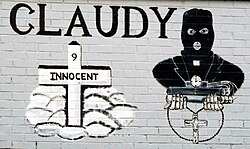 Graffiti in Belfast (2004) | |
| Date of Birth | 1934 |
| Date of death | 1980 |
| Nationality |  Great Britain Great Britain |
| Occupation | Catholic priest, IRA action movie |
Biography
Prior to the outbreak of the armed conflict in Northern Ireland, Father James Chesney was a priest at Kulyn Kallion in County Londonderry near Desertmartin Village. According to British intelligence, he did not have an impeccable reputation and was even called a "very bad person."
On July 31, 1972, three mined cars took off in Clooney , killing 9 people. According to investigators, Chesney, who was part of the South Derry IRA brigade, secretly mined all three cars by order from above. In September 1972, police arrested James's father and found explosives in his car. Chesney's attempts to justify himself and build an alibi were unsuccessful. Chesney was interrogated by two dignitaries of the Catholic Church: Bishops Neil Farren and Edward Delhi, but neither of them managed to gain recognition and confirm that Chesney had mined cars.
By the end of 1972, the police had not made any progress on the Clode bombings, and Chesney was released. Soon, father James was hospitalized with suspected cancer, and in December he left for Convoy County. Later, he repeatedly crossed the border between Ireland and the United Kingdom, but was never called for interrogation. In 1980, he died of the effects of cancer.
Documents were declassified on August 24, 2010 : according to these data, the police had all the evidence that Chesney was guilty, but the British government and the Roman Catholic Church immediately ordered to close the case and release Chesney, since the arrest of the Catholic priest and his conviction could irrevocably tarnish the reputation of the Church in the British islands and cause a surge in Catholic pogroms. In the final report on declassified documents, the police themselves were also criticized because they did not try to find the scapegoat and at least somehow complete the investigation.