The siege of Alexandria is the last battle of the Egyptian campaign . The French held Alexandria, a fortified city in northern Egypt, from July 2, 1798 to September 2, 1801.
| Siege of Alexandria | |||
|---|---|---|---|
| Main Conflict: French Revolutionary Wars | |||
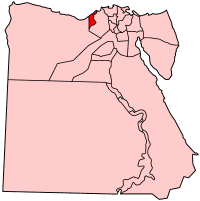 Map of Egypt with highlighted Alexandria | |||
| date of | August 17 - September 2, 1801 | ||
| A place | Alexandria , Egypt | ||
| Total | British victory | ||
| Opponents | |||
| |||
| Commanders | |||
| |||
| Forces of the parties | |||
| |||
| Losses | |||
| |||


Content
- 1 Background
- 2 siege
- 3 Consequences
- 4 Rosetta Stone
- 5 See also
- 6 Literature
- 7 notes
Background
The battle of Alexandria between the British and French on March 21, 1801 led to the defeat of the French. After this failure, the French, under the command of Menu, retreated to Alexandria. After the death of Ebercrombie , John Haley-Hutchinson became the commander in chief of the British army. He set out to besiege Alexandria.
Hutchinson left General Kut with 6,000 soldiers near Alexandria, and sent a detachment under the command of Baron Charles de Hompesch to capture Rosetta . After that, Heli-Hutchinson with the main forces made inland into the country along the coast of the Nile. In mid-June, he approached Cairo . Combining with the Turkish troops, Hutchinson besieged Cairo and on June 27 the French garrison under the command of General Augustine Daniel Bellar surrendered on honorable terms [1] . General John Moore escorted the prisoners to the coast near Rosetta.
Siege
Taking Cairo, Hutchinson stepped back to Alexandria. He had about thirty-five battalions. While part of the British troops launched a distracting attack to the east, Kut landed on August 16 in the west, where he encountered the garrison of Fort Marabut , but in the end the fort was taken by storm. After this, Menou continued to defend, but the position of the French soldiers became more and more desperate. Menu realized that his position was hopeless and surrendered on August 26, as well as Béllard, on honorable terms.
English commander Hutchinson .
English General Coot .
French commander Menu .
Consequences
On September 2, about 10,000 Frenchmen surrendered on terms that allowed them to return to France with weapons and banners on British ships. But all the French ships and guns in Alexandria were left to the British.
The frigates captured at the port, Egyptian and Leoben, were sent to the UK, and the frigate Justice , the Venetian battleship Kauss , the frigate Mantua , the Turkish corvette Khalil bey , and Salabatnam were given to the Turks.
Historians say that French soldiers, disappointed with the command of the French Revolutionary Army, gradually abandoned high standards of conduct. Many soldiers refused to renew the oath of the Republic or did it without enthusiasm, some wished to stay in Egypt.
In his memoirs, military surgeon Baron Dominic Jean Larrey recalls how horse meat consumption helped the French curb the scurvy epidemic .
Rosetta Stone
After the surrender of the French, a dispute arose over the works of ancient Egyptian art collected by French scientists. One of the key artifacts was the Rosetta Stone , which was discovered in mid-July 1799. Menu refused to hand over the finds to the British, claiming that they belonged to France. How exactly the stone ended up in the hands of the British is a mystery. Colonel Turner, who escorted the stone to the UK, said later that he had personally taken it from Menu and taken it on a gun carriage. Turner delivered the stone to Britain aboard an Egyptian woman in February 1802. March 11, he was presented to the Society of Antiquaries of London. He was later taken to the British Museum , where it is still preserved.
See also
- Egyptian campaign
Literature
- Napoleon Bonaparte. Egyptian Campaign - St. Petersburg: ABC Classic, 2007
- Barthorp, Michael. Napoleon's Egyptian Campaigns 1798-1801, Osprey Publishing, 1992.
- Downs, Jonathan. Discovery at Rosetta. Skyhorse Publishing, 2008 ISBN 978-1-60239-271-7
- Smith, D. The Greenhill Napoleonic Wars Data Book . Greenhill Books, 1998.
- Lynne, John A. "Toward an Army of Honor: The Moral Evolution of the French Army, 1789-1815." French Historical Studies , Vol. 16, No. 1. (Spring, 1989)
- Wilson, Robert Thomas. History of the British expedition to Egypt . 4th ed. London: Military Library, 1803 Text at Google Books
Notes
- ↑ For more information, see the article on Bellard.