Quotation marks are a double punctuation mark that is used to highlight direct speech , quotes , references, company names, literary works , newspapers , magazines , as well as individual words, if they are not included in the text in their usual meaning, are used in an ironic sense , are offered for the first time or, conversely, as obsolete and the like.
| Quotes | ||||||||||||||||||||||||||||||||||
|---|---|---|---|---|---|---|---|---|---|---|---|---|---|---|---|---|---|---|---|---|---|---|---|---|---|---|---|---|---|---|---|---|---|---|
| "" " | ||||||||||||||||||||||||||||||||||
Picture
| ||||||||||||||||||||||||||||||||||
| ||||||||||||||||||||||||||||||||||
| Characteristics | ||||||||||||||||||||||||||||||||||
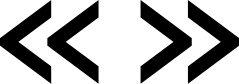
| Title | " : quotation mark " : Left-pointing double angle quotation mark » : Right-pointing double angle quotation mark | |||||||||||||||||||||||||||||||||
| Unicode | " : U + 0022 " : U + 00AB " : U + 00BB | |||||||||||||||||||||||||||||||||
| HTML code | " : " or "" : « or «" : » or » | |||||||||||||||||||||||||||||||||
| Utf-16 | " : 0x22 " : 0xAB " : 0xBB | |||||||||||||||||||||||||||||||||
| Url | " :% 22 " :% C2% AB " :% C2% BB | |||||||||||||||||||||||||||||||||
| Mnemonics | " : "" : «» : » | |||||||||||||||||||||||||||||||||
Content
- 1 History
- 2 Basic types of quotation marks
- 3 Quotes used in Russian
- 3.1 Nested quotes
- 3.2 Quotation marks at the end of a sentence
- 3.3 English single quotes
- 4 Quotes used in other languages
- 4.1 Combination of quotation marks with punctuation marks
- 5 Other applications
- 6 Quotation Codes
- 7 Keyboard input
- 7.1 X Window System
- 7.2 Windows
- 7.3 Mac OS X
- 8 Notes
- 9 Literature
- 10 Links
History
One of the very first attempts to establish the rules for the use of quotation marks in Slavic languages (and, consequently, in Russian) was made by a Slavic scientist of the 15th century Konstantin Philosopher in chapter 17 of his treatise "On Writing." The quotation marks recommended by Konstantin looked practically the same as modern Christmas trees, and were used to quote phrases from pseudographic works [1] [2] . Slavic quotes, like most of the additional Slavic writing symbols , come from the practice of writing Greek manuscripts of the time.
Basic types of quotation marks
According to their pattern, the following types of quotes are distinguished:
| French quotation marks ("Christmas trees") | "Christmas trees" |
| German quotation marks (“paws”) | “Paws” |
| English double quotes | “English doubles” |
| English single quotes | 'english singles' |
| Polish quotation marks | "Polish quotes" |
| Swedish backticks | Swedish |
Quotes used in Russian
Nested quotes
In French, French “Christmas trees” are traditionally used, and for quotation marks inside quotation marks and when writing by hand, German “paws” [3] .
An example with enclosed quotes [3] :
- Right:
- “My gypsies are not for sale at all,” complained Pushkin.
- Wrong:
- “My Gypsies are not for sale at all,” Pushkin complained.
If for technical reasons it is not possible to set quotation marks of another pattern, the quotation marks of the same pattern are not repeated nearby [4] . Therefore, it is possible (although undesirable - it is better to highlight the quote in some way that allows you to remove external quotation marks) the following option [3] :
- Allowed:
- “Gypsies” are not for sale at all, ”Pushkin complained.
Quotation marks at the end of a sentence
If, when quoting, the quoted text ends with a period, then the last is taken out of the text and put after the closing quotation mark. If the text ends with an ellipsis or a question or exclamation mark, and the quote is an independent sentence (and not a member of the sentence in which it is included), then the dot after the quotation mark is not put. For example [5] :
- A. N. Sokolov writes: "Misunderstanding is the lack of association."
- Pechorin admitted: "I sometimes despise myself ..."
English single quotes
A special case is the use of single English quotes (sometimes called Marrow [4] ) in Russian texts. In such quotation marks, according to the rules adopted in lexicology , a text is taken that indicates the meaning of a word or phrase (usually a foreign language). Numerous examples of the use of English single quotes can be found in the “ Linguistic Encyclopedic Dictionary ” (articles “Vocabulary” [6] , “Phrase” [7] , “Name” [8] , “Affix” [9] , etc.), as well as in scientific and educational linguistic literature.
An example to indicate the etymology of the Russian word:
- A lady of high society who exposed her ankle threw society in the 17th century. a stronger challenge than today's young lady, appearing on the topless beach (from the English topless 'without top'), i.e. in a bathing suit from the bottom only [10] .
It is also possible to separate the word and text in English single quotation marks with a dash:
- Linguistics, from lat. lingua - 'language' [11] .
It is not necessary to precede such a word with an indication of the language, if this already follows from the context:
- In German, the elements frieden 'peace' and kampf 'struggle' are combined as morphemes [12] .
- If necessary, in German you can distinguish ... color shades, say, using the definitions himmelblau “sky blue” and dunkelblau “dark blue” [13] .
An explanation of the meaning of a word can be textually separated from it:
- The patient cannot, for example, identify the word carrot , but without difficulty gives a definition of the word knowledge , defining it as 'making oneself mentally familiar with a subject' [14] .
Example for sharing regular and English single quotes:
- The phrase “Are you getting off?” On the bus or in the trolleybus means 'please give me a pass' [15] .
Quotes used in other languages
In British English, they use “English singles” for first-level quotes and “English doubles” for “quotes“ inside “quotes”, in American English - vice versa. Also in English (especially in its American version), a period and a comma are often put before the closing quotation mark, and not after, as in Russian.
| Special quotation marks (along with "Christmas trees") exist in the Polish language ; the same quotation marks are used in Romanian and Dutch . | „Cytować‚ wewnętrzny 'cytować ” |
| In French , "single Christmas trees" are sometimes found. Quotation marks, as well as brackets , exclamation points, and question marks in French are separated by inextricable spaces . | "Son‹ explication ›n'est qu'un mensonge" |
| In some European languages (for example, in Serbia , Montenegro , Croatia , Denmark , Sweden , in books in Germany and Austria ), the opening quotation mark looks like a French closing mark and vice versa. | "Citirati" |
| In some countries (for example, Finland ), unpaired quotes are used. | ”Lainata” or “noteerata” |
| In hieroglyphic writing there are quotation marks. | 『引 號』 |
| In Japanese, a simpler analogue of previous quotes is more often used. | 「こ ん ば ん は」 |
| Language | Commonly used | Alternative | Distance, in points | ||
|---|---|---|---|---|---|
| the main | domestic | the main | domestic | ||
| Albanian | "..." | ‹...› | “...„ | '... ‚ | |
| English | “...” | '...' | '...' | “...” | 1-2 |
| Arab | "..." | ‹...› | “...” | '...' | |
| Armenian | "..." | ||||
| Afrikaans | "..." | ‚... ' | |||
| Belorussian | "..." | „...“ | „...“ | one | |
| Bulgarian | „...“ | „...“ | |||
| Hungarian | "..." | "..." | |||
| Greek | "..." | ‹...› | “...” | '...' | one |
| Danish | "..." | ›...‹ | „...“ | ‚... ' | |
| Hebrew | "..." / '...' [16] | '...' / << ... >> [17] | |||
| Irish | “...” | '...' | 1-2 | ||
| Icelandic | „...“ | ‚... ' | |||
| Spanish | "..." | “...” | “...” | '...' | 0-1 |
| Italian | "..." | “...” | '...' | 1-2 | |
| Chinese | “...” | '...' | 《...》 | ||
| Latvian | „...“ | „...“ | "..." | "..." | |
| Lithuanian | „...“ | ‚... ' | "..." | '...' | |
| Dutch | "..." | ‚... ' | “...” | '...' | |
| Deutsch | „...“ | ‚... ' | "..." | ›...‹ | |
| Norwegian | "..." | '...' | „...“ | , ... ' | |
| Polish [18] [19] | "..." | "..." | ”...” / ″ ... ″ | ||
| Portuguese | "..." | ‹...› | “...” | '...' | 0-1 |
| Portuguese (Brazil) | “...” | '...' | 0-1 | ||
| Romanian | "..." | "..." | |||
| Russian | "..." | „...“ | “...” | '...' | |
| Serbian | „...“ | ‚... ' | "..." | ›...‹ | |
| Slovak | „...“ | ‚... ' | "..." | ›...‹ | |
| Slovenian | „...“ | ‚... ' | "..." | ›...‹ | |
| Turkish | “...” | '...' | "..." | ‹...› | 0-1 |
| Ukrainian | "..." | „...“ | „...“ | ||
| Finnish | "..." | '...' | "..." | ›...› | |
| French | "..." | ‹...› | “...” | '...' | ¼ em |
| Croatian | "..." | ›...‹ | |||
| Czech | „...“ | ‚... ' | "..." | ›...‹ | |
| Swedish | "..." | '...' | "..." | ›...› | |
| Estonian | „...“ | "..." | |||
| Japanese | 「...」 | 『...』 | one | ||
The combination of quotation marks and punctuation
Differences between languages are manifested not only in the appearance of quotation marks, but also in how they are combined with punctuation marks. In particular, in Russian, if the quotation marks convey direct speech, then an exclamation point and a question mark are placed before the closing quotation mark, then a dot and a comma are always placed after the closing quotation mark. In English (American), a period and a comma are always preceded by a closing quotation mark, while in British English the rules for using a period and a comma before or after a quotation mark are similar to the rules for exclamation and question marks [20] . The colon and semicolon are always placed after the closing quotation mark in both Russian and English.
Other Applications
In some popular programming and markup languages ( BASIC , C , HTML , PHP ), the quotation marks on both sides enclose the value assigned to a string (usually double) or symbolic (usually single) variable (despite the fact that the text between quotation marks is a "string" , the outermost quotes are not included in the string).
In accordance with the International Code of Nomenclature of Cultivated Plants , when naming plant varieties in English, the same as in Russian , after the name of the genus or species, the varietal epithet is recommended to be enclosed in single quotation marks ( Rosa 'New Dawn' ) or to use the apostrophe ( Rosa 'New Dawn' ) [21] .
Quotation Codes
| View | Function | Unicode | HTML ( mnemonics or numeric code) | Compose | |||
|---|---|---|---|---|---|---|---|
| In Russian | In English | Title | The code | ||||
| hex | dec | ||||||
| " | opening | - | left-pointing double angle quotation mark | 00AB | 0171 | & laquo; | Compose + < + < |
| ‹ | opening [22] | - | single left-pointing angle quotation mark | 2039 | 8249 | & lsaquo; | Compose + . + < |
| " | closing | - | right-pointing double angle quotation mark | 00BB | 0187 | & raquo; | Compose + > + > |
| › | closing [22] | - | single right-pointing angle quotation mark | 203A | 8250 | & rsaquo; | Compose + . + > |
| „ | opening | - | double low-9 quotation mark | 201E | 8222 | & bdquo; | Compose + , + " Compose + " + , |
| ‚ | opening [22] | - | single low-9 quotation mark | 201A | 8218 | & sbquo; | Compose + , + ' Compose + ' + , |
| “ | closing | opening | left double quotation mark | 201C | 8220 | & ldquo; | Compose + < + " Compose + " + < |
| ‟ | - | opening [22] | double high-reversed-9 quotation mark | 201F | 8223 | & # 8223; | There is no default keyboard shortcut, but you can customize your own. |
| '' | closing [22] | opening | left single quotation mark | 2018 | 8216 | & lsquo; | Compose + < + ' Compose + ' + < |
| ‛ | - | opening [22] | single high-reversed-9 quotation mark | 201B | 8219 | & # 8219; | There is no default keyboard shortcut, but you can customize your own. |
| ” | - | closing | right double quotation mark | 201D | 8221 | & rdquo; | Compose + > + " Compose + " + > |
| '' | - | closing | right single quotation mark | 2019 | 8217 | & rsquo; | Compose + > + ' Compose + ' + > |
| ⹂ | - | - | double low-reversed-9 quotation mark | 2E42 | 11842 | & # 11842; | There is no default keyboard shortcut, but you can customize your own. |
| " | universal [23] | quotation mark | 0022 | 0034 | & quot; or & quot; [24] | It is typed directly from the keyboard. | |
Keyboard Input
There are alternative keyboard layouts that are optimized for typographic characters, including quotation marks (see, for example, Ilya Birman’s typographic layout , official and unofficial versions of which are available for various operating systems). In most text editors, such as proprietary Microsoft Office , free OpenOffice and LibreOffice, and many others, it is possible to automatically convert “simple quotes” to “Christmas trees” or “paws”.
X Window System
In the X Window System (which is often used on UNIX-like operating systems , in particular, based on the Linux kernel ), to type the French quotation mark, first click Compose , then two times < or two times > , depending on which side of the quotation mark should be directed.
Windows
In Windows, you need to enable Num Lock , after which typing on the numeric keypad Alt + 0171 , Alt + 0187 for “” , and Alt + 0132 , Alt + 0147 for ““, respectively, works. Alt + 0148 is used to set the English double closing quotation mark ( ” ), Alt + 0145 and Alt + 0146 respectively for single ( '' ).
In some European layouts, Christmas trees can be entered using AltGr + [ and AltGr + ] (US international), AltGr + z, and AltGr + x (Canadian international).
Mac OS X
In the standard Russian layout of Mac OS X, the quotes are typed with the following keyboard shortcuts:
| opening Christmas tree | " | ⌥ Option + ⇧ Shift + = |
| closing herringbone | " | ⌥ Option + = |
| opening foot | „ | ⌥ Option + ⇧ Shift + / |
| closing foot | “ | ⌥ Option + / |
Notes
- ↑ Yagich I.V. Book of Konstantin the Philosopher and grammar about writing // Discussions of South Slavic and Russian antiquity about Church Slavonic languageѣ. - SPb. : Printing house of the IAN , 1885-1895. - T. 1. - S. 429, 502.
- ↑ Karsky E.F. Slavic Cyril Paleography. - 2nd ed., Facsimile . - L., M. (fax.): From the Academy of Sciences of the USSR; from the "Science" (fax.), 1928, 1979 (fax.). - S. 227.
- ↑ 1 2 3 Milchin, Cheltsova, 1999 , p. 129.
- ↑ 1 2 How to use quotation marks correctly (part one) . // Website Gramota.ru . Date of treatment August 26, 2012. Archived October 16, 2012.
- ↑ Milchin, Cheltsova, 1999 , p. 134-135.
- ↑ Kuznetsov A.M. Vocabulary // Linguistic Encyclopedic Dictionary . - M .: Soviet Encyclopedia , 1990 .-- 685 p. - ISBN 5-85270-031-2 . - S. 257—258.
- ↑ Lopatina L. E. “Collocation” // Linguistic Encyclopedic Dictionary . - M .: Soviet Encyclopedia , 1990 .-- 685 p. - ISBN 5-85270-031-2 . - S. 469-470.
- ↑ Stepanov Yu. S. “Name” // Linguistic Encyclopedic Dictionary . - M .: Soviet Encyclopedia , 1990 .-- 685 p. - ISBN 5-85270-031-2 . - S. 175-176.
- ↑ Kubryakova E. S. , Pankrats Yu. G. “Affix” // Linguistic Encyclopedic Dictionary . - M .: Soviet Encyclopedia , 1990 .-- 685 p. - ISBN 5-85270-031-2 . - S. 59-60.
- ↑ Norman, 2009 , p. 26.
- ↑ Norman, 2009 , p. 9.
- ↑ Kasevich, 2012 , p. 27.
- ↑ Norman, 2009 , p. 22.
- ↑ Kasevich, 2012 , p. 117.
- ↑ Norman, 2009 , p. 47.
- ↑ Rules for the use of quotation marks An archived copy of May 11, 2012 on the Wayback Machine , on the website of the Hebrew Language Academy : the standard form of the basic quotation marks is recognized, for choice, the sign "merkhaot kfulot" ("...") or "merkhaot bododot / yechidot" ('...' )
- ↑ Types of quotation marks An archived copy of December 16, 2011 on the Wayback Machine , on the Hebrew Language Academy website: the standard for internal quotation marks is any form of quotation marks other than the basic quotation mark, for example, “merchait of the bododedot / yechidot” ('...') as internal quotation marks “Merkhaot kfulot” (“...”) as the main quotation marks.
- ↑ Łukasz Mackiewicz. Cudzysłowy zagnieżdżone - jak umieścić cytat w cytacie? . eKorekta24.pl (November 7, 2013). Date of treatment June 12, 2018.
- ↑ Edward Polański. 98 // Wielki słownik ortograficzny. - Wydawnictwo Naukowe PWN, 2016 .-- 1340 p. - ISBN 9788301184322 .
- ↑ How to Use Quotation Marks . Quick and Dirty Tips. Date of treatment February 9, 2019.
- ↑ International code of nomenclature for cultivated plants . - Scripta Horticulturae. - International Society for Horticultural Science (ISHS), 2009. - Vol. 151. - P. 19. - 204 p. - ISBN 978-90-6605-662-6 .
- ↑ 1 2 3 4 5 6 Rarely used.
- ↑ The so-called "typewritten" or "programmer" is not commonly used in typography. Used in typewriters .
- ↑ Both browsers (spring 2019) are equally applicable in browsers, although the uppercase form for the “historical” & LT ;, & GT ;, & AMP ;, & QUOT ;, & COPY ;, & REG; and & TRADE; gradually ceases to be supported (for example, the MediaWiki engine does not understand them), that is, you should focus on the lower case variant (& lt; (<), & gt; (>), & amp; (&), & quot; ("), & copy; (©), reg (®) and ((™)).
Literature
- Quotation marks // Brockhaus and Efron Encyclopedic Dictionary : in 86 volumes (82 volumes and 4 additional). - SPb. , 1890-1907.
- Zaliznyak A.A. Semantics of quotes // Proceedings of the International Workshop Dialogue'2007 on computer linguistics and its applications. - M. , 2007.
- Kasevich V. B. Introduction to Linguistics. 3rd ed. - M .: Publ. Center "Academy", 2012. - 240 p. - ISBN 978-5-7695-9013-9 .
- Milchin A.E. , Cheltsova L.K. Directory of the publisher and author: Editorial-ed. design of the publication. - M .: Olympus: LLC "Publishing House AST" LLC, 1999. - 688 p. - ISBN 5-237-02942-6 .
- Milchin A.E. , Cheltsova L.K. Directory of the publisher and author. Editorial and publishing design of the publication . - 2nd ed. , rev. and add. - M .: OLMA-Press , 2003 .-- 800 p. - ISBN 5-224-04565-7 .
- Norman B. Yu. Theory of Language. Introductory course. 3rd ed. - M .: Flint; Science , 2009 .-- 296 p. - ISBN 978-5-02-002994-1 .
Links
- Lebedev, Artemy . Quotes // Kovodstvo (electronic version) / Artemy Lebedev . - May 17, 2004 - § 104.