Arthur Nabantino Gonçalves de Azevedo ( port. Artur Nabantino Gonçalves de Azevedo ; July 7, 1855 , San Luis - October 22, 1908 , Rio de Janeiro ) - Brazilian poet, writer, playwright, journalist. Brother Aluizio Azevedo .
| Arthur di Azevedo | |
|---|---|
| Artur de azevedo | |
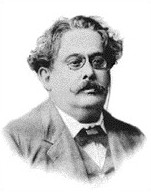 | |
| Full name | Artur Nabantino Gonçalves de Azevedo |
| Date of Birth | July 7, 1855 |
| Place of Birth | Sao Luis , Brazil |
| Date of death | October 22, 1908 (53 years old) |
| Place of death | Rio de Janeiro |
| Citizenship | Brazil |
| Occupation | writer , prose writer , poet , playwright |
| Years of creativity | 1870-1908 |
| Genre | drama , comedy , prose , poetry |
| Language of Works | Portuguese |
| Debut | 1870 |
Biography
Born in the family of the Portuguese Vice Consul in San Luis David Gonçalves de Azevedo ( port. David Gonçalves de Azevedo ) and Emilia Amalia Pinto de Magagliens ( port. Emília Amália Pinto de Magalhães ) [1] .
From the age of 8 he was fascinated by the theater, and soon he began to compose plays for his own amateur productions [1] . The literary debut is the play “Love for Sayings” (1870), immediately staged by many theaters and enjoyed popularity in Brazil. Since 1871 he began to write short stories [1] . Azevedo's genre range is very wide: he wrote dramas, comedies, burlettes , libretto for musical comedies and operettas. Along with popular genres, he took up serious topics. So, in 1884, together with Urbano Duarte, he wrote a drama in 3 acts, “The Salazar Family” (more precisely, “Supporter of Slavery” port. O Escravocrata ), which was banned from showing for the call to fight against slavery. But even in the light genre, Azeveda admits the possibility of criticizing the existing social system. Thus, the libretto of the comic opera Princess Cajueiro was attacked by a number of Brazilian politicians for impartial criticism of themselves.
But satire was not the main skate of the author, who preferred light musical comedies with sharp verses. One of the most famous works is the operetta The Federal Capital (1897) - a classic sitcom with the main character a provincial who accidentally ended up in Rio de Janeiro , the then capital of Brazil. Other notable comedies include Dowry, Oracle, Badejo, which are still included in the repertoire of Brazilian theaters. The innovations for the Brazilian theater were pop introductions introduced to Azeveda (Bilontra, Republic (1889) and Tri-Bauffe (1891)).
In 1897 he became the founder and member of the Brazilian Academy of Literature . Since 1879 he led the “Journal of the Theater” ( port. Revista do teatro ) [1] , where he often performed as a theater critic. The activity of Azeveda was of great importance for the development of national drama and the formation of the Brazilian theater. Sharp satirical couplets from his comedies entered the life of the people of Brazil. For about 30 years, Azeveda sought the construction of the Rio de Janeiro City Theater , at the opening of which in 1909 he could not attend due to death [1] .
Compositions
For the theater
The year of the first stage performance is indicated:
- 1877 - “The Skin of the Wolf” ( A pele do lobo ), comedy in 1 act
- 1878 - “Rio de Janeiro in 1877” ( O Rio de Janeiro de 1877 ), comedy in 3 acts
- 1880 - “Princess Cajueiro” ( A Princesa dos Cajueiros ), musical comedy with prologue in 2 acts
- 1886 - O Bilontra , revue with prologue in 3 acts
- 1888
- A Almanjarra , comedy in 2 acts
- The Dowry ( O Dote ), a comedy
- 1897 - The , operetta
- 1898
- O Badejo , comedy in verse in 3 acts
- “Confessions” ( Confidências )
- O jagunço
- 1901 - “Ate!” ( Comeu! )
Stories and Poetry
- 1876 - Sonnets ( Sonetos )
- 1889 - “Possible Stories” ( Contos possíveis ) - a collection of short stories dedicated to Mashad de Assis [1]
- 1901
- Unfashionable Stories ( Contos fora de moda )
- Ephemeral Stories ( Contos efêmeros )
- 1909 - “Rhymes” ( Rimas ), poetry collection
Notes
- ↑ 1 2 3 4 5 6 Biografia .
Links
Artur Azevedo. Biografia (port.) . Academia Brasileira de Letras. Date of treatment June 26, 2017.