The Boycott effect is the effect of accelerated deposition of an impurity in a vessel with inclined walls. It is observed in various dispersed media [1] . Discovered by the British biologist Arthur Boycott in 1920 while studying the deposition of red blood cells .
| Boycott effect | |
| Discoverer or inventor | |
|---|---|
| opening date | |
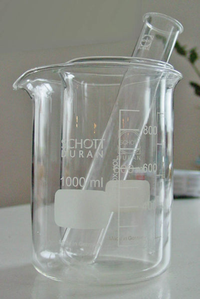
It plays a large role in oil production, laboratory studies have shown and confirmed by field data [2] that in wells with an inclination angle of 30-60 o (and most intensively at 40-50 o ) sedimentation separation of cement slurry occurs [3] .
Literature
AE Boycott "Sedimentation of blood corpuscles", Nature , vol. 104, 1920, p. 532
Notes
- ↑ boycott effect
- ↑ Hanson P., Trigg T., Rachal G., Zamora M. Investigation of Barite Sag in Weighted Drilling Fluids in Higlu Deviated Wells // SPE paper 20423 presented at the SPE Annual Conference and Exhibition. New Orlean, - 1990, - Sept. - P. 23-26
- ↑ Well cementing method