The species was first scientifically described in 1864 [2] . Syntypes are two females 75 and 43 cm long [3] .
The name of the genus comes from the words lat. sutor - “shoemaker” and lat. rectus - “direct”, and the species epithet - from the word lat. tentaculum - "probe" [4] [5] .
Lumpy carpet sharks are endemic to the southeast coast of Australia and inhabit from the islands of Houtman Abrolhos , Western Australia , to Adelaide , South Australia. They are found on rocky reefs and places overgrown with algae in the temperate waters of the continental shelf [6] .
The lumpy carpet sharks have an elongated and not as flattened body as other wobbegong-shaped bodies. The head is rather narrow. Its greatest width is less than the distance from the tip of the snout to the first gill slit. The chin is smooth, there is no leather fringe. On the sides and in front of the head, small, short, unbranched leather lobes form a fringe, consisting of several disparate groups of processes of 4-6 pairs. On the chin there is a symphysial groove. The nostrils are framed by an unbranched tendril. The mouth is wide, its width is 9% of the total length. The dorsal surface of the head, body to the tail and base of the dorsal fins is covered with rows of large skin tubercles resembling warts. The body is quite wide, the width in the area of the beginning of the bases of the pectoral fins is significantly less than the length of the head. The caudal stem is long. The distance between the beginning of the bases of the ventral fins and the lower base of the caudal fin is much greater than the length of the head. The pectoral and ventral fins are small, they are separated from each other by a considerable distance, twice the length of the bases of the pectoral fins and slightly exceeds the length of the ventral fins from the base to the free posterior tip. Dorsal fins low and long. The base of the first dorsal fin begins at the level of the middle of the bases of the ventral fins.
The body is covered with dark saddle marks with jagged edges and numerous dark spots scattered around a light background [3] .
The diet of tuberous carpet sharks consists of bony fish and bottom invertebrates. These sharks breed by egg-laying. The maximum recorded length is 92 cm. The size of the newborn is 22 cm. The embryo at a late stage of development, but with an empty yolk sac, was 18 cm long [3] . The capture of one pregnant female was recorded; males predominated in the litter [7] .
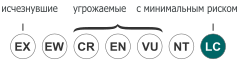
The species is not of interest to commercial fishing. As by- catch, these sharks are caught in bottom gill nets. Caught sharks are usually thrown overboard. The survival rate among them is quite high. In the waters of Western Australia, all sharks and stingrays are protected by law. The International Union for Conservation of Nature has assigned this species a conservation status of “Least Concerns” [6] .